The Tesla Model Y remains the benchmark compact electric SUV in 2026, but its minimalist cabin means every port matters. Buyers searching for the Tesla Model Y USB hub layout, data-transfer capabilities, and device-charging wattage are often trying to solve a practical problem: how to keep dashcams, phones, tablets, and rear-seat passengers powered without resorting to aftermarket dongles. This review covers the full Model Y lineup — USB connectivity included — alongside the range, charging, performance, and pricing data you need before signing a purchase agreement.
Tesla Model Y USB Hub Layout and Connectivity
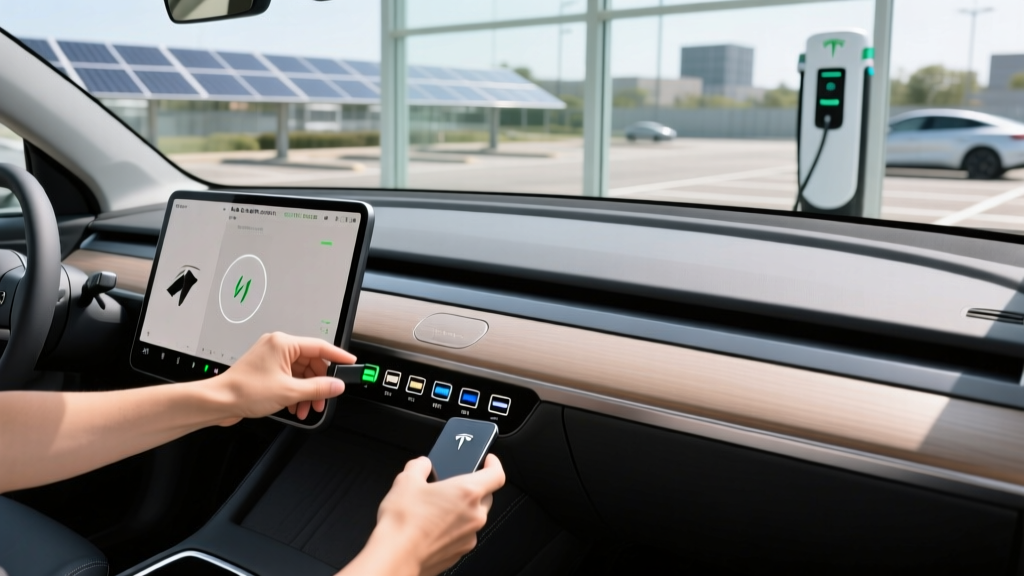
The 2026 Tesla Model Y (Juniper refresh) features a reconfigured USB-C hub compared to the pre-2025 model. Here is the port breakdown:
- Front row: Two USB-C ports located in the center console bin, delivering up to 65W combined (sufficient for fast-charging a laptop or two phones simultaneously).
- Rear row: Two USB-C ports integrated into the rear of the center console, rated at 27W each — enough for tablet charging or phone fast-charge.
- Glovebox USB-A port: Retained specifically for Sentry Mode and dashcam flash-drive data logging. This port supports data transfer, not just charging.
- Wireless charging pad: Dual Qi2 pads on the center console shelf, each delivering up to 15W.
The front USB-C ports support both power delivery and data transfer, enabling firmware updates via USB drive or direct phone integration. The rear ports are charge-only. If you need more ports, Tesla sells a first-party USB hub accessory, and third-party options (Anker, Baseus) work without triggering software conflicts — provided they do not attempt data handshake on charge-only lines.
Range, Battery, and Efficiency
| Spec | Long Range AWD | Performance |
|---|---|---|
| EPA Range | 320 miles | 293 miles |
| Battery (usable) | ~75 kWh (NMC) | ~75 kWh (NMC) |
| Efficiency | 122 MPGe / 28 kWh/100mi | 111 MPGe / 30 kWh/100mi |
| 0–60 mph | 4.8 sec | 3.5 sec |
| Horsepower | 384 hp | 456 hp |
| Drivetrain | Dual-motor AWD | Dual-motor AWD |
| Max DC Charge Rate | 250 kW | 250 kW |
| 10–80% DC Time | ~25 min | ~25 min |
| Level 2 (11.5 kW) | ~44 mi/hr | ~40 mi/hr |
| Cargo (rear seats up) | 30.2 cu ft | 30.2 cu ft |
| Cargo (rear seats folded) | 72.1 cu ft | 72.1 cu ft |
| Rear Legroom | 41.6 in | 41.6 in |
| Base MSRP | $44,990 | $51,490 |
The Model Y Long Range uses an NMC (nickel manganese cobalt) battery pack. Tesla has not shifted the Model Y to LFP in the US market for the Long Range and Performance trims, though the previously offered RWD Standard Range variant (now discontinued in the US) used an LFP pack from CATL. NMC chemistry delivers higher energy density, which is why it remains the choice for range-critical trims.
Charging Speed and Infrastructure
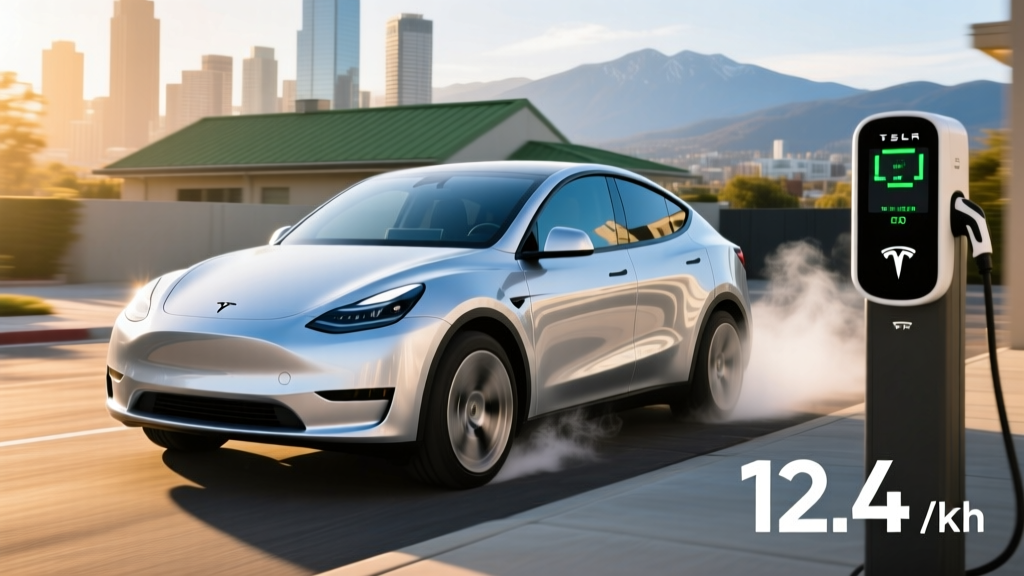
The 2026 Model Y retains the NACS (North American Charging Standard) connector natively, meaning it plugs directly into Tesla Superchargers without an adapter. With the broader industry adopting NACS through 2025–2026, the Model Y now accesses both the Supercharger network and an expanding number of Electrify America, EVgo, and ChargePoint stations equipped with NACS cables.
| Level | Power | Miles Added per Hour | Use Case |
|---|---|---|---|
| Level 1 (120V) | ~1.4 kW | ~5 mi/hr | Emergency / overnight trickle |
| Level 2 (240V, 48A) | 11.5 kW | ~44 mi/hr | Home daily charging |
| DC Fast Charge | 250 kW peak | ~1,000+ mi/hr (peak) | Road trips, 10–80% in ~25 min |
The 250 kW peak charge rate is not sustained across the full session. The Model Y's charge curve tapers significantly above 60% state of charge (SoC). From 10–50%, the pack can sustain roughly 200–250 kW under optimal thermal conditions (with preconditioning active). From 50–80%, power drops to approximately 100–130 kW. Charging from 80–100% is extremely slow and should be avoided on road trips unless you genuinely need the final 20%.
Home charging on a 48-amp Level 2 circuit (requiring a 60-amp breaker) delivers a full charge in roughly 7–8 hours from near-empty. Most owners charge from 20–80% overnight, which takes about 4.5 hours at 11.5 kW.
Performance, Ride, and Daily Driving
The Long Range AWD's 4.8-second 0–60 mph time is brisk for a family SUV, and the dual-motor setup provides confident traction in rain and light snow. The Performance trim's 3.5-second sprint is sports-car territory, though it trades roughly 27 miles of EPA range for that acceleration advantage.
The Juniper refresh brought a revised suspension with improved damping over pre-2025 models, reducing the harshness over sharp impacts that earlier Model Y owners frequently cited. Road noise remains higher than rivals like the Hyundai Ioniq 5 or BMW iX3, but the gap has narrowed. The 15.4-inch touchscreen handles all vehicle controls — there are no physical buttons for climate or mirrors, which frustrates some buyers but keeps the cabin visually clean.
Driver assistance comes via Tesla Autopilot (standard), which is an SAE Level 2 system requiring continuous driver supervision. Full Self-Driving (Supervised) remains a $8,000 add-on or $99/month subscription and is still Level 2 — it does not make the vehicle autonomous. The driver must keep hands on the wheel and eyes on the road at all times.
Pricing, Tax Credits, and Ownership Cost
| Trim | Base MSRP | Est. After §30D Credit* | Destination |
|---|---|---|---|
| Long Range AWD | $44,990 | $37,490 | $1,390 |
| Performance | $51,490 | $43,990 | $1,390 |
*Federal tax credit eligibility under IRS §30D requires meeting all of the following criteria. Credit is applied at point of sale for qualifying buyers.
- MSRP cap: SUVs must be at or below $80,000 — both Model Y trims qualify.
- Buyer income cap: Modified adjusted gross income must not exceed $150,000 (single), $225,000 (head of household), or $300,000 (joint filers).
- Battery sourcing: Critical minerals and battery components must meet phased-in US/free-trade-agreement sourcing thresholds. Tesla's US-built packs have generally met these requirements, but eligibility can shift with supply-chain changes. Always verify with your dealer and consult IRS.gov §30D guidance before purchase.
- Point-of-sale transfer: As of 2024, qualifying buyers can transfer the credit to the dealer at purchase, reducing the out-of-pocket price immediately rather than waiting for tax filing.
For a 5-year ownership estimate, the Model Y Long Range AWD costs roughly $3,200–$4,000 in electricity (based on the US average of $0.16/kWh and 12,000 miles/year). Compare that to a similarly sized gas SUV at 25 MPG combined and $3.50/gallon: approximately $8,400 in fuel over the same period. The EV saves roughly $4,400–$5,200 in energy costs alone over five years, before factoring in reduced maintenance (no oil changes, fewer brake replacements due to regen braking).
Interior, Cargo, and Practicality
The Juniper-refreshed Model Y interior features ventilated front seats, ambient lighting, a rear-seat touchscreen for climate and entertainment, and power-folding second-row seats. Cargo volume stands at 30.2 cubic feet behind the second row and 72.1 cubic feet with seats folded — competitive with the Hyundai Ioniq 5 (35.4/76.1 cu ft, though the Ioniq 5 has a lower roof line) and comfortably ahead of the Ford Mustang Mach-E (29.7/59.7 cu ft).
The front trunk (frunk) provides additional storage for charging cables or a small bag. Rear-seat legroom at 41.6 inches is generous for adults on longer trips. The panoramic glass roof creates an airy cabin but contributes to heat soak in summer — Tesla's tinted glass helps, but a removable sunshade (included) is recommended in hot climates.
Warranty and Long-Term Reliability
Tesla covers the Model Y with:
- Basic vehicle warranty: 4 years / 50,000 miles
- Battery and drive unit warranty: 8 years / 120,000 miles (Long Range and Performance) with a minimum 70% capacity retention guarantee
The 8-year/120,000-mile battery warranty is competitive with the industry standard (Hyundai offers 10/100,000; Ford offers 8/100,000). Tesla's 70% retention threshold means if your battery degrades below 70% of original capacity within the warranty period, Tesla will repair or replace it. In practice, NMC packs in Tesla vehicles have shown degradation curves that plateau around 8–12% loss after the first 50,000 miles, based on fleet data aggregated by sources like fueleconomy.gov and independent EV databases.
For buyers concerned about long-term battery replacement cost outside warranty: a Model Y pack replacement currently runs approximately $12,000–$16,000 at a Tesla service center, though this figure has trended downward as battery costs decline industry-wide.
Pros, Cons, and Verdict
Pros
- Class-leading Supercharger network access (native NACS)
- 320-mile EPA range (Long Range) handles most road trips with one stop
- 250 kW DC fast charging with ~25 min 10–80%
- Spacious cargo area (72.1 cu ft) and rear legroom
- Comprehensive USB-C hub with 65W front, 27W rear
- Strong §30D tax credit eligibility (subject to sourcing rules)
- Over-the-air updates continuously add features
Cons
- No physical buttons — all controls via touchscreen
- Road noise still noticeable at highway speeds vs. premium rivals
- FSD (Supervised) remains expensive at $8,000 and is still Level 2
- Performance trim sacrifices 27 miles of range for acceleration
- Service center wait times can be lengthy in some metro areas
- Glass roof heat soak in summer climates
Who Should Buy the Tesla Model Y?
Choose the Model Y Long Range AWD if: You want a daily-driver family SUV with 300+ mile real-world range, reliable Supercharger access for road trips, and strong federal tax credit eligibility. The USB-C hub layout supports multiple devices without aftermarket accessories.
Choose the Model Y Performance if: Acceleration matters to you and you can accept 250-ish real-world miles. The 3.5-second 0–60 time and track-tuned suspension make it a legitimate sports-sedan alternative in SUV form.
Look at competitors (Ioniq 5, Mach-E, EV6) if: You prefer physical controls, want a more compliant ride, or need 800V charging architecture (Ioniq 5/EV6 offer ~18-minute 10–80% on 350 kW chargers).
Frequently Asked Questions
What is the real-world range of the Tesla Model Y?
The Long Range AWD is EPA-rated at 320 miles. Real-world highway driving at 70–75 mph yields approximately 270–290 miles. In cold weather below 32°F, expect 240–270 miles. City driving with regenerative braking can match or slightly exceed the EPA figure.
How fast does the Model Y charge on DC fast chargers and at home?
DC fast charging peaks at 250 kW, with a 10–80% session taking approximately 25 minutes when the battery is preconditioned. At home on a 48-amp Level 2 charger (11.5 kW), the Model Y gains roughly 44 miles of range per hour, with a full charge from near-empty taking 7–8 hours.
How much does the Tesla Model Y cost after federal tax credits?
The Long Range AWD starts at $44,990 MSRP. If you qualify for the full $7,500 §30D credit (meeting income, MSRP, and battery-sourcing requirements), the effective price drops to approximately $37,490 plus $1,390 destination. Verify current eligibility at IRS.gov before purchasing.
Is the Tesla Model Y worth buying vs. the Hyundai Ioniq 5 or Ford Mach-E?
The Model Y wins on Supercharger network reliability and EPA range. The Ioniq 5 offers 800V architecture for faster peak charging and a more comfortable ride. The Mach-E provides a more conventional interior with physical controls. Test-drive all three — the best choice depends on your priorities around ride comfort, charging infrastructure, and cabin ergonomics.
Does the Tesla Model Y qualify for the $7,500 federal EV tax credit?
As of 2026, both Model Y trims fall under the $80,000 SUV MSRP cap and are assembled in the US. Eligibility depends on your income (must be under $150K single / $300K joint), and the battery must meet critical-mineral and component sourcing thresholds that can change with supply-chain updates. Always confirm with your tax professional and the IRS clean vehicle credit page.
Can I use a third-party USB hub in the Tesla Model Y?
Yes. Third-party USB-C hubs from reputable brands (Anker, Baseus, UGREEN) work for charging additional devices. However, for Sentry Mode and dashcam data logging, use only the glovebox USB-A port with a high-endurance flash drive. Do not connect aftermarket hubs to data-capable ports if they attempt unsupported data handshakes, as this can cause intermittent touchscreen recognition issues.