Tesla Model Y Top Speed and Performance at a Glance
The Tesla Model Y remains the best-selling electric vehicle in the United States for good reason: it blends crossover practicality with sports-sedan acceleration. But buyers researching the Tesla Model Y top speed often discover that the number varies significantly by trim — and that top speed is just one piece of a much larger performance picture. In this 2026 review, we break down every variant's governed top speed, 0-60 times, range, charging behavior, and ownership economics so you can decide which Model Y actually fits your driving life.
| Spec | Long Range RWD | Long Range AWD | Performance AWD |
|---|---|---|---|
| Top Speed (electronically governed) | 125 mph | 135 mph | 155 mph |
| 0–60 mph | 5.8 sec | 4.8 sec | 3.5 sec |
| Horsepower (est.) | ~346 hp | ~384 hp | ~456 hp |
| Drivetrain | Rear-Wheel Drive | Dual-Motor AWD | Dual-Motor AWD |
| EPA Range | 320 mi | 292 mi | 277 mi |
| Battery (usable) | ~75 kWh (NMC) | ~75 kWh (NMC) | ~75 kWh (NMC) |
| Max DC Fast Charge | 250 kW | 250 kW | 250 kW |
| 10–80% DC Charge Time | ~27 min | ~27 min | ~27 min |
| Level 2 Charge Rate | 11.5 kW (~44 mi/hr) | 11.5 kW (~44 mi/hr) | 11.5 kW (~44 mi/hr) |
| MPGe (combined) | 122 MPGe | 115 MPGe | 111 MPGe |
| kWh/100 mi | 28 | 29 | 30 |
| Base MSRP | $44,990 | $47,990 | $52,490 |
| Battery Warranty | 8 yr / 120,000 mi | 8 yr / 120,000 mi | 8 yr / 120,000 mi |
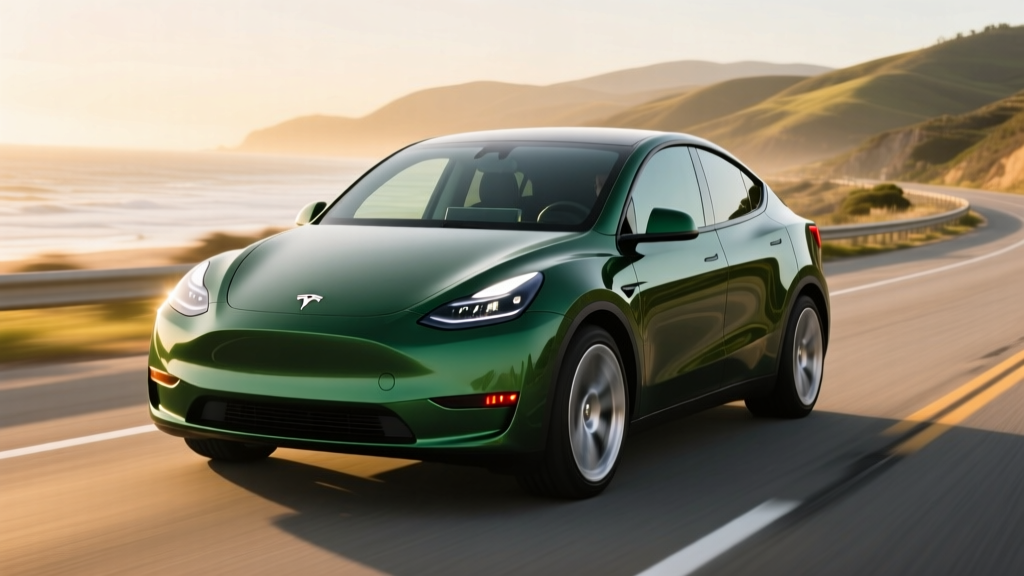
The headline number — 155 mph for the Performance trim — is electronically governed, not a physical limitation of the motors. The Long Range AWD tops out at 135 mph, while the base Long Range RWD is limited to 125 mph. For context, no public road in the United States exceeds 85 mph (a stretch of Texas SH-130), so these top speeds matter primarily for track days or Autobahn dreams. What matters more for daily driving is the instant torque delivery: the Performance variant's 3.5-second 0-60 time puts it in supercar territory at a fraction of the cost.
Real-World Range vs. EPA Estimates
EPA Sticker: 320 mi (Long Range RWD) / 292 mi (Long Range AWD) / 277 mi (Performance)
Real-World Expectation: 260–290 mi highway, 230–260 mi in cold weather (below 32°F)
The EPA numbers on fueleconomy.gov are derived from controlled laboratory cycles. In practice, the Model Y's real-world range depends heavily on speed, temperature, and terrain. On a 70-mph highway run in 70°F weather, expect the Long Range AWD to deliver roughly 260–275 miles before you need to find a Supercharger. Push speeds to 80 mph and that drops to approximately 240–255 miles due to the exponential increase in aerodynamic drag.
Cold weather is the bigger range killer. Lithium-ion batteries lose efficiency in freezing temperatures, and cabin heating draws significant energy. In sustained sub-32°F conditions with the heat pump running, plan for 20–30% range reduction — meaning a Long Range AWD that stickers at 292 miles may realistically deliver 210–235 miles. Tesla's heat pump (standard on all 2026 Model Y trims) mitigates this compared to older resistive-heater EVs, but the physics are unavoidable.
One often-overlooked advantage: the Model Y's regenerative braking system recovers meaningful energy in stop-and-go city driving. In urban commuting at moderate temperatures, some owners report exceeding the EPA combined figure, particularly on the Long Range RWD trim with its lighter single-motor configuration.
Charging Speed: DC Fast Charge and Home Level 2
| Charging Level | Power | Miles Added per Hour | Notes |
|---|---|---|---|
| Level 1 (120V household) | ~1.4 kW | ~3–5 mi/hr | Emergency/trickle only |
| Level 2 (240V home/public) | 11.5 kW max | ~44 mi/hr | Full charge in ~7–8 hours |
| DC Fast Charge (Supercharger V3/V4) | 250 kW peak | ~1,000 mi/hr at peak | 10–80% in ~27 min |
The Model Y's 250 kW peak DC fast-charge capability is impressive on paper, but understanding the charge curve is essential for trip planning. The 250 kW peak is only sustained at low states of charge (roughly 10–30% SoC). As the battery fills, the charge rate tapers progressively: expect roughly 170 kW around 50% SoC, dropping to 80–100 kW by 70%, and below 50 kW past 85%. This is standard lithium-ion behavior — the battery management system protects cell health by reducing current as internal resistance rises.
The practical result: the advertised 10–80% time of approximately 27 minutes assumes you arrive at a V3 or V4 Supercharger with a preconditioned battery (the car's navigation automatically begins battery preconditioning when you route to a charger). Without preconditioning — say, arriving at a third-party CCS charger via adapter on a cold morning — that 10–80% session can stretch to 40+ minutes.
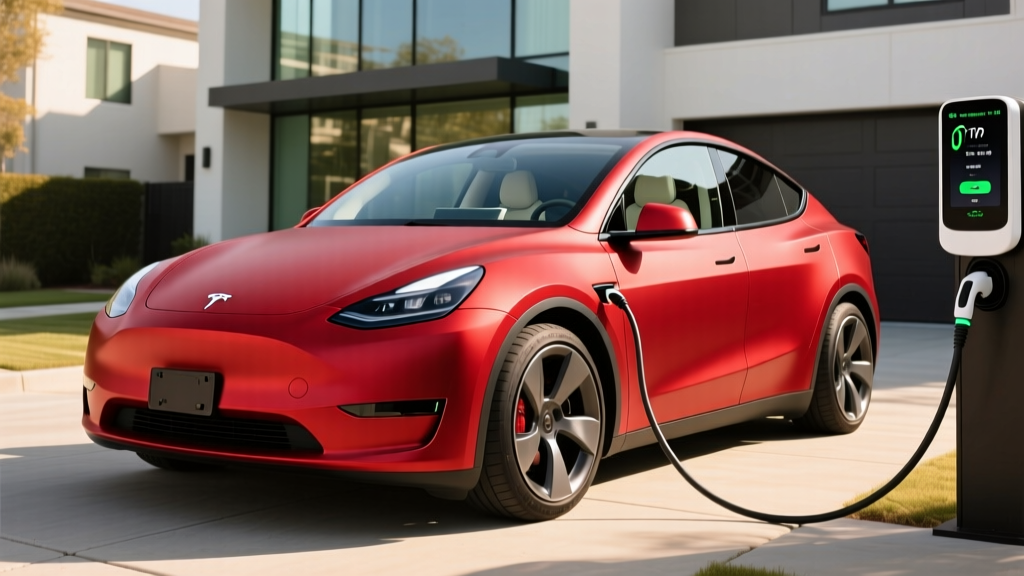
For home charging, the onboard 11.5 kW charger means a 48-amp Level 2 circuit (hardwired, requiring a 60-amp breaker) delivers roughly 44 miles of range per hour of charging. Most owners who plug in overnight at home never need to visit a public charger for daily driving. A typical 200-mile daily round-trip replenishes in under 5 hours on Level 2. Installation costs for a home Level 2 setup typically range from $500 to $2,000 depending on panel capacity and conduit run distance — consult a licensed electrician for your specific situation.
The Model Y uses Tesla's NACS connector natively. With the broader industry adopting NACS for 2025+ model years, the Model Y now has access to both the Supercharger network and a growing number of third-party NACS-equipped stations from Electrify America, EVgo, and others.
Interior Space, Tech, and Driver Assistance
The Model Y's minimalist interior is polarizing — there is no instrument cluster, no physical buttons, and every control routes through the 15.4-inch center touchscreen. Whether you love or hate this approach, the space efficiency is undeniable.
Cargo volume: 30.2 cubic feet behind the second row, expanding to 72.1 cubic feet with the rear seats folded. The rear trunk opening is wide and practical, and there is a small front trunk (frunk) adding roughly 4.1 cubic feet for charging cables or a soft bag.
Passenger space: Front legroom measures 41.8 inches; rear legroom is 41.6 inches — competitive with midsize SUVs like the Toyota RAV4. The glass roof creates an airy cabin feel, though it does reduce headroom slightly compared to competitors with conventional steel roofs. The rear seat comfortably fits two adults on longer trips; three across is tight for adults but workable for children.
Infotainment and tech highlights:
- 15.4-inch touchscreen with navigation, streaming, and gaming capabilities
- Over-the-air software updates that add features post-purchase
- Tesla mobile app with remote climate control, location tracking, and charge monitoring
- HEPA air filtration with Bioweapon Defense Mode
- Dashcam and Sentry Mode using the vehicle's external cameras
- Scheduled departure and preconditioning to optimize battery temperature before driving
Driver assistance — a critical clarification: Tesla's Autopilot (standard) and Full Self-Driving Supervised (optional, ~$8,000 or $99/month subscription) are SAE Level 2 systems. This means the driver must remain actively engaged, hands on the wheel, eyes on the road, at all times. These are not autonomous driving systems. FSD Supervised can handle highway lane changes, on-ramps, and some city streets, but it makes errors, requires constant supervision, and the driver is legally responsible for all vehicle operation.
SAE Automation Level: Tesla Autopilot and FSD Supervised = Level 2 (Partial Automation). The driver must continuously monitor the driving environment. Only Level 4 systems (e.g., Waymo robotaxis in geo-fenced areas) operate without a human driver.
Pricing, Trims, and Federal Tax Credit Eligibility
| Trim | Base MSRP | Federal §30D Credit (max) | Est. Net Price* |
|---|---|---|---|
| Long Range RWD | $44,990 | Up to $7,500 | ~$37,490 |
| Long Range AWD | $47,990 | Up to $7,500 | ~$40,490 |
| Performance AWD | $52,490 | Up to $7,500 | ~$44,990 |
*Net price assumes full §30D credit eligibility. Actual credit depends on buyer income, battery sourcing, and point-of-sale transfer. Verify at IRS.gov.
The IRS §30D Clean Vehicle Credit offers up to $7,500 for qualifying new EVs, but eligibility is not automatic. Key requirements for 2026 include:
- MSRP cap: SUVs/vans/pickups must be under $80,000 (all Model Y trims qualify)
- Buyer income cap: Modified AGI must not exceed $150,000 (single) / $225,000 (head of household) / $300,000 (joint)
- Battery sourcing: A percentage of critical minerals and battery components must be sourced from the US or free-trade-agreement countries — this requirement tightens annually and can reduce the credit to $3,750 or $0 depending on the specific battery batch
- Point-of-sale transfer: As of 2024+, buyers can transfer the credit to the dealer at purchase, reducing the sale price directly rather than waiting to claim it on their tax return
- VIN registration: The vehicle must be registered for personal use in the US
Because battery-sourcing requirements change frequently and can vary by production batch, always confirm the specific vehicle's credit eligibility with Tesla at the time of purchase and consult a tax professional. The IRS maintains an updated list of qualifying vehicles at fueleconomy.gov.
Options that increase the as-tested price include FSD Supervised ($8,000), premium paint colors ($1,000–$2,500), 20-inch wheels ($2,000, which also reduce range by approximately 10–15 miles), and tow hitch ($1,000, enabling 3,500-lb towing capacity). A fully loaded Performance with FSD can approach $65,000 before credits.
Who the Model Y Suits Best
Ideal for: Tech-forward commuters and small families who want a single vehicle that handles daily driving, road trips, and light cargo duties. The Supercharger network makes the Model Y one of the most practical EVs for long-distance travel, and the cargo space rivals compact SUVs like the Honda CR-V.
Consider alternatives if: You need three rows of seating (look at the Model X, Kia EV9, or Rivian R1S), prefer traditional controls and a physical instrument cluster, require heavy towing capacity (the 3,500-lb limit is modest), or live in an area without reliable home charging access. The Model Y's ride quality on 20-inch wheels is also notably firm on rough pavement — test-drive before committing if comfort is a priority.
For road trippers: The Supercharger network remains the gold standard for reliability and coverage. Trip planning via the car's built-in navigation is seamless, and 250 kW peak charging means 20-minute stops for a 10–80% session. Just remember the charge-curve taper: plan to leave chargers at 80% rather than waiting for 100%.
Pros
- Class-leading Supercharger network access and reliability
- Performance trim delivers 3.5-sec 0–60 and 155 mph top speed
- Over-the-air updates continuously add features
- Strong cargo capacity (72.1 cu ft max) for the segment
- Excellent efficiency: 28–30 kWh/100 mi depending on trim
- Over-the-air updates and Sentry Mode add long-term value
Cons
- Minimalist interior lacks physical controls — not for everyone
- No instrument cluster; all info on center screen
- FSD Supervised is expensive ($8,000) and still requires full driver attention
- Ride quality firm, especially with 20-inch wheels
- Top speed is electronically governed, not a performance ceiling
- Tax credit eligibility uncertain due to battery-sourcing rules
How the Model Y Compares to Key Rivals
The Model Y competes in the midsize electric crossover segment against increasingly strong alternatives. Here's how the key matchups break down:
- Vs. Hyundai Ioniq 5: The Ioniq 5 offers 800V architecture enabling 350 kW peak charging (10–80% in ~18 min), a more conventional interior with physical buttons, and a smoother ride. The Model Y counters with superior Supercharger access, more cargo space, and a lower starting price. If fast DC charging is your priority, the Ioniq 5 wins; if charging-network reliability matters most, the Model Y holds the edge.
- Vs. Ford Mustang Mach-E: The Mach-E GT delivers comparable performance (3.5-sec 0–60) with a more engaging driving feel and a traditional instrument cluster. The Model Y offers better efficiency, more cargo room, and the Supercharger advantage. The Mach-E's CCS connector now has broad Supercharger access via Ford's adapter, narrowing that gap.
- Vs. Kia EV6: Similar to the Ioniq 5, the EV6 offers faster peak charging (350 kW) and a sportier design, but less cargo space and a smaller charging network. The EV6 GT-Line S is a compelling alternative for buyers who prioritize driving dynamics and ultra-fast charging over cargo volume.
Frequently Asked Questions
What is the top speed of the Tesla Model Y?
The 2026 Tesla Model Y top speed depends on the trim: the Long Range RWD is governed to 125 mph, the Long Range AWD to 135 mph, and the Performance AWD to 155 mph. These are electronic limiters, not motor capability ceilings. For virtually all US driving, even the base trim's 125 mph exceeds any posted speed limit.
What is the real-world range of the Model Y?
While the EPA rates the Long Range RWD at 320 miles, expect approximately 260–290 miles in mixed highway driving at moderate temperatures, and 210–240 miles in cold weather (below 32°F). The Performance trim's EPA 277 miles typically translates to 230–255 miles real-world. Aggressive driving, high speeds, and hilly terrain reduce range further.
How fast does the Model Y charge at home and on the road?
On a DC fast charger (Supercharger V3/V4), the Model Y peaks at 250 kW and charges from 10–80% in approximately 27 minutes with a preconditioned battery. At home on a Level 2 (240V, 48-amp) charger, it adds roughly 44 miles of range per hour, fully replenishing overnight. Level 1 (120V) is suitable only for emergency trickle charging at 3–5 miles per hour.
Does the Tesla Model Y qualify for the $7,500 federal tax credit?
The Model Y qualifies for up to $7,500 under IRS §30D, provided the buyer meets income caps ($150K single / $300K joint), the vehicle MSRP is under $80,000 (all trims qualify), and the battery meets critical-mineral and component sourcing requirements. Because sourcing rules tighten annually and can vary by production batch, confirm eligibility for your specific vehicle at the time of purchase. The credit can be transferred to the dealer at point of sale, reducing your purchase price directly.
Is the Tesla Model Y worth buying over competitors in 2026?
If you value the Supercharger network's reliability, Tesla's software ecosystem, and strong resale value, the Model Y remains a top choice in the segment. However, competitors like the Hyundai Ioniq 5 and Kia EV6 now offer faster peak charging, more conventional interiors, and competitive range. Test-drive at least one rival before committing — the Model Y's minimalist cabin and screen-centric controls are not universally preferred.
What is the Model Y's battery warranty?
Tesla covers the Model Y's battery and drive unit for 8 years or 120,000 miles (whichever comes first) with a minimum 70% capacity retention threshold. If the battery degrades below 70% of its original capacity within the warranty period, Tesla will repair or replace it. This is competitive with the industry standard (most manufacturers offer 8 years/100,000 miles), and Tesla's 120,000-mile coverage is slightly more generous.
Can the Model Y tow? What is its towing capacity?
Yes. When equipped with the optional tow hitch ($1,000), the Model Y has a maximum towing capacity of 3,500 pounds. This is sufficient for a small utility trailer, a pair of dirt bikes, or a light boat, but not for larger campers or horse trailers. Towing significantly reduces range — expect a 30–50% reduction depending on trailer weight and aerodynamics.