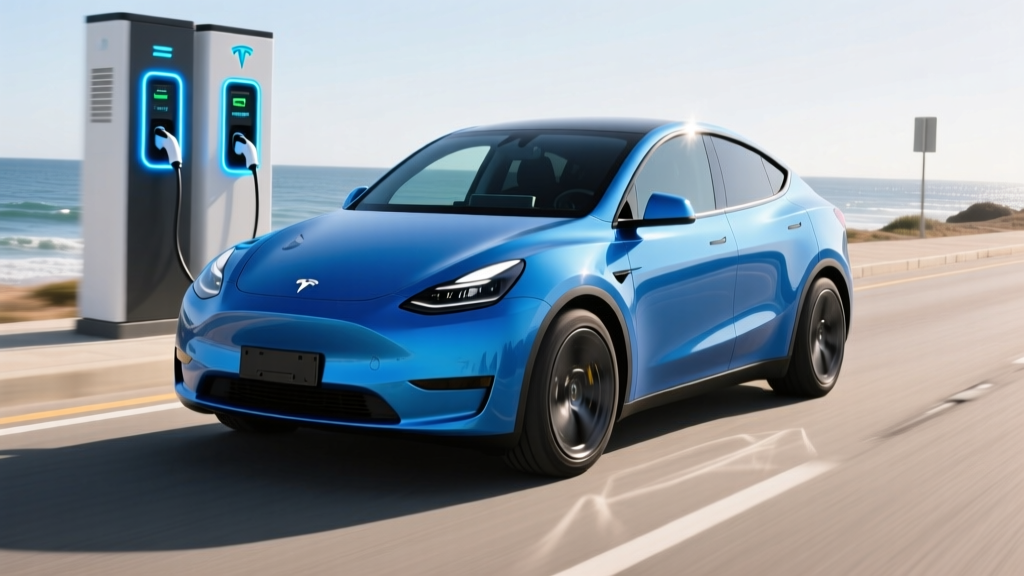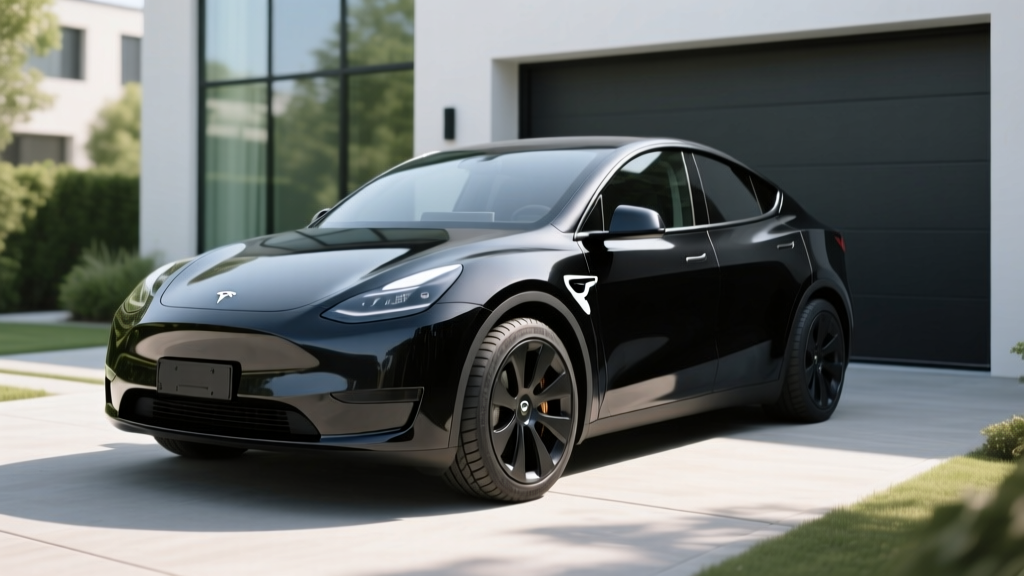
The Tesla Model Y remains the benchmark electric crossover for American buyers in 2026, balancing usable range, access to the Supercharger network, and a cabin that fits a family of five with cargo to spare. But when owners and shoppers search for Tesla Model Y tires, they're often asking a broader question: how do the wheels and rubber affect range, ride, and real-world ownership? This review covers the full 2026 Model Y lineup — tires, range, charging, pricing, and tax-credit eligibility — with the exact numbers buyers need.
2026 Tesla Model Y Trim Lineup and Tire Fitment
The 2026 Model Y is sold in three primary configurations in the United States. Tire and wheel choices have a direct, measurable impact on EPA range and highway efficiency — a 1–2 inch wheel upgrade can cost 15–25 miles of rated range.
| Trim | Drivetrain | Standard Wheels / Tires | Optional Wheels / Tires | EPA Range | Base MSRP |
|---|---|---|---|---|---|
| Long Range RWD | Rear-Wheel Drive | 19" Apollo, 255/45R19 | 20" Induction, 255/40R20 | 320 mi (19") / ~300 mi (20") | $44,990 |
| Long Range AWD | Dual-Motor AWD | 19" Apollo, 255/45R19 | 20" Induction, 255/40R20 | 310 mi (19") / ~290 mi (20") | $47,990 |
| Performance | Dual-Motor AWD | 21" Überturbine, 265/35R21 | — | 285 mi | $52,490 |
All trims use Michelin, Hankook, or Pirelli EV-specific touring tires with acoustic foam liners to reduce cabin road noise — a critical comfort feature because the absence of engine sound makes tire roar the dominant noise source above 45 mph. When it's time to replace, expect to pay $250–$420 per tire for OEM-equivalent EV rubber; budget brands are available but typically sacrifice 3–5% efficiency and noticeable noise isolation.
Range and Efficiency: EPA vs Real World
EPA Estimated: 310 miles
Real-World Highway (70 mph, mild weather): ~270–285 miles
Real-World Highway (32°F / 0°C): ~225–245 miles
City / Stop-Start Commute: ~295–310 miles (regen-heavy driving recovers energy)
The Model Y's efficiency is among the best in its class. Per fueleconomy.gov, the Long Range AWD returns an EPA-rated 122 MPGe combined, equivalent to roughly 27 kWh per 100 miles. The RWD variant nudges that to ~125 MPGe thanks to lower mass and single-motor losses.
Two factors most owners underestimate: cold-weather chemistry (the LFP pack loses more usable capacity at freezing than NMC) and tire rolling resistance. Switching from the low-rolling-resistance 19" Michelins to stickier 21" summer rubber on the Performance trim is the single biggest reason that variant drops to 285 miles EPA despite the same 78.1 kWh usable battery.
Battery Chemistry, Capacity, and Longevity
The 2026 Model Y Long Range (RWD and AWD) uses a 78.1 kWh usable CATL-sourced LFP (lithium iron phosphate) pack in US-market vehicles. The Performance trim continues to use an NMC (nickel manganese cobalt) chemistry for its higher energy density and power delivery.
| Attribute | LFP (Long Range) | NMC (Performance) |
|---|---|---|
| Usable Capacity | 78.1 kWh | 78.1 kWh |
| Cycle Life | ~3,000+ cycles | ~1,500–2,000 cycles |
| Recommended Daily SoC | 100% (Tesla advises weekly 100% calibration) | 80% daily; 100% only for trips |
| Cold-Weather Range Loss | Greater (poorer low-temp conductivity) | Moderate |
| Weight | Heavier | Lighter for same kWh |
Battery and drive unit warranty is 8 years / 120,000 miles (Long Range) or 8 years / 100,000 miles (Performance), with Tesla guaranteeing ≥70% capacity retention over the term. Real-world fleet data from sources like Tesla's Impact Report shows average degradation of ~12% at 150,000 miles — well within the warranty floor.
Charging Speeds: DC Fast, Level 2, and Level 1
Charging performance is where the refreshed Model Y's 800V-compatible architecture and thermal preconditioning pay off. Plug into a V4 Supercharger and the pack ramps quickly to peak power — but like all EVs, the curve tapers hard above 80% SoC. The advertised "250 kW peak" is a ceiling, not a sustained rate.
| Charging Level | Power | Speed | Notes |
|---|---|---|---|
| DC Fast (V4 Supercharger / CCS) | Peak 250 kW | 10–80% in ~22 min | Sustained ~170 kW avg; precondition via nav |
| DC Fast (older V3 stall) | Peak 250 kW | 10–80% in ~25 min | Shared-stall throttling possible |
| Level 2 (Tesla Wall Connector, 48A) | 11.5 kW | ~44 mi/hr | Full 0–100% in ~8 hours |
| Level 2 (public 7.7 kW) | 7.7 kW | ~29 mi/hr | Typical destination charger |
| Level 1 (120V household) | ~1.4 kW | ~4 mi/hr | Emergency / trickle only |
A critical ownership tip: always navigate to a Supercharger via the car's built-in nav (or tap "precondition for charging") so the battery thermal management warms the pack before arrival. Skipping this in cold weather can double your 10–80% time.
Performance and Drivetrain
- Long Range RWD: 0–60 mph in 5.8 sec, ~340 hp, single rear motor
- Long Range AWD: 0–60 mph in 4.8 sec, ~450 hp combined, dual-motor
- Performance: 0–60 mph in 3.5 sec, ~510 hp, dual-motor with track-tuned suspension
Even the base RWD model delivers instant torque that makes highway merging effortless. The AWD's dual-motor traction is the safer pick for snow-belt states, and the regen-calibrated one-pedal driving feel remains one of the most intuitive in the segment.
Pricing, Trims, and Federal Tax Credit Eligibility
The 2026 Model Y starts at $44,990 (Long Range RWD) before destination. A well-equipped AWD with 20" wheels, FSD (Supervised), and premium paint typically lands around $54,000–$57,000 before incentives.
- Up to $7,500 for qualifying new EVs; may be transferred to dealer at point of sale as a down-payment reduction.
- MSRP cap: SUVs/crossovers must be ≤ $80,000 — Model Y qualifies on all trims.
- Buyner income cap (MAGI): $150k single / $225k HOH / $300k joint.
- Battery sourcing: Critical-minerals and battery-component thresholds tighten annually; verify current-year compliance on the IRS qualified-vehicle list before signing.
- VIN requirement: Vehicle must be assembled in North America — Model Y (Fremont/Austin) qualifies.
Interior, Cargo, and Technology
The cabin is minimalist by design. A single 15.4" touchscreen handles infotainment, climate, and vehicle settings, with an 8" rear screen for passengers. Cargo volume is 30 cu ft behind the rear seats and 72 cu ft folded, plus a usable front trunk (frunk) of ~4 cu ft. Rear legroom measures ~41.6 inches — enough for adult passengers on long trips.
Tech highlights include Tesla's latest HW4 Autopilot suite (cameras-only, no radar), OTA software updates that add features post-purchase, Sentry Mode dashcam recording, and the Tesla app ecosystem. The main drawback: reliance on the touchscreen for nearly every function (glovebox, mirror adjustment, wipers) frustrates some drivers, and the absence of Apple CarPlay / Android Auto remains a deal-breaker for a segment of buyers.
Pros
- Class-leading Supercharger network access
- Excellent efficiency (~27 kWh/100 mi)
- Strong cargo capacity for the footprint
- Long battery cycle life (LFP trims)
- OTA updates keep the car current
Cons
- No Apple CarPlay / Android Auto
- Touchscreen-heavy controls polarize drivers
- 21" Performance tires are expensive to replace
- FSD (Supervised) is Level 2 only — not self-driving
- Ride firmness on larger wheels
Autopilot and FSD (Supervised): SAE Level 2
Autopilot and the optional FSD (Supervised) system require the driver to remain fully engaged, eyes on road, hands ready to take over. These are driver-assist systems — not self-driving. Only Level 4 robotaxi services (Waymo, Zoox) operate without a human driver in defined geofenced areas.
FSD (Supervised) costs $8,000 to purchase or $99/month and handles highway lane changes, traffic-light recognition, and city-street navigation — but driver liability is unchanged. NHTSA continues to monitor Tesla's Autopilot incident data; treat every mile as your responsibility.
Who the 2026 Model Y Suits Best
- Commuters (30–80 mi round trip): Ideal. Home Level 2 charging covers daily needs with zero gas stops.
- Families of 4–5: Cargo room, safety ratings (IIHS Top Safety Pick+), and rear space work well.
- Road-trippers: Supercharger density makes cross-country travel practical; plan 20-min stops every ~220 mi.
- Light towing: 3,500-lb max — sufficient for a small trailer or a pair of dirt bikes, not a boat.
- Cold-climate buyers: AWD and heat pump help, but budget 20–25% range loss in deep winter.
Frequently Asked Questions
What size tires does the Tesla Model Y use?
19" Apollo wheels use 255/45R19 tires; 20" Induction wheels use 255/40R20; 21" Überturbine (Performance) uses staggered 265/35R21 front and 275/35R21 rear. Always match OEM load rating (XL) and EV-specific low-rolling-resistance compounds for best range.
How much do replacement Tesla Model Y tires cost?
Expect $250–$420 per tire for OEM-equivalent EV touring rubber (Michelin Pilot Sport EV, Hankook iON evo, Pirelli P Zero Elect). A full set of four, mounted and balanced with alignment, typically runs $1,200–$1,800. Avoid non-EV tires — they increase road noise and reduce efficiency by 3–6%.
Do larger wheels really hurt range?
Yes. Moving from 19" to 20" wheels costs roughly 15–20 EPA miles; 21" Performance wheels drop ~25–30 miles. The trade-off is sharper handling and a sportier look.
Does the 2026 Model Y qualify for the $7,500 federal tax credit?
All trims fall under the $80,000 SUV MSRP cap and are built in the US. Buyer eligibility still depends on income (MAGI caps) and the current-year battery-sourcing requirements listed by the IRS. Confirm on the IRS qualified-vehicle list and with a tax professional before purchase.
Is the Model Y still worth buying vs. the Hyundai Ioniq 5, Ford Mustang Mach-E, or Kia EV6?
For pure charging-network convenience and efficiency, yes — the Supercharger advantage is tangible on road trips. For interior materials and CarPlay support, the Ioniq 5 and EV6 edge ahead. For driving dynamics and value, the Mach-E is competitive. Your priority ranking (network, tech, ride, price) determines the winner.
How long will the Model Y battery last?
Tesla's warranty guarantees ≥70% capacity at 8 years / 120,000 miles (Long Range). Fleet data suggests ~12% degradation at 150,000 miles for typical use. LFP packs tolerate daily 100% charging and tend to outlast NMC in cycle count.