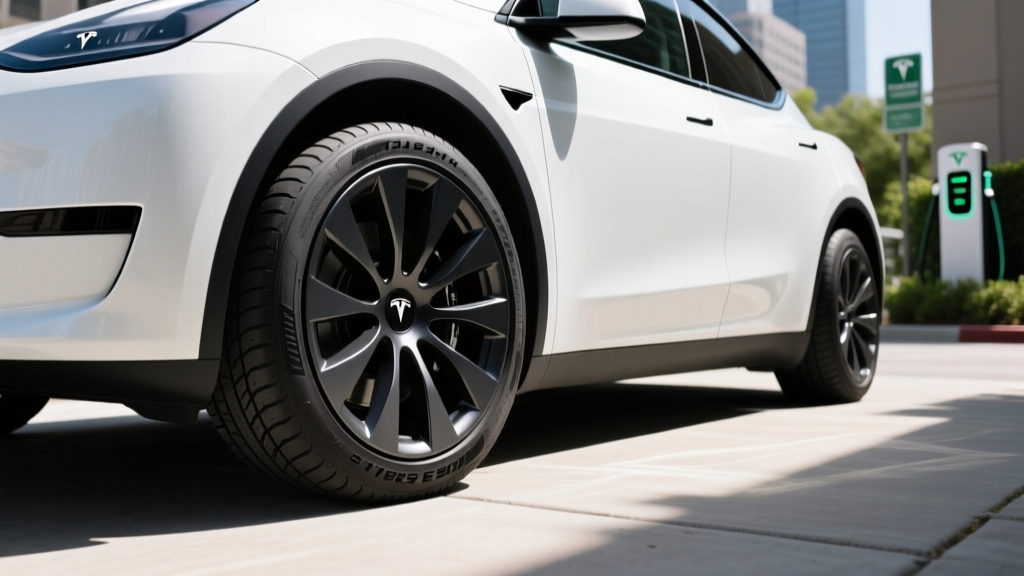
The Tesla Model Y remains one of the best-selling electric vehicles in the United States, but its performance, efficiency, and ride comfort are only as good as the rubber connecting it to the road. Choosing the right Model Y tire is one of the most impactful ownership decisions you can make — affecting EPA-estimated range by up to 5%, altering cabin noise by several decibels, and determining how well 3,900+ pounds of battery-laden SUV handles in rain, snow, and heat.
This guide breaks down the exact tire specifications for every current Model Y variant, explains why EV-specific tires matter, reviews the top replacement options available in 2026, and gives you real-world data on wear rates, pressure settings, and range impact. We'll also recap the vehicle itself so you have full context on what these tires are supporting.
Model Y 2026 Lineup: Trims, Specs & What the Tires Must Handle
Before selecting a replacement tire, you need to understand the vehicle's demands. The 2026 Tesla Model Y is available in three primary configurations, each with distinct weight, power, and tire-size requirements.
| Specification | Long Range RWD | Long Range AWD | Performance |
|---|---|---|---|
| EPA Range | 320 mi | 295 mi | 277 mi |
| Battery (usable) | ~75 kWh (NMC) | ~75 kWh (NMC) | ~75 kWh (NMC) |
| Horsepower | 346 hp | 384 hp | 456 hp |
| 0–60 mph | 5.8 sec | 4.8 sec | 3.5 sec |
| Drivetrain | Rear-Wheel Drive | Dual-Motor AWD | Dual-Motor AWD |
| Curb Weight | ~4,150 lbs | ~4,300 lbs | ~4,400 lbs |
| MPGe (combined) | 122 MPGe | 115 MPGe | 110 MPGe |
| kWh/100 mi | 28 | 29 | 31 |
| OEM Tire Size (19") | 255/45R19 | 255/45R19 | — |
| OEM Tire Size (20") | 255/40R20 | 255/40R20 | 255/40R20 |
| OEM Tire Size (21") | — | F: 255/35R21 / R: 275/35R21 | F: 255/35R21 / R: 275/35R21 |
| Cargo Volume | 76 cu ft (rear seats folded), 30 cu ft (behind 2nd row) | ||
| Battery Warranty | 8 years / 120,000 miles (min 70% retention) | ||
| Base MSRP | $44,990 | $47,990 | $52,990 |
Sources: fueleconomy.gov, Tesla.com specifications.
The EPA numbers above assume mixed driving. In real-world highway testing at 75 mph, expect the Long Range AWD to deliver approximately 255–270 miles before reaching 0% SoC. In cold weather (below 32°F), range drops 15–25% depending on cabin heating use and whether the heat pump is active. Your tire choice directly impacts these figures — low-rolling-resistance (LRR) tires can recover 10–15 miles of range compared to aggressive all-terrain or summer performance compounds.
Why the Model Y Demands EV-Specific Tires
Electric vehicles impose unique demands on tires that conventional passenger-car rubber wasn't engineered to handle. The Model Y is a case study in all three:
Weight and Instant Torque
At 4,150–4,400 lbs, the Model Y is 500–800 lbs heavier than a comparably sized gas-powered compact SUV. That mass is concentrated low (the battery pack), which changes suspension loading and tire sidewall stress. Dual-motor variants deliver instant torque to all four wheels from 0 rpm, accelerating tire tread wear — particularly on the rear axle during hard launches. Owners consistently report needing replacement tires at 20,000–30,000 miles on OEM rubber, compared to 40,000–50,000 miles on equivalent ICE vehicles.
Range and Rolling Resistance
Tire rolling resistance accounts for roughly 20–30% of an EV's total energy consumption at highway speeds. The difference between a high-efficiency tire (like the Hankook iON evo) and a standard all-season tire can be 2–4 kWh/100 mi — translating to 10–20 miles of range per charge on a 75 kWh battery. Over a year of 12,000 miles driven, that's the difference between 40 and 50 charging sessions at a DC fast charger.
Noise, Vibration, and Harshness (NVH)
Without an internal combustion engine masking road noise, the Model Y's cabin amplifies tire-generated sound. Tesla equips many OEM tires with acoustic foam liners (a polyurethane foam bonded to the tire's inner surface) to dampen cavity resonance. When replacing tires, choosing a model with similar noise-reduction technology — or accepting a 2–4 dB increase in cabin noise — is a deliberate trade-off you should make knowingly.
OEM Model Y Tire Options and What They Tell Us
Tesla ships the 2026 Model Y with different tires depending on trim and wheel option. Here's what's currently fitted at the factory:
- 19" Gemini Wheels (Long Range): Hankook Ventus S1 noble2 or Continental ProContact RX — all-season touring tires with moderate rolling resistance. Load index 104 (XL-rated).
- 20" Induction Wheels (Long Range): Michelin Pilot Sport All Season 4 or Pirelli P Zero All Season — ultra-high-performance all-season with better dry grip but slightly higher rolling resistance.
- 21" Überturbine Wheels (Performance): Pirelli P Zero (Elect) — summer-biased performance tire with an acoustic foam liner. Staggered fitment (255 front / 275 rear).
The "Elect" designation on Pirelli and the "HL" (High Load) marking on several OEM options indicate tires engineered for EV weight. When shopping for replacements, look for these EV-specific markers from any brand.
Best Replacement Tires for the Model Y in 2026
Based on rolling-resistance testing, owner noise reports, wet/dry braking data, and treadwear longevity, here are the top replacement options organized by priority.
Best for Maximum Range: Hankook iON evo (and iON evo SUV)
Hankook's iON line was developed from the ground up for EVs. The iON evo SUV in 255/45R19 offers a rolling resistance coefficient (RRC) roughly 15–20% lower than the OEM Continental ProContact RX. In controlled testing, this translates to approximately 8–12 additional miles of EPA range per charge. The tire also features Sound Absorber technology (foam liner) and a tread compound designed for instant-torque durability. Treadwear warranty: 50,000 miles. Typical price: $240–$270 per tire (19").
Best All-Season All-Rounder: Michelin CrossClimate 2
The CrossClimate 2 carries the 3PMSF (Three-Peak Mountain Snowflake) rating, meaning it meets severe snow-service requirements — a genuine advantage for Model Y owners in northern states who want to avoid swapping to dedicated winter tires. Rolling resistance is slightly higher than the Hankook iON, but wet braking performance is among the best in class. Available in 255/45R19 and 255/40R20. Treadwear warranty: 60,000 miles. Typical price: $260–$300 per tire.
Best for Performance Grip: Michelin Pilot Sport 4S
If you own the Performance trim and prioritize dry/wet grip over range, the Pilot Sport 4S remains the benchmark. Expect 0.05–0.10g higher lateral grip and shorter braking distances versus the OEM Pirelli P Zero. The trade-off: no foam liner (more cabin noise), lower treadwear (approximately 20,000–25,000 miles under aggressive driving), and a measurable range penalty of 5–8 miles per charge versus LRR alternatives. Available in 255/35R21 and 275/35R21 for staggered setups. Typical price: $320–$380 per tire (21").
Best Budget Option: Kumho Ecsta PS71 EV
Kumho's EV-specific tire offers a foam liner, competitive rolling resistance, and a price point 30–40% below Michelin or Pirelli. Treadwear longevity trails premium options (expect 25,000–35,000 miles), but for cost-conscious owners, it represents strong value. Available in 255/45R19 and 255/40R20. Typical price: $170–$200 per tire.
Best Dedicated Winter Tire: Bridgestone Blizzak LM005
For Model Y owners in regions with sustained sub-freezing temperatures and snow, a dedicated winter tire dramatically improves braking distance and cornering confidence. The Blizzak LM005 in EV-compatible load ratings is the top pick. Plan to swap back to all-season or summer tires when temperatures consistently exceed 45°F, as the soft winter compound wears rapidly in heat. Typical price: $220–$260 per tire (19").
Charging, Efficiency & How Tires Affect Both
Your tire choice doesn't change how fast the Model Y charges, but it changes how far each kWh takes you — which effectively changes how often you need to plug in.
| Charging Level | Power / Rate | Speed (approx.) |
|---|---|---|
| Level 1 (120V household) | ~1.4 kW | ~3–4 mi/hr added |
| Level 2 (240V home, 48A) | ~11.5 kW | ~35–40 mi/hr added |
| DC Fast Charge (peak) | 250 kW (max) | 10–80% in ~22 min |
| DC Fast Charge (sustained avg) | ~120–140 kW avg | ~180 mi added in 15 min |
At a DC fast charger, the Model Y's charge curve peaks near 250 kW between roughly 10–30% SoC, then tapers progressively. Above 80%, charging slows dramatically to protect the NMC cells — expect 80–100% to take nearly as long as 10–80%. This is normal lithium-ion behavior and not a defect.
The tire-range connection: If you switch from OEM all-season tires (29 kWh/100 mi) to a high-efficiency LRR tire (27 kWh/100 mi), you effectively gain ~10 miles of range per full charge and reduce your annual electricity consumption by roughly 240 kWh (at 12,000 miles/year). At $0.15/kWh national average, that's ~$36/year in electricity savings — modest, but it compounds over the tire's 40,000+ mile lifespan.
Pricing, Tax Credits & Total Ownership Cost
The 2026 Model Y starts at $44,990 for the Long Range RWD. Here's how the federal tax credit applies under current IRS §30D rules:
| Trim | Base MSRP | Federal Credit (est.) | Effective Price |
|---|---|---|---|
| Long Range RWD | $44,990 | Up to $7,500* | ~$37,490* |
| Long Range AWD | $47,990 | Up to $7,500* | ~$40,490* |
| Performance | $52,990 | Up to $7,500* | ~$45,490* |
*Federal tax credit eligibility under IRS §30D depends on: buyer AGI limits ($150K single / $300K joint), vehicle MSRP cap ($80K for SUVs — all trims qualify), battery critical-mineral and component sourcing requirements, and point-of-sale transfer availability. Credit amounts vary based on battery-sourcing compliance percentages. Consult a tax professional and check fueleconomy.gov for current eligibility.
Tire cost in ownership context: A set of four premium replacement tires (Michelin CrossClimate 2, 20") runs approximately $1,040–$1,200 before mounting and balancing. Over a 5-year/60,000-mile ownership period, expect to purchase 1.5–2 sets of tires for a total tire expenditure of $1,600–$2,400. This is higher than the average ICE compact SUV due to EV weight and torque, and should be factored into your total cost of ownership.
Tire Pressure, Rotation & Maintenance for Maximum Life
Tesla recommends 42 PSI cold for most Model Y configurations (check the door jamb placard for your specific wheel/tire combo). Running even 3–4 PSI below recommendation increases rolling resistance by ~3% and accelerates shoulder wear. Because the Model Y is heavy and torque-dense, follow these maintenance intervals:
- Pressure check: Every 2 weeks (monthly minimum). Temperature drops of 10°F reduce pressure ~1 PSI.
- Rotation: Every 6,250 miles or at every service interval. AWD models with staggered 21" wheels cannot be rotated front-to-rear — only side-to-side on the same axle.
- Alignment: Annually or after any impact event (pothole, curb). Model Y camber settings are aggressive from the factory to optimize handling; aftermarket alignment to slightly less negative camber can extend inner-edge tread life.
- Tread depth replacement threshold: 4/32" for all-season/wet safety (not the 2/32" legal minimum — EVs need more tread depth to manage weight under braking).
Pros and Cons of the Model Y Platform (Tire Context)
- Wide tire availability in 19" and 20" — most major brands offer EV-specific options
- 19" Gemini wheels give the best range and lowest tire replacement cost
- Strong Supercharger network reduces range penalty from non-LRR tire choices
- OEM foam-lined tires set a good baseline for NVH expectations
- OTA updates can adjust torque delivery to reduce tire slip and wear
- 21" Überturbine staggered setup limits rotation options and raises replacement cost ($1,300+ per set)
- EV weight accelerates tread wear — expect 20K–30K miles on performance compounds
- No spare tire — only a tire repair kit (sealant + compressor)
- Aftermarket tire choices with foam liners are still limited vs. standard tires
- Alignment specs are dealer-specific; some independent shops lack Tesla equipment
Frequently Asked Questions
What is the real-world range of the 2026 Tesla Model Y?
The EPA rates the Long Range AWD at 295 miles. In real-world highway driving at 70–75 mph, expect 255–270 miles. In freezing temperatures with cabin heating active, plan for 210–240 miles. Choosing low-rolling-resistance tires like the Hankook iON evo can recover 8–12 miles compared to standard all-season replacements.
How fast does the Model Y charge at home and on the road?
At home on a Level 2 (240V, 48A) charger, the Model Y adds roughly 35–40 miles of range per hour, fully recharging overnight in about 8 hours. On a DC fast charger (V3 Supercharger or equivalent), it peaks at 250 kW and reaches 10–80% in approximately 22 minutes. The charge curve tapers significantly above 80% SoC.
How much does the Model Y cost after federal tax credits?
With the maximum $7,500 federal credit (subject to income, sourcing, and MSRP caps under IRS §30D), the Long Range RWD drops to approximately $37,490. The Performance trim comes in around $45,490 after credit. Credit eligibility varies — confirm current battery-sourcing compliance on fueleconomy.gov before purchasing. Many buyers can transfer the credit to the dealer at point of sale for an immediate price reduction.
Is the Model Y worth buying vs. key competitors in 2026?
The Model Y competes against the Hyundai Ioniq 5, Ford Mustang Mach-E, Chevrolet Equinox EV, and BMW iX3. Its advantages remain the Supercharger network, strong software/OTA ecosystem, and segment-leading efficiency (kWh/mi). Competitors now match or exceed it in interior material quality and available 800V charging architecture (Ioniq 5). If you prioritize charging infrastructure and proven reliability, the Model Y remains a top pick. If you want a quieter cabin, more traditional controls, or faster peak charging, the Ioniq 5 is a strong alternative.
What are the biggest pros and cons of the Model Y?
Pros: class-leading efficiency, expansive Supercharger network, spacious cargo area (76 cu ft), strong acceleration, continuous OTA improvements, and strong resale value. Cons: minimalist interior isn't for everyone, panel-gap quality varies, no Apple CarPlay/Android Auto, ride firmness on 20"/21" wheels, and tire wear costs are above average for the segment.
Does the 2026 Model Y qualify for the federal EV tax credit?
All 2026 Model Y trims fall under the $80,000 MSRP cap for SUVs. Eligibility for the full $7,500 credit depends on the buyer's adjusted gross income (≤$150K single / ≤$300K joint filers), battery critical-mineral sourcing compliance, and battery-component manufacturing origin. Tesla's battery sourcing has evolved, and credit amounts may be $3,750 or $7,500 depending on the specific build. Always verify on fueleconomy.gov and consult a tax professional.
Can I put non-EV tires on my Model Y?
Technically yes, but it's not recommended. Standard passenger tires may not carry the XL (Extra Load) rating needed for the Model Y's weight, will likely lack foam noise-dampening liners, and typically have higher rolling resistance that reduces range. If you choose a non-EV-specific tire, ensure the load index matches or exceeds OEM (104 or higher) and accept the trade-offs in noise and efficiency.
How often do Model Y tires need to be replaced?
Expect 20,000–30,000 miles on OEM performance tires and 35,000–50,000 miles on touring/all-season LRR replacements like the Michelin CrossClimate 2 or Hankook iON evo. Aggressive acceleration, infrequent rotation, and under-inflation all accelerate wear. Budget $800–$1,200 per set (plus $80–$120 for mounting/balancing) every 2–3 years depending on driving habits.
Who the Model Y (and Its Tire Choices) Suits Best
The 2026 Model Y is ideal for: daily commuters who can charge at home, small families needing cargo versatility (76 cu ft with seats folded), road-trippers who value Supercharger access, and tech-forward buyers comfortable with Tesla's minimalist interface. It's less ideal for: those who prioritize traditional luxury interior materials, buyers in regions with no reliable home-charging option, and anyone who wants Apple CarPlay integration.
Tire recommendation summary: If range is your top priority, fit the Hankook iON evo on 19" wheels. If you need year-round confidence without swapping to winter tires, the Michelin CrossClimate 2 is the best all-in-one solution. If you own the Performance trim and drive aggressively, the Michelin Pilot Sport 4S delivers the grip the platform was designed for — just budget for more frequent replacements.