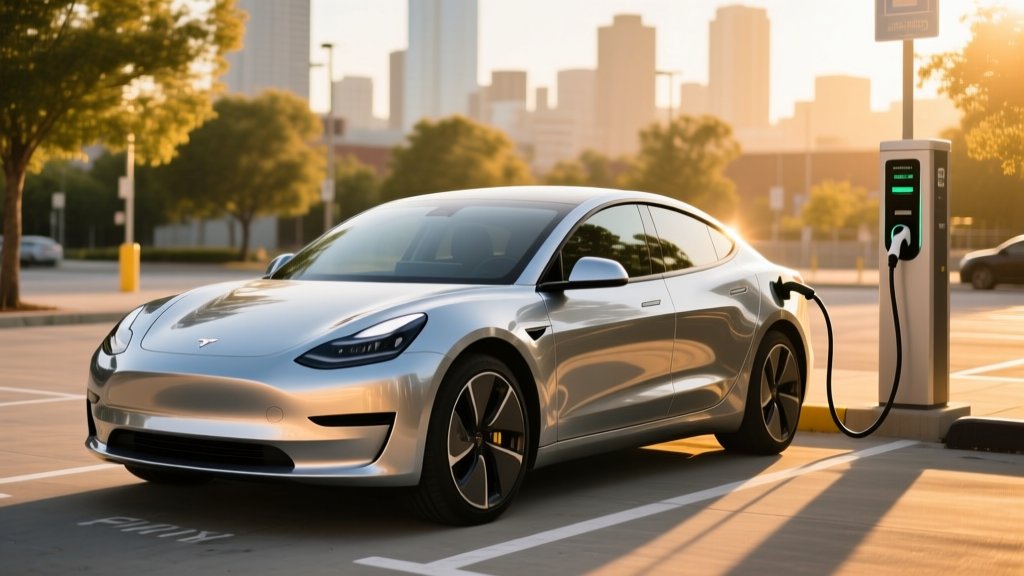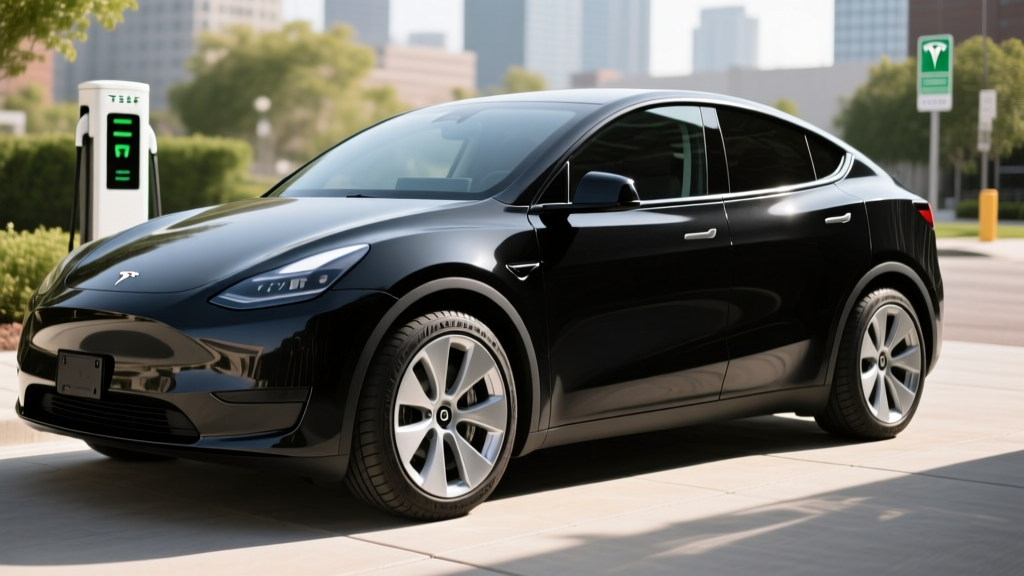
If you've searched "how much is a Tesla tire" you're probably staring at a worn tread block on your Model Y or Model 3 and bracing for a sticker shock that doesn't quite match the gas-car tire swaps you're used to. Tesla tires cost more than average, wear faster on heavy EVs, and come in specific sizes that limit your brand choices. But the tire bill is just one line item in a broader ownership picture that also includes charging, battery longevity, insurance, and tax-credit math. This guide uses the 2026 Tesla Model Y Long Range AWD as our anchor to answer the tire question precisely — and then zoom out to the numbers that actually determine whether a Tesla is the right purchase.
Tesla Tire Prices by Model and Size (2026)
EVs are heavier and deliver instant torque, which accelerates tread wear. Tesla also specifies low-rolling-resistance, foam-lined tires to reduce cabin noise — a feature that adds $40–$90 per tire versus a standard touring all-season. Here's what you'll actually pay at a tire retailer or Tesla Service Center in 2026:
| Model / Trim | OEM Tire Size | Typical Brand | Price Per Tire | Set of 4 + Install |
|---|---|---|---|---|
| Model 3 RWD (18" Aero) | 235/45R18 | Michelin e.Primacy / Hankook iON | $220–$270 | $1,020–$1,240 |
| Model 3 LR / Perf. (19" Sport) | 235/40R19 | Michelin Pilot Sport EV | $290–$340 | $1,320–$1,560 |
| Model Y LR (19" Gemini) | 255/45R19 | Hankook Ventus S1 evo3 EV | $280–$330 | $1,280–$1,520 |
| Model Y LR (20" Induction) | 255/40R20 | Pirelli P Zero EV | $340–$410 | $1,560–$1,880 |
| Model Y Performance (21" Überturbine) | 265/35R21 | Pirelli P Zero Trofeo / PS4S | $420–$510 | $1,900–$2,320 |
| Model S / X (19–22") | Varies | Michelin PS EV / Continental | $380–$620 | $1,750–$2,800 |
| Cybertruck (20–22" AT) | 285/65R20 / 35x12.5R22 | Goodyear Territory AT / BFG KO3 | $410–$560 | $1,880–$2,560 |
Real-world tread life: Expect 25,000–35,000 miles on a Model Y LR with 19" wheels under mixed driving. Performance trims on sticky summer compounds can burn through rear tires in 15,000–20,000 miles if you exploit the instant torque. Rotate every 6,250 miles (Tesla's official interval) and keep pressures at the door-jamb spec — usually 42 psi cold — to push toward the upper end.
2026 Model Y Long Range AWD: Core EV Specs
Tires are a maintenance cost; the car underneath is what you're actually buying. The refreshed Model Y (internally "Juniper") entered 2025 with a stiffer body, ventilated front seats, ambient lighting, a rear touchscreen, and a slightly larger battery pack. Here's the 2026 Long Range AWD spec sheet we verified against fueleconomy.gov and Tesla's configurator:
| Spec | Value |
|---|---|
| EPA Range | 320 miles |
| Battery (usable) | ~79 kWh, NMC (Nickel Manganese Cobalt) |
| Efficiency | 117 MPGe combined / 28 kWh/100 mi |
| Drivetrain | Dual-motor AWD (permanent magnet rear + induction front) |
| Horsepower / Torque | 384 hp / 375 lb-ft |
| 0–60 mph | 4.8 seconds |
| Top Speed | 125 mph |
| Max DC Fast Charge | 250 kW (peak) |
| 10–80% DCFC Time | ~27 minutes (preconditioned) |
| Level 2 Home Charge (11.5 kW) | ~44 miles per hour |
| Cargo (rear seats up / folded) | 30.2 / 72.1 cu ft + 4.1 cu ft frunk |
| Rear Legroom | 40.5 in |
| Curb Weight | 4,363 lb |
| Towing (with hitch) | 3,500 lb |
Real-World Range Expectations
EPA sticker: 320 miles. What you'll actually see: ~275–295 miles on a 70°F day at 70 mph on the interstate; ~230–255 miles in freezing weather with cabin heat; ~305+ miles around town with regen doing the work. Tesla's NMC pack has a ~5% buffer below the displayed 0%, but don't plan trips around it — treat 270 highway miles as your safe recharge threshold.
Charging Speed: DC Fast, Level 2, and the Curve Reality
Peak kW is not sustained kW. The Model Y LR peaks at 250 kW only between roughly 10–25% state of charge, then steps down to ~170 kW through 50%, ~110 kW through 70%, and ~50 kW above 85%. That curve is why the 10–80% time is 27 minutes, not the 18 minutes marketing sometimes implies. Always precondition the battery by routing to a Supercharger via the nav — it warms the pack and unlocks the top of the curve.
| Charging Level | Power | Miles Added per Hour | Typical Use Case |
|---|---|---|---|
| Level 1 (120V household) | ~1.4 kW | ~4–5 mi/hr | Emergency / trickle top-off |
| Level 2 (240V / 48A Wall Connector) | 11.5 kW | ~44 mi/hr | Overnight home charging (full in ~7 hrs) |
| DC Fast (Tesla Supercharger V3/V4) | Up to 250 kW | Up to ~1,000 mi/hr peak | Road trips; 10–80% in ~27 min |
| DC Fast (CCS adapter on EA/other) | Up to 150–175 kW* | ~600 mi/hr peak | Non-Tesla networks; slower curve |
*Using Tesla's CCS adapter. Native NACS Superchargers deliver the full 250 kW curve.
Pricing, Trims, and Federal Tax Credit Math (2026)
The 2026 Model Y lineup has been simplified. Here's where pricing and §30D federal credit eligibility land, per current IRS guidance:
| Trim | MSRP (before dest.) | Destination | As-Tested Typical | §30D Credit Eligible? |
|---|---|---|---|---|
| Long Range RWD | $44,990 | $1,390 | $46,380 | Yes — up to $7,500 (sourcing dependent) |
| Long Range AWD | $48,990 | $1,390 | $50,380 | Yes — up to $7,500 |
| Performance AWD | $53,990 | $1,390 | $57,500+ | Yes — up to $7,500 |
§30D eligibility caveats (2026 tax year):
- MSRP cap: SUVs/vans/pickups must be ≤$80,000. All Model Y trims clear this.
- Buyer AGI cap: $150k single / $225k HOH / $300k joint filers.
- Battery sourcing: The credit splits into two $3,750 halves — critical minerals and battery-component rules. Tesla's US-built cells currently satisfy both halves for most VINs, but confirm yours at fueleconomy.gov before signing.
- Point-of-sale transfer: You can assign the credit to the dealer at purchase to reduce the cash price — no waiting until April taxes.
Warranty, Battery Longevity, and Service Reality
Tesla's warranty is competitive with legacy automakers but not class-leading:
- Basic vehicle: 4 years / 50,000 miles
- Battery & drive units: 8 years / 120,000 miles (Long Range/Performance) with ≥70% capacity retention threshold
- Roadside assistance: 4 years / 50,000 miles
NMC chemistry in the LR degrades roughly 8–12% over the first 100,000 miles based on fleet data from Recurrent and Tesla's own impact reports. Daily charging to 80% (vs. 100%) and avoiding repeated Supercharging sessions at high SoC are the two most effective longevity levers. Out-of-warranty pack replacement currently runs $12,000–$16,000 at a Service Center — rare, but budget for it if you plan a 15-year hold.
Tech, Driver Assistance, and What's Actually Standard
The refreshed Model Y ships with a 15.4" front and 8" rear touchscreen, ventilated front seats, ambient lighting, power-folding mirrors, and a single-camera "Tesla Vision" stack. Basic Autopilot (lane centering + traffic-aware cruise) is standard and is an SAE Level 2 system — you must keep hands on the wheel and eyes on the road. Full Self-Driving (Supervised) remains a $8,000 add-on or $99/month subscription and is still Level 2 despite the name. It handles more scenarios but requires constant supervision and does not make the car autonomous.
Pros
- Best-in-class Supercharger network reliability
- Strong efficiency (117 MPGe) for an AWD SUV
- Roomy cargo hold (72 cu ft) with usable frunk
- OTA updates add features over ownership
- Point-of-sale §30D transfer lowers drive-off cost
Cons
- Tire cost + wear higher than RAV4 Hybrid / Ioniq 5
- No physical stalks — turn signals on the wheel rim
- Vision-only ADAS struggles in heavy rain/snow vs lidar/radar rivals
- Insurance premiums run 20–35% above class average
- 21" Performance wheels = brutal tire bills + range loss
Who the 2026 Model Y Actually Suits
Buy it if: you commute 30–80 miles daily, have Level 2 at home, take 2–4 road trips a year, want the Supercharger network's plug-and-charge simplicity, and can keep the 19" Gemini wheels for tire-cost sanity.
Look elsewhere if: you need a true 3-row SUV (Kia EV9, Rivian R1S), want hands-off highway driving (GM Super Cruise, Ford BlueCruise), drive mostly in deep-winter regions where Hyundai/Kia's heat-pump efficiency shines, or plan to keep the car past 150k miles without warranty coverage.
Is the Model Y Worth It vs. Key Competitors?
Against the Hyundai Ioniq 5, the Model Y wins on cargo volume (72 vs 59 cu ft) and charging-network convenience, but the Ioniq 5's 800V architecture delivers a faster 10–80% time (~18 min at 350 kW chargers) and lower tire costs on its smaller 19" fitment. The Ford Mustang Mach-E Extended Range undercuts on price and offers BlueCruise for hands-off highway stretches, but trails on efficiency and Supercharger-equivalent network coverage. The Kia EV6 matches the Ioniq 5's charging speed with a sportier drive, but cargo space is tighter. For a family of four with road-trip ambitions and a home charger, the Model Y LR AWD still sets the benchmark — provided you accept the tire, insurance, and vision-only ADAS trade-offs.
Frequently Asked Questions
How much is a Tesla tire, really?
$220–$510 per tire depending on model and wheel size. A Model Y LR on 19" Geminis typically costs $1,280–$1,520 for a set of four mounted and balanced. Performance 21" fitments push past $2,000.
Why do Tesla tires wear out faster than gas-car tires?
Two reasons: the car is 500–1,000 lb heavier than an equivalent gas SUV, and electric motors deliver peak torque from 0 rpm. Rear tires on AWD Performance trims see the most wear.
Does the Model Y qualify for the $7,500 federal tax credit?
Yes for most 2026 VINs, provided your AGI is under the IRS caps and the battery-sourcing requirements are met on your specific vehicle. Confirm the VIN on fueleconomy.gov and consider the point-of-sale transfer to apply it at purchase.
Can I put non-EV-specific tires on a Tesla?
You can, but you'll likely gain cabin noise (Teslas use foam-lined tires) and lose some range. Stick with EV-tuned lines like Michelin e.Primacy, Hankook iON, or Pirelli Elect for best results.
How often should I rotate Tesla tires?
Every 6,250 miles per Tesla's manual. Skipping rotation on an AWD EV accelerates rear-axle wear dramatically because of regen and torque bias.
Is Tesla's Autopilot actually self-driving?
No. Autopilot and FSD (Supervised) are both SAE Level 2 driver-assist systems. You must remain attentive, hands on the wheel, and ready to take over at any moment.