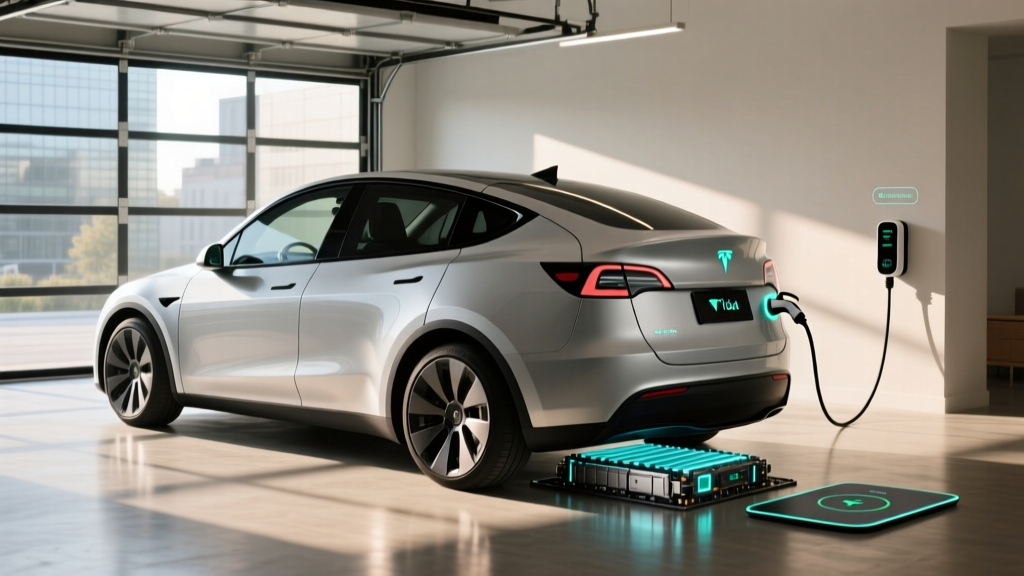
If you've been browsing Tesla forums or configurator pages lately, you've likely encountered the term "Tidal" and wondered: what exactly is Tidal on Tesla? The short answer is that Tidal is Tesla's internal codename for the significantly refreshed Model Y — widely known in the EV community as the "Juniper" update — which began deliveries in early-to-mid 2025 and carries forward into the 2026 model year. It represents the most substantial overhaul the Model Y has received since its 2020 launch, touching the exterior styling, interior architecture, suspension tuning, NVH (noise, vibration, harshness), battery thermal management, and infotainment hardware.
This review covers everything you need to know about the Tidal-refreshed Tesla Model Y: real-world range, charging speeds, pricing after federal tax credits, and whether it remains the default compact electric SUV to beat in 2026.
What Does the Tidal Refresh Actually Change?
The Tidal/Juniper Model Y borrows heavily from the "Highland" refresh that the Model 3 received for the 2024 model year. Visually, you'll notice a sleeker front fascia with a full-width light bar, revised rear lighting with an illuminated diffuser element, new wheel designs, and slightly reshaped bumpers aimed at improving aerodynamic efficiency. Tesla claims a lower drag coefficient, which directly translates to better highway range.
Inside, the changes are more dramatic. The Tidal Model Y adds:
- Ambient LED lighting strips across the dashboard and door panels
- Ventilated front seats (previously absent on Model Y)
- A rear-seat touchscreen for climate and media control
- Acoustic glass on all windows (previously front-only), dramatically reducing cabin noise
- Revised suspension with frequency-selective dampers for a more compliant ride
- A power-folding second row (on select trims)
- Updated infotainment hardware with a faster processor and improved audio system
These aren't cosmetic tweaks — they address the most common criticisms of the pre-refresh Model Y: ride harshness, cabin noise, and a sparse rear-seat experience.
2026 Tesla Model Y (Tidal) Specifications
| Spec | Long Range RWD | Long Range AWD | Performance |
|---|---|---|---|
| EPA Range | 335 mi | 320 mi | 298 mi |
| Battery (usable) | ~78 kWh (NMC) | ~78 kWh (NMC) | ~78 kWh (NMC) |
| Drivetrain | Rear-Wheel Drive | Dual-Motor AWD | Dual-Motor AWD |
| Horsepower | 346 hp | 384 hp | 456 hp |
| 0–60 mph | 5.8 sec | 4.8 sec | 3.5 sec |
| Peak DC Charge Rate | 250 kW | 250 kW | 250 kW |
| 10–80% DCFC Time | ~24 min | ~24 min | ~24 min |
| Level 2 (11.5 kW) | ~44 mi/hr | ~44 mi/hr | ~44 mi/hr |
| MPGe (combined) | 122 MPGe | 116 MPGe | 110 MPGe |
| kWh/100 mi | 28 | 29 | 31 |
| Base MSRP | $46,630 | $49,630 | $54,630 |
Sources: fueleconomy.gov, Tesla.com configurator (2026 model year). Specs reflect EPA-certified figures and manufacturer-published data.
Real-World Range: What the EPA Number Doesn't Tell You
EPA Estimate: 335 miles (Long Range RWD)
Expected Highway (70 mph, 75°F): ~285–300 miles
Expected Cold-Weather (30°F, mixed driving): ~235–260 miles
Road-Trip Practical Range (80% usable window): ~230–250 miles between charges
The Tidal Model Y's improved aerodynamics help it hold range at highway speeds better than the pre-refresh version, but physics still applies. At sustained 70+ mph, expect roughly 10–15% below the EPA sticker. In freezing temperatures, the NMC battery requires more energy for thermal management, and cabin heating (even with the heat pump) draws additional power. If you live in the northern U.S. and commute in winter, plan for 235–260 miles of practical range from the Long Range RWD trim.
For road trips, Tesla's navigation system is excellent at pre-conditioning the battery ahead of Supercharger stops, which preserves range and maximizes charge speed. Most owners report that the real-world range on the Tidal refresh is a modest improvement over the prior generation — roughly 5–8% better at highway speeds — thanks to the revised aero and slightly more efficient drivetrain calibration.
Charging Speed: DC Fast, Level 2, and Level 1
| Charging Level | Power | Miles Added per Hour | Notes |
|---|---|---|---|
| Level 1 (120V household) | ~1.4 kW | ~5 mi/hr | Emergency/trickle only |
| Level 2 (240V, 48A) | 11.5 kW | ~44 mi/hr | Full charge in ~8 hrs; ideal for home |
| Level 2 (240V, 32A Mobile Connector) | 7.7 kW | ~30 mi/hr | Requires NEMA 14-50 outlet |
| DC Fast (Tesla Supercharger V3/V4) | Peak 250 kW | Up to ~1,000 mi/hr (at peak) | 10–80% in ~24 min |
| DC Fast (CCS adapter, non-Tesla networks) | Up to 250 kW | Varies by station | Requires Tesla CCS adapter (included) |
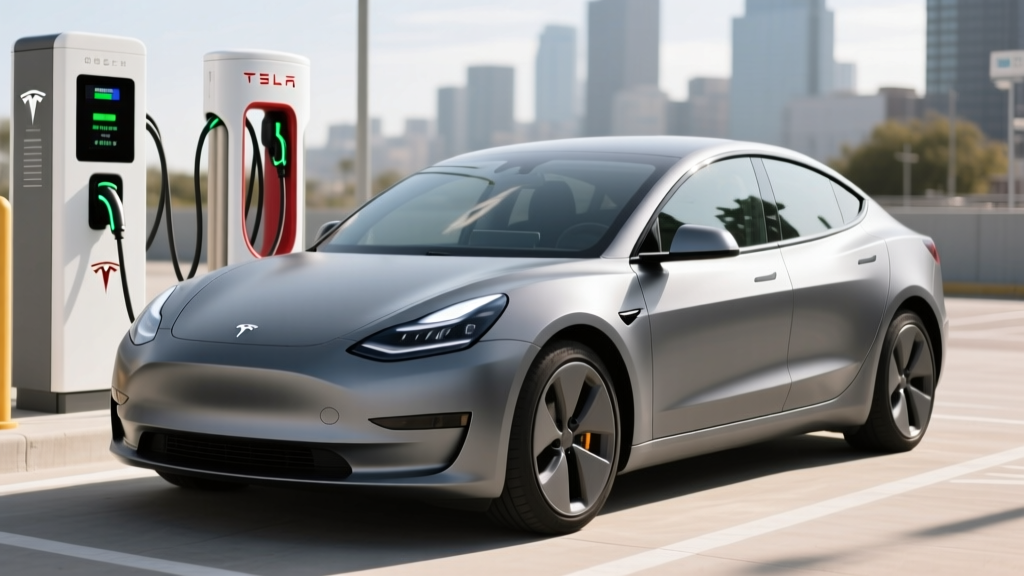
The Tidal Model Y retains a 250 kW peak DC fast-charging rate on V3 and V4 Superchargers. In real-world testing, the charge curve is strong from 10% to roughly 50% SoC (sustaining 200–250 kW), then tapers progressively. From 50% to 80%, expect an average of ~100–130 kW. This means a 10–80% session takes approximately 24 minutes at a V3/V4 stall — competitive with rivals like the Hyundai Ioniq 5 and Kia EV6, though those vehicles' 800V architectures allow slightly faster 10–80% times (~18 minutes) at 350 kW chargers.
For home charging, a Tesla Wall Connector on a 60A circuit delivers 48A (11.5 kW), adding about 44 miles of range per hour. A full overnight charge from 10% to 90% takes roughly 7–8 hours, which is more than sufficient for daily use. Tesla now includes a CCS adapter with all new Model Y deliveries, unlocking Electrify America, EVgo, and other non-Tesla DC networks — a significant practical advantage now that the NACS standard has been widely adopted by other automakers.
Pricing, Trims, and Federal Tax Credit Eligibility
| Trim | Base MSRP | Destination | Total Before Credit | Est. After §30D Credit* |
|---|---|---|---|---|
| Long Range RWD | $46,630 | $1,390 | $48,020 | ~$40,520 |
| Long Range AWD | $49,630 | $1,390 | $51,020 | ~$43,520 |
| Performance | $54,630 | $1,390 | $56,020 | ~$48,520 |
*Federal §30D credit shown at the maximum $7,500. Actual eligibility depends on your income, the vehicle's battery sourcing compliance, and MSRP caps. See checklist below.
- MSRP Cap: SUVs/vans/pickups must be ≤$80,000 MSRP — all Model Y trims qualify.
- Buyer Income Cap: AGI ≤$150,000 (single), ≤$225,000 (head of household), ≤$300,000 (joint).
- Battery Sourcing: Must meet critical-mineral and battery-component requirements (phased thresholds increase annually). Tesla has progressively shifted sourcing to comply, but confirm current-year eligibility at IRS.gov or with a tax professional.
- Point-of-Sale Transfer: You can transfer the credit to the dealer at purchase, reducing your out-of-pocket cost immediately — no need to wait for tax filing.
- Assembly: Must be final-assembled in North America (Model Y is built in Fremont, CA and Austin, TX).
Tesla's pricing has fluctuated frequently, so verify the current configurator price at the time of purchase. The Long Range RWD trim offers the best value proposition: 335 miles of EPA range, a practical drivetrain for most climates, and a post-credit price that undercuts most AWD electric SUV competitors.
Interior, Cargo Space, and Technology
The Tidal refresh transformed the Model Y's interior from functional-but-sparse to genuinely premium. The ambient lighting, ventilated seats, and acoustic glass create a cabin experience closer to the BMW iX or Mercedes EQB than the previous Model Y. The 15.4-inch center touchscreen remains the command center for all vehicle functions — there are still no physical buttons for climate or media, which some buyers love and others find distracting.
Cargo and passenger dimensions:
- Cargo (behind 2nd row): 30.2 cu ft
- Cargo (2nd row folded): 72.1 cu ft
- Front trunk (frunk): 4.1 cu ft
- Rear legroom: 41.6 inches
- Front headroom: 41.0 inches
- Seating: 5 passengers standard (7-seat option available on Long Range AWD with small third row, best for children)
On the technology front, the Tidal Model Y ships with Tesla's latest HW4 (Hardware 4) Autopilot computer, enabling the current Autopilot and optional Full Self-Driving (Supervised) features. It's critical to understand that FSD (Supervised) is an SAE Level 2 driver-assistance system — it does not make the car self-driving. You must remain attentive, keep your hands available, and supervise at all times. True driverless operation (SAE Level 4) is currently limited to geofenced robotaxi services like Waymo.
Tesla Autopilot and FSD (Supervised) are SAE Level 2 systems. The driver is responsible for all vehicle operation at all times. These systems assist with steering, acceleration, and braking on marked roads but do not handle all scenarios — construction zones, unmapped roads, adverse weather, and unexpected obstacles require immediate human intervention.
Warranty Coverage
Tesla's warranty on the Tidal Model Y remains competitive:
- Basic Vehicle: 4 years / 50,000 miles
- Battery & Drive Unit (Long Range/Performance): 8 years / 120,000 miles, whichever comes first, with minimum 70% battery capacity retention over the warranty period
The 70% retention threshold is standard for the industry. Real-world degradation data from Tesla's fleet suggests most Model Y batteries retain 90%+ capacity at 100,000 miles, with the NMC chemistry showing a typical degradation curve of ~5–8% in the first two years, then leveling off. For buyers concerned about long-term battery health, Tesla's battery management system (BMS) is among the most sophisticated in the industry, with active thermal management that keeps cells in an optimal temperature window during charging and driving.
Pros and Cons
- Class-leading Supercharger network access (17,000+ stalls in North America)
- 335-mile EPA range (Long Range RWD) is among the best in the segment
- Dramatically improved ride quality and cabin quietness over pre-refresh Model Y
- Over-the-air updates continuously add features
- Strong resale value relative to most EV competitors
- CCS adapter included — access to non-Tesla DC networks
- Ventilated seats and rear touchscreen standard
- No physical buttons — all controls through touchscreen
- Turn signal stalks replaced by steering-wheel buttons (love-it-or-hate-it)
- Performance trim range drops to 298 miles
- 250 kW peak charge rate trails 800V competitors at 350 kW chargers
- FSD (Supervised) costs extra and remains Level 2 — not autonomous
- Third-row seat (when equipped) is extremely tight — children only
- Insurance costs tend to run higher than segment average
Who Should Buy the Tidal Model Y?
- Choose the Long Range RWD if: You want maximum range, lowest price, and live in a mild climate. Best for commuters and road-trippers who don't need AWD.
- Choose the Long Range AWD if: You face snow, rain, or mountain driving. The dual-motor setup adds traction and a modest performance bump for $3,000 more.
- Choose the Performance if: You prioritize acceleration (3.5-sec 0–60) and track-day capability, and can accept the ~37-mile range penalty.
- Look elsewhere if: You need three usable rows of seating (consider the Kia EV9), want physical buttons and a traditional cockpit (BMW iX, Hyundai Ioniq 5), or need 800V-class ultra-fast charging at 350 kW stations.
The Tidal Model Y remains the benchmark compact electric SUV for a reason: it delivers outstanding range, access to the most reliable DC fast-charging network in North America, and a refreshed interior that finally matches its price point. The competition is closer than ever — the Hyundai Ioniq 5, Ford Mustang Mach-E, and BMW iX3 are all compelling alternatives — but the Model Y's combination of Supercharger infrastructure, OTA evolution, and cargo practicality keeps it at the top of the segment.
Frequently Asked Questions
What exactly is "Tidal" on Tesla?
Tidal is Tesla's internal project codename for the major Model Y refresh that debuted for the 2025 model year and continues into 2026. It's analogous to "Highland" for the refreshed Model 3. The community also refers to it as the "Juniper" update. It includes revised exterior styling, a redesigned interior with ambient lighting and ventilated seats, improved suspension, acoustic glass, and updated electronics.
What is the real-world range of the Tidal Model Y?
The EPA rates the Long Range RWD at 335 miles. In real-world highway driving at 70 mph in moderate temperatures, expect 285–300 miles. In cold weather (below freezing), plan for 235–260 miles. For road trips using an 80% charge window, practical range between stops is roughly 230–250 miles.
How fast does the Tidal Model Y charge?
On a Tesla V3/V4 Supercharger, the peak rate is 250 kW, and a 10–80% session takes approximately 24 minutes. At home on a 48A Level 2 Wall Connector (11.5 kW), you'll add about 44 miles per hour, with a full charge taking 7–8 hours.
Does the 2026 Model Y qualify for the federal EV tax credit?
As of 2026, the Model Y is eligible for up to $7,500 under IRS §30D, provided you meet the income caps (≤$150K single / ≤$300K joint), the vehicle's battery components and critical minerals meet the phased sourcing thresholds, and the MSRP is under $80,000 (all trims qualify). You can transfer the credit to the dealer at point of sale. Always verify current eligibility at IRS.gov or with a tax professional, as sourcing rules tighten annually.
Is the Tidal Model Y worth buying over competitors?
It depends on your priorities. If access to the Supercharger network, strong resale value, and best-in-class range matter most, the Model Y is hard to beat. If you prefer 800V ultra-fast charging, a more traditional interior with buttons, or a smoother ride without sport-suspension firmness, the Hyundai Ioniq 5 or Ford Mustang Mach-E are strong alternatives. Test-drive both before deciding.
Is Tesla FSD self-driving?
No. Tesla's Full Self-Driving (Supervised) is an SAE Level 2 driver-assistance system. You must remain fully engaged and supervise the vehicle at all times. It assists with steering, lane changes, and speed management on compatible roads, but it cannot handle all driving scenarios. Only Level 4 services like Waymo operate without a human driver in geofenced areas.