The Tesla Model Y has dominated EV sales charts for good reason: strong range, access to the Supercharger network, and a price point that undercuts most luxury electric SUVs. But for growing families, the critical question isn't just about range or performance — it's about whether the optional third-row seats make this a viable 7-passenger vehicle. In this review, we break down exactly what you get (and give up) when you add the third row to the 2026 Tesla Model Y, including real-world range expectations, charging logistics, cargo trade-offs, and whether the math works after federal tax credits.
Tesla Model Y Third Row: What You Need to Know Up Front
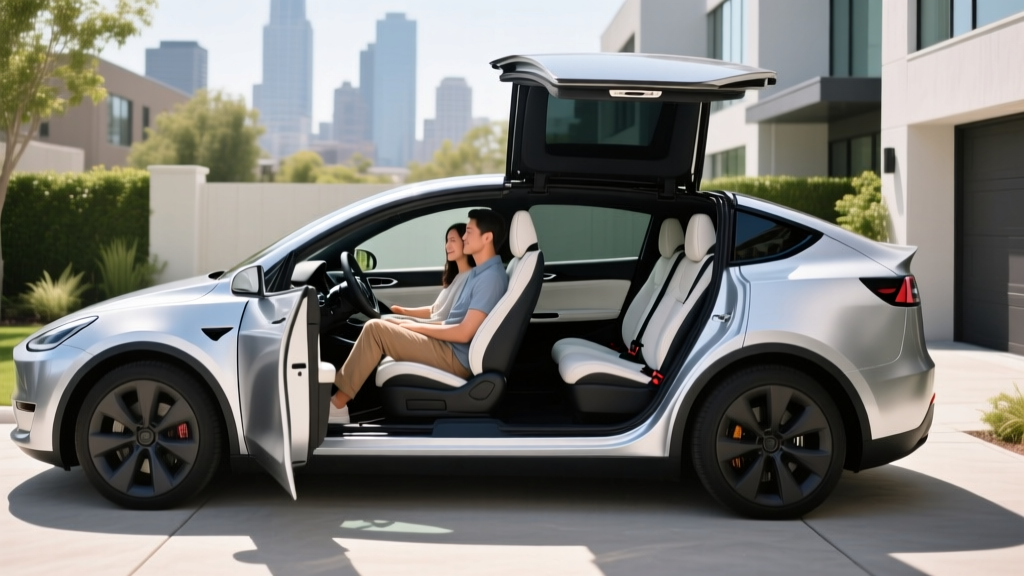
The third-row seat option is available exclusively on the Tesla Model Y Long Range AWD trim. It is not offered on the base Rear-Wheel Drive model. Adding the third row transforms the Model Y from a 5-passenger crossover into a 7-passenger vehicle with a 2-3-2 seating configuration. The option costs approximately $2,000 on top of the Long Range AWD's base MSRP, bringing the starting price for a 7-seat Model Y to roughly $49,990 before any incentives.
Here's the essential spec sheet before we dig into the details:
| Specification | Value |
|---|---|
| EPA Estimated Range | 310 miles (5-seat); ~295 miles (7-seat) |
| Battery Capacity | ~75 kWh usable (NMC chemistry) |
| Max DC Fast Charge | 250 kW peak |
| 10–80% DC Charge Time | ~27 minutes |
| Level 2 Home Charging | 11.5 kW (~44 mi/hr) |
| 0–60 mph | 4.8 seconds |
| Horsepower | 384 hp (dual motor) |
| Drivetrain | Dual Motor AWD |
| MPGe (combined) | 117 MPGe |
| Efficiency | 29 kWh/100 mi |
| Base MSRP (7-seat) | ~$49,990 |
| Battery Warranty | 8 years / 120,000 miles |
Real-World Range: What the EPA Number Doesn't Tell You
EPA sticker: ~310 miles (5-seat configuration). Adding the third row adds roughly 50–70 lbs and slightly alters aerodynamics, reducing effective range to approximately 295 miles EPA.
Real-world highway (70–80 mph): Expect 250–270 miles in moderate temperatures. Tesla's efficiency is excellent for the segment, but sustained highway speeds above 75 mph erode range noticeably.
Cold weather (below 32°F / 0°C): Plan for 200–230 miles of usable range. The Model Y uses a heat pump (standard), which mitigates cabin-heating losses, but battery chemistry and regen limitations still reduce effective range by 20–30% in freezing conditions.
The Model Y Long Range AWD uses an NMC (nickel manganese cobalt) battery pack with approximately 75 kWh of usable capacity. NMC offers higher energy density than LFP, which is why Tesla reserves it for the Long Range trims — you get more range in a lighter package. The trade-off is that NMC batteries are more sensitive to sustained 100% state of charge. Tesla recommends daily charging to 80–90% for NMC packs and reserving 100% charges for road trips.
For a family hauling kids to school and activities in a suburban setting, 250+ real-world miles is more than adequate for daily driving with home charging. But if you're planning a 400-mile road trip with the family loaded up, you'll need at least one DC fast-charge stop — which brings us to the next critical topic.
Charging Speed: DC Fast, Home Level 2, and the Supercharger Advantage
Charging speed is where Tesla still holds a meaningful edge over most competitors, and it matters even more when you're running errands with kids in the car and can't afford 45-minute charging stops.
| Charging Level | Power (kW) | Speed | Notes |
|---|---|---|---|
| Level 1 (120V household) | ~1.4 kW | ~5 mi/hr | Emergency only; impractical for daily use |
| Level 2 (240V home wall connector) | 11.5 kW | ~44 mi/hr | Full charge in ~7 hours; ideal daily solution |
| DC Fast (Supercharger V3) | 250 kW peak | ~162 mi in 15 min | Peak rate tapers above 60% SoC |
| DC Fast (Supercharger V4) | Up to 250 kW | Similar to V3 | Newer stalls; CCS adapter not needed for Teslas |
DC fast charging reality check: The Model Y peaks at 250 kW, but that rate only holds between roughly 10–35% state of charge. The charge curve tapers significantly above 60%, and charging from 80–100% can take as long as the 10–80% portion. For road trips, the practical strategy is to charge from 10–80% in about 27 minutes, then move on. This is where Tesla's navigation-integrated preconditioning shines: the car automatically warms the battery as you approach a Supercharger, ensuring you hit peak charge rates even in cold weather.
Home charging setup: Tesla's Wall Connector at 48 amps delivers 11.5 kW on a 240V/60A circuit. For most families, plugging in overnight means waking up to a full battery every morning. Installation costs vary widely — expect $500–$2,000 if your electrical panel has capacity, or $2,000–$4,500+ if you need a panel upgrade (200A service). Always get a quote from a licensed electrician before committing.
One advantage Tesla owners retain in 2026: the Supercharger network remains the most reliable and geographically comprehensive DC fast-charging network in the US, with over 25,000 stalls nationally. While non-Tesla EVs now have growing access via adapters, native NACS-equipped Teslas still enjoy the simplest plug-and-charge experience.
Third-Row Practicality: Space, Comfort, and Cargo Trade-Offs
This is where the rubber meets the road for families considering the 7-seat Model Y. Let's be direct: the third row is best suited for children or occasional use by smaller adults. Here's the dimensional breakdown:
- Third-row legroom: ~26.5 inches — tight for adults on anything beyond short trips
- Third-row headroom: ~35.5 inches — adequate for kids, snug for taller teens
- Cargo behind 3rd row (all seats up): ~12.8 cu ft — enough for a couple of grocery bags or a small stroller
- Cargo behind 2nd row (3rd row folded): ~30.2 cu ft
- Max cargo (2nd and 3rd rows folded): ~72.1 cu ft
- Front trunk (frunk): ~4.1 cu ft — useful for charging cables or a small bag
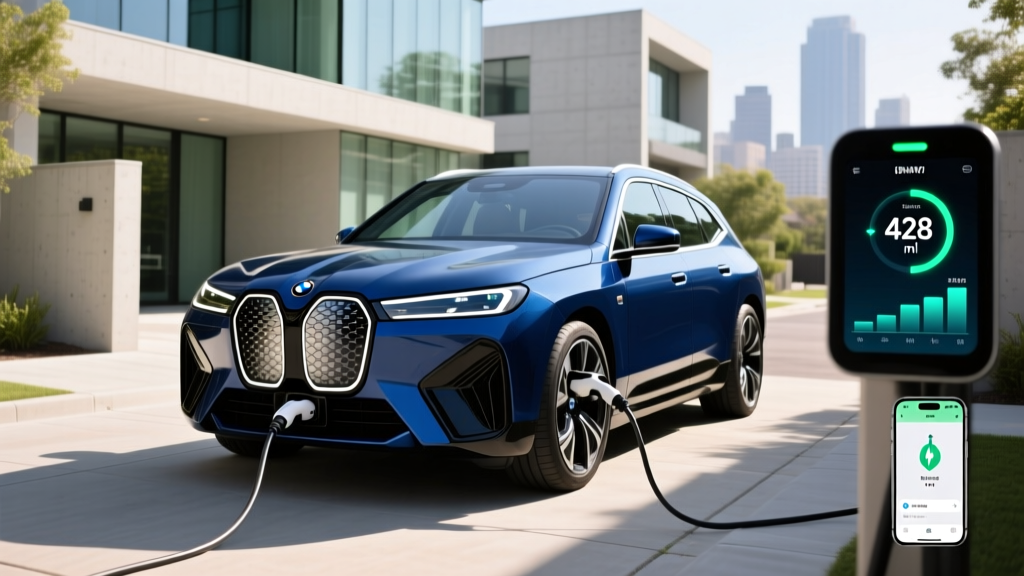
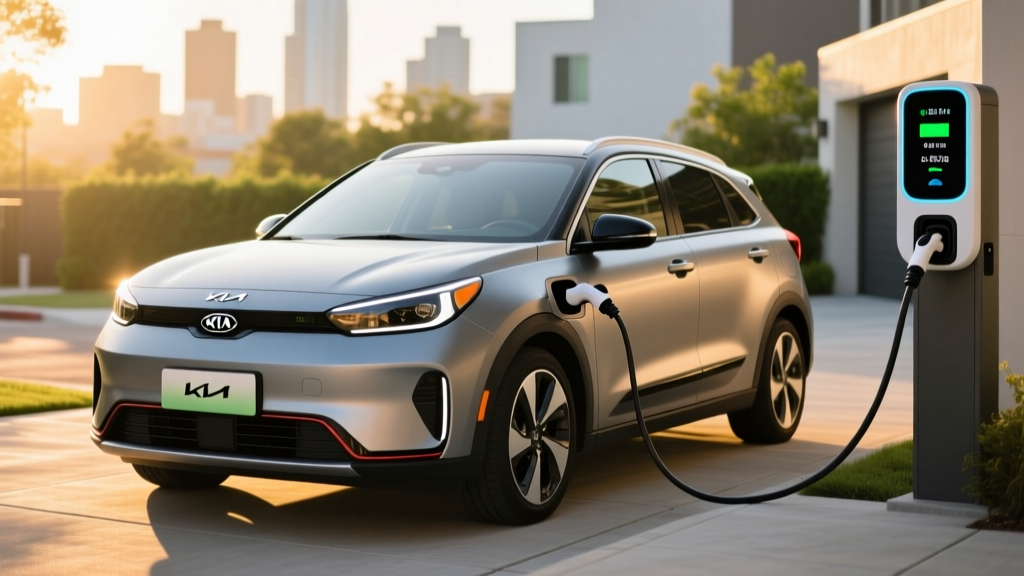
The cargo situation is the most significant compromise. With all seven seats occupied, you have roughly 12.8 cubic feet of rear cargo space. That's enough for a few backpacks and a small cooler, but a family road trip with luggage for seven will require creative packing or a roof cargo box. Compare this to the Kia EV9, which offers ~20 cu ft behind its third row — a meaningful difference for larger families.
Access to the third row is via a power-folding second-row seat that tilts and slides forward. It works adequately, though installing child car seats in the second row can complicate third-row access. The third row includes USB-C ports and cup holders, which helps keep younger passengers content.
Performance, Efficiency, and Driving Dynamics
The Model Y Long Range AWD pairs a dual-motor all-wheel-drive system producing 384 horsepower with a 0–60 mph time of 4.8 seconds. That's genuinely quick for a 7-seat family vehicle, and the instant torque makes merging and passing effortless. The low center of gravity (battery pack under the floor) keeps body roll reasonably controlled, though you'll feel the extra weight of the third-row hardware in tight corners compared to the 5-seat version.
Efficiency remains a Tesla strong suit. At 117 MPGe combined (roughly 29 kWh per 100 miles), the Model Y is one of the most efficient electric SUVs in its class. For context, that translates to roughly $0.04–$0.06 per mile when charging at home on an average US electricity rate of $0.16/kWh — dramatically cheaper than a comparable gas-powered 3-row SUV at $0.12–$0.15 per mile.
Ride quality has improved on recent model years with revised suspension tuning, but the Model Y still leans firm. On rough pavement, you'll feel imperfections more than you would in a Hyundai Ioniq 9 or Kia EV9. For most suburban commutes and highway driving, it's composed and quiet.
Tech, Safety, and Driver Assistance
The Model Y's interior is minimalist by design — a single 15.4-inch center touchscreen controls virtually everything, from climate to navigation to media. There's no traditional instrument cluster; a small secondary display sits on the rear of the center console for second-row passengers. The 7-seat configuration doesn't change the front-row tech experience.
Standard driver assistance: Tesla's Basic Autopilot includes adaptive cruise control, lane centering, and automatic emergency braking. This is a SAE Level 2 system — it assists with steering and speed but requires the driver to remain fully engaged and supervising at all times.
Tesla's Autopilot and optional Full Self-Driving (Supervised) are SAE Level 2 driver-assistance systems. They do NOT make the vehicle autonomous. The driver must keep hands on the wheel, eyes on the road, and remain prepared to take over instantly. True driverless operation (Level 4) is currently limited to geofenced robotaxi services like Waymo in select cities.
The optional Full Self-Driving (Supervised) package ($8,000 one-time or $99/month subscription as of 2026) adds automatic lane changes, traffic light and stop sign recognition, and city-street navigation assistance. It's impressive in capability but still requires active driver supervision and can make unexpected decisions in complex scenarios. For most families, Basic Autopilot is sufficient for highway commuting.
Safety ratings are strong: the Model Y earned a 5-star overall rating from NHTSA and top marks from IIHS. Standard features include automatic emergency braking, blind-spot monitoring, lane departure warning, and eight airbags.
Pricing, Tax Credits, and Total Cost
Here's how the pricing breaks down for the 7-seat Model Y in 2026:
| Item | Cost |
|---|---|
| Model Y Long Range AWD (base MSRP) | $47,990 |
| Third-Row Seat option | $2,000 |
| Base MSRP (7-seat) | $49,990 |
| Federal Tax Credit (§30D, if eligible) | Up to $7,500 |
| Effective price after max credit | ~$42,490 |
| FSD (Supervised) add-on | $8,000 or $99/mo |
| Destination fee | $1,390 |
Federal tax credit eligibility (§30D): The Model Y Long Range AWD qualifies for up to $7,500 in federal tax credits, but eligibility depends on several factors per current IRS rules:
- MSRP cap: The vehicle's MSRP must be at or below $80,000 for SUVs — the Model Y clears this easily at ~$49,990.
- Buyer income cap: Modified adjusted gross income (MAGI) must not exceed $150,000 (single), $225,000 (head of household), or $300,000 (married filing jointly).
- Battery sourcing: A percentage of critical minerals and battery components must be sourced from the US or free-trade-agreement countries. Tesla's US-built battery packs currently meet these thresholds for the full $7,500.
- Point-of-sale transfer: As of 2024, buyers can transfer the credit to the dealer at purchase, reducing the purchase price directly rather than waiting for a tax refund.
Consult a tax professional to confirm your personal eligibility, as individual circumstances vary and rules are subject to legislative change.
How the 7-Seat Model Y Compares to Key Rivals
The 7-seat electric SUV market has expanded considerably. Here's how the Model Y stacks up against its most direct competitors:
| Spec | Tesla Model Y LR AWD | Kia EV9 GT-Line AWD | Hyundai Ioniq 9 AWD |
|---|---|---|---|
| EPA Range | ~295 mi (7-seat) | ~270 mi | ~290 mi |
| Battery (kWh) | ~75 kWh (NMC) | 100 kWh (NMC) | 110.3 kWh (NMC) |
| Max DC Charge | 250 kW | 210 kW | 240 kW |
| 10–80% Time | ~27 min | ~24 min | ~24 min |
| 3rd Row Cargo | 12.8 cu ft | 20.2 cu ft | ~18 cu ft |
| Base MSRP (7-seat) | $49,990 | $65,900 | $58,000 |
| Federal Tax Credit | Up to $7,500 | Up to $7,500 | Up to $7,500 |
The bottom line on competition: The Kia EV9 and Hyundai Ioniq 9 offer substantially more third-row space and cargo volume, making them better choices for families who regularly carry older children or adults in the third row. However, both cost $8,000–$16,000 more than the Model Y before incentives. If your third-row needs are occasional (playdates, carpooling) and your budget is tighter, the Model Y's value proposition is hard to beat.
- Your third-row passengers are primarily young children
- You want the lowest entry price in a 7-seat EV
- Supercharger network access is a priority for road trips
- You value efficiency and lower charging costs over maximum interior space
- You regularly carry teens or adults in the third row
- You need 18+ cu ft of cargo space with all seats occupied
- You prefer a more traditional interior layout with physical buttons
- Budget is less of a constraint
Pros and Cons at a Glance
Pros
- Most affordable 7-seat EV on the market (~$42,490 after tax credit)
- Excellent efficiency (117 MPGe) keeps charging costs low
- Supercharger network access for stress-free road trips
- Quick acceleration (4.8 sec 0–60) for a family hauler
- Strong safety ratings (NHTSA 5-star, IIHS Top Safety Pick)
- Over-the-air updates continuously add features
- Heat pump standard — better cold-weather range retention
Cons
- Third row is tight — best for children only
- Only 12.8 cu ft cargo behind 3rd row (road trips require planning)
- Firm ride quality on rough roads
- Minimalist interior not for everyone (no physical buttons, no instrument cluster)
- FSD (Supervised) is expensive and still requires full driver attention
- No Apple CarPlay or Android Auto
- NMC battery requires 80–90% daily charge limit for longevity
Who Is the 7-Seat Tesla Model Y Best For?
The 7-seat Model Y is ideal for families with two or three young children who need occasional extra seating for carpooling, grandparents visiting, or playdate pickups — but don't need adult-sized third-row space on a daily basis. It's also a strong fit for families who prioritize low running costs, value the Supercharger network for road trips, and want an EV that holds its resale value well.
It is not the right choice if you regularly transport teenagers or adults in the third row, if you need substantial cargo space with all seats in use, or if you prefer a more traditional, button-heavy interior. For those needs, the Kia EV9 or Hyundai Ioniq 9 are worth the premium.
Frequently Asked Questions
What is the real-world range of the 7-seat Tesla Model Y?
With the third row installed, expect approximately 295 miles EPA-rated. In real-world mixed driving at highway speeds, plan for 250–270 miles in moderate temperatures and 200–230 miles in freezing weather. Preconditioning and conservative driving can extend these figures slightly.
How fast does the Model Y charge at home and on the road?
On a Level 2 home charger (240V, 48A Wall Connector), the Model Y charges at 11.5 kW, adding roughly 44 miles of range per hour — a full charge takes about 7 hours. On a Tesla V3 Supercharger, it peaks at 250 kW and charges from 10–80% in approximately 27 minutes, though the rate tapers significantly above 80% SoC.
How much does the 7-seat Model Y cost after the federal tax credit?
The base MSRP for the Model Y Long Range AWD with the third-row option is approximately $49,990. If you qualify for the full $7,500 federal EV tax credit under §30D (subject to income caps, MSRP limits, and battery-sourcing requirements), the effective price drops to roughly $42,490 before destination fees and any state incentives.
Does the Tesla Model Y qualify for the $7,500 federal EV tax credit?
Yes, the Model Y Long Range AWD currently qualifies for up to $7,500 under IRS §30D, provided the buyer meets income thresholds ($150K single / $300K married filing jointly) and the vehicle meets battery-sourcing requirements. The credit can be applied at the point of sale to reduce the purchase price directly. Always verify current eligibility on irs.gov and consult a tax professional.
Is the Model Y's third row worth it vs. a Kia EV9 or Hyundai Ioniq 9?
It depends on your use case. The Model Y 7-seat is $8,000–$16,000 cheaper than the EV9 or Ioniq 9 and offers better range and charging infrastructure. However, both Korean competitors provide significantly more third-row legroom (32+ inches vs. 26.5 inches) and cargo volume behind the third row (18–20 cu ft vs. 12.8 cu ft). If third-row comfort and cargo are top priorities, the EV9 or Ioniq 9 is the better vehicle. If budget and efficiency matter more, the Model Y wins.
Can I install a home charger for the Model Y myself?
Tesla's Wall Connector requires a 240V/60A dedicated circuit. While the physical mounting is straightforward, the electrical work — running a new circuit from your panel, potentially upgrading your service — must be performed by a licensed electrician to meet code and ensure safety. Installation costs range from $500 (simple run to a nearby panel) to $4,500+ (panel upgrade required).