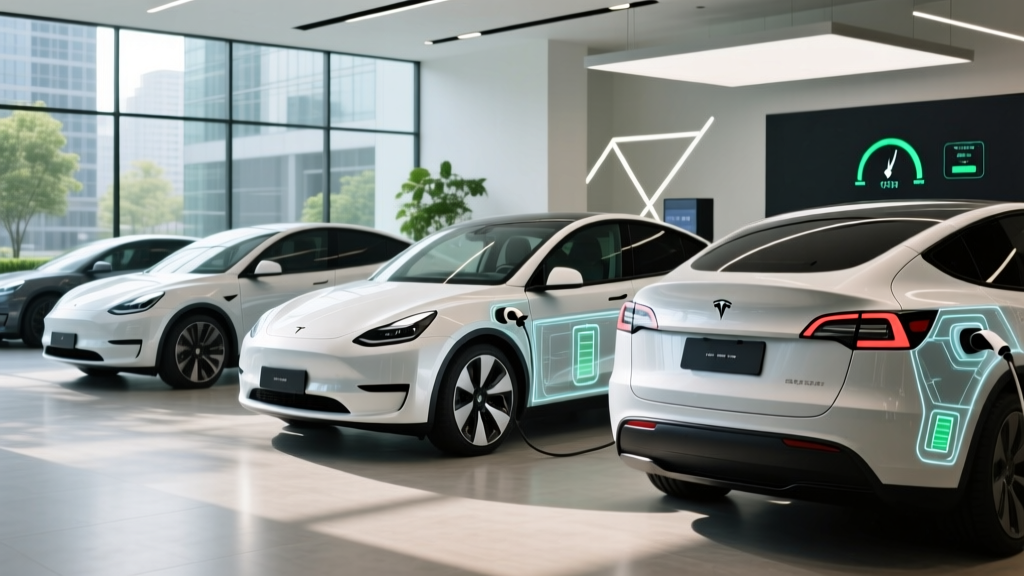
The Tesla Model Y has been the best-selling EV in America for years, but for families needing more than five seats, the optional third row has always been a polarizing choice. With the refreshed 2026 Model Y now on sale, Tesla continues to offer a $3,000 seven-seat package on the Long Range AWD trim — but does squeezing two more passengers into the back actually make sense for real-world family use? We break down the space, range trade-offs, charging practicality, and ownership economics to help you decide.
Quick Verdict: Who Should Consider the Third Row?
The bottom line: The Tesla Model Y third row is best suited for families with small children (under ~4'9") who need occasional extra seating for short trips. It is not a minivan replacement. If your third-row passengers are regularly over age 10, or you need serious cargo space with all seats up, look at the Kia EV9, Rivian R1S, or a three-row PHEV instead. But if you need a compact, efficient electric crossover that can occasionally carry seven, the Model Y remains the most affordable way to do it.
2026 Tesla Model Y Long Range AWD: Full Spec Sheet
Below are the confirmed specifications for the 2026 Model Y Long Range AWD with the optional seven-seat configuration. The third-row package is not available on the Rear-Wheel Drive (Standard Range) trim.
| Spec | 2026 Model Y Long Range AWD (7-Seat) |
|---|---|
| Base MSRP | $50,490 (incl. $1,990 dest.) + $3,000 third-row option = $53,490 |
| EPA Est. Range | 310 miles (5-seat: 320 mi) |
| Battery (Usable) | ~75 kWh, NMC (nickel manganese cobalt) |
| Efficiency | 117 MPGe combined / 29 kWh/100 mi |
| Peak DC Fast Charge | 250 kW (V3 Supercharger) |
| 10–80% DC Charge | ~27 minutes |
| Level 2 Home Charging | 11.5 kW / 44 mi/hr (48A Wall Connector) |
| 0–60 mph | 4.8 seconds |
| Horsepower | 384 hp (dual motor) |
| Drivetrain | Dual-motor AWD |
| Cargo (all seats up) | 12.0 cu ft (behind 3rd row) |
| Cargo (3rd row folded) | 30.2 cu ft |
| Cargo (all rows folded) | 72.1 cu ft |
| 3rd-Row Legroom | 26.5 inches |
| Battery/Powertrain Warranty | 8 years / 120,000 miles (min. 70% retention) |
| Bumper-to-Bumper Warranty | 4 years / 50,000 miles |
Range and Efficiency: The Real-World Story
The EPA rates the 2026 Model Y Long Range AWD at 310 miles with the third-row option — a 10-mile reduction versus the five-seat configuration, owing to roughly 130 pounds of additional seat hardware and slightly altered weight distribution. Efficiency comes in at 117 MPGe combined, or about 29 kWh per 100 miles, according to fueleconomy.gov.
EPA sticker: 310 miles. In practice, plan for:
- Highway driving (70–75 mph): ~255–275 miles, depending on terrain and wind
- City/suburban mixed: ~285–305 miles (regen braking helps recover energy)
- Cold weather (below 32°F): Expect a 20–30% reduction, dropping to ~215–250 miles. The Model Y uses a heat pump, which mitigates cabin-heating losses compared to resistive heaters, but battery chemistry still suffers in deep cold.
- With full 7-passenger load + cargo: Subtract another 5–8% due to increased mass and rolling resistance
For road trips, precondition the battery by navigating to a Supercharger in the Tesla app before arrival — this warms the pack and allows the car to accept peak charge rates immediately upon plugging in.
Charging Speed: DC Fast, Home, and Destination
Tesla's Supercharger network remains the gold standard for reliability, and the refreshed Model Y Long Range accepts up to 250 kW on V3 and V4 Superchargers. However, peak rate is not sustained rate — understanding the charge curve is critical for trip planning.
| Charging Level | Power (kW) | Speed | Notes |
|---|---|---|---|
| Level 1 (120V outlet) | ~1.4 kW | ~4 mi/hr | Emergency/trickle only; full charge in ~50+ hours |
| Level 2 (Tesla Wall Connector, 48A) | 11.5 kW | 44 mi/hr | Full charge overnight in ~7 hours; requires 60A circuit |
| Level 2 (Generic J1772/NACS, 32A) | 7.7 kW | ~30 mi/hr | Common at workplaces, apartments, public L2 stations |
| DC Fast (V3 Supercharger) | Up to 250 kW | 10–80% in ~27 min | Peak rate from 5–35% SoC; tapers significantly above 60% |
| DC Fast (CCS via adapter) | Up to ~150 kW | 10–80% in ~38 min | Tesla's CCS adapter included; rate depends on station |
Charge curve reality check: The 250 kW peak only holds roughly from 5% to 35% state of charge. By 60%, you're typically seeing 100–120 kW, and above 80%, charging slows dramatically to protect the NMC cells — often under 40 kW. For road trips, charge from 10–80% and skip the last 20% unless you're at your destination. That last 20% can add 20+ minutes for only ~60 miles of range.
For home charging, Tesla's Wall Connector ($420) on a NACS plug delivers the fastest Level 2 rate. Budget $800–$2,000 for professional installation of a 60-amp dedicated circuit, depending on your panel's proximity to the garage and whether a panel upgrade is needed.
Third-Row Space: The Honest Measurements
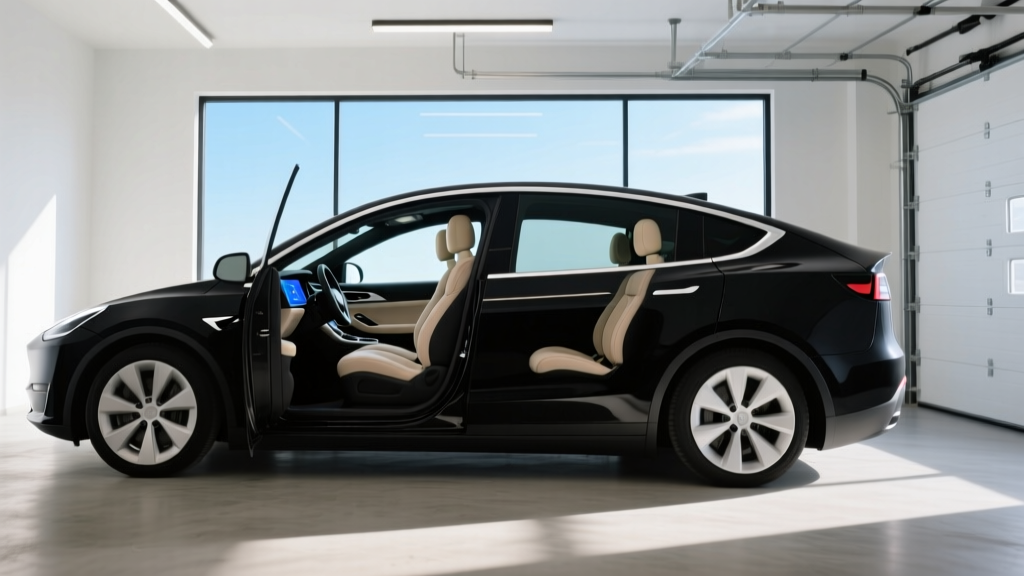
Let's address the keyword directly: the Tesla Model Y third row is compact. At 26.5 inches of legroom, it falls well short of dedicated three-row EVs like the Kia EV9 (32.0 in.) or Rivian R1S (33.4 in.). Here's how the space actually works in practice:
- Children under 5'0" (roughly age 10 and under): Reasonably comfortable for trips up to 2 hours. Forward-facing child seats fit, but the low roofline makes loading awkward.
- Teens and adults: Knees pressed into the second-row seatback; headroom compromised by the sloping roofline. Tolerable for 15–20 minute rides, not road trips.
- Access: The second row tilts and slides forward, but the opening is narrower than a minivan's. Loading a car seat into the third row requires some contortion.
- Cargo with all seats up: Just 12.0 cubic feet behind the third row — enough for 2–3 grocery bags or a couple of soft duffels. A stroller won't fit without folding the third row.
The 50/50-split third row folds flat individually, so you can carry five passengers and still access 30.2 cu ft of cargo — a practical compromise for families that only occasionally need the extra seats.
Performance, Tech, and Driver Assistance
The dual-motor AWD powertrain produces 384 hp and launches the Model Y to 60 mph in 4.8 seconds — brisk for a family crossover and more than adequate for highway merging, even with a full load of seven passengers. The low center of gravity (battery pack under the floor) keeps body roll controlled, though the ride quality is firm by family-vehicle standards. Road noise at highway speeds is noticeable, a common complaint among owners.
Infotainment: All controls route through the 15.4-inch center touchscreen. There is no instrument cluster — speed and navigation appear on the main display. Rear passengers get an 8-inch screen for climate and entertainment controls. The system is fast and responsive, but the lack of physical buttons for common functions (wipers, glovebox, mirror adjustment) remains a friction point for new owners.
Driver Assistance (SAE Level 2):
Tesla's Autopilot (included) and Full Self-Driving Supervised ($8,000 option or $99/mo subscription) are SAE Level 2 driver-assistance systems. The driver must remain fully attentive, keep hands on the wheel (or demonstrate attention via the cabin camera), and be prepared to take over instantly. These are not Level 4 autonomous systems like Waymo's driverless robotaxis. Treat FSD as an advanced cruise-control-plus-lane-keeping system that handles some intersections and highway ramps — with significant supervision required.
Standard Autopilot includes adaptive cruise control and lane-centering on highways. FSD Supervised adds automatic lane changes, traffic-light and stop-sign recognition, and navigation-guided on-ramp-to-off-ramp driving. Real-world FSD performance varies enormously by geography and road-marking quality.
Pricing, Tax Credits, and Total Cost
Here's what you'll actually pay for a 2026 Model Y Long Range AWD with the seven-seat option:
| Cost Item | Amount |
|---|---|
| Base MSRP (Long Range AWD) | $50,490 |
| Third-Row Option | +$3,000 |
| As-Tested (with FSD, no other options) | $61,490 |
| Federal Tax Credit (§30D, if eligible) | Up to $7,500 (point-of-sale) |
| Effective Price (base + 3rd row, after max credit) | ~$45,990 |
Federal tax credit eligibility (§30D): The Model Y Long Range AWD qualifies for the full $7,500 credit when transferred at point of sale, provided you meet all IRS requirements. Per IRS.gov, these include:
- MSRP cap: Vehicle must be under $80,000 (SUVs/vans) — the Model Y qualifies at all trims.
- Income cap: Modified AGI must not exceed $300,000 (married filing jointly), $225,000 (head of household), or $150,000 (single).
- Battery sourcing: Critical minerals and battery components must meet phased-in thresholds from qualified trade partners. Tesla's supply chain has largely met these requirements for 2026, but always confirm with your dealer at time of purchase.
- Point-of-sale transfer: You can apply the credit as an immediate price reduction at the dealer rather than waiting for a tax refund.
Consult a tax professional before relying on credit eligibility — rules can change and individual circumstances vary.
Competitor Comparison: Is the Model Y Third Row the Best Choice?
The seven-seat EV market has grown significantly. Here's how the Model Y stacks up against the key alternatives:
| Spec | Tesla Model Y LR AWD (7-seat) | Kia EV9 GT-Line AWD | Rivian R1S Dual-Motor |
|---|---|---|---|
| Base Price (7-seat) | $53,490 | $65,900 | $79,900 |
| EPA Range | 310 mi | 280 mi | 316 mi (Max Pack) |
| 3rd-Row Legroom | 26.5 in. | 32.0 in. | 33.4 in. |
| Cargo (all seats up) | 12.0 cu ft | 20.2 cu ft | 18.5 cu ft |
| Peak DC Charge | 250 kW | 236 kW | 200+ kW |
| Towing Capacity | 3,500 lbs | 5,000 lbs | 7,700 lbs |
| Federal Tax Credit | $7,500 | $7,500 | $7,500 |
✅ Choose the Model Y Third Row If:
- Budget is your primary constraint — it's the cheapest 7-seat EV by $12,000+
- Third-row passengers are small children
- You prioritize Supercharger network access and charging speed
- You want the lowest energy cost per mile (29 kWh/100 mi)
- You rarely need all seven seats simultaneously
❌ Look Elsewhere If:
- Adults or teens regularly ride in the third row
- You need meaningful cargo space with all seats occupied
- You tow more than 3,500 lbs
- You prefer physical buttons and a traditional instrument cluster
- Ride comfort is a higher priority than efficiency
Pros, Cons, and Ownership Realities
Pros
- Lowest entry price for a 7-seat EV in the US market
- Excellent energy efficiency — lowest cost per mile in the segment
- Supercharger network reliability remains best-in-class for road trips
- Strong over-the-air update cadence keeps software current
- Competitive 0–60 time for a family vehicle
- Heat pump standard — better cold-weather range retention
- 8-year/120,000-mile battery warranty with 70% retention guarantee
Cons
- Third row is genuinely small — 26.5" legroom limits use to children
- Nearly no cargo space (12 cu ft) with all three rows in use
- No physical controls — everything requires the touchscreen
- Firm ride quality; road noise at highway speeds
- Insurance premiums run 15–25% higher than comparable ICE crossovers
- FSD ($8,000) remains an expensive, imperfect Level 2 system
- Panel gap inconsistency and interior material quality below luxury competitors
- Range drops to 310 mi with 3rd row vs. 320 mi without
Ownership cost note: According to IIHS, the Model Y earns top safety marks, but repair costs after collisions tend to be high due to the aluminum-intensive structure and integrated battery pack. Budget-conscious buyers should get insurance quotes before ordering — annual premiums of $2,200–$3,400 are common depending on state and driving record.
Frequently Asked Questions
What is the real-world range of the Tesla Model Y with the third row?
The EPA rates it at 310 miles, but real-world highway driving typically yields 255–275 miles in moderate weather. In winter (below freezing), expect 215–250 miles. A full passenger load of seven reduces range by an additional 5–8% compared to solo driving.
How fast does the Model Y charge at home and on the road?
At home on a Tesla Wall Connector (48A/11.5 kW), you gain about 44 miles per hour of charging, filling the 75 kWh battery from empty in roughly 7 hours. On a V3 Supercharger at 250 kW peak, a 10–80% charge takes about 27 minutes. Charging slows significantly above 80% to protect battery health — don't plan on charging to 100% during road-trip stops.
Does the Tesla Model Y qualify for the $7,500 federal EV tax credit?
Yes — the 2026 Model Y Long Range AWD qualifies for the full §30D credit when transferred at point of sale, provided the buyer meets income caps ($300K joint, $150K single), the vehicle MSRP is under $80,000 (it is), and battery-sourcing requirements are met at time of delivery. Always verify with your tax advisor and the IRS clean vehicle credit page before purchasing.
Is the Model Y third row worth it vs. the Kia EV9 or Rivian R1S?
If budget is paramount and third-row passengers are small children, the Model Y at ~$46K after the tax credit is unbeatable on value. If you regularly carry older kids or adults in the third row, need more cargo space with all seats up, or tow heavy loads, the EV9 (~$58K after credit) or R1S (~$72K after credit) offer meaningfully more room and capability — at a significant price premium.
Can I add the third row to a Model Y after purchase?
No. The seven-seat option must be ordered from the factory. Tesla does not offer a retrofit kit, and third-party conversions are not available. If you're unsure, order with the third row — the $3,000 cost is modest relative to the vehicle price and preserves resale flexibility.
How does the third row affect insurance and maintenance costs?
The third-row option adds negligible weight to insurance premiums (the vehicle class and repair costs remain the same). Maintenance is minimal — EVs have no oil changes, spark plugs, or transmission fluid. Budget for cabin air filter replacement (~$150 every 2 years), tire rotation, and eventual tire replacement (EV-specific tires run $250–$400 each and wear 15–20% faster than ICE vehicle tires due to instant torque and vehicle weight).