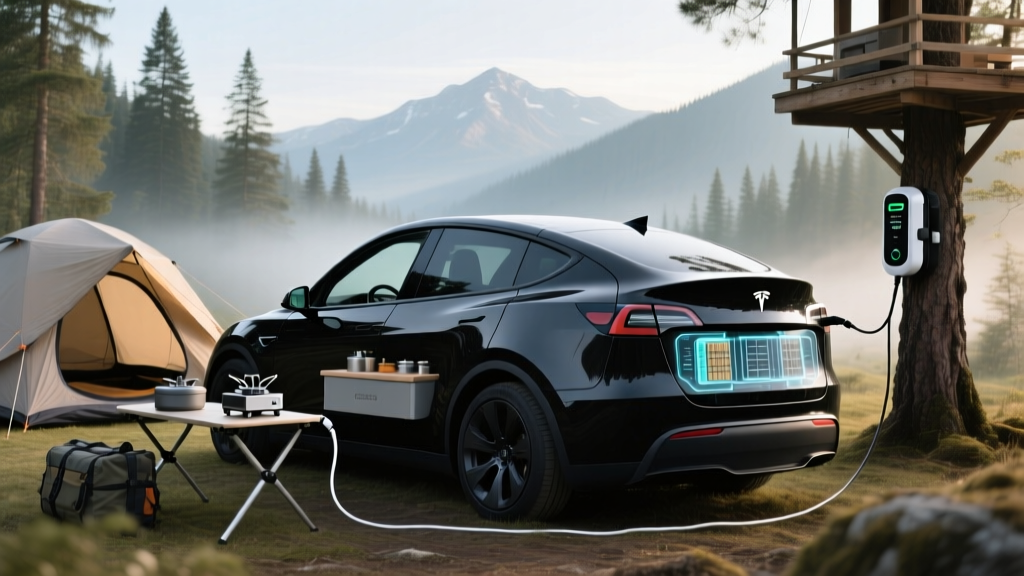
The search for the perfect Tesla Y tent setup is more than a niche trend — it's a full-blown movement among EV owners who want to combine zero-emission driving with overlanding and car camping. The 2026 Tesla Model Y, refreshed with the "Juniper" update, remains one of the most popular electric vehicles for tent camping thanks to its flat-load cargo floor, Camp Mode software, expanding Supercharger network, and available rooftop tent compatibility. But before you bolt a rooftop tent to the roof rails or inflate a tailgate annex, you need to understand exactly what this SUV can deliver in range, charging speed, cargo dimensions, and real-world efficiency when loaded down with gear.
This review covers the 2026 Tesla Model Y with a specific lens: Is it a practical platform for tent camping and overlanding? We'll run through EPA range, real-world range expectations under load, DC fast-charging curves, Camp Mode battery drain, cargo volume, and pricing — all with exact numbers.
2026 Tesla Model Y: Core Specs at a Glance
| Spec | Value |
|---|---|
| EPA Range | 320 miles (Long Range AWD) |
| Battery Capacity | ~78 kWh usable (NMC chemistry) |
| Drivetrain | Dual-Motor AWD |
| Horsepower | 384 hp (combined) |
| 0–60 mph | 4.8 seconds |
| Max DC Fast Charge | 250 kW (peak) |
| 10–80% DC Charge Time | ~25 minutes |
| Level 2 Home Charge Rate | 11.5 kW (~44 miles/hr) |
| MPGe (Combined) | 111 MPGe |
| Efficiency | 30 kWh/100 mi |
| Cargo Volume (rear seats folded) | 72.1 cu ft |
| Cargo Volume (behind 2nd row) | 30.2 cu ft |
| Ground Clearance | 6.6 inches |
| Towing Capacity | 3,500 lbs |
| Battery Warranty | 8 years / 120,000 miles |
| Base MSRP (Long Range AWD) | $46,630 |
Sources: EPA fueleconomy.gov, Tesla Model Y specifications.
Real-World Range: What Tent Camping Does to Your Miles
The rooftop tent penalty is real. Aerodynamic drag is the dominant range killer at highway speeds, and a rooftop tent — even a low-profile hard-shell — increases the Model Y's frontal area and disrupts its carefully optimized drag coefficient (Cd 0.23). Based on real-world owner reports from Tesla forums and overlanding communities, a rooftop tent reduces highway efficiency by roughly 10–18%, depending on tent profile and driving speed.
If you're running a tailgate tent or ground tent instead, the range penalty is negligible — only the extra weight of camping gear (typically 100–200 lbs in the cargo area) affects consumption, and that costs roughly 2–5% of range. For serious Tesla Y tent camping, the tailgate-annex-plus-ground-tent approach preserves the most range.
The Model Y's rear seats fold nearly flat, creating a 72.1-cu-ft cargo area that accommodates a full-size sleeping platform. Many owners use a custom-cut mattress (roughly 72" x 40") and sleep inside the vehicle with Camp Mode running — no external tent required. This "car camping" approach eliminates the rooftop tent drag penalty entirely.
Charging Speed: DC Fast Charging and Home Level 2
| Charging Level | Power / Rate | Speed | Notes |
|---|---|---|---|
| Level 1 (120V) | ~1.4 kW | ~5 miles/hr | Emergency/trickle only |
| Level 2 (240V, 48A) | 11.5 kW | ~44 miles/hr | Home Wall Connector; full charge ~8 hrs |
| DC Fast Charge (V3 Supercharger) | 250 kW peak | 10–80% in ~25 min | Peak rate sustained to ~50% SoC, then tapers |
| DC Fast Charge (V4 Supercharger) | Up to 250 kW* | 10–80% in ~25 min | *Model Y Juniper architecture limits to ~250 kW |
Tesla's Supercharger network remains the gold standard for road-trip charging reliability. With over 6,500 V3 and V4 Supercharger stalls across the U.S. as of early 2026, most camping routes — including national parks and remote corridors — are within reach of a fast charger. The Model Y Long Range peaks at 250 kW on a V3 stall, but like all EVs, that peak is not sustained. The charge curve holds near 250 kW from roughly 10% to 45% State of Charge (SoC), then tapers to ~150 kW through 65%, and drops further above 80%. Plan your road-trip stops around the 10–80% window for the fastest sessions.
For camping trips, preconditioning is critical. When you navigate to a Supercharger using the Tesla's built-in navigation, the battery thermal management system pre-warms (or pre-cools) the pack to optimize charge acceptance. If you arrive at a charger without preconditioning — especially in cold weather — your peak charge rate could be cut by 30–50%. Always route through the car's nav to trigger preconditioning.
At the campsite, Level 2 charging is rare but not impossible. Some campgrounds now offer 240V/50A outlets (NEMA 14-50), which with Tesla's Mobile Connector and the appropriate adapter can deliver up to ~30 miles of range per hour. For boondocking, a portable solar panel setup (200–400W) can trickle-charge the 12V system and offset Camp Mode drain, though it won't meaningfully recharge the traction battery.
Camp Mode: Battery Drain, Climate Control, and Overnight Comfort
Tesla's Camp Mode is the feature that makes the Model Y a legitimate tent-camping platform. When activated, it maintains cabin climate control, keeps USB ports powered, and allows the infotainment screen to play media — all while the vehicle is parked. The system draws from the high-voltage traction battery.
Real-world Camp Mode battery consumption:
- Mild weather (55–75°F): ~1–1.5 kWh per hour, or roughly 12–18 kWh over an 8-hour night. That translates to about 40–60 miles of range consumed overnight.
- Cold weather (25–40°F): ~2–3 kWh per hour due to heat pump and resistive heating demands. Expect 20–30 kWh consumed, or 65–100 miles of range lost.
- Hot weather (90°F+): ~1.5–2 kWh per hour for air conditioning. About 50–65 miles of range consumed.
For a summer camping weekend, you can comfortably sleep in the Model Y with Camp Mode running and still have 250+ miles of range in the morning — provided you arrived at the campsite with a high State of Charge. In winter, plan to arrive with at least 70–80% charge if you intend to run Camp Mode all night and still drive 150+ miles to the next charger.
The cabin is quiet — significantly quieter than any tent — and the heat pump (standard on all 2026 Model Y trims) is remarkably efficient. Many owners report sleeping better in the Model Y than in a traditional ground tent, especially in inclement weather.
Cargo Space, Tent Compatibility, and Camping Practicality
Whether you're sleeping inside the vehicle or setting up an external tent, the Model Y's dimensions matter:
- Cargo floor length (seats folded): ~67 inches — enough for most adults with a slight knee bend, or full extension with the front seats pushed forward
- Cargo floor width (between wheel wells): ~40 inches
- Cargo volume (seats folded): 72.1 cu ft
- Front trunk (frunk): 4.1 cu ft — useful for storing charging cables, a compact camp kitchen, or dirty gear
- Roof rail dynamic load limit: 165 lbs (Tesla's official rating) — sufficient for most hard-shell rooftop tents (typically 100–140 lbs) but check your specific tent's weight
- Rear legroom: 40.5 inches
- Headroom (front/rear): 40.3 / 38.7 inches
Popular Tesla Y tent configurations include:
- Rooftop tent on OEM crossbars: Brands like Thule, Yakima, and Roofnest make low-profile hard-shell tents that mount to the Model Y's flush roof rails. This setup keeps the cargo area free for gear but adds aerodynamic drag and consumes ~10–18% of highway range.
- Tailgate annex tent: These attach to the open liftgate and create a covered vestibule behind the vehicle. The Model Y's hatchback design makes this setup easy. You sleep inside the car with the annex serving as a kitchen/changing area.
- Ground tent + car for gear storage: The simplest and most range-efficient approach. Pitch a standalone tent and use the Model Y's 72.1 cu ft of cargo space to store everything. Camp Mode can still run cabin heating/AC if you retreat to the car.
- In-car sleeping platform: Custom platforms (from brands like Tukan, EV Camping Co., or DIY builds) create a flat sleeping surface with storage underneath. This is the most popular approach among dedicated Tesla campers.
Pricing, Trims, and Federal Tax Credit Eligibility
| Trim | MSRP | Federal Credit (§30D) | Effective Price* |
|---|---|---|---|
| Long Range RWD | $44,130 | Up to $7,500 | ~$36,630 |
| Long Range AWD | $46,630 | Up to $7,500 | ~$39,130 |
| Performance AWD | $51,130 | Up to $7,500 | ~$43,630 |
*Effective price assumes full $7,500 federal tax credit eligibility. Actual credit depends on buyer income, battery sourcing compliance, and point-of-sale transfer rules.
The 2026 Model Y qualifies for the IRS §30D federal clean vehicle credit of up to $7,500, but eligibility has strict requirements that buyers must verify:
- MSRP cap: SUVs must be under $80,000 — all Model Y trims qualify ✓
- Buyer income cap: AGI must not exceed $150,000 (single), $225,000 (head of household), or $300,000 (joint) ✓ (buyer-dependent)
- Battery sourcing: Critical minerals and battery components must meet escalating percentage thresholds from U.S. or FTA-partner countries. Tesla has significantly shifted supply chains, but verify current-year compliance on the IRS qualified vehicles list.
- Point-of-sale transfer: As of 2024, buyers can transfer the credit to the dealer at purchase for an immediate price reduction, rather than waiting to claim it on their tax return. Tesla supports this at delivery.
- Final assembly: Must be in North America — the Model Y is assembled in Austin, TX, and Fremont, CA ✓
For tent camping specifically, the Long Range AWD at $46,630 (before credit) is the sweet spot. AWD provides traction on forest service roads and unpaved campsite approaches, and the 320-mile EPA range gives you the most buffer for remote driving. The Performance trim sacrifices ~20 miles of range for quicker acceleration — a tradeoff that doesn't benefit camping use cases.
Driver Assistance on the Road to the Campsite
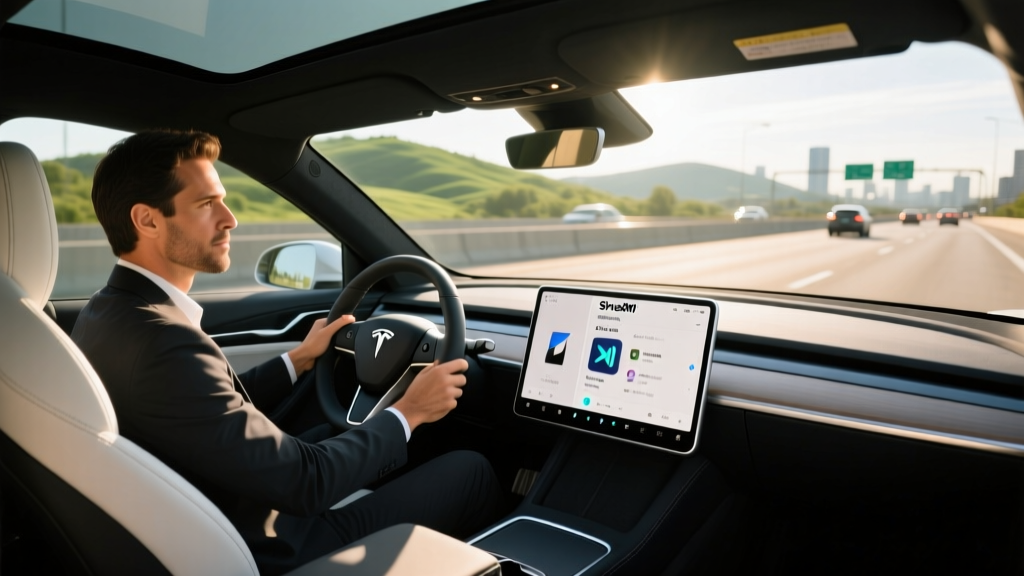
That said, Autopilot is genuinely useful on long highway stretches to remote camping destinations. The adaptive cruise control and lane-centering reduce fatigue on 4–6 hour drives, and Tesla's navigation system reliably routes you through Supercharger stops. FSD (Supervised) can handle some surface streets, but on unpaved or poorly marked forest roads, you'll want to disengage and drive manually.
Warranty, Ownership Costs, and Longevity
Tesla's warranty coverage for the 2026 Model Y:
- Basic vehicle: 4 years / 50,000 miles
- Battery and drive units: 8 years / 120,000 miles (Long Range/Performance) with a minimum 70% capacity retention guarantee
- Rust-through (perforation): 12 years, unlimited miles
The 8-year/120,000-mile battery warranty is important for camping-oriented owners who may put higher-than-average miles on the vehicle. If the battery degrades below 70% of its original capacity within the warranty period, Tesla will repair or replace it. Real-world data from high-mileage Model Y owners suggests NMC packs in this generation retain roughly 88–92% capacity at 100,000 miles with normal charging habits (avoiding frequent 100% charges and deep discharges).
Insurance costs for the Model Y remain above the compact-SUV average. Expect annual premiums of $1,800–$2,800 depending on your state, age, and driving record. Tesla offers its own insurance product in many states that uses real-time driving data to set rates, which can be competitive for safe drivers.
How the Model Y Compares to Key Camping EV Alternatives
| Spec | Tesla Model Y LR AWD | Ford Mustang Mach-E Ext. Range AWD | Hyundai Ioniq 5 Long Range AWD |
|---|---|---|---|
| EPA Range | 320 mi | 310 mi | 290 mi |
| Battery | ~78 kWh NMC | 91 kWh NMC | 77.4 kWh NMC |
| Max DC Charge | 250 kW | 150 kW | 240 kW (350 kW capable) |
| 10–80% Time | ~25 min | ~42 min | ~18 min |
| Cargo (seats folded) | 72.1 cu ft | 59.7 cu ft | 59.3 cu ft |
| Camp Mode | Yes (native) | No (aftermarket workaround) | Yes (Utility Mode) |
| Roof Rail Load | 165 lbs | 165 lbs | 165 lbs |
| Base MSRP | $46,630 | $48,995 | $49,950 |
| Charging Network | Supercharger (native) | NACS adapter for Superchargers | NACS adapter for Superchargers |
The Model Y's advantages for tent camping are clear: the largest cargo volume in its class, native Camp Mode, the most extensive fast-charging network, and competitive range. The Hyundai Ioniq 5 charges faster (18 minutes 10–80% on a 350 kW charger), but its smaller cargo area and slightly shorter range make it less ideal for loaded camping trips. The Mach-E lags in both charging speed and cargo space.
Pros and Cons: Tesla Model Y for Tent Camping
Pros
- 72.1 cu ft flat-load cargo floor — best in class for in-car sleeping
- Native Camp Mode with climate control and low overnight drain
- Supercharger network: 6,500+ stalls, most reliable public charging
- 320-mile EPA range provides real buffer for remote destinations
- Heat pump standard — efficient cold-weather camping
- OTA updates continuously improve features
- $7,500 federal tax credit eligible (with caveats)
- Frunk adds sealed, weatherproof gear storage
Cons
- 6.6" ground clearance limits rough-road access to campsites
- Rooftop tent cuts highway range by 10–18%
- No spare tire — tire punctures on remote roads are a real risk
- Minimal physical buttons — everything via touchscreen (glove operation in cold)
- Insurance costs above segment average
- Build quality inconsistency reported by some owners
- No native V2L (vehicle-to-load) to power external camp appliances
- Single USB-C power limit for external accessories
Who the Tesla Model Y Tent Setup Suits Best
The Tesla Y tent camping setup is ideal for:
- Weekend car campers who drive 100–250 miles to campsites and want a quiet, climate-controlled sleeping environment without pitching a traditional tent.
- Couples and solo travelers who value comfort over ruggedness — the Model Y is a luxury camping platform, not a hardcore off-roader.
- Existing Tesla owners already embedded in the Supercharger ecosystem who want to add camping to their EV lifestyle without buying a second vehicle.
- Cold-weather campers who benefit from the heat pump and insulated cabin — far warmer than any tent in sub-freezing conditions.
It is not ideal for:
- Overlanders who need high ground clearance, skid plates, and serious off-road capability. Consider a Rivian R1S or a traditional 4x4 with a rooftop tent instead.
- Large families needing three rows of seating — the Model Y seats five (an optional third row was discontinued).
- Boondockers who need days of off-grid power — the Model Y has no V2L capability to run external appliances or tools.
Frequently Asked Questions
What is the real-world range of the 2026 Tesla Model Y with a rooftop tent?
With a rooftop tent installed, expect 240–265 miles of real-world highway range in moderate weather, down from the 320-mile EPA sticker. Cold weather and mountain driving will reduce this further. A tailgate tent or ground tent setup preserves nearly all of the vehicle's range.
How fast does the Model Y charge on a road trip?
At a Tesla V3 Supercharger (250 kW), the Model Y charges from 10% to 80% in approximately 25 minutes. Peak charge rate is sustained to about 45% SoC, then tapers. Always use the car's navigation to route to a Supercharger — this triggers battery preconditioning for faster charging.
How much does the 2026 Model Y cost after the federal tax credit?
The Long Range AWD starts at $46,630. If you qualify for the full $7,500 §30D credit (subject to income caps, battery sourcing rules, and MSRP limits), the effective price drops to approximately $39,130. Confirm eligibility at irs.gov and with a tax professional.
Is the Tesla Model Y worth buying for camping vs. competitors?
For car camping and light overlanding, yes. The Model Y offers the best combination of cargo space (72.1 cu ft), native Camp Mode, Supercharger access, and range in its price class. Competitors like the Ioniq 5 charge faster but have less cargo room. For serious off-road overlanding, look at the Rivian R1S or a body-on-frame SUV.
Can I run a CPAP machine or laptop from the Model Y while camping?
Yes. With Camp Mode active, the USB-C ports remain powered and can run low-draw devices like a CPAP machine, laptop, or phone chargers. For higher-draw AC appliances, you'd need a portable power station (like a Jackery or EcoFlow) since the Model Y does not offer native V2L (vehicle-to-load) functionality.
Does the Model Y qualify for the federal EV tax credit in 2026?
Yes, all 2026 Model Y trims currently qualify for up to $7,500 under IRS §30D, provided the buyer meets income thresholds and the vehicle's battery sourcing meets critical-mineral and component requirements. The credit can be transferred at point of sale for an immediate price reduction. Always verify current eligibility on the IRS qualified vehicles page, as sourcing rules tighten annually.