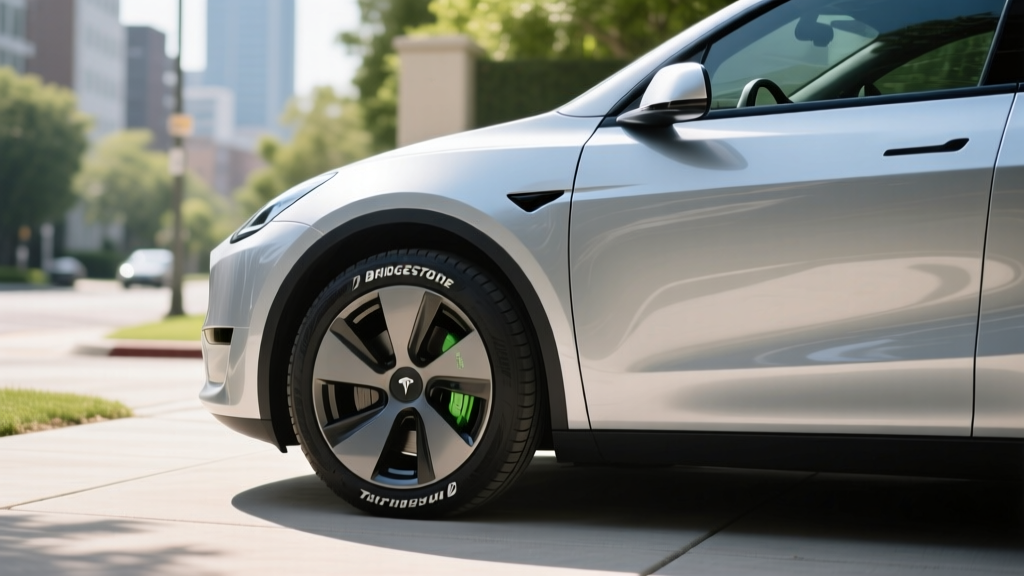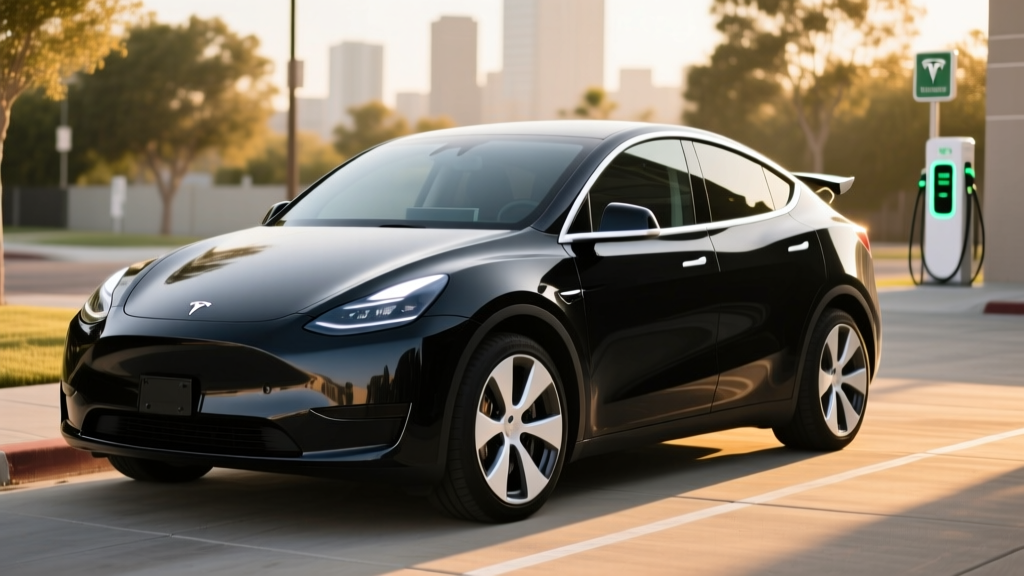
The Tesla Model Y remains the best-selling electric vehicle in the United States for good reason, but the entry point into the lineup tells a very specific story about value, compromise, and daily usability. The Tesla Model Y Standard Rear-Wheel Drive strips away the dual-motor complexity and Long Range battery to deliver a compact electric crossover at the lowest possible price in Tesla's portfolio. For 2026, this rear-wheel-drive variant continues to serve as the gateway into the Tesla ecosystem — complete with Supercharger access, over-the-air updates, and the minimalist interior that defines the brand.
But with competitors like the Hyundai Ioniq 5, Ford Mustang Mach-E, and Chevrolet Equinox EV pushing hard on price and features, does the base Model Y RWD still make sense? We break down every number that matters — from real-world range to charging curves to total ownership cost — so you can decide whether this is the right EV for your driveway.
Quick Verdict: Who Should Buy the Model Y Standard RWD?
The Tesla Model Y Standard Rear-Wheel Drive is the right pick for urban and suburban commuters who prioritize low running costs, access to the Supercharger network, and Tesla's software ecosystem over maximum range or all-weather capability. It's a practical daily driver for households with reliable home charging and mostly temperate climates. If you regularly drive more than 200 miles in a single trip, live in a region with harsh winters, or need all-wheel drive for snow, you'll want to step up to the Long Range AWD variant.
- Your daily commute is under 60 miles round-trip
- You have access to Level 2 home charging
- You live in a mild climate (rarely below 25°F)
- You value Supercharger network access for occasional road trips
- You want the lowest entry price into a Tesla SUV
- You frequently drive 250+ miles between charges
- You need AWD for snow or mountain driving
- You want maximum cargo capacity with the larger battery pack
- Cold-weather range loss would leave you short on range
Range, Battery & Efficiency: The Numbers That Matter
The 2026 Tesla Model Y Standard Rear-Wheel Drive carries an EPA-estimated range of 260 miles on a full charge. That figure comes from a 60 kWh usable lithium iron phosphate (LFP) battery pack — a chemistry choice that has significant implications for longevity, charging habits, and cold-weather performance.
Real-World Expectations:
- City/suburban mixed driving (55-65°F): 245-260 miles — LFP packs are efficient at moderate speeds and regen-friendly city routes
- Highway driving (70-75 mph): 215-235 miles — aerodynamic drag reduces efficiency significantly above 65 mph
- Cold weather (20-30°F, no preconditioning): 170-195 miles — LFP chemistry suffers more capacity loss in cold than NMC, and cabin heating draws heavily from the pack
- Cold weather with preconditioning + heat pump: 195-215 miles — Tesla's standard heat pump helps, but LFP cold-weather loss is a real factor
The LFP chemistry in this pack is worth understanding. Unlike the nickel-manganese-cobalt (NMC) batteries in the Long Range and Performance variants, LFP offers a longer cycle life, greater thermal stability, and Tesla recommends charging to 100% daily — eliminating the 80% daily charge limit that NMC owners must observe. The trade-off is lower energy density (hence the smaller range), reduced cold-weather performance, and slightly slower DC fast charging speeds.
Efficiency comes in at 123 MPGe combined (city: 129 MPGe / highway: 116 MPGe) according to EPA data on fueleconomy.gov, translating to roughly 27 kWh per 100 miles. That's competitive within the compact EV crossover segment, though the Hyundai Ioniq 5 RWD edges slightly ahead at 132 MPGe combined.
| Specification | Value |
|---|---|
| EPA Range | 260 miles |
| Battery (usable) | 60 kWh, LFP chemistry |
| Efficiency | 123 MPGe combined / 27 kWh/100 mi |
| Drivetrain | Rear-Wheel Drive (single motor) |
| Horsepower | 295 hp |
| 0-60 mph | 6.6 seconds |
| Top Speed | 135 mph |
| Max DC Fast Charge | 170 kW peak |
| 10-80% DC Fast Charge | ~25 minutes |
| Level 2 Home Charge Rate | 11.5 kW (~37 miles/hr) |
| Cargo (rear seats up) | 30.2 cu ft |
| Cargo (rear seats folded) | 72.1 cu ft |
| Rear Legroom | 37.4 inches |
| Base MSRP | $44,990 (incl. destination) |
| Battery Warranty | 8 years / 100,000 miles (70% retention) |
| Vehicle Warranty | 4 years / 50,000 miles |
Charging Speed: DC Fast, Level 2 & What to Expect
Charging is where the LFP battery's characteristics become most apparent. The Model Y Standard RWD peaks at 170 kW on a DC fast charger — lower than the Long Range's 250 kW capability. On a V3 Supercharger or comparable 350 kW Electrify America station, you'll see the charge curve ramp quickly to around 150-170 kW in the 10-30% state-of-charge window, then taper progressively.
| Charging Level | Power | Speed | Notes |
|---|---|---|---|
| Level 1 (120V outlet) | ~1.4 kW | ~4-5 miles/hour | Emergency/top-up only; 50+ hours for full charge |
| Level 2 (240V, 48A home charger) | 11.5 kW | ~37 miles/hour | Full charge in ~5.5 hours; ideal overnight setup |
| DC Fast Charge (peak) | 170 kW | ~130 miles in 15 min | 10-80% in ~25 min; tapers sharply above 80% |
| Tesla Supercharger V3 | Up to 170 kW | 10-80% ~25 min | Precondition battery via nav for peak speeds |
Real-world charging tip: The charge curve on LFP is less aggressive than NMC above 50% SoC. While the 10-80% time of roughly 25 minutes is acceptable for road trips, expect charging from 80-100% to take a disproportionately long time — plan your stops to stay in the 10-80% sweet spot. Always navigate to a Supercharger using the car's built-in routing to trigger battery preconditioning; arriving without preconditioning can add 5-10 minutes to your stop, especially in cold weather.
For home charging, a Level 2 wall connector at 48 amps delivers 11.5 kW, replenishing roughly 37 miles of range per hour. A full charge from empty takes about 5.5 hours — easily achievable overnight. Installation costs for a 240V/60A circuit typically range from $800 to $2,500 depending on your electrical panel's capacity and the distance from panel to charger location. If your home has a 100-amp service panel, you may need a panel upgrade ($1,500-$3,000 additional) to support a 48A charger alongside other household loads.
Performance & Driving Dynamics
The single rear-mounted motor produces 295 horsepower and propels the Model Y Standard RWD from 0 to 60 mph in 6.6 seconds. That's not the neck-snapping acceleration of the Performance variant, but it's more than adequate for highway merging, passing, and spirited city driving. The rear-wheel-drive layout also gives this Model Y a slightly lighter front end, which translates to marginally better efficiency and a more natural steering feel compared to the dual-motor AWD models.
Ride quality remains firm — Tesla's suspension tuning prioritizes handling composure over plushness. Road imperfections are communicated clearly to the cabin, which some drivers appreciate and others find tiring on long trips. The regenerative braking system offers strong one-pedal driving capability, though Tesla removed the user-adjustable regen setting several model years ago; you get one aggressive regen profile, and it takes a few days to adapt if you're coming from a conventional vehicle.
Notably, the Standard RWD does not include adaptive air suspension or the adaptive dampers found on higher trims. You're on conventional coil springs, which keeps costs down but limits ride refinement.
Interior, Tech & Driver Assistance
The Model Y's interior continues to polarize. The minimalist dashboard centers entirely around a 15.4-inch touchscreen that handles climate controls, media, navigation, and vehicle settings. There are no physical buttons, no instrument cluster, and no heads-up display. For 2026, Tesla has refined the UI responsiveness and added ambient lighting improvements, but the fundamental layout remains unchanged.
What works well:
- Over-the-air software updates that add features post-purchase
- Integrated navigation with real-time Supercharger routing and availability
- Tesla app with remote climate control, charging monitoring, and Sentry Mode alerts
- Spotify, Tidal, and podcast integration built into the infotainment
- Sentry Mode dashcam recording (requires USB drive)
- Dog Mode and Camp Mode for climate management while parked
What falls short:
- No Apple CarPlay or Android Auto — a dealbreaker for some buyers
- Rear visibility is compromised by the sloping roofline; the camera-based mirror helps but isn't standard
- Panel gap quality has improved but still varies unit to unit
- Rear-seat passengers get no dedicated climate controls or USB-C ports in the base trim
Every Model Y ships with Tesla Autopilot (Traffic-Aware Cruise Control + Autosteer), which is an SAE Level 2 driver-assistance system. The driver must remain fully engaged — hands on the wheel, eyes on the road — at all times. Tesla's optional Full Self-Driving (Supervised) package ($8,000 or $99/month) adds automated lane changes, traffic light recognition, and city street navigation, but it remains Level 2: the human driver is legally and practically responsible for all driving decisions. No Tesla vehicle sold to consumers is a Level 4 autonomous vehicle. For true driverless robotaxi service, see Waymo's operational areas.
Safety ratings are strong. The Model Y earned a 5-Star Overall Safety Rating from NHTSA and Top Safety Pick recognition from IIHS in prior model years, with excellent crash-test performance across all categories.
Pricing, Trims & Federal Tax Credit Eligibility
The 2026 Tesla Model Y Standard Rear-Wheel Drive starts at $44,990 including the $1,390 destination charge. This is a single-trim offering — Tesla does not break the Standard RWD into sub-trims. Options are limited to paint color (Pearl White is standard; additional colors cost $1,000-$2,500), wheel size (19-inch standard, 20-inch optional at $2,000), interior color (all black standard, black and white $1,000), and the FSD package.
| Item | Cost |
|---|---|
| Base MSRP (incl. destination) | $44,990 |
| Typical options (paint + wheels) | $2,000 - $4,500 |
| As-tested estimate (moderately equipped) | $47,500 - $49,500 |
| FSD Supervised (optional) | +$8,000 or $99/mo |
| Federal Tax Credit (§30D, if eligible) | Up to -$7,500 |
| Estimated net price after credit | $37,490 - $42,000 |
Federal EV Tax Credit (IRS §30D) — Critical Details: The Model Y Standard RWD may qualify for up to $7,500 in federal tax credits, but eligibility depends on several requirements that change periodically. As of 2026, the key criteria include:
- MSRP cap: The vehicle's MSRP must not exceed $80,000 for SUVs — the Model Y qualifies
- Buyer income cap: Modified adjusted gross income must not exceed $150,000 (single), $225,000 (head of household), or $300,000 (joint filing)
- Battery sourcing: Critical minerals and battery components must meet phased-in domestic sourcing thresholds — Tesla has worked to qualify LFP packs, but specific eligibility can change; verify at IRS.gov §30D guidelines
- Point-of-sale transfer: Eligible buyers can transfer the credit to the dealer at purchase, reducing the upfront cost rather than waiting for a tax refund
- VIN verification: Confirm your specific vehicle's eligibility using the VIN at fueleconomy.gov before purchase
Important: Tax credit eligibility is subject to change based on battery sourcing rules, manufacturer caps, and legislative updates. Consult a tax professional and verify on IRS.gov before relying on the credit in your purchase decision.
Ownership Costs: How Does the Model Y RWD Compare?
Over five years, the Model Y Standard RWD offers compelling total cost of ownership (TCO) when compared to a similarly priced gas-powered compact SUV. Here's a realistic breakdown:
| Category | Model Y Standard RWD | Gas SUV (e.g., Toyota RAV4 AWD) |
|---|---|---|
| Purchase price (after credit) | ~$38,500 | ~$35,000 |
| Fuel/energy (75k miles) | ~$3,400 (home charging, $0.14/kWh avg) | ~$8,100 (28 MPG avg, $3.40/gal) |
| Maintenance | ~$1,200 | ~$3,500 |
| Insurance (avg) | ~$9,500 | ~$7,200 |
| Depreciation (est.) | ~$14,000 | ~$11,500 |
| Total 5-Year Cost | ~$66,600 | ~$65,300 |
The Model Y's fuel and maintenance savings are substantial — roughly $7,000 over five years — but higher insurance premiums (common across EVs due to repair costs and parts pricing) and steeper depreciation partially offset those gains. The TCO is essentially comparable to a gas SUV, with the advantage shifting further in the EV's favor if gas prices rise or if you have access to cheap utility-rate electricity.
Pros, Cons & the Competition
- Lowest entry price into the Tesla Supercharger network
- LFP battery allows daily 100% charging without degradation concerns
- Class-leading software, OTA updates, and app integration
- Strong safety ratings (5-star NHTSA)
- Practical cargo space (30.2 cu ft rear seats up, 72.1 folded)
- Quick 0-60 (6.6s) for a base-model crossover
- Federal tax credit eligibility can bring effective price below $38K
- 260-mile EPA range limits road-trip flexibility vs Long Range
- LFP battery loses more range in cold weather than NMC
- 170 kW peak DC charging is slower than many competitors
- No Apple CarPlay or Android Auto
- Firm ride quality; no adaptive suspension available
- Single-motor RWD not ideal for snow/ice climates
- Insurance costs higher than comparable gas vehicles
Key competitors to cross-shop:
- Hyundai Ioniq 5 SE RWD: 303-mile EPA range, 225 kW DC charging, CarPlay included — more range and faster charging, but no Supercharger access (though NACS adapters are expanding)
- Ford Mustang Mach-E Select RWD: 250-mile range, competitive pricing, more traditional interior controls
- Chevrolet Equinox EV 3RS: ~315-mile range, lower starting price, but less refined software
- Tesla Model Y Long Range AWD: 330-mile range, 250 kW charging, dual-motor AWD — $4,000-$5,000 more but substantially more capable
Frequently Asked Questions
What is the real-world range of the Tesla Model Y Standard RWD?
The EPA rates it at 260 miles, but expect 215-235 miles on highway road trips at 70-75 mph, and 170-215 miles in cold weather depending on temperature and preconditioning. For daily commuting in moderate climates, 240-260 miles is achievable.
How fast does the Model Y Standard RWD charge at home and on the road?
At home on a Level 2 (240V, 48A) charger, it adds about 37 miles per hour, reaching a full charge in roughly 5.5 hours. On DC fast chargers, it peaks at 170 kW and charges from 10-80% in approximately 25 minutes with battery preconditioning.
Does the Tesla Model Y Standard RWD qualify for the $7,500 federal tax credit?
It may qualify, depending on your income (must be under $150K single / $300K joint), the vehicle's battery sourcing compliance with current §30D rules, and MSRP (the Model Y is under the $80K SUV cap). Verify your specific vehicle's eligibility at IRS.gov and fueleconomy.gov before purchase. The credit can be transferred at point of sale.
Is the Model Y Standard RWD worth buying over the Long Range?
If your daily driving stays under 150 miles and you have home charging, the Standard RWD saves $4,000-$5,000 upfront and still delivers the core Tesla experience. The Long Range AWD's 330-mile range, faster 250 kW charging, and all-wheel drive are worth the premium for road-trippers, cold-climate drivers, and those without reliable home charging.
Is Tesla Autopilot or FSD self-driving?
No. Both Autopilot and Full Self-Driving (Supervised) are SAE Level 2 driver-assistance systems. The driver must remain fully attentive and in control at all times. Tesla's consumer vehicles are not autonomous. Level 4 driverless service is currently only available through robotaxi operators like Waymo in limited cities.
How long will the LFP battery last?
LFP batteries are known for excellent cycle life — typically 3,000+ full charge cycles before significant degradation. Tesla warranties the battery for 8 years or 100,000 miles with a minimum 70% capacity retention threshold. Real-world data suggests LFP packs in Tesla vehicles degrade slowly and linearly, with many owners reporting 90%+ capacity after 50,000 miles.
Can I tow with the Model Y Standard RWD?
Tesla does not rate the Standard RWD for towing. If towing capacity matters (up to 3,500 lbs), you need the Long Range AWD variant with the factory tow package.