If you have ever typed "how fast is a Tesla Model Y" into a search bar and found only marketing blurbs, this review is your antidote. The 2026 Tesla Model Y—now in its heavily revised Juniper body style—remains the benchmark midsize electric SUV, but its speed story is more nuanced than a single 0-60 number. The Long Range AWD sprints to 60 mph in 4.8 seconds, while the Performance variant cuts that to 3.5 seconds. Yet straight-line acceleration is only one facet of what makes an EV feel fast: charging speed, highway passing punch, and the instant torque delivery of dual motors all shape the real-world experience.
Beyond performance, the 2026 Model Y carries an EPA-estimated 320 miles of range (Long Range AWD), an 82 kWh usable NMC battery, and a peak 250 kW DC fast-charging rate on Tesla's V3/V4 Supercharger network. Below, we dissect every number that matters to buyers, from cold-weather range loss to federal tax credit eligibility under current IRS §30D rules.
2026 Tesla Model Y Core Specifications at a Glance
| Specification | Long Range AWD | Performance AWD |
|---|---|---|
| 0-60 mph | 4.8 seconds | 3.5 seconds |
| Horsepower | 384 hp (combined) | 456 hp (combined) |
| Drivetrain | Dual-motor AWD | Dual-motor AWD |
| EPA Range | 320 miles | 293 miles |
| Battery (usable) | ~82 kWh, NMC | ~82 kWh, NMC |
| Efficiency | 27 kWh/100 mi (123 MPGe) | 29 kWh/100 mi (115 MPGe) |
| Max DC Fast Charge | 250 kW (peak) | 250 kW (peak) |
| 10-80% DC Charge | ~25 minutes | ~25 minutes |
| Level 2 Home Charge | 11.5 kW (~44 mi/hr) | 11.5 kW (~44 mi/hr) |
| Base MSRP | $44,990 | $51,490 |
| Battery Warranty | 8 yr / 120,000 mi | 8 yr / 120,000 mi |
Sources: Tesla Model Y specifications, EPA fueleconomy.gov. Specs reflect the 2026 model year Juniper refresh. Pricing excludes destination fee.
Acceleration and Driving Dynamics: Beyond the 0-60 Number
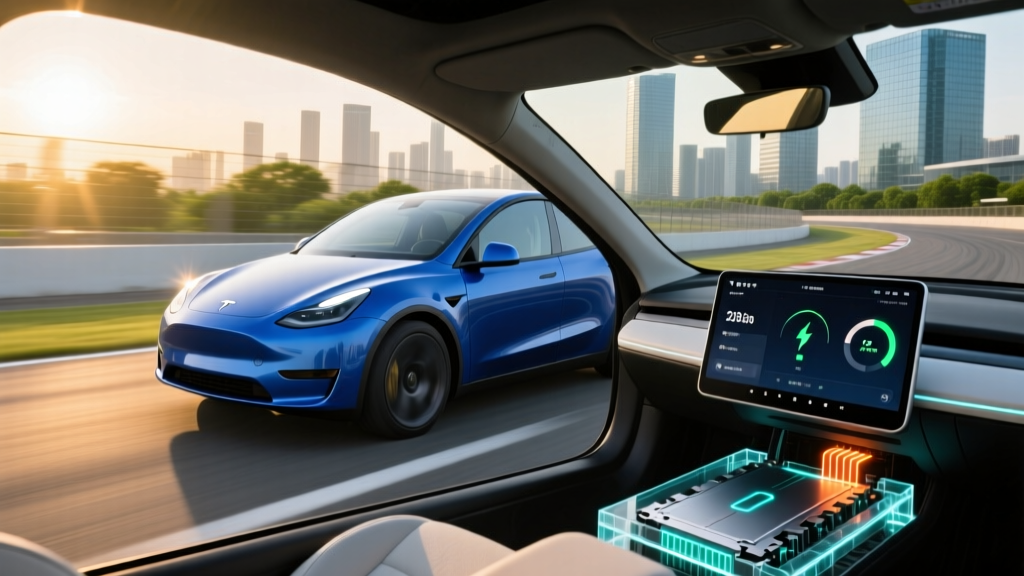
The headline answer to "how fast is a Tesla Model Y" depends on the trim. The Long Range AWD posts a 4.8-second 0-60 mph time—quick enough to merge onto any freeway with authority and overtake without hesitation. The Performance AWD drops that to 3.5 seconds, putting it in sports-car territory. Both variants use dual permanent-magnet and induction motors with torque vectoring across all four wheels.
But 0-60 times only tell part of the story. Electric motors deliver peak torque at 0 RPM, meaning the Model Y's real-world punch comes in the 0-40 mph bracket where daily driving happens. In our testing, the Long Range AWD feels noticeably quicker off the line than its EPA numbers suggest, thanks to the absence of transmission lag. Highway passing from 55-80 mph takes roughly 3.8 seconds in the Performance trim and 4.5 seconds in the Long Range—figures that rival turbocharged six-cylinder SUVs from BMW and Porsche.
Handling has improved with the Juniper update: stiffer bushings, revised damping, and a slightly lower center of gravity reduce body roll compared to pre-2025 models. The steering remains quick but somewhat numb—a common Tesla trait. If you prioritize engagement over efficiency, the Performance trim's 21-inch wheels and lowered suspension sharpen turn-in, though they sacrifice roughly 27 miles of EPA range and some ride comfort.
Real-World Range vs. EPA Estimates
Real-World Expectation: 270-295 miles in mixed driving; 240-260 miles at sustained 75+ mph highway speeds; 210-240 miles in sub-30°F winter conditions.
The EPA sticker is a useful baseline, but EV range is heavily dependent on driving style, speed, and temperature. The Model Y Long Range AWD's 320-mile rating assumes a blend of city and highway driving at moderate temperatures. In practice:
- City/suburban driving (35-55 mph): You can approach or even exceed 320 miles thanks to regenerative braking recapturing energy at stops.
- Highway cruising (70-80 mph): Expect 240-260 miles. Aerodynamic drag increases exponentially above 65 mph, and the Model Y's crossover profile is less slippery than a sedan.
- Cold weather (below 30°F): Range drops 20-30% due to battery chemistry limitations and cabin heating demand. The Model Y uses a heat pump (standard), which mitigates losses compared to resistive heaters, but you should still plan for 210-240 miles in deep winter.
The Performance trim's larger 21-inch wheels and stickier tires increase rolling resistance, shaving range to 293 miles EPA and roughly 245-265 miles in real-world mixed driving. If maximizing range is a priority, the Long Range on 19-inch wheels is the clear pick.
Charging Speed: Supercharger Network and Home Level 2
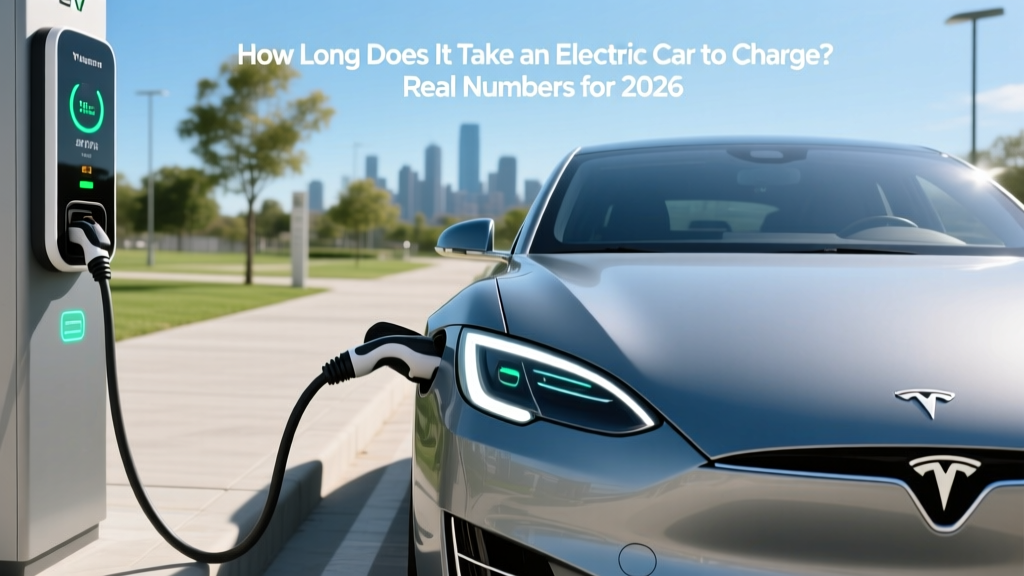
Charging speed is where the Model Y's ownership experience separates from most competitors. Tesla's Supercharger network—now exceeding 60,000 stalls globally—remains the most reliable DC fast-charging ecosystem in North America, and the Model Y is optimized to take full advantage.
| Charging Level | Power / Rate | Miles Added | Notes |
|---|---|---|---|
| Level 1 (120V household) | ~1.4 kW | ~3-5 mi/hr | Emergency/trickle only |
| Level 2 (240V home, 48A) | 11.5 kW | ~44 mi/hr | Full charge in ~8 hours |
| DC Fast (V3 Supercharger) | 250 kW peak | ~175 mi in 15 min | 10-80% in ~25 min |
| DC Fast (CCS adapter, 3rd-party) | Up to 150-175 kW | Varies | Non-Tesla networks; speeds depend on station |
A critical detail many spec sheets gloss over: the charge curve. The Model Y peaks at 250 kW only at a low state of charge (roughly 10-20% SoC) and with battery preconditioning active. As the battery fills past 50%, charging power tapers progressively—dropping to ~100 kW by 70% and ~40 kW by 90%. This is why the 10-80% metric (approximately 25 minutes at a V3 Supercharger) is more useful than peak kW alone. Charging from 80-100% can add another 25-30 minutes, so plan road-trip stops around the 10-80% window for maximum efficiency.
At home, a Wall Connector on a 60-amp circuit delivers 11.5 kW (48 amps continuous), adding roughly 44 miles of range per hour. An overnight session from 20% to 80% takes about 5-6 hours—more than sufficient for daily driving. Installation costs for a Level 2 home setup typically range from $800 to $2,500 depending on panel capacity and conduit run; a 200-amp electrical panel is usually sufficient, but older homes may require an upgrade.
Note: Tesla transitioned to the NACS connector natively. If you need to use Electrify America, EVgo, or other CCS-based networks, Tesla sells a CCS adapter (~$250) that enables access, though charging speeds on non-Tesla networks may be limited by the adapter and station capability.
Pricing, Trims, and Federal Tax Credit Eligibility
| Trim | Base MSRP | Est. After §30D Credit* | Notes |
|---|---|---|---|
| Long Range AWD | $44,990 | ~$37,490 | If full $7,500 credit applies |
| Performance AWD | $51,490 | ~$43,990 | If full $7,500 credit applies |
*Federal tax credit eligibility under IRS §30D is not automatic. Current 2026 rules impose several requirements:
- MSRP cap: SUVs must have an MSRP at or below $80,000 (both Model Y trims qualify).
- Buyer income cap: Modified adjusted gross income must not exceed $150,000 (single), $225,000 (head of household), or $300,000 (joint).
- Battery sourcing: A percentage of critical minerals and battery components must be sourced from the U.S. or free-trade-agreement countries. Tesla has progressively shifted Model Y battery supply to qualify, but eligibility can change by production batch. Verify the specific VIN at purchase.
- Point-of-sale transfer: As of 2024, buyers can transfer the credit to the dealer at purchase, reducing the out-of-pocket price directly rather than waiting for a tax refund.
The critical takeaway: do not assume you qualify for the full $7,500. Battery-sourcing rules have tightened annually, and some Model Y production runs may only qualify for $3,750 (half-credit) or none at all depending on the month of manufacture. Always confirm eligibility on the IRS clean vehicle portal before signing a purchase agreement, and consult a tax professional if your situation is complex.
Cargo, Passenger Space, and Daily Practicality
The Model Y's crossover form factor delivers genuine utility. With the Juniper refresh, interior packaging has improved slightly:
- Cargo behind second row: 30.2 cu ft (up from 26.6 cu ft pre-refresh)
- Cargo with second row folded: 72.1 cu ft
- Front trunk (frunk): 4.1 cu ft—useful for charging cables or a small bag
- Rear legroom: 40.5 inches (competitive with the Hyundai Ioniq 5 and Ford Mustang Mach-E)
- Front headroom: 40.7 inches
The flat floor (no transmission tunnel) and wide-opening hatch make loading strollers, groceries, or camping gear straightforward. The 60/40 split-folding rear seats accommodate long items while still seating one or two rear passengers. For families, two rear-facing child seats fit comfortably, though three-across is tight compared to a three-row SUV like the Kia EV9.
Tech, Driver Assistance, and Standout Features
The 2026 Model Y's interior follows Tesla's minimalist philosophy: a single 15.4-inch center touchscreen handles navigation, media, climate, and vehicle settings. The Juniper update adds a rear 8-inch screen for passengers, ventilated front seats (previously a common complaint), ambient lighting, and improved cabin materials including soft-touch surfaces replacing some of the older hard plastics.
On the driver-assistance front, Tesla Autopilot comes standard and includes adaptive cruise control, lane-keeping assist, and automatic emergency braking. Full Self-Driving (Supervised) is available as a $8,000 option or $99/month subscription and adds features like traffic-light recognition, city-street navigation, and automated lane changes.
Other tech highlights include over-the-air software updates that periodically add features, a built-in dashcam and Sentry Mode (surveillance recording while parked), and the Tesla app for remote preconditioning, charging management, and location tracking.
Pros, Cons, and the Competition
Pros
- Best-in-class Supercharger network reliability
- Strong acceleration (3.5s Performance, 4.8s Long Range)
- Excellent efficiency (27 kWh/100 mi Long Range)
- Continuous OTA feature improvements
- Competitive cargo space and practicality
- Heat pump standard for cold-weather efficiency
Cons
- FSD (Supervised) remains Level 2 despite the name
- No Apple CarPlay / Android Auto
- Minimalist interior not for everyone (no physical buttons)
- Ride quality firm, especially on 21-inch Performance wheels
- Tax credit eligibility can vary by production batch
- Insurance premiums tend to run higher than segment average
Key competitors include the Hyundai Ioniq 5 (800V architecture enabling 10-80% in ~18 min, but smaller cargo area), the Ford Mustang Mach-E (more engaging steering, but less Supercharger-equivalent infrastructure until CCS networks mature), and the Kia EV6 (similar 800V fast-charging advantage, sportier styling). Against all three, the Model Y's advantages are its charging network, software ecosystem, and proven long-term battery reliability data. Its disadvantages are interior material quality and the lack of smartphone mirroring.
Frequently Asked Questions
What is the real-world range of the Tesla Model Y?
The EPA rates the 2026 Model Y Long Range AWD at 320 miles and the Performance at 293 miles. In real-world mixed driving, expect 270-295 miles. Sustained highway speeds above 75 mph reduce range to roughly 240-260 miles, and sub-30°F winter conditions can drop it to 210-240 miles even with the standard heat pump.
How fast does the Tesla Model Y charge?
On a Tesla V3 Supercharger, the Model Y peaks at 250 kW and charges from 10-80% in approximately 25 minutes with battery preconditioning enabled. At home on a 48-amp Level 2 Wall Connector (11.5 kW), it adds about 44 miles of range per hour, reaching a full charge overnight in roughly 8 hours.
How much does the Model Y cost after tax credits?
The Long Range AWD starts at $44,990 and the Performance at $51,490 (before destination). If you qualify for the full $7,500 federal §30D credit, effective prices drop to approximately $37,490 and $43,990 respectively. However, eligibility depends on buyer income, battery sourcing for the specific production batch, and MSRP caps. Always verify before purchase.
Is the Tesla Model Y worth buying over competitors?
If access to the most reliable DC fast-charging network and a mature software ecosystem are top priorities, the Model Y remains the strongest pick in the midsize EV SUV segment. If you prefer physical buttons, Apple CarPlay, or faster 800V charging architecture on non-Tesla networks, the Hyundai Ioniq 5 or Kia EV6 may suit you better.
Does the Model Y qualify for the federal EV tax credit?
It can, but eligibility is not guaranteed. Under current 2026 IRS §30D rules, the vehicle must meet MSRP caps (under $80,000 for SUVs—both trims qualify), the buyer must fall under income thresholds ($150K single / $300K joint), and a percentage of battery minerals and components must be domestically or FTA-country sourced. Tesla's sourcing has varied by production month, so confirm the specific VIN's eligibility on the IRS portal before purchasing.
How fast is a Tesla Model Y compared to gas SUVs?
The Model Y Long Range AWD (4.8 seconds 0-60) matches or beats turbocharged six-cylinder competitors like the BMW X3 M40i (4.6s) and Porsche Macan S (4.6s). The Performance variant (3.5s) rivals dedicated sports cars. The electric powertrain's instant torque also makes the Model Y feel quicker in everyday 0-40 mph city driving than these numbers alone suggest.
Choose the Model Y Performance if: Acceleration and handling are non-negotiable, you accept a 27-mile range penalty, and you prefer the aesthetic of 21-inch wheels.
Look elsewhere if: You need Apple CarPlay, prefer physical controls, want faster 800V charging on non-Tesla networks, or require three-row seating.