Why Tesla Model Y Snow Tires Matter More Than You Think
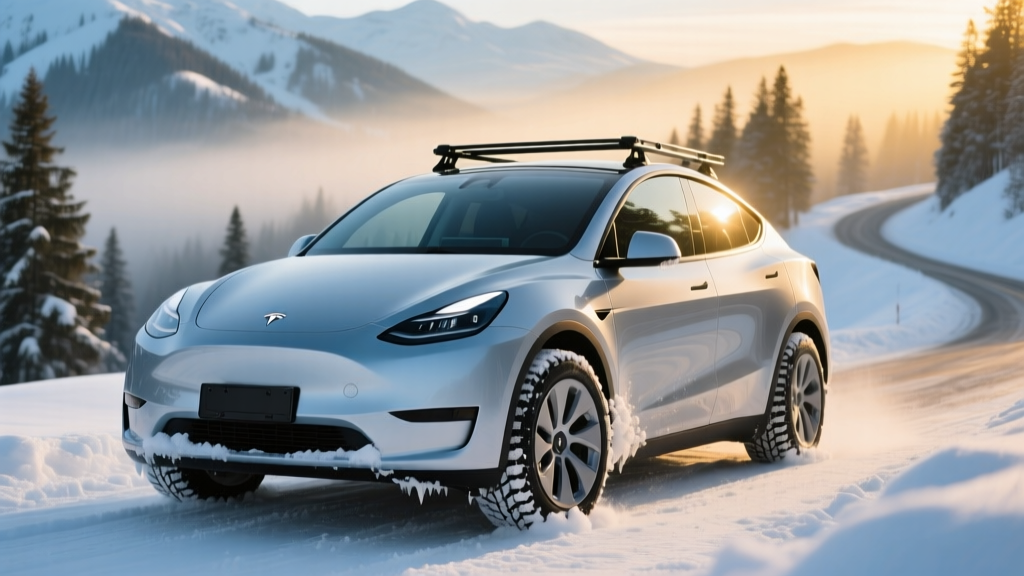
The Tesla Model Y remains one of the best-selling electric vehicles in the United States, and for good reason: strong range, fast DC charging, and a practical crossover footprint. But when temperatures drop below 45°F and roads turn to slush or ice, the all-season tires that come from the factory become a significant liability. Searching for the right Tesla Model Y snow tires is one of the most consequential ownership decisions you'll make if you live in a winter climate.
Electric vehicles are heavier than their gas counterparts—the 2026 Model Y Long Range AWD tips the scales at roughly 4,400 lbs—and that weight, combined with instant electric torque, demands winter rubber that can actually bite into snow and ice. This guide covers the best dedicated winter tire options, the correct wheel-and-tire sizing for the Model Y, the real-world cold-weather range impact you should plan for, and a full vehicle profile so you know exactly what you're working with.
Best Snow Tires for the Tesla Model Y: Sizes, Picks, and Setup
Before choosing a winter tire, you need to know what fits. The 2026 Tesla Model Y (Juniper refresh) ships in two primary wheel configurations:
- 19-inch Gemini wheels: 255/45R19 (most common base setup)
- 20-inch Induction wheels: 255/40R20 (performance-oriented)
- 21-inch Überturbine wheels (Performance): Staggered — 255/35R21 front, 275/35R21 rear
For dedicated winter use, downsizing to the 19-inch Gemini wheel is the smartest move. A narrower tire increases ground pressure per square inch, which improves snow and ice traction. If your Model Y came with 20s or 21s, purchasing a set of 19-inch Gemini-style aftermarket wheels (or OEM Tesla Gemini wheels) for winter duty is strongly recommended.
Top Tesla Model Y Snow Tire Picks for 2026
| Tire Model | Type | Size (19" Gemini) | Stud Option | Best For | Approx. Price/Set of 4 |
|---|---|---|---|---|---|
| Nokian Hakkapeliitta R5 EV | Studless winter | 255/45R19 | No | Ice/snow traction, EV-optimized low rolling resistance | $1,100–$1,300 |
| Michelin X-Ice Snow | Studless winter | 255/45R19 | No | Ice braking, longevity, quiet ride | $1,000–$1,200 |
| Bridgestone Blizzak DM-V2 | Studless winter | 255/45R19 | No | Deep snow, value pricing | $900–$1,100 |
| Nokian Hakkapeliitta 10p EV | Studded winter | 255/45R19 | Factory studded | Extreme ice, rural unplowed roads | $1,300–$1,500 |
| Continental VikingContact 7 | Studless winter | 255/45R19 | No | Balanced winter performance, comfort | $950–$1,150 |
Our top recommendation for most Model Y owners: The Nokian Hakkapeliitta R5 EV. It's engineered specifically for the higher weight and instant torque of electric vehicles, uses a silica-and-cryocrystal tread compound for ice grip, and maintains lower rolling resistance than conventional winter tires—meaning less range sacrifice. For drivers in regions where studded tires are legal and roads are routinely iced over (rural Montana, northern Minnesota, parts of Alaska), the Hakkapeliitta 10p EV is the benchmark.
Winter Wheel-and-Tire Setup Cost
Budget for a complete winter setup as follows:
- Set of 4 winter tires (255/45R19): $900–$1,500
- Set of 4 aftermarket 19" wheels (if needed): $600–$1,200
- Tire mounting, balancing, and TPMS sensors: $200–$350
- Seasonal swap labor (twice/year): $80–$160/year
Total first-year cost: roughly $1,800–$3,200 depending on whether you need new wheels. Subsequent years are just the swap labor plus eventual tire replacement (winter tires typically last 3–5 seasons depending on mileage).
2026 Tesla Model Y Long Range AWD: Full Vehicle Profile
Understanding the vehicle itself is essential to planning your winter strategy. Here are the core specifications for the 2026 Model Y Long Range AWD (Juniper generation):
| Spec | Value |
|---|---|
| EPA Estimated Range | 320 miles |
| Battery Capacity (usable) | ~75 kWh (NMC chemistry) |
| Drivetrain | Dual-motor AWD |
| Horsepower | 384 hp (combined) |
| 0–60 mph | 4.8 seconds |
| Max DC Fast-Charge Rate | 250 kW (peak) |
| 10–80% DC Charge Time | ~25 minutes |
| Level 2 Home Charge Rate | 11.5 kW (~44 mi/hr) |
| EPA Efficiency | 122 MPGe combined / 28 kWh/100 mi |
| Cargo Volume (rear seats up) | 30.2 cu ft |
| Cargo Volume (rear seats folded) | 72.1 cu ft |
| Rear Legroom | 41.6 inches |
| Curb Weight | ~4,400 lbs |
| Battery Warranty | 8 years / 120,000 miles (70% minimum retention) |
| Basic Vehicle Warranty | 4 years / 50,000 miles |
| Base MSRP | $44,990 (before destination) |
EPA sticker: 320 miles. In real-world driving, expect approximately 280–300 miles on mixed highway/city routes in moderate temperatures (50–75°F). On sustained 75 mph highway driving, plan for roughly 260–275 miles. In cold weather (below 32°F), range drops significantly—see the winter range section below. The Model Y's NMC battery and heat pump give it one of the better cold-weather efficiency profiles in the EV market, but physics still applies.
Cold-Weather Range: What Winter Actually Does to Your Model Y
This is the section every prospective Model Y owner in a winter climate needs to read carefully. Cold temperatures affect EV range through three mechanisms:
- Battery chemistry slowdown: Lithium-ion cells have higher internal resistance in cold, reducing usable capacity and regenerative braking effectiveness.
- Cabin and battery heating: Even with the Model Y's standard heat pump (far more efficient than resistive heating), warming the cabin and battery pack consumes energy that would otherwise go to propulsion.
- Winter tires and road conditions: Dedicated snow tires have higher rolling resistance than all-seasons, and snow/slush on the road increases drag.
Expected Winter Range Loss for the Model Y
| Condition | Expected Range | Loss vs. EPA |
|---|---|---|
| Mild winter (35–45°F), all-season tires | ~270–290 mi | 9–16% |
| Cold (15–30°F), snow tires, city/suburban | ~240–265 mi | 17–25% |
| Cold (15–30°F), snow tires, highway 70+ mph | ~220–245 mi | 23–31% |
| Extreme cold (below 0°F), snow tires, highway | ~190–220 mi | 31–41% |
These numbers are based on aggregated owner data from sources like fueleconomy.gov and long-term EV fleet testing. The Model Y's heat pump is a genuine advantage here—vehicles without heat pumps (many older EVs) can lose 40–50% in similar conditions.
Practical takeaway: If your daily winter round-trip commute is under 120 miles and you charge at home nightly, range loss is an inconvenience, not a crisis. If you regularly drive 200+ miles in winter, plan charging stops and precondition aggressively.
Winter Charging Tips for Model Y Owners
- Always precondition: Use the Tesla app to set a departure time. The car will warm the battery to optimal charging temperature before you leave, improving both range and regenerative braking.
- Navigate to Superchargers: When you enter a Supercharger in the navigation, the car automatically begins battery preconditioning, even in cold weather. This can cut your 10–80% charge time by 5–10 minutes in freezing temps.
- Charge at home when possible: Level 2 home charging (11.5 kW) keeps the battery warm if plugged in, reducing cold-soak losses. A Tesla Wall Connector on a 60-amp circuit delivers roughly 44 miles of range per hour.
- Expect slower DC charging in extreme cold: If you arrive at a Supercharger without preconditioning and the battery is below 40°F, the car will limit charge rate to protect the cells. Peak 250 kW is only achievable with a warm battery.
Charging Specs: DC Fast, Level 2, and Winter Considerations
| Charge Level | Power (kW) | Speed (miles of range per hour) | Notes |
|---|---|---|---|
| Level 1 (120V standard outlet) | ~1.4 kW | ~5 mi/hr | Emergency/trickle only; not practical for daily use |
| Level 2 (240V, Tesla Wall Connector) | 11.5 kW | ~44 mi/hr | Full charge in ~7 hours; ideal home setup |
| Level 2 (240V, 40A J1772 + adapter) | 9.6 kW | ~36 mi/hr | Works with public Level 2 stations via included adapter |
| DC Fast Charge (Supercharger V3/V4) | 250 kW peak | Up to ~1,000 mi/hr (peak) | 10–80% in ~25 min; tapers above 80% |
| DC Fast Charge (CCS via adapter) | Up to 150–170 kW | Varies | Requires Tesla CCS adapter; speed limited by station and adapter |
The Model Y uses the NACS (North American Charging Standard) connector natively, which is now the Tesla Supercharger connector. As of 2026, the Supercharger network remains the most reliable DC fast-charging network in North America, with over 25,000 stalls. The Model Y can also use CCS-equipped public chargers (Electrify America, EVgo, etc.) with the Tesla CCS adapter, though charge speeds are typically lower than at a V3 Supercharger.
Charging curve reality check: The 250 kW peak rate is only sustained from roughly 10–30% state of charge. From 30–60%, expect ~170–200 kW. From 60–80%, it tapers to ~100–130 kW. Above 80%, charging slows dramatically to protect the battery—plan to unplug at 80% on road trips unless you need the extra range.
Pricing, Trims, and Federal Tax Credit Eligibility
The 2026 Tesla Model Y is offered in three main configurations:
| Trim | Drivetrain | EPA Range | 0–60 mph | MSRP (before destination) |
|---|---|---|---|---|
| Long Range RWD | Rear-wheel drive | ~340 mi | 5.8 sec | $42,990 |
| Long Range AWD | Dual-motor AWD | 320 mi | 4.8 sec | $44,990 |
| Performance AWD | Dual-motor AWD | ~295 mi | 3.5 sec | $49,990 |
Destination and order fees add approximately $1,390–$1,800 depending on configuration.
Does the 2026 Model Y Qualify for the Federal EV Tax Credit?
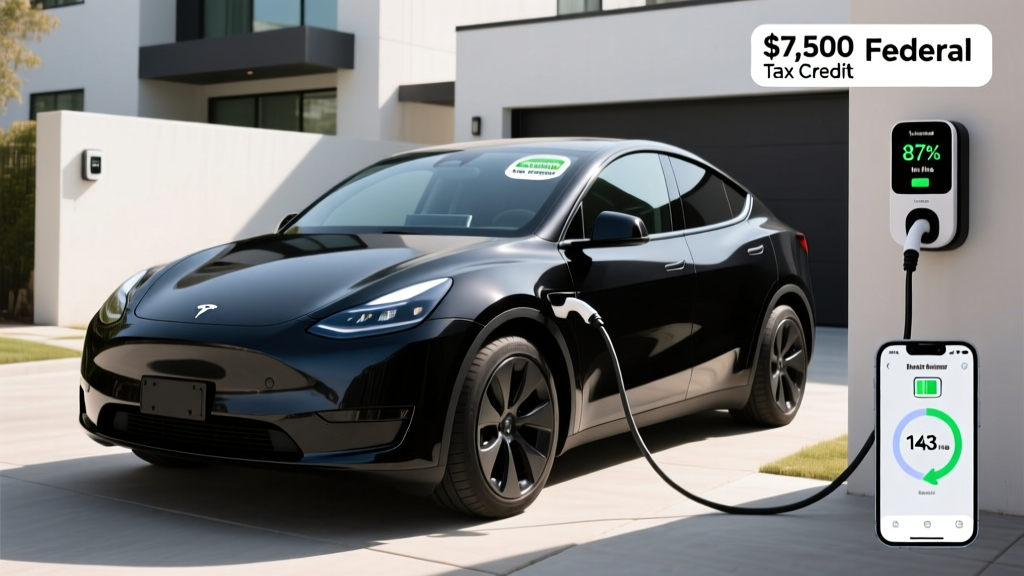
The federal EV tax credit under IRS §30D is complex and subject to change. As of early 2026, the Model Y's eligibility depends on several factors:
- MSRP cap: SUVs/crossovers must be priced at or below $80,000. All Model Y trims qualify on price.
- Buyer income cap: Modified adjusted gross income must not exceed $150,000 (single), $225,000 (head of household), or $300,000 (joint filing).
- Battery sourcing requirements: The credit is split into two halves ($3,750 each) — one for critical minerals sourcing and one for battery component manufacturing. Tesla's US-built battery packs and increasing domestic mineral sourcing have historically allowed the Model Y to qualify for the full $7,500, but sourcing rules tighten annually. Verify current eligibility on the IRS clean vehicle credit page before purchasing.
- Point-of-sale transfer: As of 2024, buyers can transfer the credit to the dealer at purchase, effectively reducing the purchase price by up to $7,500 at the point of sale rather than waiting to claim it on a tax return.
Federal EV tax credit rules change frequently and depend on your individual tax situation, the vehicle's battery sourcing at time of delivery, and annual rule updates. Always confirm eligibility with a tax professional and check the latest guidance at IRS.gov before making a purchase decision.
Effective price after maximum credit: A Model Y Long Range AWD at $44,990 MSRP + ~$1,390 destination = ~$46,380. With a full $7,500 point-of-sale credit, the effective price drops to approximately $38,880—competitive with many gas-powered compact SUVs once you factor in fuel and maintenance savings.
Tech, Safety, and Driver Assistance
The Juniper-generation Model Y carries forward Tesla's minimalist interior with a 15.4-inch center touchscreen, a rear 8-inch passenger screen, ventilated front seats, and ambient lighting. Key technology highlights:
- Autopilot (standard): Adaptive cruise control, lane-keeping assist, automatic emergency braking, and blind-spot monitoring. This is an SAE Level 2 driver-assistance system — you must keep your hands on the wheel and eyes on the road at all times.
- Full Self-Driving (Supervised) — $8,000 option: Adds automatic lane changes, traffic light/stop sign recognition, and Navigate on Autopilot. Despite the name, FSD Supervised is also SAE Level 2 and requires active driver supervision. It is not autonomous driving.
- Over-the-air updates: Tesla regularly pushes software updates that can add features, improve efficiency, and refine the driving experience post-purchase.
- Sentry Mode and Dashcam: Built-in cameras provide 360-degree security recording and dashcam functionality—useful for documenting winter road incidents.
Tesla Autopilot and FSD (Supervised) are SAE Level 2 systems. They do not make the vehicle self-driving. The driver is legally and practically responsible for all vehicle operation. Winter conditions — lane markings obscured by snow, reduced camera visibility, icy roads — can degrade these systems. Always remain fully engaged, and be prepared to disable Autopilot in heavy snow or whiteout conditions.
Safety ratings for the Model Y remain strong. The vehicle earned a 5-star overall rating from NHTSA and has historically been an IIHS Top Safety Pick+ recipient. Check the latest IIHS and NHTSA pages for the most current 2026 model-year ratings.
Who the Model Y Suits Best — and Who Should Look Elsewhere
✅ Best For
- Winter commuters who charge at home and drive under 150 miles daily — AWD traction plus snow tires is a formidable combination
- Small families needing 30+ cu ft of cargo space and easy car-seat access
- Tech-forward buyers who value OTA updates and the Supercharger network
- Cost-conscious EV adoptors — effective price after tax credit is highly competitive
❌ Look Elsewhere If
- You need 3-row seating — the Model Y's optional third row is extremely tight and not practical for older children or adults
- You frequently tow heavy loads — the 3,500-lb tow rating is adequate for a small trailer but not a boat or camper
- You want physical buttons and stalks — nearly all controls are touchscreen-based, which some drivers find distracting, especially with winter gloves
- You live in a charging desert with no home charging option and sparse public infrastructure
Model Y vs. Key Competitors: Quick Comparison
| Spec | Tesla Model Y LR AWD | Ford Mustang Mach-E ER AWD | Hyundai Ioniq 5 Long Range AWD |
|---|---|---|---|
| EPA Range | 320 mi | ~300 mi | ~290 mi |
| Battery (usable) | ~75 kWh (NMC) | ~88 kWh (NMC) | ~77.4 kWh (NMC) |
| Max DC Charge | 250 kW | ~150 kW | ~240 kW |
| 10–80% DC Time | ~25 min | ~38 min | ~18 min |
| 0–60 mph | 4.8 sec | 5.1 sec | 5.1 sec |
| Cargo (seats up) | 30.2 cu ft | 29.7 cu ft | 27.2 cu ft |
| Base MSRP (AWD) | $44,990 | ~$48,000 | ~$49,500 |
| Charging Network | NACS (Supercharger native) | NACS (adapter for Supercharger) | NACS (adapter for Supercharger) |
The Model Y's combination of range, Supercharger access, and price (especially after the federal credit) is difficult to beat. The Ioniq 5 charges faster in the 10–80% window thanks to its 800V architecture, and the Mach-E offers a more traditional interior layout, but neither matches the Model Y's overall efficiency-per-dollar proposition in 2026.
Frequently Asked Questions
What size snow tires fit the Tesla Model Y?
The most common winter tire size for the Model Y is 255/45R19 on the 19-inch Gemini wheels. If your car came with 20-inch or 21-inch wheels, we strongly recommend purchasing a dedicated set of 19-inch wheels for winter use. The narrower sidewall and tire profile improve snow traction and protect wheels from pothole damage hidden under snow.
Do I really need dedicated snow tires, or are all-seasons enough?
If you regularly drive in temperatures below 45°F with snow or ice on the road, dedicated winter tires are a significant safety upgrade. All-season tires harden in cold temperatures and lose grip. Winter tire compounds stay pliable and feature siping (tiny tread slits) that grab ice. On a 4,400-lb EV with instant torque, the difference in braking distance on ice can be 30–50% shorter with proper winter tires.
How much range do snow tires cost the Model Y?
Dedicated winter tires typically add 3–7% rolling resistance compared to all-season tires. On a Model Y with a 320-mile EPA range, that translates to roughly 10–22 miles of range lost to the tires alone. Combined with cold-weather battery and heating losses, plan for 20–35% total range reduction in winter conditions.
Does Tesla sell a winter tire package?
Tesla has historically offered winter tire packages through its service centers and online store, typically including tires pre-mounted on wheels. Availability varies by region and model year. Check the Tesla Shop or your local service center for current offerings. Third-party tire retailers like Tire Rack also carry Model Y-compatible winter setups.
Can I use tire chains on the Tesla Model Y?
Tesla's owner's manual specifies low-profile SAE Class S chains (or cable chains) for the 19-inch and 20-inch wheel sizes. Chains should only be used on the rear axle. However, with quality dedicated winter tires, chains are rarely necessary except in extreme mountain pass conditions or legally mandated chain-control areas.
Is the Model Y AWD system good in snow?
Yes. The dual-motor AWD system independently controls front and rear torque distribution with millisecond response—faster than any mechanical AWD system. Combined with traction control, stability control, and winter tires, the Model Y is one of the most capable EVs in snow. The low center of gravity from the floor-mounted battery pack also reduces rollover risk.