Why Winter Changes Everything for the Tesla Model Y
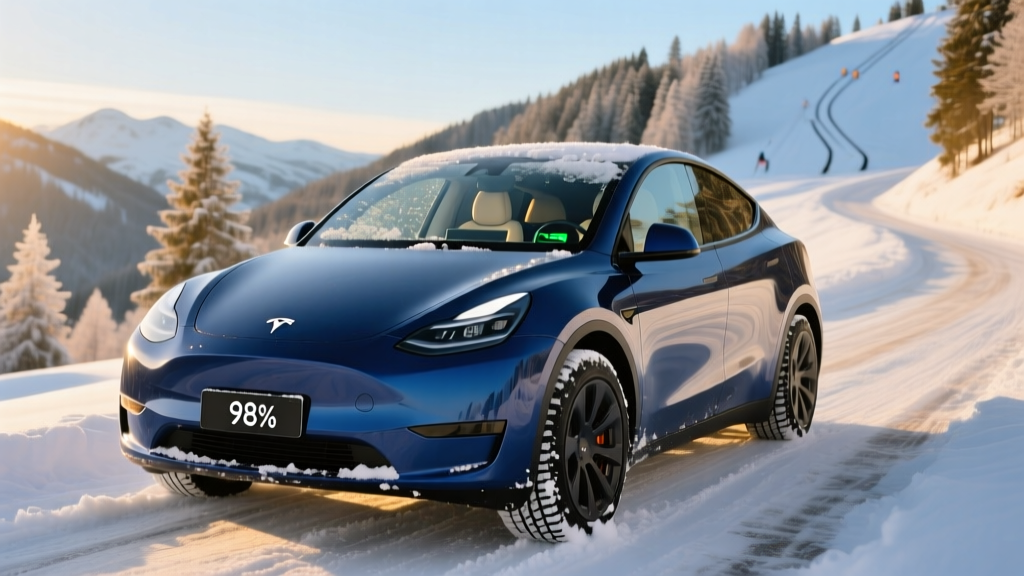
The Tesla Model Y remains one of the best-selling electric vehicles in the U.S. for good reason: strong range, access to the Supercharger network, and practical SUV packaging. But when temperatures drop below freezing and roads turn slick, every EV owner faces a physics problem. Cold weather reduces battery efficiency, regenerative braking behaves differently, and the stock all-season tires that roll off the factory floor simply aren't designed for snow and ice traction.
This guide covers the 2026 Tesla Model Y's full spec profile — range, charging, pricing, and tax credit eligibility — while giving you the actionable winter-tire intelligence you need to keep this EV safe and capable from November through March. If you've been searching for reliable information on Tesla snow tires and how cold weather affects real-world range, you're in the right place.
2026 Tesla Model Y: Full Spec Profile
| Spec | Long Range AWD | Performance AWD |
|---|---|---|
| EPA Range | 320 miles | 293 miles |
| Battery (usable) | ~75 kWh (NMC) | ~75 kWh (NMC) |
| Drivetrain | Dual-Motor AWD | Dual-Motor AWD |
| Horsepower | 384 hp | 456 hp |
| 0–60 mph | 4.8 sec | 3.5 sec |
| MPGe (combined) | 122 MPGe | 111 MPGe |
| Efficiency | 28 kWh/100 mi | 30 kWh/100 mi |
| Max DC Fast Charge | 250 kW (peak) | 250 kW (peak) |
| 10–80% DCFC Time | ~27 min | ~27 min |
| Level 2 Home Charge | 11.5 kW (~44 mi/hr) | 11.5 kW (~44 mi/hr) |
| Cargo Volume | 30.2 cu ft (rear seats up) / 72.1 cu ft (folded) | 30.2 / 72.1 cu ft |
| Rear Legroom | 37.7 in | 37.7 in |
| Battery Warranty | 8 yr / 120,000 mi | 8 yr / 120,000 mi |
| Base MSRP | $48,990 | $53,990 |
Sources: fueleconomy.gov, Tesla.com 2026 spec sheets. Figures reflect current model-year data and may vary by configuration.
Real-World Range: What the EPA Sticker Doesn't Tell You
EPA Rating: 320 miles (Long Range AWD)
Expected Real-World (moderate conditions): 270–295 miles mixed driving
Highway at 75 mph: ~250–270 miles
Cold weather (below 32°F): ~210–255 miles (20–35% reduction depending on severity and preconditioning)
Lithium-ion batteries lose efficiency in cold temperatures because the electrolyte becomes more viscous, increasing internal resistance. Tesla's heat pump (standard on all 2026 Model Y trims) mitigates cabin-heating energy draw significantly compared to older resistive heaters, but the battery chemistry itself still suffers in sub-freezing conditions.
The critical range-preservation strategy: precondition your battery while plugged in. Navigate to a Supercharger using the Tesla app or in-car nav before departing, and the vehicle will warm the battery pack using grid power rather than pack energy. This alone can recover 10–15% of cold-weather range loss on a given trip.
Charging Speed: DC Fast, Home Level 2, and Cold-Weather Taper
| Level | Power (kW) | Miles Added per Hour | Notes |
|---|---|---|---|
| Level 1 (120V outlet) | ~1.4 kW | ~4–5 mi/hr | Emergency/trickle only |
| Level 2 (240V home) | 11.5 kW | ~44 mi/hr | Full overnight charge in ~7–8 hr |
| DC Fast (Supercharger V3/V4) | 250 kW peak | ~1,000 mi/hr (peak) | 10–80% in ~27 min; tapers above 80% |
A crucial detail many new EV owners miss: the 250 kW peak charge rate is not sustained. The Model Y's charge curve peaks around 20–30% State of Charge (SoC) and progressively tapers, particularly above 60%. By 80%, you're pulling roughly 60–80 kW. This is why Tesla (and most EV manufacturers) quote 10–80% times rather than 0–100%.
Winter charging reality: A cold battery that hasn't been preconditioned will accept charge far more slowly. Without preconditioning on a freezing day, you might see initial DCFC rates of just 30–50 kW until the pack warms up. Always navigate to your charging stop — the car's thermal management system will begin heating the pack en route.
The Tesla Snow Tire Guide: What to Buy and Why
The 2026 Model Y Long Range ships with 255/45R19 all-season tires (on the standard Gemini or Nova wheels). All-season tires carry the M+S (mud and snow) marking but do not meet the 3-Peak Mountain Snowflake (3PMSF) certification required for genuine winter performance. The rubber compound in all-season tires hardens below ~45°F, drastically reducing grip on ice and packed snow.
Top Tesla Snow Tire Picks for the Model Y
| Tire | Type | Size (19" option) | 3PMSF | Est. Price/Set | Best For |
|---|---|---|---|---|---|
| Nokian Hakkapeliitta R5 EV | Studless winter | 255/45R19 | ✅ Yes | $1,100–$1,300 | Extreme cold, ice, deep snow |
| Michelin X-Ice Snow | Studless winter | 255/45R19 | ✅ Yes | $950–$1,150 | Balanced winter + low road noise |
| Bridgestone Blizzak WS90 | Studless winter | 255/45R19 | ✅ Yes | $850–$1,050 | Budget-conscious winter safety |
| Pirelli Winter Sottozero 3 | Performance winter | 255/45R19 | ✅ Yes | $1,000–$1,200 | Milder winters, sporty handling |
The Nokian Hakkapeliitta R5 EV is purpose-built for electric vehicles: it features a foam-lined inner layer to reduce road noise (a significant concern in EVs without engine masking) and a low-rolling-resistance compound that minimizes range penalty. Independent testing shows winter tires with EV-optimized compounds cost roughly 3–5% in range versus all-seasons — far less than the 15–20% penalty of older winter-tire designs.
Should You Buy a Dedicated Winter Wheel Set?
Yes, if your budget allows. Mounting and balancing winter tires on your existing wheels twice a year costs $120–$200 per swap at most tire shops. Over three seasons, a dedicated set of 19" wheels ($600–$1,000 for a quality aftermarket set) pays for itself. You also avoid the risk of TPMS sensor damage during tire changeovers and can swap wheels at home in 20 minutes with a jack and torque wrench.
Important: Tesla's TPMS sensors must be recalibrated after any tire change. The car will prompt you to reset tire pressure settings in the Controls > Service menu. Ensure any tire shop working on a Tesla knows the correct torque spec for lug nuts (129 lb-ft for Model Y) and uses a proper lift-pad adapter to avoid damaging the battery pack.
Pricing, Tax Credits, and Total Cost
| Trim | Base MSRP | Destination | Federal Credit (§30D) | Effective Price* |
|---|---|---|---|---|
| Long Range AWD | $48,990 | $1,390 | Up to $7,500 | ~$42,880 |
| Performance AWD | $53,990 | $1,390 | Up to $7,500 | ~$47,880 |
*Effective price assumes full §30D eligibility. Point-of-sale transfer available at Tesla — the credit reduces your purchase price at delivery.
- MSRP Cap: SUVs/vans/pickups must be ≤ $80,000. Model Y qualifies ✅
- Buyer Income Cap: Modified AGI ≤ $150,000 (single) / $225,000 (head of household) / $300,000 (joint). Verify current limits at IRS.gov
- Battery Sourcing: Critical minerals and battery components must meet escalating domestic/free-trade sourcing thresholds. Tesla has maintained Model Y eligibility through North American battery cell sourcing, but always confirm at the point of sale
- Point-of-Sale Transfer: You can transfer the credit to Tesla at purchase, reducing your out-of-pocket cost immediately rather than waiting to claim it on your tax return
Winter Tire Budget: Factor It In
A complete winter-tire setup for the Model Y (four Nokian Hakkapeliitta R5 EVs on dedicated 19" wheels, mounted and balanced) runs $1,700–$2,300 all-in. This is a meaningful addition to your first-year ownership cost, but consider it a safety investment that also preserves your all-season or summer tire life — effectively doubling the lifespan of both sets.
Standout Tech and Notable Drawbacks
- Access to 20,000+ Superchargers — the most reliable DCFC network in North America
- Heat pump standard — efficient cabin heating preserves winter range
- OTA updates continuously improve thermal management algorithms
- Spacious cargo area (72.1 cu ft max) with flat load floor
- Strong regenerative braking aids one-pedal driving in dry winter conditions
- Preconditioning scheduling via Tesla app — wake up to a warm car and warm battery
- Regenerative braking can be unpredictable on ice (Tesla added a "Low" regen setting, but it's still more aggressive than a coasting ICE vehicle)
- No physical buttons — adjusting climate or wipers requires touchscreen interaction
- Rear visibility is compromised by the sloping roofline; no rear wiper (aftermarket solutions exist)
- Insurance premiums run 15–25% higher than comparable ICE SUVs
- Panel gaps and interior trim quality have improved but still trail legacy luxury brands
- 250 kW peak DCFC is slower than Hyundai/Kia's 800V architecture (~350 kW)
Driver Assistance: Autopilot and FSD (Supervised)
Tesla Autopilot and Full Self-Driving (Supervised) are SAE Level 2 driver-assistance systems. You must remain fully engaged, keep your hands on the wheel, and monitor the road at all times. These systems do not make the Model Y autonomous. Only Level 4 services like Waymo operate without a human driver, and those are limited to geofenced urban areas.
Autopilot is included standard and handles highway lane-keeping and adaptive cruise competently. FSD (Supervised) adds city-street navigation, traffic-light recognition, and automatic stop-sign handling for an additional $8,000 (or $99/month subscription as of 2026). In winter conditions — faded lane markings, snow-covered roads, heavy precipitation — both systems will degrade and may disengage more frequently. Plan to take over more often in bad weather.
Who the Model Y Suits Best
Commuters with home charging: If you can install a Level 2 charger (NEMA 14-50 or Tesla Wall Connector) at home, the Model Y's 320-mile EPA range means most commuters charge once or twice a week. A 40-mile round-trip commute uses roughly 11–12 kWh — easily replenished overnight.
Families needing cargo flexibility: 30.2 cu ft behind the second row beats most compact SUVs, and the 72.1 cu ft maximum with seats folded accommodates ski gear, camping equipment, or a week's groceries for a family of four. The frunk adds another 4.1 cu ft.
Snow-belt drivers: With dual-motor AWD and a proper set of 3PMSF-rated winter tires, the Model Y is genuinely capable in snow. The instant torque delivery and low center of gravity (battery pack under the floor) provide excellent traction management — but tires remain the single biggest safety variable.
Road trippers: Supercharger access makes the Model Y the most practical EV for long-distance travel in the U.S. A 500-mile trip requires one ~25-minute charging stop. Just plan for extra time in winter: cold packs charge slower, and cabin heat draws more energy.
Frequently Asked Questions
What is the real-world range of the 2026 Tesla Model Y in winter?
Expect 210–255 miles in sustained sub-freezing temperatures, depending on speed, terrain, and whether you precondition the battery. The 320-mile EPA rating assumes moderate conditions. Highway driving at 75+ mph in cold weather produces the worst efficiency; city driving with regenerative braking recovers more energy.
Do I really need dedicated snow tires for my Tesla?
If you regularly drive in temperatures below 45°F, on snow-covered roads, or on ice — yes. All-season tires harden in cold weather and lose significant grip. A 3PMSF-certified winter tire like the Nokian Hakkapeliitta R5 EV or Michelin X-Ice Snow dramatically improves braking distance, cornering stability, and hill-climb traction. AWD helps you accelerate, but only tires help you stop and turn.
How fast does the Model Y charge at home and on the road?
At home on a 240V Level 2 connection (11.5 kW), you'll add roughly 44 miles of range per hour — a full charge takes about 7–8 hours. On a V3/V4 Supercharger, the Model Y peaks at 250 kW and charges from 10–80% in approximately 27 minutes, though the rate tapers significantly above 80% SoC.
How much does the Model Y cost after federal tax credits?
The 2026 Long Range AWD starts at $48,990 + $1,390 destination. If you qualify for the full $7,500 §30D federal credit (income and sourcing requirements apply — check IRS.gov), your effective price drops to roughly $42,880. Tesla supports point-of-sale credit transfer, so the discount applies at delivery.
Does the Tesla Model Y qualify for the federal EV tax credit in 2026?
Yes, the Model Y currently qualifies for up to $7,500 under §30D, provided you meet the income caps ($150K single / $300K joint) and the vehicle's battery sourcing meets 2026 critical-mineral and component thresholds. Tesla has maintained eligibility through North American manufacturing, but always confirm at the time of purchase, as sourcing rules tighten annually.
Is the Model Y worth buying over the Hyundai Ioniq 5 or Ford Mustang Mach-E?
The Model Y wins on Supercharger network access, software integration, and cargo space. The Hyundai Ioniq 5 charges faster on compatible 350 kW chargers (800V architecture, 10–80% in ~18 min) and offers a more conventional interior with physical buttons. The Mach-E provides a more engaging driving experience but has a smaller charging network. If Supercharger reliability and road-trip convenience are your top priorities, the Model Y retains a meaningful edge in 2026.