The Tesla Model Y in 2026: Still the Benchmark Compact Electric SUV
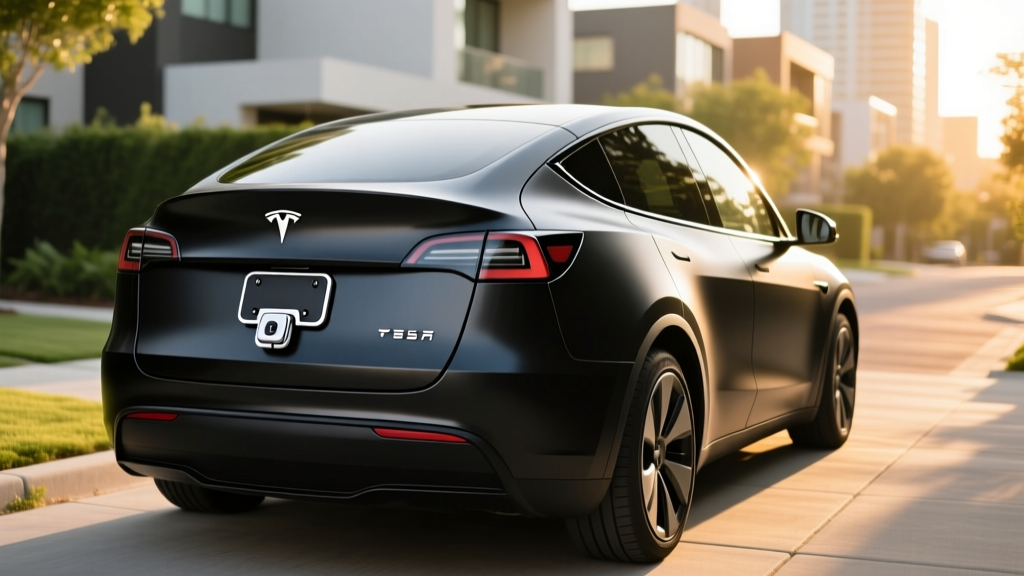
If you've spent any time in Tesla owner forums or accessory shops, you've likely encountered the term "snap plate Tesla" — referring to the popular magnetic or clip-in mounting plates designed specifically for Tesla vehicles. These snap plates enable owners to quickly attach and detach accessories like phone mounts, radar detectors, toll transponders, and dash cams without adhesive residue or drilling. But beyond the accessory ecosystem, the vehicle these plates are designed for — the 2026 Tesla Model Y — remains the best-selling electric vehicle in the United States for good reason.
This review covers the current-generation Model Y (refreshed for the 2025-2026 model year) with exact specs, real-world range data, charging performance, pricing after federal tax credits, and where the snap plate accessory fits into the ownership experience. Whether you're researching your first EV purchase or optimizing your existing Tesla setup, this guide delivers the numbers you need.
| Specification | Long Range AWD | Performance | Long Range RWD |
|---|---|---|---|
| EPA Range | 320 miles | 293 miles | 340 miles |
| Battery (usable) | ~75 kWh (NMC) | ~75 kWh (NMC) | ~75 kWh (NMC) |
| Drivetrain | Dual-Motor AWD | Dual-Motor AWD | Single-Motor RWD |
| Horsepower | 384 hp | 510 hp | 295 hp |
| 0-60 mph | 4.8 sec | 3.5 sec | 6.5 sec |
| Peak DC Charge Rate | 250 kW | 250 kW | 250 kW |
| 10-80% DC Fast Charge | ~22 min | ~22 min | ~22 min |
| Level 2 Home Charging | 11.5 kW (~44 mi/hr) | 11.5 kW (~44 mi/hr) | 11.5 kW (~44 mi/hr) |
| EPA Efficiency | 117 MPGe (29 kWh/100mi) | 111 MPGe (30 kWh/100mi) | 123 MPGe (27 kWh/100mi) |
| Cargo Volume (rear seats up) | 30.2 cu ft | 30.2 cu ft | 30.2 cu ft |
| Cargo Volume (rear seats folded) | 72.1 cu ft | 72.1 cu ft | 72.1 cu ft |
| Base MSRP | $47,990 | $52,490 | $44,990 |
Real-World Range: What the EPA Number Doesn't Tell You
The EPA rates the 2026 Model Y Long Range AWD at 320 miles, and the RWD variant pushes that to 340 miles. But as any experienced EV owner knows, the sticker number is a starting point, not a guarantee.
- City/commute driving (moderate climate): ~300-325 miles — regenerative braking recovers significant energy in stop-and-go traffic
- Highway cruising (70-75 mph, mild weather): ~260-285 miles — aerodynamic drag dominates at sustained speed
- Cold weather (below 32°F, mixed driving): ~230-270 miles — battery chemistry slows, cabin heating draws power; expect 15-25% reduction
- Cold weather highway (below 20°F, 70+ mph): ~210-240 miles — worst-case scenario combining thermal losses and drag
- Hot weather (above 95°F, A/C running): ~280-300 miles — less impact than cold, but cabin cooling still draws ~1-2 kW
Source: Aggregated owner data and EPA fueleconomy.gov testing. Your results will vary based on driving style, terrain, tire pressure, and climate control usage.
The Model Y's NMC (nickel manganese cobalt) battery chemistry offers higher energy density than LFP alternatives, which is how Tesla achieves this range in a relatively compact package. However, NMC batteries are more sensitive to sustained high states of charge. Tesla recommends daily charging to 80-90% for NMC packs, reserving 100% for road trips — a practice that meaningfully extends long-term battery health.
Charging Speed: DC Fast Charging and Home Setup
Charging infrastructure access remains the single biggest concern for prospective EV buyers. The Model Y's charging capability is competitive but no longer class-leading in 2026, as rivals like the Hyundai Ioniq 5 and Kia EV6 offer 350 kW peak rates on 800V architectures.
| Charging Level | Power | Miles Added per Hour | Notes |
|---|---|---|---|
| Level 1 (120V household) | ~1.4 kW | ~4-5 mi/hr | Emergency/trickle only; full charge takes 50+ hours |
| Level 2 (240V, 48A Wall Connector) | 11.5 kW | ~44 mi/hr | Full charge overnight (~7-8 hours); requires 60A circuit |
| Level 2 (240V, 32A Mobile Connector) | 7.7 kW | ~30 mi/hr | Uses NEMA 14-50 outlet; good for most daily needs |
| DC Fast Charge (Tesla Supercharger V3) | 250 kW peak | ~1,000+ mi/hr (peak) | 10-80% in ~22 min; tapers significantly above 80% |
| DC Fast Charge (CCS adapter, EA/others) | Up to 250 kW | Varies by station | Tesla now includes CCS adapter; NACS native at Superchargers |
The charging curve reality: The Model Y peaks at 250 kW only when the battery is warm (preconditioned via navigation to a Supercharger) and at a low state of charge (~10-20%). By 50% SoC, the rate drops to roughly 150-170 kW. Above 80%, expect 50-75 kW — which is why Tesla and every experienced owner recommends charging only to 80% on road trips unless you absolutely need the extra range. That last 20% can add 15-20 minutes to your stop.
Home charging installation cost: A Tesla Wall Connector with professional installation on an existing 60A circuit typically runs $500-$800 (equipment + electrician). If your electrical panel needs an upgrade to 200A service — common in older homes — expect $1,500-$3,500 additional. Always get a quote from a licensed electrician before committing.
Performance, Efficiency, and Daily Drivability
The Model Y's performance credentials remain strong across the lineup. The Performance trim hits 0-60 mph in 3.5 seconds — sports-car territory in a five-seat crossover — while the Long Range AWD's 4.8-second run is more than adequate for highway merging and passing. The RWD model's 6.5-second time is the slowest in the lineup but still competitive with turbocharged gas crossovers.
Efficiency is where Tesla continues to shine. The Long Range RWD achieves 123 MPGe (27 kWh per 100 miles), making it one of the most efficient electric SUVs available. For context, that translates to roughly $0.04-$0.06 per mile on average residential electricity rates ($0.13-$0.17/kWh nationally), compared to $0.12-$0.16 per mile for a 28 MPG gas crossover at $3.50/gallon.
The refreshed Model Y's ride quality has improved meaningfully over the pre-2025 models, with revised suspension tuning that absorbs sharp impacts without the floaty feel some competitors exhibit. Road noise remains a weak point — it's noticeably louder than the Hyundai Ioniq 5 or BMW iX at highway speeds, though improved acoustic glass in the 2025+ refresh narrowed the gap.
Pricing, Tax Credits, and Total Cost of Ownership
The 2026 Model Y lineup starts at $44,990 for the Long Range RWD and climbs to $52,490 for the Performance variant. Destination fees add approximately $1,390. Full Self-Driving (Supervised) remains a $8,000 add-on or $99/month subscription — and it's critical to understand that FSD is a SAE Level 2 driver-assistance system, not autonomous driving. You must remain engaged and supervising at all times.
| Trim | Base MSRP | + Destination | Federal Credit (§30D) | Effective Price |
|---|---|---|---|---|
| Long Range RWD | $44,990 | $46,380 | Up to $7,500* | ~$38,880* |
| Long Range AWD | $47,990 | $49,380 | Up to $7,500* | ~$41,880* |
| Performance | $52,490 | $53,880 | Up to $7,500* | ~$46,380* |
*Federal tax credit eligibility is NOT automatic. Under current IRS §30D rules, you must meet ALL of the following:
- MSRP cap: Vehicle MSRP must not exceed $80,000 for SUVs (Model Y qualifies)
- Income cap: Modified AGI ≤ $150,000 (single) / $300,000 (married filing jointly)
- Battery sourcing: Critical minerals and battery components must meet phased-in domestic sourcing thresholds (Tesla's US-built batteries currently satisfy requirements, but verify at purchase — rules tighten annually)
- Point-of-sale transfer: As of 2024+, you can transfer the credit to the dealer for an immediate price reduction, or claim it on your tax return
Consult a tax professional before relying on credit eligibility. State incentives (California, Colorado, New York, etc.) may stack on top — check your local programs.
5-year cost of ownership advantage: Based on 15,000 miles/year, average electricity rates, and no oil changes or transmission service, the Model Y typically saves $4,000-$7,000 in fuel and maintenance over a comparably priced gas SUV across five years, per EPA fueleconomy.gov cost-to-own tools. Insurance premiums, however, run 15-25% higher than equivalent gas crossovers — get quotes before purchasing.
Tech, Interior, and the Snap Plate Accessory Ecosystem
The Model Y's interior remains polarizing: minimalist to the point of austerity, with nearly every function routed through the 15.4-inch center touchscreen. The 2025+ refresh added ventilated front seats, ambient lighting, a rear-seat entertainment screen, and power-folding second-row seats — addressing the most common complaints from earlier models.
Where the "snap plate Tesla" search comes in: Tesla's sparse interior design — specifically the lack of traditional air vents, dashboard surfaces, and mounting points — created a thriving aftermarket for snap-in mounting solutions. The most common snap plate applications include:
- Phone mounts: Magnetic snap plates that attach to the screen edge or dashboard trim, enabling quick phone attachment without blocking vents (there aren't traditional ones) or using suction cups that fail in heat
- Toll transponder mounts: Snap-in brackets for E-ZPass, SunPass, and similar devices that clip to the rearview mirror housing or windshield trim
- Dashcam accessories: While the Model Y has built-in Sentry Mode cameras, some owners add aftermarket dashcams using snap plate mounts that clip to the headliner or mirror stalk
- Radar detector mounts: Clip-in plates for Escort, Valentine, and similar devices — positioned high on the windshield for optimal detection
These accessories are widely available from brands like RPM Tesla, EVANNEX, and numerous Amazon sellers for $15-$45. They're popular because they avoid the adhesive damage and residue that plague traditional mounts on Tesla's soft-touch dashboard materials.
Driver assistance: The Model Y comes standard with Tesla's Autopilot (adaptive cruise + lane centering). FSD (Supervised) adds automatic lane changes, traffic light/stop sign recognition, and Navigate on Autopilot. However, this remains a Level 2 system — the driver must keep hands on the wheel and eyes on the road. It is not self-driving. For true Level 4 autonomous rides, Waymo operates in select cities but is not a consumer product you can purchase.
Cargo Space, Practicality, and Family Use
The Model Y's cargo area is genuinely competitive with midsize gas crossovers: 30.2 cubic feet behind the second row and 72.1 cubic feet with seats folded. The front trunk (frunk) adds another 4.1 cubic feet — useful for charging cables, groceries, or a small bag. Rear legroom measures 41.6 inches, adequate for adults on longer trips.
For families, the Model Y offers standard LATCH anchors for two outboard rear car seats, with a tether for the center position. The power liftgate and low load floor make loading strollers and gear straightforward. The available tow hitch (3,500-pound capacity on AWD models) handles light trailer duty — bike racks, small utility trailers, or a lightweight camper — though it's not a heavy-duty tow vehicle.
Warranty, Battery Longevity, and Long-Term Ownership
Tesla covers the Model Y with a 4-year/50,000-mile basic warranty and an 8-year/120,000-mile battery and drive unit warranty. The battery warranty guarantees the pack will retain at least 70% of its original capacity during the coverage period — if it degrades below that threshold, Tesla will repair or replace it.
Real-world data from high-mileage Tesla owners and fleet operators suggests NMC packs in the Model Y typically lose 8-12% capacity over the first 100,000 miles, with the degradation curve flattening significantly after the initial 20,000-30,000 miles. Best practices for longevity:
- Charge to 80-90% daily; avoid leaving the car at 100% for extended periods
- Use DC fast charging when needed, but favor Level 2 for daily charging
- Precondition the battery (via the Tesla app or scheduled departure) in cold weather before driving or charging
- Avoid consistently draining below 10% state of charge
Out-of-warranty battery replacement costs remain significant — typically $12,000-$16,000 for a Model Y pack in 2026 — but the failure rate is low, and most owners will sell or trade the vehicle before reaching that point.
Pros
- Class-leading efficiency (123 MPGe RWD) and strong real-world range
- Access to Tesla Supercharger network — still the most reliable DC fast-charging ecosystem in the US
- Over-the-air updates continuously add features and refinements
- Strong resale value relative to most EVs
- Practical cargo space and available towing capability
- Thriving aftermarket (including snap plate mounts and accessories)
Cons
- DC fast charging peaks at 250 kW — outpaced by 800V competitors at 350 kW stations
- Road noise and ride firmness still noticeable vs. premium alternatives
- Minimalist interior lacks physical controls — everything requires the touchscreen
- FSD (Supervised) costs $8,000 and remains Level 2 — not autonomous
- Insurance premiums 15-25% higher than gas equivalents
- NMC battery requires more careful charge management than LFP alternatives
Who Should Buy the 2026 Tesla Model Y?
Choose the Model Y if:
- You want the most proven EV ecosystem with the broadest fast-charging network
- You commute 30-80 miles daily and can charge at home
- You value over-the-air updates and a tech-forward ownership experience
- You need practical SUV cargo space with strong efficiency
- You take 2-4 road trips per year and want reliable DC fast-charging infrastructure
Consider alternatives if:
- You want the fastest possible DC charging — look at the Hyundai Ioniq 5 or Kia EV6 (800V, 350 kW capable)
- You prefer physical buttons and a more traditional interior — the Ford Mustang Mach-E or VW ID.4 offer more conventional layouts
- You want LFP battery chemistry for simpler charge management (charge to 100% daily) — consider the base Model 3 RWD, which uses LFP
- You need three rows of seating — look at the Kia EV9 or Tesla Model X
Frequently Asked Questions
What is the real-world range of the 2026 Tesla Model Y?
The EPA rates the Long Range AWD at 320 miles and the RWD at 340 miles. In real-world driving, expect 260-285 miles on highway trips at 70-75 mph, 300-325 miles in mixed city commuting, and 230-270 miles in sustained cold weather (below 32°F). Preconditioning the battery and using seat heaters instead of cabin heat can recover some cold-weather losses.
How fast does the Model Y charge at home and on the road?
On a Level 2 Tesla Wall Connector (11.5 kW / 48A), the Model Y adds approximately 44 miles of range per hour — a full charge takes 7-8 hours overnight. On a Tesla Supercharger V3, it peaks at 250 kW and charges from 10-80% in roughly 22 minutes when the battery is preconditioned. Above 80%, charging slows dramatically to protect battery health.
Does the 2026 Model Y qualify for the $7,500 federal EV tax credit?
The Model Y is eligible for up to $7,500 under IRS §30D, but only if you meet income limits (≤$300,000 married filing jointly / ≤$150,000 single), the vehicle MSRP is under $80,000 (it is), and the battery meets current-year critical mineral and component sourcing requirements. Tesla's US-built batteries currently qualify, but rules tighten annually — verify at the time of purchase. The credit can be transferred to the dealer as a point-of-sale discount. Consult a tax professional for your specific situation.
What is a "snap plate" for Tesla vehicles?
A snap plate is an aftermarket mounting accessory — typically magnetic or clip-in — designed to attach to specific points in a Tesla's interior (screen edge, mirror housing, dashboard trim, headliner) without adhesives or drilling. They're used for phone mounts, toll transponders, dashcams, and radar detectors. Popular brands include RPM Tesla and EVANNEX, with prices ranging from $15-$45.
Is the Tesla Model Y worth buying vs. the Hyundai Ioniq 5 or Ford Mach-E?
It depends on your priorities. The Model Y wins on charging network access (Superchargers), efficiency, and software. The Ioniq 5 charges faster at 350 kW stations and offers a more comfortable ride. The Mach-E provides a more traditional interior with physical controls. If reliable fast charging on road trips is your top priority, the Model Y's Supercharger advantage is still significant in 2026, though competitors are closing the gap as Electrify America and other networks expand.
How long will the Model Y battery last?
Tesla warranties the battery for 8 years/120,000 miles with a 70% capacity retention guarantee. Real-world data from high-mileage owners shows typical degradation of 8-12% over 100,000 miles. With proper care (avoiding sustained 100% charges, favoring Level 2 over DC fast charging, preconditioning in cold weather), most Model Y batteries should provide reliable service well beyond 150,000 miles.
Is Tesla's Full Self-Driving actually self-driving?
No. FSD (Supervised) is a SAE Level 2 driver-assistance system. It can handle lane changes, stop signs, and traffic lights under driver supervision, but you must keep your hands on the wheel and eyes on the road at all times. It does not make the Model Y autonomous. True Level 4 driverless vehicles (like Waymo's robotaxis) operate in limited geographic areas and are not consumer-purchasable products.
Sources: EPA fueleconomy.gov, IRS §30D Clean Vehicle Credits, Tesla Model Y official specifications. Pricing and tax credit rules reflect 2026 model year data and are subject to change. Verify all figures at the time of purchase.