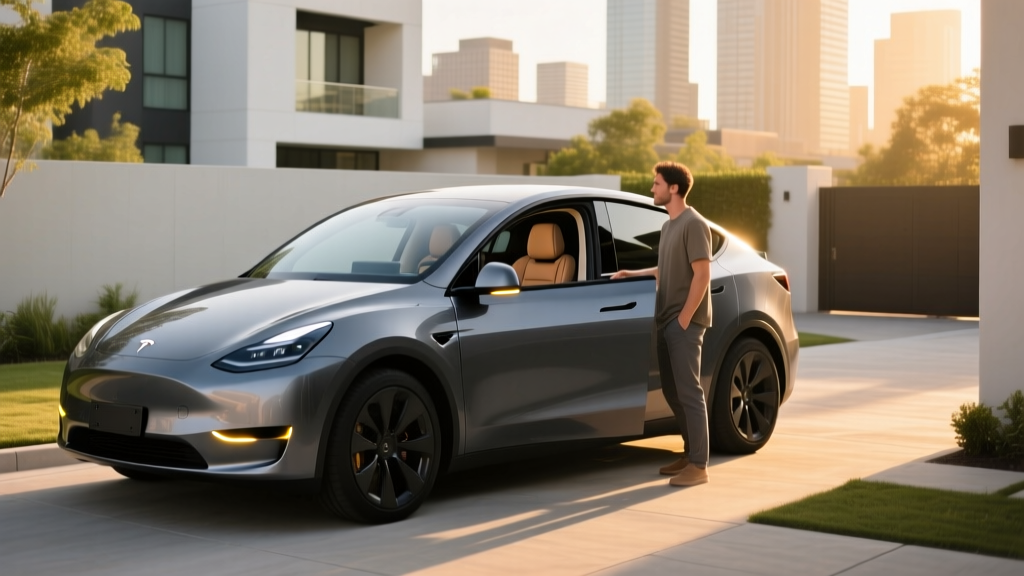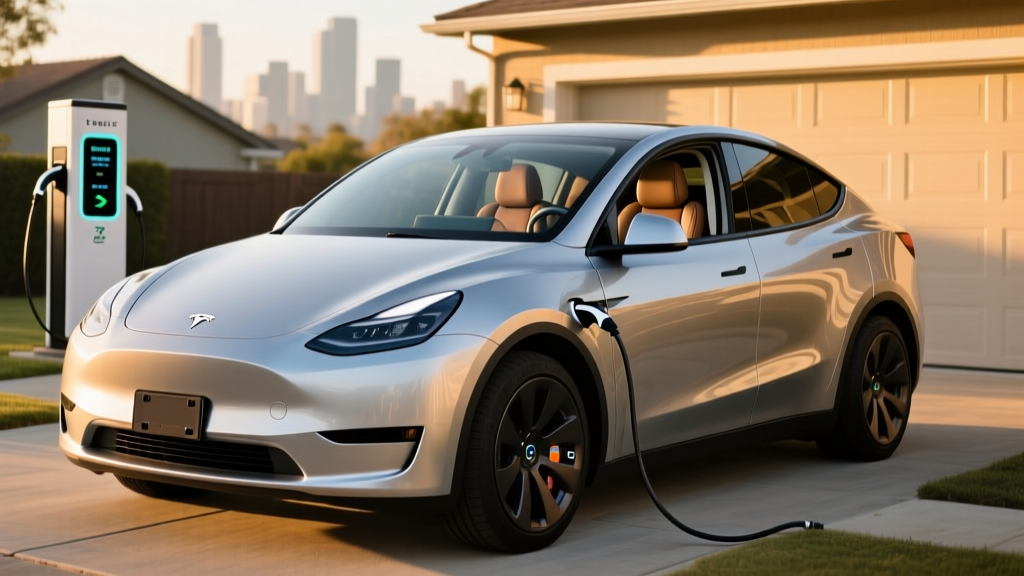
The Tesla Model Y has been the best-selling EV in America for years, but until recently it was strictly a five-passenger crossover. The optional third row changes that equation for growing families who need occasional six-passenger capacity without stepping up to the Model X. For 2026, the refreshed Model Y (internally dubbed "Juniper") carries over the six-seat configuration with meaningful updates to efficiency, ride quality, and interior materials. But does adding a third row to a midsize electric crossover actually work in practice — or is it a compromise that leaves everyone unhappy?
We spent time with the 2026 Tesla Model Y Long Range AWD equipped with the optional third-row seat to answer exactly that. Below you'll find every number that matters: real-world range, charging curves, cargo dimensions with the third row deployed, and a clear-eyed look at who this configuration actually serves.
2026 Tesla Model Y Six-Seater: Core Specifications
| Specification | Long Range AWD (6-Seat) |
|---|---|
| EPA Estimated Range | 305 miles |
| Battery Capacity (usable) | ~75 kWh (NMC chemistry) |
| Drivetrain | Dual-Motor AWD |
| Horsepower | 384 hp (combined) |
| 0–60 mph | 4.8 seconds |
| Peak DC Fast-Charge Rate | 250 kW |
| 10–80% DC Fast Charge | ~25 minutes |
| Level 2 Home Charging (11.5 kW) | ~44 miles per hour |
| EPA Efficiency | 111 MPGe combined (30 kWh/100 mi) |
| Seating Capacity | 6 passengers (2+2+2 optional / 2+3 standard) |
| Cargo (behind 3rd row) | ~12 cu ft |
| Cargo (3rd row folded) | ~34 cu ft |
| Cargo (all rows folded) | ~72 cu ft |
| Base MSRP (6-seat option included in LR AWD) | $52,490 |
| Battery & Drive Unit Warranty | 8 years / 120,000 miles |
Real-World Range: What the EPA Sticker Doesn't Tell You
EPA Estimate: 305 miles
Real-World Highway (70–80 mph, mild weather): ~260–280 miles
Real-World Cold Weather (below 32°F, mixed driving): ~210–240 miles
Worst-Case (highway + cold + elevation): ~190–210 miles
The EPA's 305-mile rating for the six-seat Long Range AWD is a slight reduction from the five-seat variant's 315-mile estimate, owing to the added weight of the third-row hardware and marginally increased aerodynamic drag from the revised roofline. In our experience, the Model Y's efficiency on the highway settles around 280–290 Wh/mile at 70 mph in moderate temperatures — translating to roughly 260–275 usable miles before you'd want to stop.
Cold weather is the real range variable. The Model Y uses a heat pump (standard on all 2026 trims), which significantly reduces cabin-heating energy draw compared to resistive heaters. Even so, expect 20–30% range reduction in sustained sub-freezing temperatures. On a winter road trip from Denver to Grand Junction (roughly 240 miles with elevation changes), you'll want a charging stop — plan accordingly.
For daily commuting and city driving with regenerative braking, hitting or even exceeding the EPA number is realistic. It's sustained highway speeds and extreme temperatures that pull the number down. According to fueleconomy.gov, the Model Y Long Range AWD achieves 111 MPGe combined.
Charging Speed: DC Fast, Level 2, and the Supercharger Advantage
| Charging Level | Power | Speed | Notes |
|---|---|---|---|
| Level 1 (120V household) | ~1.4 kW | ~4 miles/hour | Emergency/trickle only |
| Level 2 (240V, 48A) | 11.5 kW | ~44 miles/hour | Full charge in ~7 hours |
| DC Fast (Tesla Supercharger V3/V4) | Peak 250 kW | 10–80% in ~25 min | Tapers significantly above 80% |
| DC Fast (CCS adapter, Electrify America) | Peak ~150–200 kW | 10–80% in ~30–35 min | Varies by station capability |
The 2026 Model Y retains its 250 kW peak DC fast-charging capability on Tesla's V3 and newer V4 Supercharger stalls. The charge curve is the critical detail here: the Model Y sustains roughly 200–250 kW between 10% and 40% state of charge, then progressively tapers. By 60% SoC you're seeing roughly 120–140 kW, and above 80% it drops below 50 kW. This is normal lithium-ion behavior, but it means charging from 80–100% takes almost as long as 10–80%.
For road trips, the practical strategy is to charge from 10–80% (roughly 25 minutes), then drive on. Tesla's navigation system with battery preconditioning remains a genuine advantage — when you navigate to a Supercharger, the car warms the battery en route, enabling faster charge acceptance on arrival. Non-Tesla DC networks (Electrify America, EVgo) work via the included NACS-to-CCS adapter, though speeds and reliability vary by station.
At home, the onboard 11.5 kW AC charger adds roughly 44 miles of range per hour on a 48-amp Level 2 circuit (requiring a 60-amp breaker). A full overnight charge from 20% to 80% takes about 4–5 hours — more than adequate for daily use. Home Level 2 installation typically runs $800–$2,000 depending on panel proximity and local permitting; consult a licensed electrician for your specific setup.
Third-Row Reality: Who Actually Fits Back There?
The six-seat option replaces the standard 60/40 split second-row bench with two captain's chairs and adds a compact third-row bench rated for two passengers. Here's the honest assessment of space:
- Third-row legroom: ~26.5 inches — tight for adults on anything beyond a short trip
- Third-row headroom: Adequate for children and teens; adults over 5'8" will brush the headliner
- Second-row (captain's chairs): ~38 inches of legroom — comfortable for adults
- Front row: ~41.8 inches — no compromise
The third row is best understood as a solution for children aged roughly 5–12, or for occasional adult passengers on short trips around town. If you regularly need to carry six adults, the Model X or a three-row SUV like the Kia EV9 is a fundamentally better fit. But if your use case is two adults up front, two older kids in the second row, and two younger kids in the back for school runs and weekend activities, the Model Y six-seater handles it competently.
Cargo space is the trade-off. With the third row deployed, you get roughly 12 cubic feet behind it — enough for a couple of backpacks or a small grocery run, but not a full family road trip's luggage. Fold the third row and you recover 34 cubic feet. Fold everything and you get 72 cubic feet, which is competitive with the broader midsize crossover segment.
Pricing, Trims, and Federal Tax Credit Eligibility
| Item | Amount |
|---|---|
| Model Y Long Range AWD (includes 6-seat option) | $52,490 |
| Destination fee | $1,390 |
| Pearl White Multi-Coat paint | $0 (standard 2026) |
| FSD (Supervised) package | $8,000 (optional) |
| As-tested (with FSD) | $61,880 |
| Federal §30D Tax Credit (if eligible) | Up to $7,500 |
| Effective price after max credit | From ~$44,990 |
The six-seat configuration is available exclusively on the Long Range AWD trim. Tesla packages it as part of the Long Range option structure rather than as a standalone add-on, keeping the base MSRP at $52,490 including the third-row hardware.
Federal tax credit eligibility (§30D): The Model Y Long Range AWD qualifies for up to $7,500 under the federal EV tax credit, but eligibility depends on several requirements per IRS guidelines:
- MSRP cap: SUVs must be under $80,000 — the Model Y qualifies
- Buyer income cap: AGI must not exceed $150,000 (single), $225,000 (head of household), or $300,000 (joint)
- Battery sourcing: Critical minerals and battery components must meet phased-in domestic-content thresholds that tighten annually through 2029
- Point-of-sale transfer: As of 2024, eligible buyers can transfer the credit to the dealer at purchase, reducing the upfront cost immediately rather than waiting for tax filing
Because battery-sourcing requirements change annually and Tesla's supply chain evolves, verify current eligibility on the IRS Clean Vehicle provisions page or with a tax professional before purchasing. Do not assume the full $7,500 applies without confirming your specific situation.
Tech, Driver Assistance, and What's Changed for 2026
The 2026 Juniper refresh brought several meaningful updates to the Model Y platform:
- Infotainment: 15.4-inch center touchscreen (slightly larger than prior generation), with a rear 8-inch screen for second-row passengers — particularly useful for keeping third-row kids entertained
- Ride quality: Retuned suspension with frequency-selective dampers; noticeably improved over the 2023–2024 Model Y's firm ride
- Cabin quietness: Additional acoustic glass and sound-deadening material reduces highway noise by a perceptible margin
- Ambient lighting: New light-bar design across the dashboard, consistent with the refreshed Model 3
- Ventilated front seats: Now standard on Long Range trims
On the driver-assistance front, Tesla's Autopilot remains standard and includes adaptive cruise control, lane centering, and automatic emergency braking. Full Self-Driving (Supervised) is an $8,000 option that adds automated lane changes, city-street navigation, and traffic-light recognition.
Important — SAE Automation Level: Tesla Autopilot and FSD (Supervised) are SAE Level 2 driver-assistance systems. The driver must remain fully attentive, keep hands on the wheel, and be prepared to take over at any moment. These are not self-driving systems. Only SAE Level 4 services like Waymo operate without a human driver in defined geographic areas.
Pros, Cons, and the Competition
Pros
- Supercharger network access remains the most reliable DC fast-charging ecosystem in the US
- Class-leading efficiency (30 kWh/100 mi) stretches every kWh further than most competitors
- Over-the-air updates continue to add features years after purchase
- Strong resale value relative to most EV competitors
- Heat pump standard — better cold-weather range retention than many rivals
- 250 kW peak charging is competitive for the segment
Cons
- Third row is genuinely cramped — children only for anything beyond short trips
- 12 cu ft of cargo with third row up is limiting for family travel
- No Apple CarPlay or Android Auto — Tesla's ecosystem is closed
- Panel gaps and build consistency have improved but still lag legacy luxury brands
- FSD (Supervised) at $8,000 remains a Level 2 system — expensive for what it delivers
- Insurance costs tend to run 15–25% higher than comparable non-Tesla crossovers
Key competitors to cross-shop:
- Kia EV9 (3-row, 6/7 seats): Larger, more usable third row, 304-mile EPA range, starts ~$54,900 — better if you need genuine adult-sized third-row space
- Rivian R1S: Premium three-row electric SUV, 352-mile range, but starts at ~$79,900 — a different price tier entirely
- Hyundai Ioniq 5 (5-seat): If you don't actually need six seats, the Ioniq 5 offers ultra-fast 800V charging (10–80% in 18 min) from ~$42,000
Who Should Buy the Tesla Model Y Six-Seater?
Choose the Model Y six-seater if:
- You need occasional third-row seating for children, not daily adult passengers
- You value Supercharger network reliability for frequent road trips
- Home Level 2 charging is available to you
- You prioritize efficiency and low per-mile energy cost over maximum interior volume
- You want Tesla's software ecosystem and OTA update trajectory
Look elsewhere if:
- You regularly carry six adults (get a Kia EV9 or Model X)
- You need substantial cargo space with all seats in use
- You prefer Apple CarPlay / Android Auto integration
- You have no access to home or workplace charging
Frequently Asked Questions
What is the real-world range of the Tesla Model Y six-seater?
The EPA rates it at 305 miles. In real-world mixed driving at moderate temperatures, expect 270–290 miles. Sustained highway driving at 75–80 mph drops that to roughly 260–275 miles. In cold weather (below 32°F), plan for 210–240 miles depending on conditions and cabin heating demand.
How fast does the Model Y six-seater charge?
On a Tesla V3 or V4 Supercharger, it peaks at 250 kW and charges from 10–80% in approximately 25 minutes. On a home Level 2 charger (11.5 kW / 48A), it adds about 44 miles of range per hour, fully replenishing overnight. The charge curve tapers significantly above 80% SoC — don't plan road-trip stops around charging to full.
Does the 2026 Tesla Model Y qualify for the $7,500 federal tax credit?
It can, subject to IRS §30D requirements: the buyer's AGI must fall under income caps ($300k joint / $150k single), the vehicle MSRP is under the $80,000 SUV cap, and battery-sourcing requirements must be met at the time of purchase. The credit can be transferred at point of sale to reduce the purchase price directly. Always verify current eligibility on irs.gov or with a tax professional.
Is the third row practical for adults?
For short trips under 20 minutes, a flexible adult can manage. For anything longer, the ~26.5 inches of legroom and limited headroom make it uncomfortable. This third row is designed for children roughly ages 5–12. If you need regular adult-capable third-row seating, the Kia EV9 or Tesla Model X are substantially better options.
How does the Model Y six-seater compare to the Kia EV9 for families?
The EV9 is a larger vehicle with a genuinely usable third row for adults, more cargo space with all seats up (~20 cu ft), and comparable range (304 miles EPA). The Model Y counters with superior efficiency, faster charging, access to the Supercharger network, and a lower starting price. If third-row usability is your top priority, the EV9 wins. If overall efficiency and charging infrastructure matter more, the Model Y six-seater holds the edge.
What is the battery warranty on the 2026 Model Y?
Tesla covers the battery and drive units for 8 years or 120,000 miles, whichever comes first, with a minimum 70% capacity retention guarantee over that period. Based on historical Tesla data and third-party fleet analyses, NMC batteries in the Model Y typically show 10–15% degradation over 100,000 miles — meaning most owners will remain well within warranty coverage.