Quick Verdict: The Magnetism of the Model Y
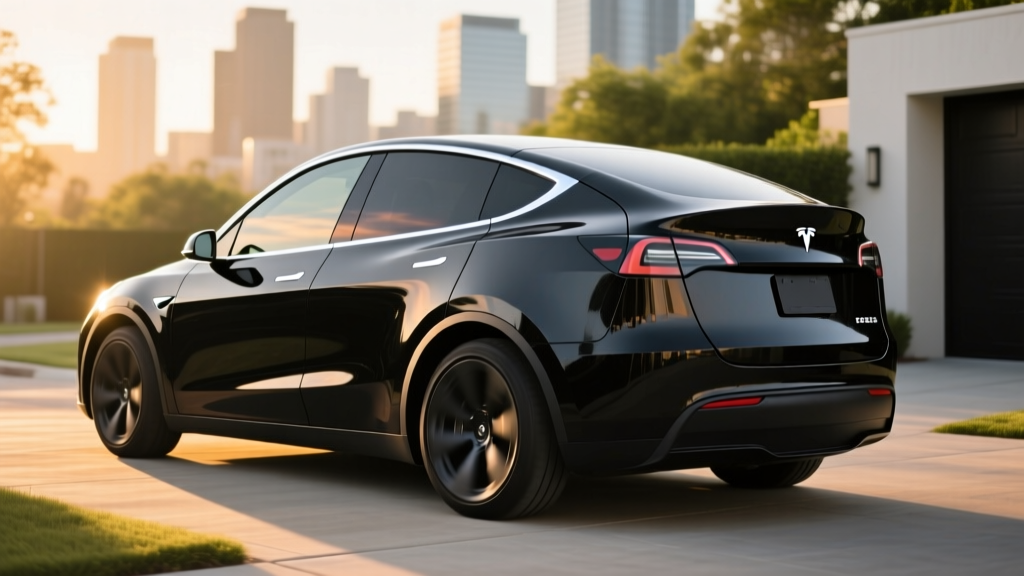
The phrase Tesla sexual has circulated in EV forums and social media for years — shorthand for the visceral, almost irrational pull that Tesla's design language exerts on certain buyers. Whether it's the coupe-like roofline, the minimalist interior, or the instant torque that pins you back at stoplights, there's an undeniable sensory dimension to owning a Tesla that transcends spreadsheet logic. The 2026 Tesla Model Y Long Range AWD remains the brand's volume leader, and after spending time with the refreshed Juniper-generation model, it's clear the appeal is both real and quantifiable — even if the car has genuine trade-offs that deserve honest discussion.
| Spec | Value |
|---|---|
| EPA Range | 320 miles |
| Battery (usable) | ~75 kWh, NMC (2170 cells) |
| Drivetrain | Dual-motor AWD |
| 0–60 mph | 4.8 seconds |
| Horsepower | 384 hp (combined) |
| MPGe (combined) | 111 MPGe |
| Efficiency | 30 kWh/100 mi |
| Max DC Fast Charge | 250 kW (peak) |
| 10–80% DC Time | ~25 minutes |
| Level 2 Home Rate | 11.5 kW (~44 mi/hr) |
| Cargo (rear seats up) | 30.2 cu ft |
| Cargo (rear seats folded) | 72.1 cu ft |
| Rear Legroom | 38.8 in |
| Battery Warranty | 8 yr / 120,000 mi |
| Base MSRP | $47,990 |
| As-Tested (w/ FSD, Red Paint) | $57,490 |
Range and Efficiency: EPA vs. Reality
The 2026 Model Y Long Range AWD carries an EPA-estimated 320 miles of range on its ~75 kWh usable NMC battery pack. That number is competitive with the Hyundai Ioniq 5 (305 mi) and slightly behind the Ford Mustang Mach-E Extended Range (320 mi), though the Tesla's efficiency edge — 30 kWh/100 mi combined — means it extracts more miles per kilowatt-hour than most rivals.
EPA 320 mi is the sticker number. In practice: expect ~285–300 miles on mixed highway/city driving at 70–75 mph. In sustained cold weather (below 30°F), range drops 15–25%, bringing usable range to roughly 240–270 miles before you'll want to find a charger. The Model Y's heat pump helps mitigate winter losses compared to older EVs, but physics is physics — cold batteries hold less energy and cabin heating is a real load. On warm-weather highway runs with preconditioning, some owners report touching 310 mi, but plan your road trips around 260–280 mi segments to maintain a comfort buffer.
Efficiency is where Tesla's engineering shows. At 111 MPGe combined and 30 kWh/100 mi, the Model Y sips electrons more carefully than the Mach-E (34 kWh/100 mi) or the Ioniq 5 AWD (34 kWh/100 mi). Over 15,000 annual miles at $0.16/kWh (national average residential electricity), that translates to roughly $720/year in home-charging electricity — versus $1,950+ for a 28 MPG gas crossover at $3.65/gallon.
Charging Speed: Supercharger Network Advantage
Charging speed is a top buyer concern, and the Model Y delivers a strong — if not class-leading — DC fast-charging profile. The 250 kW peak rate on V3 Superchargers means a 10–80% session takes approximately 25 minutes. That's slower than the Hyundai Ioniq 5's 800V architecture (10–80% in ~18 minutes at 350 kW-capable chargers), but Tesla's advantage is network density and reliability.
| Level | Power | Miles Added per Hour | Notes |
|---|---|---|---|
| Level 1 (120V) | ~1.4 kW | ~4 mi/hr | Emergency/trickle only |
| Level 2 (240V, 48A) | 11.5 kW | ~44 mi/hr | Home Wall Connector; full charge in ~7 hr |
| DC Fast (V3 Supercharger) | 250 kW peak | ~1,000+ mi/hr (peak) | 10–80% in ~25 min; tapers above 80% |
| DC Fast (V4 Supercharger) | Up to 250 kW | Similar to V3 | Newer stalls with integrated cable management |
A critical note on the charging curve: the 250 kW figure is a peak, not a sustained rate. The Model Y typically holds above 200 kW only between roughly 10–30% State of Charge (SoC), then tapers progressively. From 50–80%, expect 80–120 kW. This is standard for NMC chemistry, but it's why that last 20% takes nearly as long as the first 50%. For road-trip planning, budget 25–30 minutes for a 10–80% stop, and avoid charging past 80% unless your destination requires it — the taper makes 80–100% painfully slow.
At home, the Tesla Wall Connector at 11.5 kW (48 amps on a 60-amp circuit) adds roughly 44 miles per hour of charging, meaning a full overnight session easily replenishes a day's driving. Home installation typically runs $800–$2,000 depending on panel proximity and whether your electrical panel needs an upgrade to support a 60-amp dedicated circuit.
Performance: The Torque That Defines 'Tesla Sexual'
Part of what fuels the "Tesla sexual" reputation is the instant, relentless acceleration that electric powertrains deliver — and the Model Y Long Range AWD is no exception. With 384 combined horsepower from its dual-motor setup, the 0–60 mph sprint clocks in at 4.8 seconds. That's sports-sedan territory in a compact crossover that seats five and hauls 72 cubic feet of cargo.
The dual-motor AWD system provides confident traction in rain and light snow, with torque vectoring that feels planted through corners. Regenerative braking is strong enough for near one-pedal driving in most scenarios, though Tesla removed the adjustable regen setting several years ago — you get one fixed regen strength, and it's aggressive. Most owners adapt within a week, but if you prefer coasting, it takes adjustment.
For context, the Performance trim (not tested here) drops 0–60 to 3.5 seconds at a $52,990 MSRP — but the Long Range's 4.8 seconds already outpaces nearly every gas crossover in its price class. The visceral shove of electric torque from 0 rpm is a big part of the sensory appeal people describe when they talk about the "Tesla sexual" experience — it's physical, immediate, and addictive.
Interior, Tech, and the Minimalist Gamble
The Juniper-refreshed Model Y interior is a study in reduction. There are no physical buttons on the dashboard. Climate, media, navigation, and even the glovebox release live on the 15.4-inch center touchscreen. The 2026 model adds ventilated front seats, ambient lighting, a rear-seat entertainment screen, and power-folding second-row seats — addressing long-standing complaints about rear-seat comfort and utility.
The standout tech feature remains Autopilot (included) and optional Full Self-Driving Supervised ($8,000 one-time or $99/month). A critical clarification: both are SAE Level 2 driver-assistance systems. You must keep your hands on the wheel and eyes on the road at all times. FSD Supervised handles highway lane changes, on-ramps, and some city intersections, but it is emphatically not autonomous driving. Tesla's camera-only vision approach (no LiDAR or radar) produces impressive results in clear conditions but can struggle in heavy rain, construction zones, or faded lane markings.
Tesla Autopilot and FSD Supervised are SAE Level 2 systems. The driver is legally and practically responsible for all vehicle operation at all times. These systems do NOT make the car self-driving. Expect disengagements in construction zones, adverse weather, and unmapped areas. Review NHTSA guidance on ADAS before relying on any driver-assist feature.
Drawbacks? The absence of physical controls genuinely frustrates some drivers — adjusting fan speed or temperature while driving requires screen interaction, which is a distraction concern. Build quality has improved markedly in the Juniper generation, but panel-gap consistency still trails German and Korean competitors. And the glass roof, while stunning, turns the cabin into a greenhouse in summer without the included sunshade installed.
Pricing, Tax Credits, and the Bottom Line
The 2026 Model Y Long Range AWD starts at $47,990 (including destination). Adding FSD Supervised, Ultra Red paint ($2,000), and 20-inch wheels pushes the as-tested price to roughly $57,490. The Performance trim starts at $52,990.
| Trim | Base MSRP | §30D Credit Potential | Effective Price |
|---|---|---|---|
| Long Range RWD | $44,990 | Up to $7,500* | ~$37,490 |
| Long Range AWD | $47,990 | Up to $7,500* | ~$40,490 |
| Performance AWD | $52,990 | Up to $7,500* | ~$45,490 |
*Federal tax credit eligibility under IRS §30D is NOT automatic. To qualify for the full $7,500, you must meet all of the following:
- Income caps: AGI ≤ $150,000 (single), $225,000 (head of household), $300,000 (joint)
- MSRP cap: SUVs/crossovers ≤ $80,000 (Model Y qualifies)
- Battery sourcing: Critical minerals and battery components must meet escalating domestic/free-trade-partner thresholds — Tesla's US-built packs have largely met these requirements for 2026, but verify at purchase
- Point-of-sale transfer: You can apply the credit as a down-payment reduction at the dealer rather than waiting for tax filing
Tesla's US manufacturing gives it a structural advantage on battery-sourcing rules, but always confirm current-year eligibility on the IRS clean vehicle credit page before signing. Rules change, and partial credits ($3,750) may apply if only one of the two sourcing thresholds is met.
Who Should Buy the Model Y — And Who Shouldn't
- You want access to the most reliable, dense DC fast-charging network (Superchargers) in North America
- You prioritize efficiency and real-world range per kWh over maximum interior volume
- You value OTA software updates that add features post-purchase
- You commute 30–80 miles daily and can charge at home overnight
- The acceleration and driving dynamics are part of the appeal
- You need a physical-button interface (consider Hyundai Ioniq 5 or BMW iX)
- You tow frequently (Model Y is rated for 3,500 lbs — adequate but not class-leading)
- You want 800V ultra-fast charging (Ioniq 5 / Kia EV6 charge faster at compatible stations)
- Build-quality perfection is a priority (consider Genesis GV60 or BMW iX)
- Best-in-class efficiency (30 kWh/100 mi)
- Supercharger network reliability and coverage
- Strong 320-mi EPA range with practical 280+ mi real-world
- 4.8-second 0–60 in a practical crossover
- OTA updates continuously improve the vehicle
- Strong resale value relative to EV segment
- No physical climate/media controls — screen-only
- DC fast-charge speed (250 kW peak) trails 800V rivals
- FSD Supervised is expensive and still Level 2 only
- Glass roof creates heat issues without sunshade
- Rear visibility is compromised by coupe-like roofline
- Insurance premiums run 15–30% above segment average
Frequently Asked Questions
What is the real-world range of the 2026 Tesla Model Y?
The EPA rates it at 320 miles. In mixed real-world driving at highway speeds, expect 285–300 miles. In cold weather (below 30°F), plan for 240–270 miles. The heat pump helps, but cold-chemistry losses are unavoidable.
How fast does the Model Y charge at home and on the road?
At home on a Level 2 Wall Connector (11.5 kW), it adds ~44 miles per hour — a full charge takes about 7 hours overnight. On a V3 Supercharger at 250 kW peak, a 10–80% session takes approximately 25 minutes, with tapering above 80% SoC.
How much does the Model Y cost after the federal tax credit?
The Long Range AWD starts at $47,990. If you meet all §30D requirements (income, MSRP, battery sourcing), the credit can reduce your effective cost to ~$40,490 via point-of-sale transfer. Verify eligibility at purchase — rules evolve annually.
Is the Model Y worth buying vs. the Hyundai Ioniq 5 or Ford Mach-E?
The Model Y wins on efficiency, Supercharger network access, and software. The Ioniq 5 wins on DC charge speed (800V), physical controls, and interior design flair. The Mach-E offers a more traditional driving feel and strong dealer support. If Supercharger access matters to your road-trip habits, Tesla still holds the edge — though the opening of Superchargers to NACS-equipped rivals is narrowing this gap through 2026.
Does the Model Y qualify for the $7,500 federal EV tax credit?
It can — but eligibility depends on your income (AGI caps apply), the vehicle's MSRP (under $80,000 for SUVs — Model Y qualifies), and battery-sourcing compliance. Tesla's US-built battery packs have generally met 2026 sourcing thresholds, but always verify on the IRS clean vehicle credit page at the time of purchase.
Is 'Tesla sexual' a real phenomenon or just marketing?
It's informal internet shorthand, but it captures something real: the combination of instant torque, minimalist design, and tech-forward identity creates an emotional pull that goes beyond rational spec comparison. Whether that justifies the premium over competitors depends on how much you value the ecosystem, the acceleration experience, and the brand cachet. The car's engineering merits — efficiency, range, charging network — stand on their own regardless of the hype.