The 2026 Tesla Model Y arrives with the "Juniper" refresh that overhauled nearly every surface inside the cabin — and for good reason. Earlier generations drew consistent criticism for firm cushioning, limited adjustability, and road noise that made long drives fatiguing. With the updated Model Y, Tesla addressed the most vocal complaints, but do the new Tesla seats actually deliver on comfort for daily commuting and cross-country road trips alike? We spent extended time in the refreshed cabin to find out — while also evaluating the full ownership picture: range, charging, pricing, and tax-credit eligibility.
Quick Verdict: The Seats Are Genuinely Better, and the Package Is Stronger
The 2026 Model Y Long Range AWD earns a confident recommendation for buyers who want a practical electric crossover with strong range, access to the Supercharger network, and a cabin that no longer feels like a penalty box. The redesigned seats offer improved bolstering, softer foam density, and standard ventilated front cushions — a first for the Model Y. Rear passengers benefit from a slightly reclined backrest and added padding. However, the rear bench still falls short of competitors like the Hyundai Ioniq 5 for thigh support on long journeys, and the absence of a traditional instrument cluster or physical climate controls continues to polarize.
2026 Tesla Model Y: Core Specifications at a Glance
| Attribute | Long Range AWD | Performance |
|---|---|---|
| EPA Range | 320 miles | 277 miles |
| Battery (usable) | ~75 kWh, NMC | ~75 kWh, NMC |
| Drivetrain | Dual-Motor AWD | Dual-Motor AWD |
| Horsepower | 384 hp | 456 hp |
| 0–60 mph | 4.8 sec | 3.5 sec |
| Max DC Fast Charge | 250 kW | 250 kW |
| 10–80% DC Time | ~25 min | ~25 min |
| Level 2 Rate (11.5 kW) | ~37 mi/hr | ~37 mi/hr |
| MPGe (combined) | 111 MPGe | 102 MPGe |
| Efficiency | 30 kWh/100 mi | 33 kWh/100 mi |
| Cargo (rear seats up) | 30.2 cu ft | 30.2 cu ft |
| Cargo (rear seats folded) | 72.1 cu ft | 72.1 cu ft |
| Rear Legroom | 41.6 in | 41.6 in |
| Battery Warranty | 8 yr / 120,000 mi | 8 yr / 120,000 mi |
| Base MSRP | $48,990 | $53,990 |
Source: EPA / fueleconomy.gov, Tesla specifications. Figures reflect 2026 model-year data and may vary by configuration.
Real-World Range: What the EPA Sticker Doesn't Tell You
In mixed real-world driving — suburban errands with moderate highway stints — expect approximately 280–300 miles from a full charge in mild weather. Sustained highway driving at 75+ mph drops that to roughly 250–270 miles. In sub-freezing temperatures (below 32°F), plan for a 20–30% reduction, meaning a realistic winter highway range of 180–210 miles unless you precondition the battery while plugged in.
Tesla's trip planner and the in-car energy app remain among the best in the industry for predicting arrival state-of-charge, and the heat pump (standard on all 2026 trims) helps mitigate cold-weather cabin energy draw. Still, buyers in northern climates should budget for range loss as a fact of EV physics, not a Tesla-specific flaw.
Charging Speed: 250 kW Peak, but the Curve Matters
The 2026 Model Y supports a peak DC fast-charge rate of 250 kW at V3 and V4 Supercharger stalls. Here's what that actually means in practice:
| Charging Method | Power | Speed |
|---|---|---|
| DC Fast (Supercharger V3/V4) | Up to 250 kW peak | 10–80% in ~25 min; peak rate tapers significantly above 60% SoC |
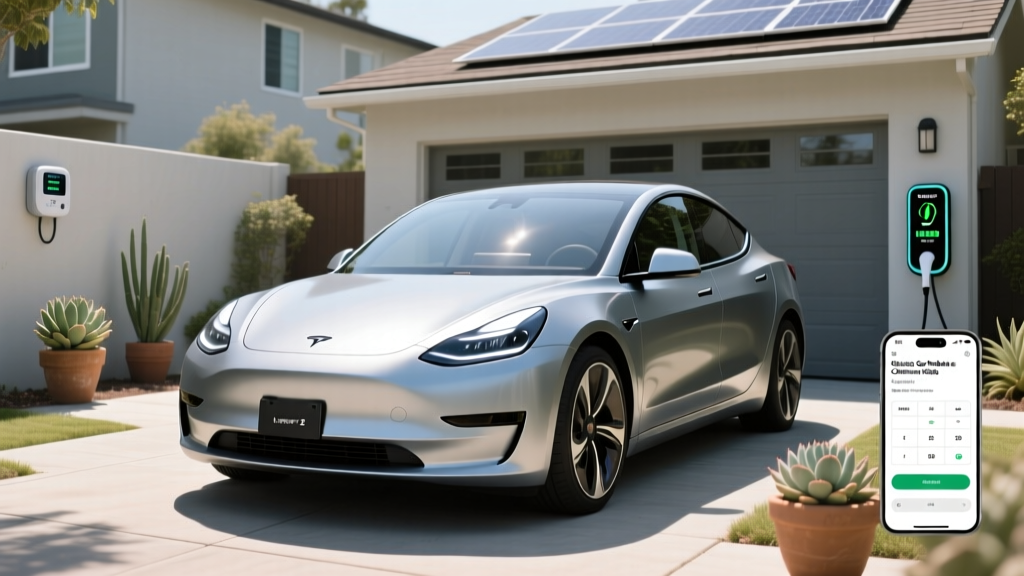
| Level 2 (Home Wall Connector) | 11.5 kW (48A) | ~37 miles of range per hour; full charge in ~8 hours |
| Level 1 (120V outlet) | ~1.4 kW | ~4–5 miles per hour; emergency/trickle only |
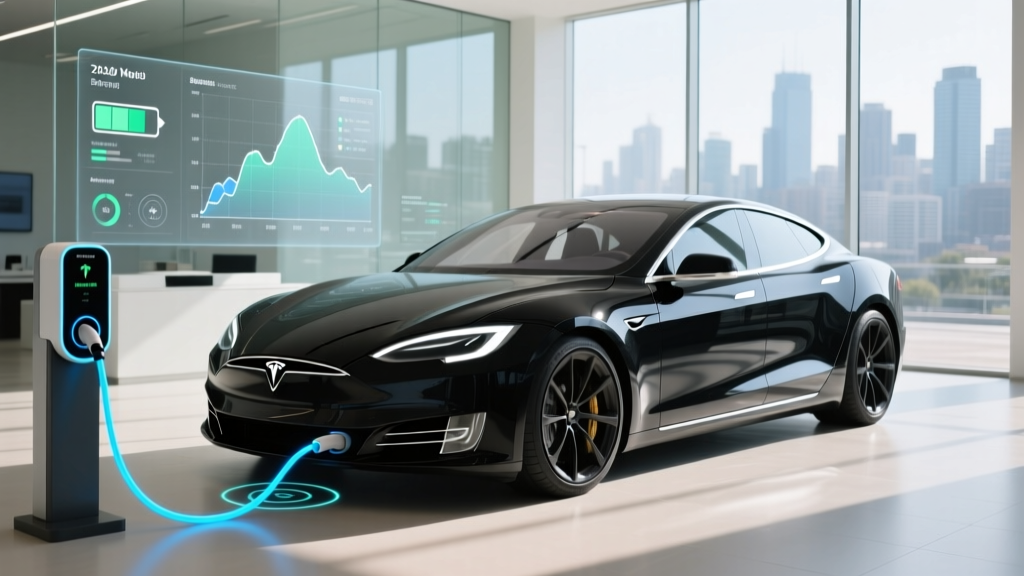
The charge curve is the critical detail: you'll see 250 kW only briefly at a low state-of-charge (typically 5–15%). By 50% SoC, the rate drops to roughly 150 kW, and above 80%, it falls below 50 kW. This is normal for NMC lithium-ion chemistry and thermal management — not a defect — but it means charging from 80–100% at a DC fast charger is painfully slow and best avoided. For daily use, home Level 2 charging at 11.5 kW covers virtually all needs, replenishing a full battery overnight.
The 2026 Model Y comes equipped with the NACS (North American Charging Standard) connector natively, granting full access to Tesla's Supercharger network — the most reliable public DC network in the U.S. by uptime metrics. CCS adapters are available for non-Tesla networks like Electrify America, though native NACS adoption by other automakers in 2025–2026 has expanded Supercharger access broadly.
Seat Comfort and Interior: Where Tesla Invested the Most
The Juniper refresh brought the most meaningful seat redesign in Model Y history. Here's what changed:
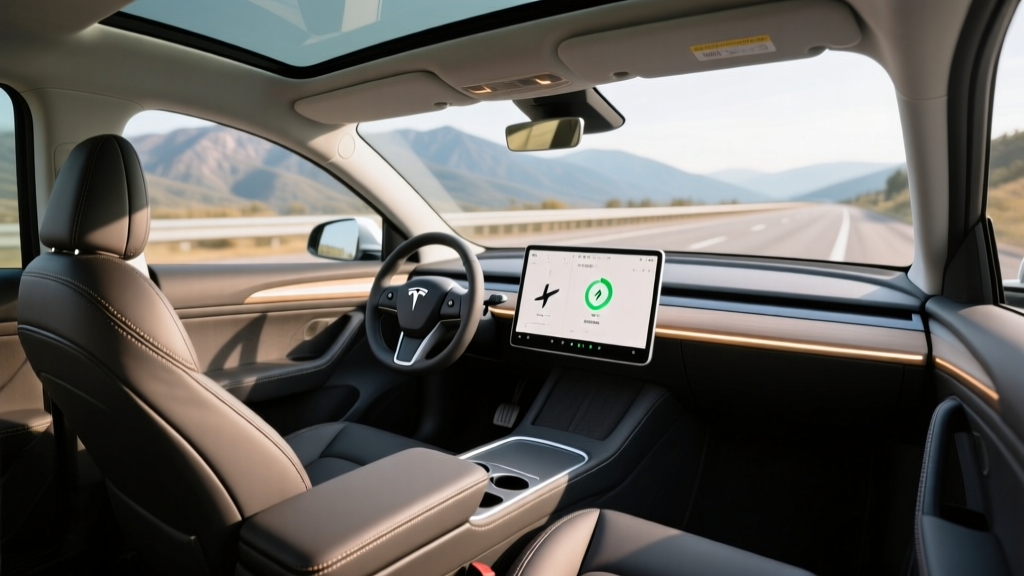
- Front seats: New multi-density foam with firmer side bolsters and a softer center pad. Ventilation is now standard (previously unavailable on Model Y), with three fan-speed settings controlled via the touchscreen. The seat-bottom cushion is slightly longer, improving thigh support for drivers over 5'10".
- Rear seats: Re-contoured backrest with a slightly more reclined angle (~28° vs. the prior ~25°). Padding thickness increased by approximately 15 mm. A rear-seat touchscreen (8" display) now provides climate and media control for passengers — eliminating the awkward reach to the front display.
- Materials: Tesla continues to use vegan leather (polyurethane-based) across all trims. The material is durable and easy to clean, but it does not breathe as well as perforated leather in hot weather — the new ventilation helps compensate.
- Noise: Acoustic glass on all four doors (previously front-only) and additional sound-deadening material reduce cabin noise by a noticeable margin at highway speeds. This makes the seat comfort improvements more impactful, since vibration and noise are major fatigue contributors.
Where the seats still fall short: The rear bench remains a three-across design with a relatively flat contour. Middle-seat passengers get a narrow, firm cushion with a pronounced floor hump (due to the under-floor battery pack structure). For two adults in the outboard positions, comfort is solid for trips up to 3–4 hours. For three adults, it's tight. The Hyundai Ioniq 5 and Kia EV6 both offer more sculpted, supportive rear seating.
Pricing, Trims, and Federal Tax Credit Eligibility
| Trim | MSRP | Est. After §30D Credit* |
|---|---|---|
| Long Range AWD | $48,990 | ~$41,490 |
| Performance | $53,990 | ~$46,490 |
*Federal tax credit estimate. Eligibility is NOT guaranteed. See details below.
The 2026 Model Y Long Range AWD qualifies for the up to $7,500 federal EV tax credit under IRS §30D, provided the buyer meets all requirements. As of 2026, the credit can be transferred to the dealer at point-of-sale, effectively reducing the purchase price at the time of transaction rather than waiting for tax filing. However, eligibility depends on several conditions:
- MSRP cap: The vehicle must have an MSRP at or below $80,000 for SUVs (the Model Y qualifies).
- Buyer income cap: Modified adjusted gross income (MAGI) must not exceed $150,000 (single), $225,000 (head of household), or $300,000 (joint filing).
- Battery sourcing: A percentage of critical minerals and battery components must be sourced from the U.S. or free-trade-agreement countries. Tesla's U.S.-built battery cells (from the Nevada and Texas Gigafactories) generally satisfy these requirements for 2026, but the exact credit amount ($3,750 vs. $7,500) can vary based on the specific battery batch and mineral sourcing. Always verify current eligibility on fueleconomy.gov before purchasing.
- Point-of-sale transfer: Buyers can elect to transfer the credit to the dealer, reducing the purchase price directly. This requires dealer participation and IRS registration at the time of sale.
Consult a tax professional for your specific situation. Credit rules are subject to legislative change, and state-level incentives (e.g., California's CVRP, Colorado's state credit) may stack on top of the federal credit depending on your jurisdiction.
Tech, Driver Assistance, and What's Missing
The 2026 Model Y continues to lead in software integration and over-the-air update frequency. Key technology features include:
- Infotainment: 15.4" center touchscreen with a faster processor (AMD Ryzen-based), wireless Apple CarPlay and Android Auto (added in the Juniper refresh), and a customizable app launcher.
- Autopilot (standard): SAE Level 2 driver-assist with adaptive cruise control, lane-centering, and automatic emergency braking. The driver must remain attentive with hands on the wheel at all times — this is not self-driving.
- FSD Supervised (optional, ~$8,000): Enhanced Level 2 system with intersection handling, traffic-light recognition, and city-street navigation. Despite the name, the driver must continuously supervise. It is not a Level 4 autonomous system.
- Unique features: Sentry Mode (360° parked surveillance), Dog Mode (climate-maintained cabin for pets), Camp Mode (overnight HVAC), and a front trunk (frunk) with 4.1 cu ft of space.
Notable drawbacks: No physical buttons for climate, volume, or glovebox — all functions route through the touchscreen, which is distracting while driving. No heads-up display. No Apple CarPlay/Android Auto integration prior to the Juniper refresh (now resolved for 2026). The absence of a traditional instrument cluster means speed and navigation info are displayed on the center screen, requiring a glance to the right.
Pros, Cons, and Who Should Buy the 2026 Model Y
Pros
- 320-mile EPA range is among the highest in the segment
- Supercharger network access (most reliable U.S. DC network)
- Significantly improved front-seat comfort with standard ventilation
- Class-leading cargo volume (72.1 cu ft with seats folded)
- Strong efficiency: 111 MPGe combined / 30 kWh per 100 mi
- Over-the-air updates continuously add features
Cons
- Rear middle seat remains cramped and firm
- All climate/media controls are touchscreen-only (distracting)
- FSD Supervised costs $8,000 extra and is still Level 2
- No heads-up display or physical instrument cluster
- NMC battery chemistry degrades faster than LFP if routinely charged to 100%
- Insurance premiums run 15–25% higher than segment average
Who the 2026 Model Y suits best:
- Commuters and road-trippers who value range and Supercharger access over luxury-brand badges.
- Families of four (two adults, two children) who need cargo space and reasonable rear-seat comfort.
- Tech-forward buyers comfortable with a touchscreen-centric interface and who appreciate frequent OTA improvements.
Who should look elsewhere:
- Buyers who regularly carry three adults in the rear seat (look at the Ioniq 5 or EV6).
- Those who prefer physical controls for climate and audio (consider the Ford Mustang Mach-E or BMW iX).
- Buyers in areas with limited Supercharger coverage who rely on Electrify America or other CCS-dominant networks.
Frequently Asked Questions
What is the real-world range of the 2026 Tesla Model Y?
The EPA rates the Long Range AWD at 320 miles. In real-world mixed driving, expect 280–300 miles in mild weather, 250–270 miles on sustained highway trips, and 180–210 miles in freezing temperatures. Preconditioning the battery while plugged in helps recover some winter range.
How fast does the Model Y charge at home and on the road?
On a 250 kW Supercharger, the Model Y charges from 10–80% in approximately 25 minutes, though the peak rate is sustained only briefly. At home on an 11.5 kW Level 2 Wall Connector, it adds roughly 37 miles of range per hour, fully recharging overnight in about 8 hours.
How much does the 2026 Model Y cost after tax credits?
The Long Range AWD starts at $48,990. If you qualify for the full $7,500 federal §30D credit (meeting income, MSRP, and battery-sourcing requirements), the effective price drops to approximately $41,490. State incentives may reduce the cost further — check your local programs.
Does the 2026 Model Y qualify for the federal EV tax credit?
Yes, the Model Y is currently eligible for up to $7,500 under IRS §30D, subject to buyer income caps ($150K single / $300K joint), the $80K SUV MSRP cap, and battery critical-mineral sourcing requirements. Eligibility can change — verify at fueleconomy.gov and consult a tax professional before purchasing.
Are Tesla seats comfortable for long road trips?
The 2026 Juniper-refresh seats are a meaningful improvement over prior Model Y generations, with better bolstering, standard ventilation, and improved cushion density. Front-seat comfort is competitive for trips of 4–6 hours. The rear outboard seats are adequate for 3–4 hour journeys, but the middle seat remains firm and narrow — not ideal for three-across adult passengers on long drives.
Is the 2026 Model Y worth buying over the Hyundai Ioniq 5 or Ford Mach-E?
The Model Y wins on range (320 mi vs. Ioniq 5's 303 mi), Supercharger network access, and cargo space. The Ioniq 5 offers faster peak charging (up to 350 kW on 800V architecture), more comfortable rear seats, and physical climate controls. The Mach-E provides a more traditional driving feel and available BlueCruise (hands-free on mapped highways). Your decision should hinge on charging-network preference, rear-seat needs, and interface tolerance.