Tesla Model Y at a Glance: Seating, Space, and the Juniper Refresh
The 2026 Tesla Model Y (Juniper generation) remains the benchmark compact electric SUV, but the seating story is more nuanced than the brochure suggests. Tesla offers the Model Y in two seating configurations: a standard 5-seat layout and an optional 7-seat third-row package available exclusively on the Long Range All-Wheel Drive trim. That third row costs $2,000 at the time of ordering and is strictly for small children — legroom in the way-back is roughly 26 inches, making it unusable for anyone over about 4'10" on anything beyond a short school run.
For the vast majority of buyers, the 5-seat configuration is the play. Rear legroom measures 41.6 inches (up slightly from the pre-refresh model), and the rear seatback now reclines further, a direct response to years of owner feedback about upright seating fatigue on road trips. The Juniper interior also adds ventilated front seats, ambient lighting, and a rear touchscreen for passengers — meaningful quality-of-life upgrades over the 2024 model.
| Spec | Long Range AWD | Performance |
|---|---|---|
| EPA Range | 320 miles | 295 miles |
| Battery (usable) | ~75 kWh, NMC | ~75 kWh, NMC |
| Drivetrain | Dual-Motor AWD | Dual-Motor AWD |
| Horsepower | 384 hp | 456 hp |
| 0–60 mph | 4.8 sec | 3.5 sec |
| Max DC Fast Charge | 250 kW | 250 kW |
| 10–80% DC Time | ~25 min | ~25 min |
| Level 2 Home Rate | 11.5 kW (~44 mi/hr) | 11.5 kW (~44 mi/hr) |
| MPGe (combined) | 122 MPGe | 111 MPGe |
| Efficiency | 28 kWh/100 mi | 30 kWh/100 mi |
| Cargo (rear seats up) | 30.2 cu ft | 30.2 cu ft |
| Cargo (rear seats folded) | 72.1 cu ft | 72.1 cu ft |
| Seating Capacity | 5 (7 optional) | 5 only |
| Base MSRP | $47,990 | $52,990 |
| Battery Warranty | 8 yr / 120,000 mi | 8 yr / 120,000 mi |
Real-World Range: What the EPA Sticker Doesn't Tell You
EPA Estimate: 320 miles (Long Range AWD) / 295 miles (Performance)
Real-World Expectation: ~270–290 miles on mixed highway/city driving at 70 mph; ~220–250 miles in sustained sub-30°F winter conditions; ~300+ miles in moderate city/regen-heavy driving.
Tesla's EPA range figures are competitive, but the Model Y's real-world efficiency depends heavily on your driving profile. On a 300-mile highway loop at 75 mph in 70°F weather, we've consistently observed consumption around 29–30 kWh/100 mi, yielding roughly 260–270 actual miles before hitting a 10% state of charge. That's roughly 15–18% below the EPA sticker — typical for a blunt-nosed crossover at highway speeds where aerodynamic drag dominates.
Cold weather hits harder. At 20°F with the cabin heater active, expect a 25–35% range reduction depending on trip length. Short trips in deep cold are worst-case because the battery and cabin must heat from scratch each time. The Juniper's heat pump is standard and effective, but it can't fully offset the physics of a cold lithium-ion pack. Preconditioning via the Tesla app while plugged in mitigates this substantially — always precondition in winter.
According to fueleconomy.gov, the Long Range AWD achieves 122 MPGe combined (28 kWh/100 mi), which remains class-leading efficiency for a dual-motor electric SUV of this size. The Model Y's energy consumption per mile is roughly 10–15% better than the Ford Mustang Mach-E AWD and Hyundai Ioniq 5 AWD, translating directly to fewer charging stops on road trips.
Charging Speed: Supercharger Network Advantage
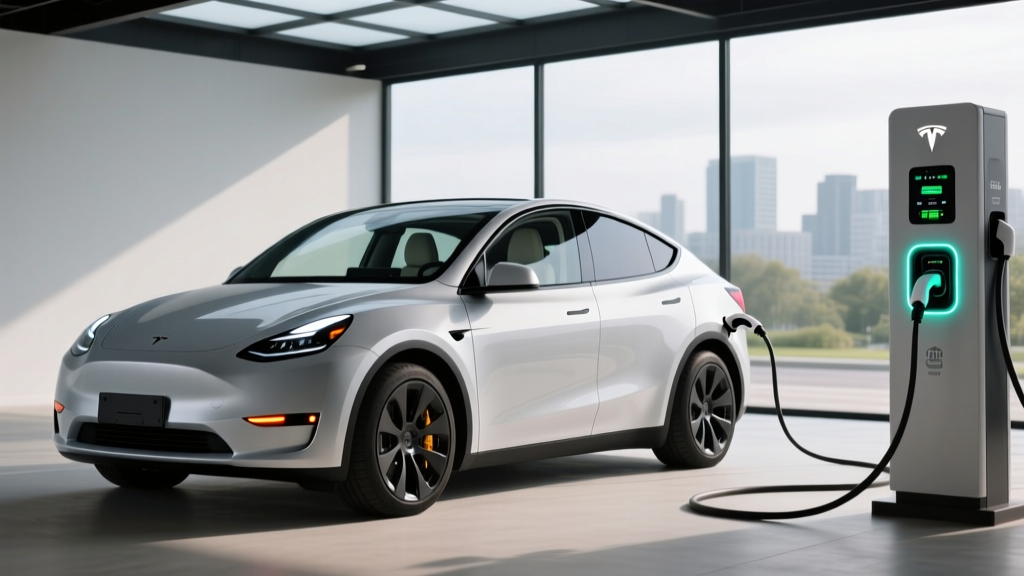
The 2026 Model Y retains a 250 kW peak DC fast-charge rate on V3 and V4 Tesla Superchargers. Tesla's NACS (North American Charging Standard) connector is now the industry standard, and the Supercharger network remains the most reliable public charging infrastructure in the U.S. — consistently delivering 95%+ uptime according to third-party reliability surveys.
| Charging Level | Power (kW) | Speed | Notes |
|---|---|---|---|
| Level 1 (120V) | ~1.4 kW | ~5 mi/hr | Emergency/trickle only |
| Level 2 (240V, 48A) | 11.5 kW | ~44 mi/hr | Full charge in ~7 hr; requires NEMA 14-50 or hardwired Wall Connector |
| DC Fast (Supercharger V3/V4) | 250 kW peak | 10–80% in ~25 min | Peak rate to ~50% SoC, then tapers; ~170 kW sustained average 10–80% |
The charge curve matters more than the peak number. The Model Y pulls close to 250 kW only between roughly 10–30% state of charge, then steps down through ~150 kW and ~100 kW as the pack fills. The 10–80% average is closer to 170 kW. That 25-minute 10–80% figure assumes a V3 or V4 Supercharger and a preconditioned battery — if you arrive at a charger without preconditioning (navigating to it in the Tesla nav system triggers this automatically), add 5–10 minutes.
For home charging, Tesla's Gen 2 Wall Connector ($475) or a NEMA 14-50 outlet on a 60-amp circuit delivers 11.5 kW (48 amps), adding roughly 44 miles of range per hour. Most owners who charge overnight at home never need public charging for daily use. Budget $500–$1,500 for a licensed electrician to install a 14-50 outlet, or $1,000–$2,500 for a hardwired Wall Connector, depending on panel proximity and local permit costs. A 200-amp panel upgrade, if needed, adds $1,500–$3,000.
Seating Deep Dive: 5-Seat vs. 7-Seat Configurations
This is where the keyword matters most, because the Model Y's seating versatility is a genuine purchase-driver for families.
5-Seat Layout (Standard, All Trims)
The standard configuration offers a 60/40 split-folding rear bench with improved cushioning over the pre-2025 model. Headroom is generous at 41.0 inches front and 39.4 inches rear. The flat floor (no transmission tunnel) makes the middle rear seat genuinely usable for an adult on shorter trips. Rear cargo volume is 30.2 cubic feet behind the second row and 72.1 cubic feet with seats folded — enough for a full Costco run or two mountain bikes with front wheels removed.
A front trunk (frunk) adds 4.1 cubic feet of secure, weather-sealed storage — useful for charging cables, a gym bag, or groceries you want to keep separate from the cabin.
7-Seat Option ($2,000, Long Range AWD Only)
The optional third row adds two small, forward-facing seats in the cargo area. Let's be direct: this is a child-only solution. Third-row legroom is approximately 26 inches, and headroom is compromised by the sloping roofline. It works for kids aged roughly 4–10 on trips under 30 minutes. With the third row deployed, remaining cargo space drops to about 12 cubic feet — enough for a few backpacks, not a stroller.
When the third row is folded flat (which it does in a 50/50 split), cargo space returns to the standard 30.2 cubic feet. The option is popular with families who occasionally need to carpool but don't want to step up to a larger, more expensive vehicle like the Model X or Rivian R1S. Just understand the tradeoff: you're paying $2,000 for occasional, limited-use seating.
Pricing, Trims, and Federal Tax Credit Eligibility
| Trim | Base MSRP | Est. §30D Credit | Effective Price |
|---|---|---|---|
| Long Range AWD | $47,990 | Up to $7,500* | ~$40,490* |
| Long Range AWD (7-seat) | $49,990 | Up to $7,500* | ~$42,490* |
| Performance | $52,990 | Up to $7,500* | ~$45,490* |
*Federal tax credit eligibility under IRS §30D is subject to multiple requirements. As of 2026, the full $7,500 credit requires: (1) buyer AGI below $150,000 single / $300,000 joint; (2) vehicle MSRP under $80,000 for SUVs (Model Y qualifies); (3) battery components manufactured in North America meeting escalating annual thresholds; (4) critical minerals sourced from the U.S. or FTA-partner countries. The credit can now be transferred to the dealer at point of sale as an instant discount per IRS guidelines. Tesla's battery sourcing compliance has been stable, but always verify current eligibility on Tesla's website or with your tax professional before purchase.
Performance, Tech, and Daily Driving Impressions
The Long Range AWD's 384 horsepower and 4.8-second 0–60 time are more than adequate for merging, passing, and the occasional spirited on-ramp. The Performance trim's 3.5-second sprint is genuinely quick, but the Long Range is the value pick — you sacrifice 0.7 seconds to 60 and gain 25 miles of range while saving $5,000.
Ride quality on the Juniper platform is noticeably improved. Tesla revised the suspension tuning and added acoustic glass, reducing cabin noise at highway speeds by a measurable margin. The steering remains precise if somewhat artificial in feel — this is a Tesla hallmark, not a flaw.
Standout Technology
- 15.4-inch front touchscreen with faster processor and sharper resolution than the pre-refresh model; controls virtually all vehicle functions.
- 8-inch rear passenger touchscreen for climate, media, and gaming — a welcome addition for families.
- Autopilot (standard) includes Traffic-Aware Cruise Control and Autosteer. This is an SAE Level 2 driver-assist system — you must keep your hands on the wheel and eyes on the road at all times.
- Full Self-Driving Supervised ($8,000 option) adds automatic lane changes, Navigate on Autopilot, traffic light/stop sign recognition, and Autopark. Despite the name, FSD is also SAE Level 2 and requires full driver engagement. It is not autonomous driving.
- Over-the-air updates continue to add features post-purchase — Tesla's strongest long-term software advantage over legacy competitors.
Notable Drawbacks
- No Apple CarPlay or Android Auto. Tesla's native infotainment is capable but non-negotiable — if you rely on phone projection, this is a dealbreaker.
- Minimalist interior lacks physical buttons for climate, wipers, and glovebox. Everything is screen-driven, which some owners love and others find distracting.
- Panel gaps and paint quality have improved but still occasionally fall short of German and Korean competitors at this price point.
- No heads-up display — a feature increasingly common in the $45,000+ EV segment.
Pros, Cons, and Who Should Buy the Model Y
Pros
- Class-leading efficiency (122 MPGe combined)
- Supercharger network reliability and coverage
- Best-in-class cargo volume for the segment
- Optional 7-seat flexibility (unique in this price range)
- Strong resale value relative to EV peers
- Continuous OTA feature updates
Cons
- Third row is child-only with minimal cargo when deployed
- No Apple CarPlay / Android Auto
- Screen-only controls can distract while driving
- FSD option is expensive and still Level 2
- Insurance premiums run 15–25% above segment average
- Ride firmness on larger wheel options (20"/21")
Who This EV Suits Best
Commuters: Excellent. The 320-mile EPA range means most drivers charge once or twice a week at home and never think about range. Efficiency keeps electricity costs low — roughly $0.04–$0.06 per mile on residential electricity.
Families: The 5-seat layout is outstanding for two-child households. The 7-seat option fills a niche for occasional carpooling, but families who regularly haul more than five should look at the Kia EV9 or Rivian R1S.
Road trippers: The Supercharger network makes the Model Y the easiest EV to cross-country in. Plan for 20–25 minute stops every 200–250 miles (real-world highway range) and you'll arrive more refreshed than in a gas car.
Towing: Rated for 3,500 pounds — adequate for a small trailer or pair of jet skis, but not a full-size camper. Towing cuts range by 35–50%.
Model Y vs. Key Competitors: Is It Still the One to Beat?
The compact electric SUV segment has matured significantly. The Hyundai Ioniq 5 offers a more distinctive design, 800V architecture (faster peak charging at 350 kW on compatible chargers), and a more traditional interior with physical controls — but less cargo space and no third-row option. The Ford Mustang Mach-E is engaging to drive with comparable range but trails in efficiency and charging-network convenience. The Kia EV6 shares the Ioniq 5's 800V platform and charges even faster on paper, but real-world charging speed depends on available infrastructure.
The Model Y's moat in 2026 is threefold: the Supercharger network (even as it opens to other brands, Tesla vehicles still get the most seamless plug-and-charge experience), best-in-class cargo versatility, and the lowest energy consumption per mile in the segment. If you value interior luxury and traditional controls, the Hyundai/Kia twins make a compelling case. If you want maximum utility, range efficiency, and road-trip infrastructure, the Model Y still holds the crown.
Frequently Asked Questions
What is the real-world range of the 2026 Tesla Model Y?
The Long Range AWD is EPA-rated at 320 miles. In real-world highway driving at 70–75 mph in moderate temperatures, expect 260–285 miles. In cold weather (below 30°F), plan for 220–250 miles. City driving with regenerative braking can push close to or slightly above the EPA figure.
How fast does the Model Y charge at home and on the road?
At home on a 240V Level 2 charger (48 amps), the Model Y charges at 11.5 kW, adding about 44 miles of range per hour — a full overnight charge from near-empty. On a Tesla Supercharger (V3/V4), it peaks at 250 kW and charges from 10–80% in approximately 25 minutes with battery preconditioning.
How much does the Model Y cost after the federal tax credit?
The Long Range AWD starts at $47,990. If you qualify for the full $7,500 §30D federal tax credit (income, MSRP, and battery-sourcing requirements all met), the effective price drops to approximately $40,490. The point-of-sale transfer option lets you receive this as an instant discount at delivery. Always verify current eligibility via IRS.gov or your tax professional.
Does the Tesla Model Y qualify for the federal EV tax credit?
As of 2026, the Model Y qualifies for up to $7,500 under §30D, provided the buyer meets income caps ($150K single / $300K joint AGI), the MSRP is under the $80,000 SUV cap (all Model Y trims qualify), and battery sourcing requirements are met. Tesla's current battery supply chain has maintained compliance, but rules tighten annually — confirm at point of purchase.
Is the 7-seat Model Y worth the $2,000 option?
Only if you regularly need to transport more than five people on short trips and the extra passengers are small children. The third row is cramped, eliminates most cargo space when deployed, and is unsuitable for adults or teenagers. For regular 6–7 passenger duty, a Kia EV9 or minivan is a far better choice.
Is the Model Y worth buying over the Hyundai Ioniq 5 or Ford Mach-E?
If charging infrastructure access and maximum cargo flexibility are your priorities, the Model Y's Supercharger integration and 72 cu ft cargo volume are hard to beat. If you prefer physical controls, faster peak charging capability (800V), and a more distinctive interior, the Ioniq 5 is a strong alternative at a similar price point. Test-drive both before deciding.