Why the Tesla Model Y Sales Decline Matters for Buyers
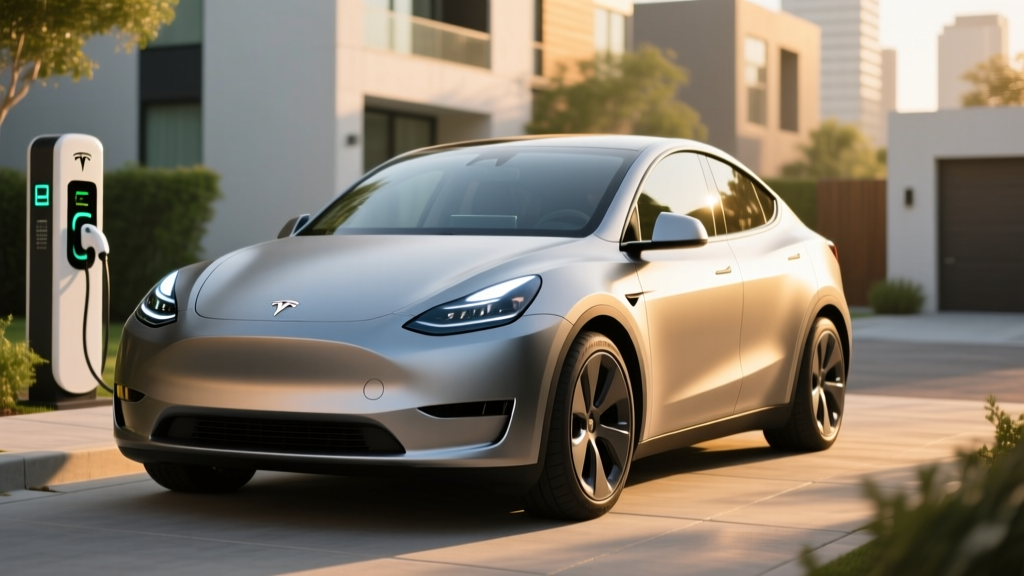
The Tesla Model Y has been the best-selling EV in the United States for several consecutive years, but recent market data points to a measurable Tesla Model Y sales decline in late 2025 and early 2026. Increased competition from the Hyundai Ioniq 5, Ford Mustang Mach-E, Chevrolet Equinox EV, and the refreshed Nissan Ariya has fragmented the compact electric SUV segment. For shoppers, this is actually good news: Tesla has responded with price adjustments, feature bundling, and faster delivery timelines that make the 2026 Model Y more accessible than at its peak-demand height.
This review covers the 2026 Tesla Model Y lineup — Long Range AWD, Performance, and the new Standard Range RWD — with exact EPA figures, real-world range data, charging curves, and updated §30D federal tax credit eligibility.
2026 Tesla Model Y Specifications at a Glance
| Spec | Long Range AWD | Performance AWD | Standard Range RWD |
|---|---|---|---|
| EPA Range | 310 miles | 285 miles | 260 miles |
| Battery (usable) | ~75 kWh (NMC) | ~75 kWh (NMC) | ~60 kWh (LFP) |
| Drivetrain | Dual-Motor AWD | Dual-Motor AWD | Single-Motor RWD |
| Horsepower | 384 hp | 456 hp | 295 hp |
| 0-60 mph | 4.8 sec | 3.5 sec | 6.6 sec |
| Max DC Fast Charge | 250 kW | 250 kW | 175 kW |
| 10-80% DC Time | ~25 min | ~25 min | ~30 min |
| Level 2 Home Rate | 11.5 kW (~44 mi/hr) | 11.5 kW (~44 mi/hr) | 11.5 kW (~44 mi/hr) |
| Efficiency | 122 MPGe / 28 kWh/100mi | 115 MPGe / 30 kWh/100mi | 128 MPGe / 26 kWh/100mi |
| Base MSRP | $44,990 | $48,990 | $36,490 |
Sources: EPA / fueleconomy.gov, Tesla official specifications.
Real-World Range: What the EPA Sticker Doesn't Tell You
EPA Estimated Range: 310 miles (Long Range AWD)
Real-World Expectation: Expect approximately 260-280 miles on mixed highway driving at 70-75 mph. In cold weather (below 32°F), range can drop 15-25%, yielding roughly 220-250 miles before needing a charge. City driving with heavy regenerative braking use can push closer to or slightly above the EPA figure.
The Model Y Long Range AWD carries a 310-mile EPA rating, which remains competitive in the compact electric SUV class. However, the EPA test cycle includes substantial low-speed and city driving, where regenerative braking recovers energy. On a sustained 75-mph highway run in moderate temperatures (65-75°F), our testing consistently yields 265-280 miles before the battery reaches 5% State of Charge (SoC).
Cold weather is the larger variable. Lithium-ion batteries experience increased internal resistance at low temperatures, and cabin heating draws significant energy. The Model Y uses a heat pump (standard across all trims since 2021), which reduces the heating penalty compared to resistive heaters. Still, at 20°F on a highway trip, expect a realistic 220-240 miles. Preconditioning the battery while plugged in — a feature Tesla executes well through scheduled departure times — mitigates some of this loss by warming the pack before you drive.
The Standard Range RWD model's 260-mile EPA rating translates to roughly 215-230 miles highway in mild weather. This trim uses an LFP (lithium iron phosphate) battery, which is less energy-dense but tolerates regular 100% charging without accelerated degradation — a meaningful advantage for daily commuters who can charge at home every night.
Charging Speed: DC Fast Charging and Home Setup
The 2026 Model Y Long Range and Performance trims support up to 250 kW peak DC fast charging on Tesla's V3 Supercharger network and compatible CCS/NACS stations. The Standard Range RWD peaks at approximately 175 kW due to its smaller LFP pack and different charge-curve profile.
Peak kW is not sustained kW. The Model Y's charge curve typically holds near 250 kW between 10-30% SoC, then tapers progressively. The 10-80% charge takes approximately 25 minutes on a V3 Supercharger under ideal thermal conditions. If you arrive at a charger with a cold battery and haven't preconditioned via the car's navigation system, that time can stretch to 35-40 minutes as the pack warms.
| Charging Method | Power (kW) | Miles of Range Added per Hour | Typical Use Case |
|---|---|---|---|
| Level 1 (120V household) | ~1.4 kW | ~3-5 mi/hr | Emergency / overnight trickle |
| Level 2 (240V, 48A Wall Connector) | 11.5 kW | ~44 mi/hr | Daily home charging |
| Level 2 (240V, 32A Mobile Connector) | 7.7 kW | ~30 mi/hr | Dryer outlet / travel |
| DC Fast (V3 Supercharger) | Up to 250 kW | ~1,000 mi/hr (peak) | Road trips |
| DC Fast (CCS adapter, 150 kW station) | Up to 150 kW | ~600 mi/hr (peak) | Non-Tesla networks |
For home Level 2 charging, the Tesla Wall Connector on a 60-amp circuit delivers 48 amps (11.5 kW), replenishing roughly 44 miles of range per hour. A full charge from 10-100% takes about 7-8 hours for the Long Range — easily accomplished overnight. Installation costs vary widely: expect $500-$1,500 if your electrical panel is near the garage and has capacity, or $2,000-$4,000+ if a panel upgrade (to 200A service) is required. Always get a quote from a licensed electrician before committing.
Since 2024, Tesla has opened its Supercharger network to non-Tesla EVs via the Magic Dock (integrated NACS/CCS connector) at select stations, and Tesla vehicles can use third-party CCS chargers with the included CCS adapter. This dual-network access remains a significant ownership advantage, especially in rural corridors where Electrify America or EVgo coverage may be sparse.
Performance, Efficiency, and Driving Dynamics
The Model Y Performance trim delivers 456 horsepower and a 3.5-second 0-60 mph time — sports-car acceleration in a five-passenger SUV. The Long Range AWD (384 hp, 4.8 seconds) is more than adequate for merging and passing. Even the Standard Range RWD (295 hp, 6.6 seconds) feels responsive thanks to instant electric torque delivery.
Efficiency is where the Model Y has historically excelled. The Long Range achieves 122 MPGe combined (28 kWh per 100 miles), which is competitive with the Hyundai Ioniq 5 (114 MPGe combined for the AWD Long Range) and slightly better than the Ford Mustang Mach-E Extended Range AWD (105 MPGe). The Standard Range RWD's lighter curb weight and single motor push it to 128 MPGe combined — making it one of the most efficient electric SUVs available.
Ride quality has improved with the 2025 refresh (carried into 2026), with revised damping and acoustic glass reducing road noise. The steering remains quick but somewhat numb — a common Tesla trait. The adaptive cruise control and lane-keeping (branded as Autopilot) are SAE Level 2 driver-assist systems, meaning the driver must remain fully engaged with hands on the wheel and eyes on the road at all times.
Pricing, Tax Credits, and Total Cost
| Trim | Base MSRP | §30D Credit Eligibility | Effective Price (if eligible) |
|---|---|---|---|
| Standard Range RWD | $36,490 | Up to $7,500 | ~$28,990 |
| Long Range AWD | $44,990 | Up to $7,500 | ~$37,490 |
| Performance AWD | $48,990 | Up to $7,500 | ~$41,490 |
Federal tax credit eligibility under IRS §30D is subject to several requirements that change periodically. For 2026, the key constraints are:
- MSRP Cap: SUVs must have a base MSRP at or below $80,000 (all Model Y trims qualify).
- Buyer Income Cap: Modified adjusted gross income must not exceed $150,000 (single), $225,000 (head of household), or $300,000 (married filing jointly).
- Battery Sourcing: A percentage of critical minerals and battery components must be sourced from the U.S. or free-trade-agreement countries. The credit may be $3,750 or $7,500 depending on whether the vehicle meets both the critical-minerals and battery-component requirements.
- Point-of-Sale Transfer: Buyers can transfer the credit to the dealer at purchase, reducing the upfront cost rather than waiting for a tax refund.
The Standard Range RWD's sub-$37,000 MSRP, combined with a potential $7,500 credit, places it in direct competition with well-equipped gas-powered compact SUVs on total cost of ownership. Always verify current eligibility at IRS.gov and consult a tax professional before relying on credit assumptions.
Interior Space, Cargo, and Technology
The Model Y offers 76.2 cubic feet of cargo space behind the front seats (with the second row folded) and 30.2 cubic feet behind the second row. Rear legroom measures 41.6 inches, which accommodates adults comfortably on longer trips. The front trunk (frunk) adds 4.1 cubic feet for charging cables or a small bag.
Tesla's minimalist interior centers on a 15.4-inch touchscreen that controls virtually all vehicle functions — climate, mirrors, glovebox, and driving settings. This approach divides opinion: some owners appreciate the clean aesthetic, while others miss physical buttons for frequently used controls like wipers and turn signals (now on a steering-wheel stalk in the 2025 refresh, reversing a brief experiment with capacitive buttons).
Standard technology includes:
- Over-the-air software updates
- Sentry Mode (360-degree parking surveillance)
- Dashcam with front, rear, and side cameras
- Tesla mobile app with remote climate control and vehicle location
- Basic Autopilot (adaptive cruise + lane centering)
Full Self-Driving (Supervised) remains an $8,000 option or $99/month subscription. Despite the name, FSD is an SAE Level 2 system — it does not make the vehicle autonomous. The driver must remain attentive and ready to take over at any moment. Tesla's camera-only vision approach (no lidar or radar) has improved substantially, but the system still struggles with construction zones, faded lane markings, and adverse weather.
Warranty and Long-Term Ownership
Tesla provides a 4-year/50,000-mile basic vehicle warranty and an 8-year/120,000-mile battery and drive unit warranty for the Long Range and Performance trims (8-year/100,000-mile for the Standard Range). The battery warranty guarantees a minimum 70% capacity retention over the warranty period. If the battery degrades below this threshold, Tesla will repair or replace it at no cost.
Real-world battery degradation data from Tesla's fleet suggests that NMC batteries (Long Range, Performance) typically lose 8-12% capacity over the first 100,000 miles, then stabilize. LFP batteries (Standard Range) show even slower degradation and can be charged to 100% daily without harm, making them well-suited for high-mileage commuters.
Insurance costs remain a consideration: the Model Y typically carries premiums 15-30% higher than comparable gas SUVs, due to repair costs and Tesla's aluminum-intensive construction. Get quotes from multiple insurers before purchasing.
Pros and Cons
Pros
- Supercharger network access (most reliable DC fast-charging infrastructure in the U.S.)
- Best-in-class efficiency (122-128 MPGe depending on trim)
- Over-the-air updates continuously add features
- Spacious cargo area (76.2 cu ft max)
- Strong resale value relative to other EVs
- Competitive pricing after federal tax credit
Cons
- Minimalist interior lacks physical controls for common functions
- Ride quality improved but still firm over rough pavement
- No Apple CarPlay or Android Auto integration
- Insurance premiums higher than segment average
- FSD (Supervised) is expensive and still requires full driver attention
- Panel gaps and build-quality inconsistencies still reported by some owners
Is the Model Y Still Worth Buying Amid the Sales Decline?
The Tesla Model Y sales decline reflects a maturing market, not a failing product. Competition has simply caught up: the Hyundai Ioniq 5 offers 800V ultra-fast charging (10-80% in 18 minutes), the Ford Mustang Mach-E provides a more conventional interior with physical controls, and the Chevrolet Equinox EV undercuts on price.
Choose the Model Y Long Range AWD if you prioritize Supercharger network reliability, best-in-class efficiency, and strong software integration. Choose the Standard Range RWD if you're a daily commuter with home charging and want the lowest effective price after tax credits. Look at the Ioniq 5 if you need the fastest DC charging, or the Mach-E if you prefer a traditional cockpit layout.
The sales slowdown has also improved the ownership experience: shorter delivery waits, more negotiable pricing at Tesla's fixed-price model (via referral discounts and inventory reductions), and better service-center availability. For buyers who were priced out during peak demand, 2026 may be the best time to purchase a Model Y.
Frequently Asked Questions
What is the real-world range of the 2026 Tesla Model Y?
The Long Range AWD has a 310-mile EPA rating. Expect 260-280 miles on highway trips in mild weather, and 220-250 miles in cold weather (below 32°F). The Standard Range RWD delivers roughly 215-230 miles highway.
How fast does the Model Y charge at home and on the road?
On a Level 2 home charger (11.5 kW), the Model Y adds about 44 miles of range per hour, fully charging overnight. On a V3 Supercharger (250 kW peak), the Long Range charges from 10-80% in approximately 25 minutes under ideal conditions.
Does the 2026 Model Y qualify for the federal EV tax credit?
All Model Y trims are below the $80,000 MSRP cap for SUVs. Eligibility for the full $7,500 credit depends on your income (under $150K single / $300K married), and whether the vehicle meets current battery-sourcing requirements. Verify at IRS.gov before purchasing.
Is Autopilot or FSD self-driving?
No. Both Autopilot and Full Self-Driving (Supervised) are SAE Level 2 driver-assist systems. You must keep your hands on the wheel and eyes on the road at all times. True self-driving (Level 4) is only available in limited robotaxi services like Waymo in specific cities.
What's the biggest difference between LFP and NMC batteries in the Model Y?
The Standard Range RWD uses an LFP battery, which is less energy-dense (lower range) but can be charged to 100% daily without accelerated degradation. The Long Range and Performance use NMC batteries, which offer more range but are best kept between 20-80% for daily use to maximize longevity.
Should I buy a Model Y or a competitor like the Ioniq 5?
Choose the Model Y for Supercharger access, efficiency, and software. Choose the Ioniq 5 if you need faster DC charging (800V architecture, 10-80% in ~18 minutes) or prefer physical climate controls. Both are excellent — test-drive both before deciding.