Why Tesla Model Y Sales Keep Climbing in 2025
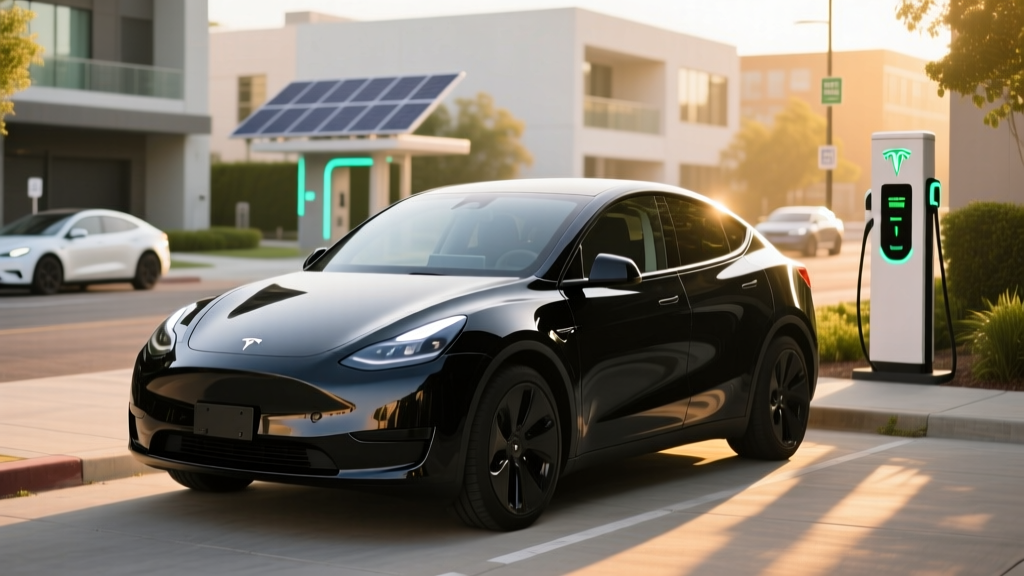
The Tesla Model Y doesn't need hype — it needs a spec sheet. Through the first half of 2025, the Model Y continues to anchor Tesla's sales volume globally, and for buyers evaluating the compact electric SUV segment, the reasons are quantifiable: a usable 320-mile EPA range, a 250 kW DC fast-charge peak, and access to the largest reliable fast-charging network in North America. But with the Hyundai Ioniq 5, Ford Mustang Mach-E, and Chevrolet Equinox EV all posting aggressive numbers, the question isn't whether the Model Y is good — it's whether it's still the best answer for your specific use case.
This review breaks down every number that matters for the 2025 Model Year (MY2025) Tesla Model Y lineup, from battery chemistry and real-world range to the exact federal tax credit math under current IRS §30D rules.
2025 Tesla Model Y Core Specifications
| Spec | Long Range RWD | Long Range AWD | Performance |
|---|---|---|---|
| Base MSRP | $44,990 | $47,990 | $51,490 |
| EPA Range | 320 mi | 308 mi | 277 mi |
| Battery (usable) | ~75 kWh (NMC) | ~75 kWh (NMC) | ~75 kWh (NMC) |
| Drivetrain | RWD (single motor) | AWD (dual motor) | AWD (dual motor) |
| 0-60 mph | 5.8 sec | 4.8 sec | 3.5 sec |
| Horsepower | ~346 hp | ~384 hp | ~456 hp |
| Top Speed | 125 mph | 125 mph | 155 mph |
| MPGe (combined) | 122 MPGe | 117 MPGe | 111 MPGe |
| Efficiency | 28 kWh/100mi | 29 kWh/100mi | 30 kWh/100mi |
| Max DC Charge | 250 kW | 250 kW | 250 kW |
| 10-80% DCFC | ~25 min | ~25 min | ~25 min |
| Level 2 (11.5 kW) | ~44 mi/hr | ~44 mi/hr | ~44 mi/hr |
| Cargo (rear seats up) | 30.2 cu ft | 30.2 cu ft | 30.2 cu ft |
| Cargo (rear seats folded) | 72.0 cu ft | 72.0 cu ft | 72.0 cu ft |
| Rear Legroom | 40.5 in | 40.5 in | 40.5 in |
| Battery Warranty | 8 yr / 120,000 mi | 8 yr / 120,000 mi | 8 yr / 120,000 mi |
| Basic Warranty | 4 yr / 50,000 mi | 4 yr / 50,000 mi | 4 yr / 50,000 mi |
Source: fueleconomy.gov, Tesla.com (2025 model year specs). Prices exclude $1,390 destination fee. HP figures estimated from Tesla powertrain data.
Real-World Range: What the EPA Number Doesn't Tell You
EPA Estimate: 308 miles
Real-World Highway (70-75 mph, 72°F): ~260-280 miles
Real-World City/Mixed: ~290-310 miles
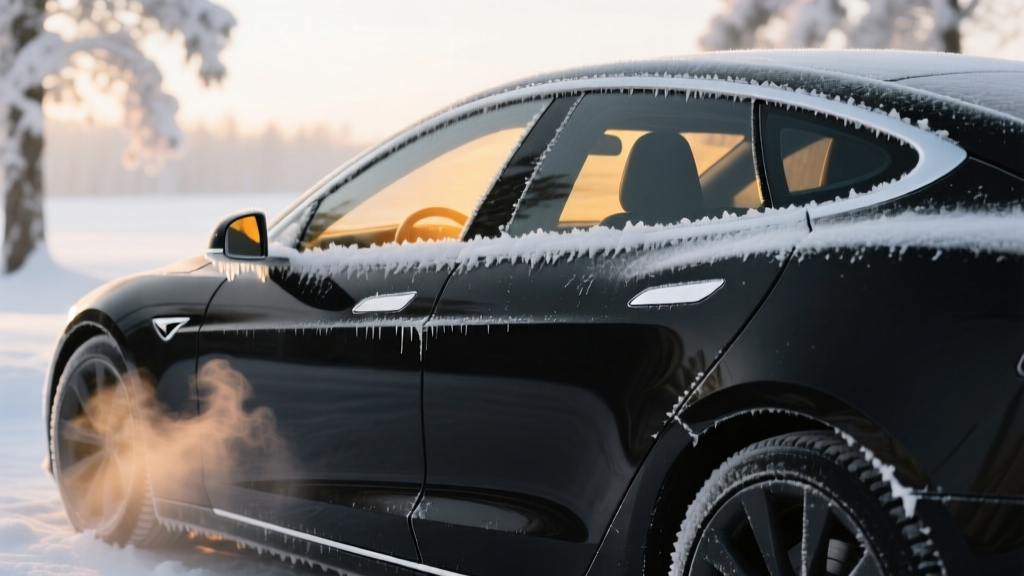
Cold Weather (below 32°F, highway): ~210-240 miles (30-35% reduction)
With Heat Pump Running (winter mixed): ~240-270 miles
The EPA range figure is a blended cycle that weights city driving more heavily than highway, and EVs are inherently more efficient at lower speeds thanks to regenerative braking. On a sustained 75 mph interstate run in moderate temperatures, expect the Long Range AWD to deliver roughly 260-280 miles before you'll want to stop. The Model Y's standard heat pump helps mitigate winter losses compared to older EVs using resistive cabin heaters, but any EV battery loses 25-35% of its effective capacity in sub-freezing temperatures due to increased internal resistance and cabin heating demand.
The RWD Long Range model's 320-mile EPA figure benefits from single-motor efficiency and a slightly lighter curb weight. If your commute is mostly suburban and below 65 mph, you'll land closer to the EPA sticker. If you're running 80 mph on I-70 through Kansas in January, plan for 200-220 miles between stops.
Charging Speed: Supercharger Network Advantage
The 2025 Model Y retains a 250 kW peak DC fast-charge rate on V3 Superchargers. Tesla's charge curve is well-managed: the battery pulls close to peak rate from roughly 10% to 45% state of charge (SoC), then progressively tapers. A 10-80% session takes approximately 25 minutes under ideal thermal conditions (battery preconditioned via navigation to a Supercharger).
| Charging Level | Power / Voltage | Rate (mi/hr added) | Notes |
|---|---|---|---|
| Level 1 (120V) | ~1.4 kW | ~3-4 mi/hr | Standard outlet; emergency/trickle only |
| Level 2 (240V, 48A) | 11.5 kW | ~44 mi/hr | Tesla Wall Connector or J1772 w/ adapter; full charge ~8 hrs |
| Level 2 (240V, 32A) | 7.7 kW | ~30 mi/hr | Mobile Connector on NEMA 14-50; full charge ~11 hrs |
| DC Fast (V3 Supercharger) | 250 kW peak | Up to ~1,000 mi/hr | 10-80% in ~25 min; preconditioned |
| DC Fast (V4 Supercharger) | 250+ kW | Similar to V3 | Rolling out; cable-cooled connector |
| DC Fast (CCS via adapter) | Up to 150-250 kW | Varies by station | Requires Tesla CCS adapter; Electrify America, etc. |
A critical nuance: kW is power (how fast energy flows); kWh is energy (how much the battery holds). The Model Y's ~75 kWh battery charging at 250 kW doesn't fill in 18 minutes because the rate tapers above ~50% SoC. Peak rate is a ceiling, not a sustained average. Real-world average charge rate over a 10-80% session is closer to 130-150 kW.
For home charging, the Tesla Wall Connector at 48 amps (11.5 kW on a 60A circuit) adds roughly 44 miles per hour of charging — enough to replenish a full day's driving in 1-2 hours. Installation cost for a dedicated 60A circuit typically runs $800-$2,000 depending on panel proximity and local permitting, though older homes may require a panel upgrade ($2,000-$4,000 additional).
Performance and Driving Dynamics
The Model Y Performance trim delivers 3.5-second 0-60 mph times that rival sports sedans, while the Long Range AWD's 4.8 seconds is more than adequate for highway merging and passing. The RWD model at 5.8 seconds feels brisk but not thrilling.
All trims use an NMC (nickel manganese cobalt) lithium-ion battery pack. Tesla has not switched the Model Y to LFP (lithium iron phosphate) chemistry in the US market as of 2025, though the Standard Range variant sold in some markets uses CATL-supplied LFP cells. NMC offers higher energy density (more range per kilogram) but benefits from staying between 20-80% SoC for daily use to minimize degradation. Tesla's battery management system (BMS) handles this well, and the 8-year/120,000-mile battery warranty guarantees at least 70% capacity retention over the coverage period.
Ride quality in the current Model Y generation remains firm. The 2024 "Juniper" refresh improved noise isolation and suspension compliance for non-US markets, but US-spec 2025 models carry over the pre-refresh chassis tuning. Road noise at highway speed is noticeable compared to the Hyundai Ioniq 5 or Genesis GV60, and the absence of physical buttons for climate and mirror adjustment remains a friction point for new owners.
Pricing, Tax Credits, and Total Cost
| Trim | MSRP + Destination | §30D Credit (if eligible) | Effective Price |
|---|---|---|---|
| Long Range RWD | $46,380 | Up to $7,500 | ~$38,880 |
| Long Range AWD | $49,380 | Up to $7,500 | ~$41,880 |
| Performance | $52,880 | Up to $7,500 | ~$45,380 |
IRS §30D Federal Tax Credit — Eligibility Requirements (2025):
- MSRP Cap: SUVs/vans/pickups must have MSRP ≤ $80,000. All Model Y trims qualify.
- Buyer Income Cap: Modified AGI ≤ $150,000 (single), $225,000 (head of household), $300,000 (joint filers).
- Battery Sourcing: The full $7,500 requires both critical-mineral and battery-component sourcing thresholds. Tesla has historically met these requirements for US-built Model Y vehicles, but sourcing rules tighten annually. Verify current eligibility at IRS.gov qualified vehicle list.
- Point-of-Sale Transfer: As of 2024, the credit can be transferred to the dealer at purchase, reducing your out-of-pocket cost immediately rather than waiting for tax filing. Consult a tax professional for your specific situation.
- One Vehicle Per VIN: The credit applies once per vehicle VIN and once per taxpayer (1 new EV credit per 3-year period).
State incentives vary widely — California's CVRP, Colorado's $5,000 credit, and various utility rebates can stack on top of the federal credit. Check your state energy office or utility provider for current programs.
Tech, Safety, and Driver Assistance
The Model Y's 15-inch center touchscreen runs Tesla's proprietary infotainment stack — no Apple CarPlay or Android Auto. Navigation, media, climate, and vehicle controls all route through the screen. The UI is responsive and feature-rich (Sentry Mode dashcam, theater mode, dog mode, camp mode), but the lack of phone projection is a dealbreaker for some buyers.
Tesla Autopilot and Full Self-Driving (Supervised) are SAE Level 2 driver-assistance systems. The driver must remain fully attentive, keep hands on the wheel (or demonstrate engagement via camera monitoring), and be prepared to take over at any moment. These systems do NOT make the vehicle self-driving. Only Level 4 services like Waymo operate without a human driver in defined operational domains.
Standard Autopilot includes Traffic-Aware Cruise Control and Autosteer (lane centering on marked roads). The $8,000 FSD (Supervised) upgrade adds automatic lane changes, Navigate on Autopilot, traffic light/stop sign recognition, and Smart Summon. Real-world FSD capability has improved significantly with the vision-only neural network approach, but it remains a supervised system — not a replacement for an attentive driver. For most buyers, standard Autopilot handles highway cruising competently, and the FSD premium is difficult to justify unless you regularly drive in complex urban environments.
Safety ratings are strong: the Model Y earned a 5-star overall rating from NHTSA and a Top Safety Pick+ designation from IIHS across all crashworthiness categories.
How the Model Y Stacks Up Against Key Competitors
| Attribute | Tesla Model Y LR AWD | Hyundai Ioniq 5 Limited | Ford Mustang Mach-E Premium AWD | Chevy Equinox EV RS |
|---|---|---|---|---|
| MSRP | $49,380 | $54,200 | $50,975 | $46,295 |
| EPA Range | 308 mi | 305 mi | 290 mi | 319 mi |
| Max DC Charge | 250 kW | 240 kW | 150 kW | 150 kW |
| 10-80% DCFC | ~25 min | ~18 min (350kW station) | ~38 min | ~35 min |
| 0-60 mph | 4.8 sec | 5.0 sec | 5.1 sec | ~7.0 sec |
| Charging Network | Supercharger (native) | NACS adapter / CCS | NACS adapter / CCS | NACS adapter / CCS |
| Apple CarPlay | No | Yes (wireless) | Yes (wireless) | Yes (wireless) |
| Cargo (seats up) | 30.2 cu ft | 27.2 cu ft | 29.7 cu ft | 26.4 cu ft |
The Ioniq 5 charges faster on compatible 350 kW Electrify America stations (18-minute 10-80% under ideal conditions), but Tesla's Supercharger network remains more reliable and ubiquitous for road trips. The Mach-E and Equinox EV offer CarPlay, which matters to many buyers, but sacrifice DC charge speed. The Equinox EV's 319-mile range at a lower price point is compelling for budget-conscious buyers who don't need performance.
Pros
- Supercharger network — most reliable DC fast-charging in North America
- Class-leading cargo volume (72 cu ft with seats folded)
- Strong efficiency (28-30 kWh/100mi)
- Over-the-air updates continuously add features
- 5-star NHTSA safety across all categories
- Frunk adds 4.1 cu ft of front storage
- Heat pump standard for winter efficiency
Cons
- No Apple CarPlay or Android Auto
- Firm ride quality; road noise above 70 mph
- All controls through touchscreen — no physical buttons
- FSD costs $8,000 extra and remains Level 2 supervised
- Panel gaps and interior material quality trail luxury competitors
- Rear visibility limited by sloping roofline
- NMC battery prefers 20-80% daily range (not 100% daily like LFP)
Who Should Buy the 2025 Tesla Model Y?
Choose the Model Y if:
- You road-trip frequently and want the most reliable DC fast-charging network (Superchargers average 99.5% uptime)
- You need maximum cargo space for a family (72 cu ft is best-in-class for compact electric SUVs)
- You value OTA software updates that improve the vehicle over time
- Your daily commute fits within 200-250 real-world miles and you can charge at home
- You want strong performance without the luxury-SUV price premium
Look elsewhere if:
- You require Apple CarPlay/Android Auto for daily navigation and media
- You prioritize ride comfort and cabin quietness over efficiency
- You want the absolute fastest DC charging (Ioniq 5 on a 350 kW station is quicker)
- You prefer physical buttons and a traditional instrument cluster
- You need a third row (consider the Kia EV9 or Model X)
For daily commuters with home Level 2 charging, the Model Y Long Range RWD at ~$38,880 after the federal credit is one of the most cost-efficient electric SUVs on the market. The 320-mile EPA range covers virtually any commute with margin, and overnight charging at $0.12-$0.18/kWh (national residential average) costs roughly $9-$14 for a full charge — equivalent to 80-100 MPGe in fuel cost terms.
For families who road-trip 2-4 times per year, the AWD Long Range model's dual-motor traction and Supercharger access make it the default choice in the segment. The 25-minute 10-80% charge time is manageable with a rest stop, and Tesla's trip planner reliably routes you through functioning Superchargers.
Frequently Asked Questions
What is the real-world range of the 2025 Tesla Model Y?
The Long Range AWD delivers approximately 260-280 miles on the highway at 70-75 mph in moderate temperatures, and around 290-310 miles in mixed city/suburban driving. In cold weather (below 32°F), expect 210-240 miles on the highway. The RWD model adds roughly 10-15 real-world miles thanks to single-motor efficiency. The EPA sticker of 308 miles (AWD) or 320 miles (RWD) is achievable in ideal city-heavy conditions but should not be your trip-planning baseline.
How fast does the Model Y charge at home and on the road?
On a Tesla Wall Connector (48A/11.5 kW), the Model Y adds approximately 44 miles of range per hour, fully recharging overnight in about 8 hours. On a V3 Supercharger (250 kW DC), a 10-80% session takes roughly 25 minutes with a preconditioned battery. Using the Tesla CCS adapter on third-party networks like Electrify America, expect similar speeds at compatible 250 kW stations, though many CCS stations cap at 150 kW, extending the session to 35-40 minutes.
Does the 2025 Model Y qualify for the $7,500 federal EV tax credit?
Yes, the Model Y qualifies for up to $7,500 under IRS §30D, provided you meet the income cap ($150K single / $300K joint) and the vehicle meets battery-sourcing requirements. Tesla's US-built Model Y has consistently appeared on the IRS qualified vehicles list. The credit can be transferred to the dealer at point of sale, reducing your purchase price immediately. Always verify current eligibility on the IRS qualified vehicles page before purchasing, as sourcing rules tighten annually.
Is the Model Y worth buying over the Ioniq 5 or Mach-E?
It depends on your priorities. The Model Y wins on cargo space (30.2 cu ft vs 27.2 for Ioniq 5), Supercharger network reliability, and OTA feature updates. The Ioniq 5 charges faster at 350 kW stations (18 min 10-80%), offers CarPlay, and has a more comfortable ride. The Mach-E provides CarPlay and a more conventional interior layout. If road-trip charging reliability and cargo volume are your top criteria, the Model Y remains the strongest choice. If cabin comfort and phone integration matter more, test-drive the Ioniq 5.
How long will the Model Y battery last?
Tesla warrants the battery for 8 years or 120,000 miles (whichever comes first) with at least 70% capacity retention. Real-world data from high-mileage Tesla owners shows NMC packs typically retaining 85-90% capacity at 100,000 miles with proper care (avoiding frequent 100% charges, using scheduled charging to minimize time at high SoC). Replacement cost out of warranty is estimated at $12,000-$16,000 for the pack, though full replacements are rare — individual module repairs are more common and less expensive.
Can I charge a Model Y on non-Tesla charging networks?
Yes. Tesla includes a CCS adapter with new Model Y vehicles (or sells one for ~$175), allowing you to use Electrify America, EVgo, ChargePoint, and other CCS-equipped networks. The native NACS (Tesla) connector works on Superchargers and a growing number of third-party NACS-equipped stations. As of 2025, Ford, GM, Rivian, and others have adopted NACS, meaning Supercharger stalls are increasingly shared — which can mean longer wait times at popular corridors during peak travel.