Quick Verdict: Safety Leader, But Read the Fine Print
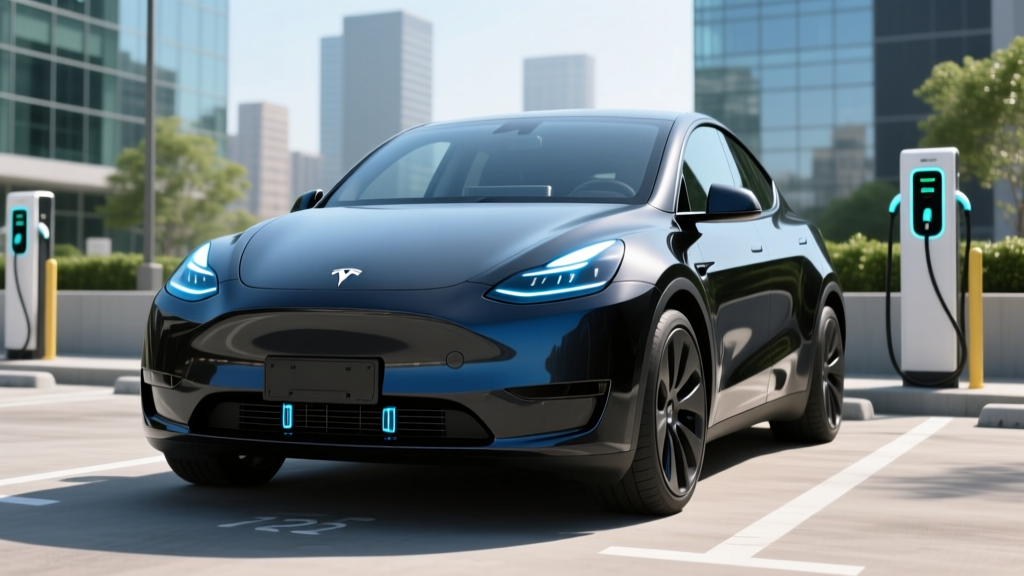
The question are Tesla the safest cars comes up in nearly every EV shopping conversation — and the 2026 Tesla Model Y is the vehicle most buyers have in mind when they ask it. With top marks from both NHTSA and IIHS, the Model Y earns its reputation as one of the safest vehicles on the road in crash protection. But crashworthiness is only half the story. Active safety, driver-assist limitations, real-world range, charging speed, and total cost all factor into whether this is the right EV for your garage.
This review breaks down the 2026 Model Y Long Range AWD — the volume trim — with exact specs, real-world caveats, and a clear-eyed look at where Tesla's safety story holds up and where it doesn't.
Crash Ratings and Structural Safety
The 2026 Model Y carries a 5-Star Overall Safety Rating from NHTSA across frontal, side, and rollover tests. IIHS names it a Top Safety Pick+ when equipped with acceptable headlights. These are the highest marks either agency awards.
Tesla's skateboard architecture contributes directly: the floor-mounted battery pack lowers the center of gravity, reducing rollover risk to just 7.9% per NHTSA data — among the lowest of any crossover. The rigid battery enclosure also acts as a structural member, absorbing side-impact energy.
Standard active safety includes automatic emergency braking (AEB), lane departure warning, blind-spot monitoring, and rear cross-traffic alert — all functioning without requiring an Autopilot subscription.
Tesla's Autopilot and Full Self-Driving (Supervised) are SAE Level 2 driver-assist systems. You must keep your hands on the wheel and eyes on the road at all times. These are not self-driving systems. Only Level 4 robotaxi services like Waymo operate without driver supervision in geofenced areas.
Range, Battery, and Real-World Efficiency
| Spec | 2026 Model Y Long Range AWD |
|---|---|
| EPA Range | 320 miles |
| Battery Capacity | 78.1 kWh usable (NMC chemistry) |
| Efficiency | 122 MPGe combined / 27 kWh/100 mi |
| Drivetrain | Dual-motor AWD |
| 0-60 mph | 4.8 seconds |
| Horsepower | 384 hp combined |
| Top Speed | 125 mph |
EPA rates the Model Y Long Range at 320 miles. Expect ~270-290 miles in mixed highway driving at 70-75 mph. In cold weather (below 30°F), plan for 230-260 miles due to battery resistance and cabin heating load. City driving with regen braking can exceed the EPA estimate, reaching 330+ miles in mild conditions.
The NMC (nickel manganese cobalt) battery offers high energy density but is more sensitive to sustained 100% states of charge. Tesla recommends daily charging to 80-90% for NMC packs, reserving 100% for trips. This is different from the LFP (lithium iron phosphate) packs in the Standard Range RWD model, which Tesla recommends charging to 100% regularly.
Charging Speed: Home and DC Fast Charging
| Level | Power | Speed | Notes |
|---|---|---|---|
| Level 1 (120V) | ~1.4 kW | ~4 mi/hr | Emergency/trickle only |
| Level 2 (240V, 48A) | 11.5 kW | ~37 mi/hr | Full charge in ~8.5 hrs |
| DC Fast (NACS) | 250 kW peak | 10-80% in ~25 min | Tapers above 60% SoC |
The Model Y uses the NACS (North American Charging Standard) connector natively — the same plug used across the Tesla Supercharger network, now also adopted by Ford, GM, Rivian, and others. At a V3 Supercharger (250 kW), the Model Y peaks around 250 kW but sustains roughly 150-170 kW through the bulk of the 10-80% window. The charge curve tapers noticeably past 60% state of charge, which is why Tesla's navigation system routes you to chargers and preconditions the battery en route — arriving with a warm battery is critical for hitting peak speeds.
At home on a Tesla Wall Connector (48 amps / 11.5 kW), you'll add about 37 miles of range per hour of charging. A typical overnight session (8-10 hours) fully replenishes the battery. Note: kW is the rate of energy flow (power), while kWh is the total energy stored. The Model Y's 78.1 kWh battery charged at 11.5 kW takes roughly 78.1 ÷ 11.5 = 6.8 hours from empty, plus losses.
Interior Space, Cargo, and Daily Practicality
The Model Y's crossover form factor is its practicality ace. Cargo volume behind the second row measures 30.2 cubic feet, expanding to 72.1 cu ft with the rear seats folded — competitive with midsize gas crossovers. The front trunk (frunk) adds 4.1 cu ft for charging cables or a small bag.
Rear legroom is 37.1 inches, adequate for adults on longer trips. The panoramic glass roof creates an airy cabin but does reduce headroom slightly compared to vehicles with a traditional steel roof. The optional third row (available on some trims) is best suited for children under 5'4" and cuts cargo space significantly.
The 15.4-inch center touchscreen controls virtually everything — climate, mirrors, glovebox, wiper speed. There is no instrument cluster; speed and navigation appear on the center screen. This minimalism polarizes buyers: some find it clean, others find it distracting. Physical controls are limited to steering-wheel scroll wheels and a single button on each front door for the window lock.
Pricing, Trims, and Federal Tax Credit
| Trim | MSRP | Est. After §30D Credit* |
|---|---|---|
| Long Range AWD | $44,990 | ~$37,490 |
| Performance AWD | $48,990 | ~$41,490 |
*Federal tax credit estimates. Actual eligibility depends on buyer income, battery sourcing, and MSRP caps per IRS §30D rules. Credit can be transferred to the dealer at point of sale as an instant discount.
- MSRP cap: SUVs/crossovers must be under $80,000 (Model Y qualifies)
- Income cap: $150,000 single / $225,000 head of household / $300,000 joint MAGI
- Battery sourcing: Critical minerals and battery components must meet phased domestic-content thresholds — Tesla's US-built packs currently qualify, but verify at purchase
- Point-of-sale transfer: You can assign the credit to the dealer for an instant price reduction rather than claiming it on your tax return
Warranty and Long-Term Battery Outlook
Tesla covers the Model Y's battery and drive units for 8 years or 120,000 miles (whichever comes first) with a minimum 70% capacity retention guarantee. The basic vehicle warranty is 4 years / 50,000 miles. This is competitive with Hyundai's 10-year/100,000-mile battery warranty but trails the 8-year/100,000-mile standard seen on some rivals with lower mileage thresholds.
Real-world degradation data from Tesla's fleet shows NMC packs typically retain 88-92% capacity at 100,000 miles when charged primarily to 80-90%. The biggest degradation occurs in the first 20,000 miles (~3-5% loss), after which the curve flattens considerably. Avoiding frequent Supercharging to 100% and letting the car sit at extreme states of charge for extended periods will extend pack life.
Tech, Driver Assists, and Notable Drawbacks
The Model Y's tech stack is best-in-class for over-the-air updates, navigation-based battery preconditioning, and the Supercharger network's plug-and-charge simplicity. The Tesla app provides granular energy tracking, remote climate control, and Sentry Mode dashcam recording.
Autopilot (standard) handles lane centering and adaptive cruise well on highways. FSD Supervised ($8,000 option or $99/month) adds automatic lane changes, traffic light/stop sign recognition, and city street navigation — but still requires constant driver supervision and occasionally makes puzzling routing decisions in construction zones.
- They do not make the Model Y self-driving — you are the driver and liable for all actions
- They may not detect stationary emergency vehicles, construction barriers, or debris reliably
- Performance degrades in heavy rain, fog, or when cameras are obstructed
- City streets with faded lane markings or complex intersections require immediate takeover
Notable drawbacks: the lack of Apple CarPlay/Android Auto (Tesla uses its own infotainment exclusively), the absence of physical buttons for common adjustments, and ride quality that remains firmer than competitors like the Hyundai Ioniq 5 or Ford Mustang Mach-E on rough pavement. Road noise at highway speeds is also more pronounced than in luxury-priced rivals.
- Top NHTSA 5-Star + IIHS Top Safety Pick+ ratings
- 320-mi EPA range; excellent real-world efficiency
- 250 kW DC fast charging; Supercharger network access
- 30.2 cu ft cargo + 4.1 cu ft frunk
- Strong OTA update cadence; best-in-class app
- Qualifies for up to $7,500 federal tax credit
- No Apple CarPlay or Android Auto
- Touchscreen-only controls can distract while driving
- FSD Supervised is expensive and still Level 2 only
- Firm ride quality on uneven roads
- NMC battery requires 80-90% daily charge discipline
- Rear visibility is limited; relies heavily on cameras
Who the Model Y Suits Best
- You prioritize top crash-test ratings and low rollover risk
- You need 300+ miles of range for frequent 200-300 mile road trips
- You have access to home Level 2 charging and Tesla Superchargers
- You want a tech-forward EV with strong resale value
- You prefer physical controls and Apple CarPlay (try Hyundai Ioniq 5)
- You need a plush, quiet ride over sporty handling (try Genesis Electrified GV70)
- You want LFP battery chemistry for 100% daily charging convenience (Model Y Standard Range RWD)
Frequently Asked Questions
Are Tesla the safest cars on the road?
In terms of crash-test performance, the Model Y scores at or near the top of both NHTSA (5-Star Overall) and IIHS (Top Safety Pick+) ratings. Its low rollover risk (7.9%) and strong side-impact protection are class-leading. However, "safest" also involves active safety — and Tesla's Autopilot/FSD systems, while capable, still require full driver attention and have been involved in documented incidents with stationary objects and emergency vehicles.
What is the real-world range of the 2026 Model Y?
The EPA rates it at 320 miles. Real-world highway driving at 70-75 mph typically yields 270-290 miles. Cold weather (below 30°F) can reduce that to 230-260 miles. City driving with regenerative braking in mild weather can exceed 330 miles.
How fast does the Model Y charge at home and on the road?
On a 240V Level 2 home charger (48A / 11.5 kW), it adds ~37 miles of range per hour, fully charging in about 8.5 hours. On a 250 kW DC fast charger, it goes from 10-80% in approximately 25 minutes, though the charge curve tapers significantly above 60% SoC.
Does the 2026 Model Y qualify for the $7,500 federal EV tax credit?
Yes, as of 2026 the Model Y qualifies for up to $7,500 under IRS §30D, provided the buyer meets income caps ($150K single / $300K joint), the vehicle MSRP is under $80,000 (it is), and battery sourcing requirements are met. The credit can be transferred to the dealer at point of sale for an instant discount. Always verify current eligibility at irs.gov before purchasing.
Is the Model Y worth buying over competitors?
The Model Y leads in charging network access (Superchargers), software updates, and crash ratings. The Hyundai Ioniq 5 offers 800V architecture for faster peak charging (10-80% in ~18 min at 350 kW), Apple CarPlay, and a more comfortable ride. The Ford Mustang Mach-E provides a more traditional interior layout. For buyers who value the Supercharger ecosystem and top safety scores, the Model Y remains the benchmark.
What is the battery warranty on the Model Y?
Tesla covers the battery and drive units for 8 years or 120,000 miles with a guaranteed minimum 70% capacity retention. The basic vehicle limited warranty is 4 years or 50,000 miles.