Tesla Model Y Safety & Ownership: A Data-Driven Review for 2026 Buyers
Searches around "Tesla car accident" trends often stem from two very different intents: buyers researching crash safety before purchasing, and drivers seeking context on incidents involving Tesla's driver-assistance systems. The Tesla Model Y, America's best-selling EV, sits squarely at the intersection of both conversations. This review dissects the Model Y's structural crashworthiness, its active-safety technology, and what the data actually shows about accident involvement — alongside the practical ownership metrics (range, charging, price) that matter just as much to informed buyers.
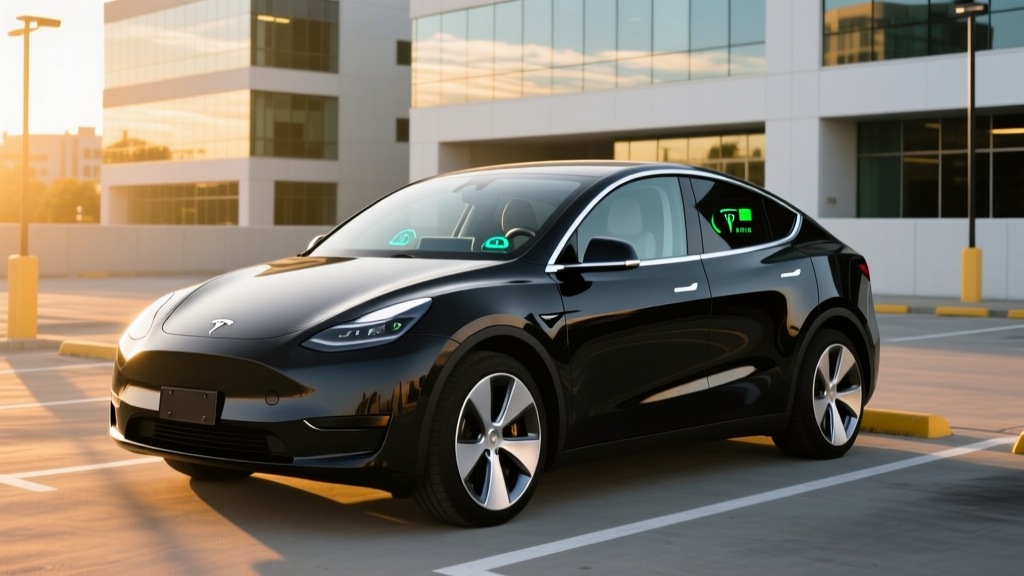
For 2026, the refreshed Model Y (internally dubbed "Juniper") brings updated styling, a revised interior, and tweaked powertrain efficiency. Let's evaluate whether it remains the benchmark compact electric SUV — and how its safety profile stacks up.
Crashworthiness & Accident-Avoidance: What the Data Shows
The Model Y continues to earn top marks in structural crash testing. The National Highway Traffic Safety Administration (NHTSA) has awarded the Model Y a 5-Star Overall Safety Rating across multiple model years, with 5-star results in frontal crash, side crash, and rollover resistance categories.
The Insurance Institute for Highway Safety (IIHS) has historically named the Model Y a Top Safety Pick+ when equipped with specific headlights, citing "Good" ratings in all crashworthiness tests. The rigid skateboard architecture — battery pack mounted low in the floor — contributes to a very low center of gravity, reducing rollover risk compared to tall ICE crossovers.
Active Safety & Accident Avoidance Technology
Every Model Y ships standard with Tesla's basic Autopilot suite, which includes:
- Traffic-Aware Cruise Control: Maintains set speed and following distance
- Autosteer: Lane-centering on marked roads
- Automatic Emergency Braking (AEB): Forward collision mitigation
- Side Collision Warning & Avoidance: Alerts and corrective steering for adjacent-lane intrusions
- Obstacle-Aware Acceleration: Limits torque if an object is detected in the path of acceleration
The optional Full Self-Driving (Supervised) package ($8,000 one-time or $99/month as of early 2026) adds automated lane changes, traffic-light and stop-sign recognition, and Navigate on Autopilot for highway interchanges. Tesla's camera-only "Tesla Vision" approach (no LiDAR or radar) relies on neural-network processing of eight surround cameras.
Putting Accident Data in Context
Tesla publishes quarterly safety data claiming approximately one accident per 4+ million miles driven with Autopilot engaged, compared to the national average of roughly one per 670,000 miles (NHTSA national estimates). However, these figures require careful interpretation:
- Tesla's Autopilot is predominantly engaged on divided highways — statistically the safest road type
- NHTSA's national average includes all road types, weather, and vehicle ages
- NHTSA's Standing General Order requires manufacturers to report crashes involving Level 2+ systems, making Tesla incidents more visible than those of conventional vehicles
Range, Battery & Efficiency: Real Numbers for 2026
The 2026 Model Y lineup offers three configurations with distinct battery and range profiles:
| Spec | Long Range RWD | Long Range AWD | Performance |
|---|---|---|---|
| EPA Range | 320 mi | 303 mi | 277 mi |
| Battery (usable) | ~78 kWh, NMC | ~78 kWh, NMC | ~78 kWh, NMC |
| Efficiency | 122 MPGe / 28 kWh/100mi | 116 MPGe / 29 kWh/100mi | 111 MPGe / 30 kWh/100mi |
| Drivetrain | Rear-Wheel Drive | Dual-Motor AWD | Dual-Motor AWD |
| 0-60 mph | 5.6 sec | 4.8 sec | 3.5 sec |
| Horsepower | ~346 hp | ~384 hp | ~456 hp |
Charging Speed: DC Fast, Level 2 & Home Setup
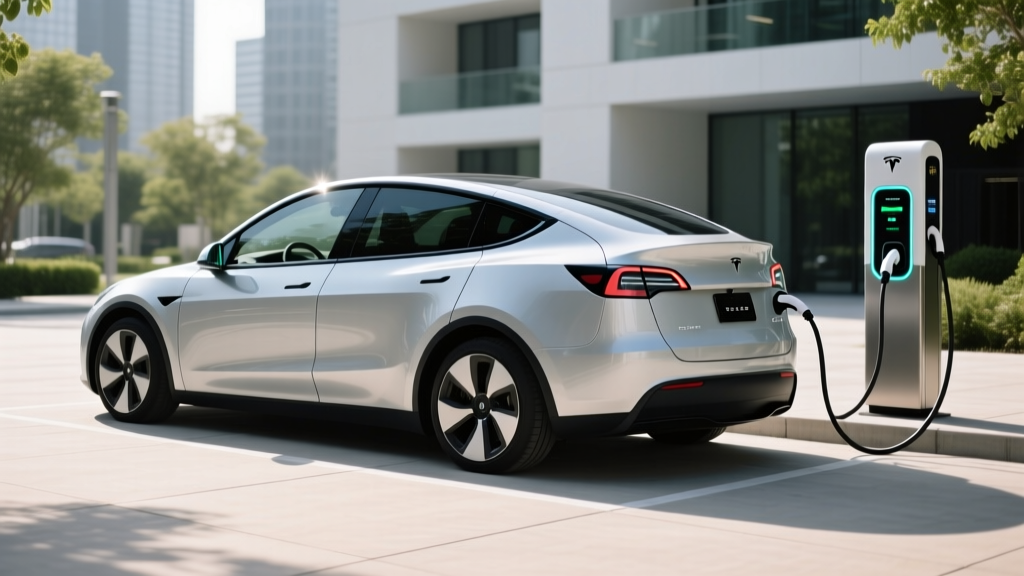
The Model Y uses the NACS (North American Charging Standard) connector natively — Tesla's proprietary design now adopted industry-wide. This gives Model Y owners seamless access to the Supercharger network (19,000+ stalls in North America) without an adapter, plus growing access to third-party networks as they deploy NACS cables.
| Charging Level | Max Rate | Speed (mi/hr) | 10-80% Time |
|---|---|---|---|
| Level 1 (120V household) | ~1.4 kW | ~3–4 mi/hr | N/A (overnight trickle) |
| Level 2 (240V home/public) | 11.5 kW (48A) | ~37 mi/hr | ~7.5 hours (full) |
| DC Fast Charge (V3 Supercharger) | 250 kW peak | ~1,000+ mi/hr (peak) | ~25 minutes |
| DC Fast Charge (V4 Supercharger) | Up to 325 kW* | ~1,200+ mi/hr (peak) | ~20 minutes* |
*V4 Supercharger speeds depend on station generation, battery preconditioning, and state of charge. Peak rates are sustained only between roughly 10–45% SoC before tapering.
Charging curve reality: Like all EVs, the Model Y does not charge at peak kW for the entire session. The battery management system ramps power aggressively from 10–45% SoC, then progressively tapers to protect cell health. A 10–80% session on a V3 Supercharger averages roughly 150–170 kW sustained, even though the peak reads 250 kW. Always precondition the battery (automatic when navigating to a Supercharger) for optimal charge speed.
Interior, Cargo & Daily Livability
The refreshed Model Y interior adopts a cleaner, more premium aesthetic with ventilated front seats, ambient lighting, power-folding second-row seats, and a rear touchscreen for passengers. The minimalist approach (no physical instrument cluster; all info on the 15.4-inch center display) continues to polarize — some buyers love the openness, others miss physical controls for climate and mirrors.
Dimensions & Space
- Cargo (behind 2nd row): 30.2 cu ft
- Cargo (2nd row folded): 72.1 cu ft
- Front trunk (frunk): 4.1 cu ft — fits a carry-on or charging cables
- Front legroom: 41.8 in
- Rear legroom: 41.6 in (competitive with midsize SUVs)
- Seating: 5-passenger standard; 7-seat option available (third row best for children)
The Juniper refresh adds acoustic glass and improved suspension tuning, noticeably reducing road noise at highway speeds — a common complaint on pre-2025 models.
Pricing, Trims & Federal Tax Credit Eligibility
| Trim | MSRP | Est. After §30D Credit | Eligible for $7,500? |
|---|---|---|---|
| Long Range RWD | $44,990 | ~$37,490* | Yes (meets sourcing & price caps) |
| Long Range AWD | $47,990 | ~$40,490* | Yes |
| Performance AWD | $52,490 | ~$44,990* | Yes |
*Estimated effective price assumes buyer qualifies for the full $7,500 federal credit under IRS §30D and elects the point-of-sale transfer. Eligibility depends on individual circumstances.
- MSRP cap: SUVs must be priced at or below $80,000 (all Model Y trims qualify)
- Buyer income cap: Modified AGI ≤ $150,000 (single) / $300,000 (married filing jointly)
- Battery sourcing: Critical minerals and battery components must meet escalating domestic/free-trade-agreement thresholds per the Inflation Reduction Act — Tesla's vertically integrated supply chain currently meets these requirements for US-built Model Y
- Point-of-sale transfer: Buyers can transfer the credit to the dealer at purchase for an immediate price reduction (no need to wait for tax filing)
- Filing: Confirm eligibility with a tax professional; rules are subject to change. See IRS guidance on clean vehicle credits.
Warranty & Long-Term Battery Outlook
- Basic vehicle warranty: 4 years / 50,000 miles
- Battery & drive unit warranty: 8 years / 120,000 miles (Long Range & Performance, whichever comes first)
- Capacity retention guarantee: Tesla warrants a minimum of 70% battery capacity retention over the warranty period
The NMC (nickel-manganese-cobalt) chemistry used across the Model Y lineup offers high energy density but is more sensitive to sustained high states of charge than LFP cells. Best practice: charge to 80% for daily use and reserve 100% charges for road trips. Tesla's battery management system includes active thermal management (liquid cooling/heating), which has proven effective — large-scale fleet data shows typical degradation of 8–12% over 100,000 miles.
Battery replacement cost outside warranty (if ever needed) is estimated at $12,000–$16,000 including labor, though the vast majority of Model Y packs will outlast the vehicle's useful life.
Model Y vs. Key Competitors: Quick Comparison
| Metric | Tesla Model Y LR AWD | Hyundai Ioniq 5 AWD | Ford Mustang Mach-E ER AWD |
|---|---|---|---|
| EPA Range | 303 mi | 290 mi | 290 mi |
| Peak DC Charge | 250 kW | 240 kW | 150 kW |
| 0-60 mph | 4.8 sec | 5.1 sec | 5.1 sec |
| Cargo (rear seats up) | 30.2 cu ft | 27.2 cu ft | 29.7 cu ft |
| Charging Network | Supercharger (native NACS) | NACS (adapter or native 2025+) | NACS (adapter or native 2025+) |
| Starting MSRP | $47,990 | $50,150 | $48,995 |
Pros & Cons: The Honest Verdict
- Best-in-class Supercharger network access (native NACS, no adapter needed)
- Top-tier crash safety ratings (5-star NHTSA, IIHS Top Safety Pick+)
- Industry-leading efficiency (kWh/100mi) for the segment
- Over-the-air updates continuously add features
- Strong cargo volume and available 7-seat configuration
- Excellent real-world fast-charging speeds with preconditioning
- Minimalist interior lacks physical controls — mirrors and glovebox are screen-operated
- No Apple CarPlay or Android Auto support
- FSD (Supervised) is a $8,000 upsell that remains Level 2 — not autonomous
- Ride quality firm on larger wheel options (20" Induction wheels)
- Insurance premiums run 15–30% higher than comparable ICE crossovers
- Sightlines compromised by thick rear pillars; camera mirror helps but takes adjustment
Who Is the Model Y Best For?
The 2026 Model Y fits a specific buyer profile exceptionally well:
- Daily commuters covering 30–80 miles round-trip with home Level 2 charging — the efficiency and Supercharger network make ownership nearly frictionless
- Young families needing compact-SUV cargo space (strollers, groceries) with the option of a 7th seat for occasional carpools
- Road trippers who value the Supercharger network's reliability for cross-country travel — V3/V4 stations with amenities are a tangible advantage over CCS-dependent rivals
- Tech-forward buyers comfortable with screen-centric controls and OTA feature evolution
It's less ideal for buyers who prioritize physical button controls, need CarPlay/Android Auto integration, or want a traditional luxury brand badge. Those buyers should cross-shop the BMW iX, Genesis Electrified GV70, or Hyundai Ioniq 5.
Frequently Asked Questions
What is the real-world range of the Tesla Model Y?
The EPA rates the Long Range RWD at 320 miles and the Long Range AWD at 303 miles. In real-world highway driving at 70–75 mph, expect 265–285 miles. In freezing temperatures, plan for 220–250 miles. Always buffer 15–20% below EPA for trip planning.
How fast does the Model Y charge at home and on the road?
At home on a 240V Level 2 charger (48A), the Model Y adds approximately 37 miles of range per hour, fully charging overnight in about 7.5 hours. On a V3 Supercharger (250 kW DC), a 10–80% session takes roughly 25 minutes. V4 stations may reduce this to ~20 minutes under optimal conditions.
How much does the Model Y cost after the federal tax credit?
The Long Range RWD starts at $44,990 MSRP and drops to approximately $37,490 after the $7,500 federal credit (assuming buyer qualifies under §30D income, sourcing, and MSRP rules). The credit can be transferred at point of sale for an immediate reduction. Consult a tax professional to confirm individual eligibility.
Is the Model Y worth buying vs. the Hyundai Ioniq 5 or Ford Mach-E?
The Model Y wins on efficiency, Supercharger network access, cargo volume, and price. The Ioniq 5 offers a more conventional interior layout with physical controls and CarPlay. The Mach-E provides a sportier driving feel but charges slower on DC. For buyers prioritizing road-trip charging ease and value, the Model Y remains the segment benchmark.
Does the Tesla Model Y qualify for the $7,500 federal EV tax credit?
Yes, all current Model Y trims qualify under 2026 IRS §30D rules, as they meet the $80,000 SUV MSRP cap, battery-sourcing requirements, and are assembled in North America. Buyer income must not exceed $150,000 (single) or $300,000 (joint). Rules are subject to legislative change — verify at irs.gov.
Are Tesla vehicles involved in more accidents than other cars?
Raw incident counts are high because the Model Y is the best-selling EV in the US. NHTSA's General Order reporting requirement also makes Level 2 system-involved incidents more visible. Per-mile data suggests Tesla's active safety features (AEB, lane-keeping) reduce certain crash types, but Autopilot misuse (driver inattention) remains a factor in some high-profile incidents. Safe operation requires continuous driver engagement regardless of the system engaged.