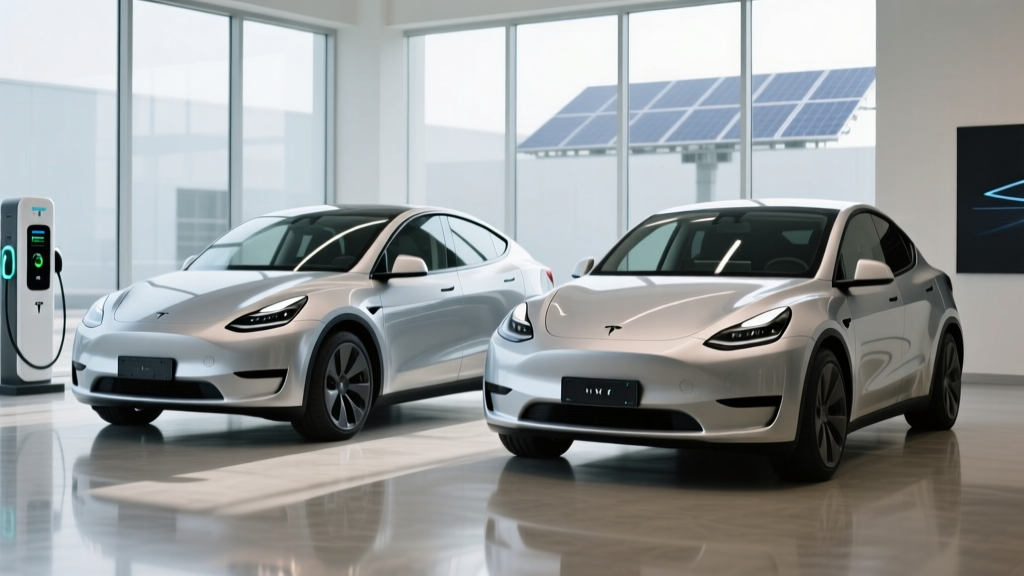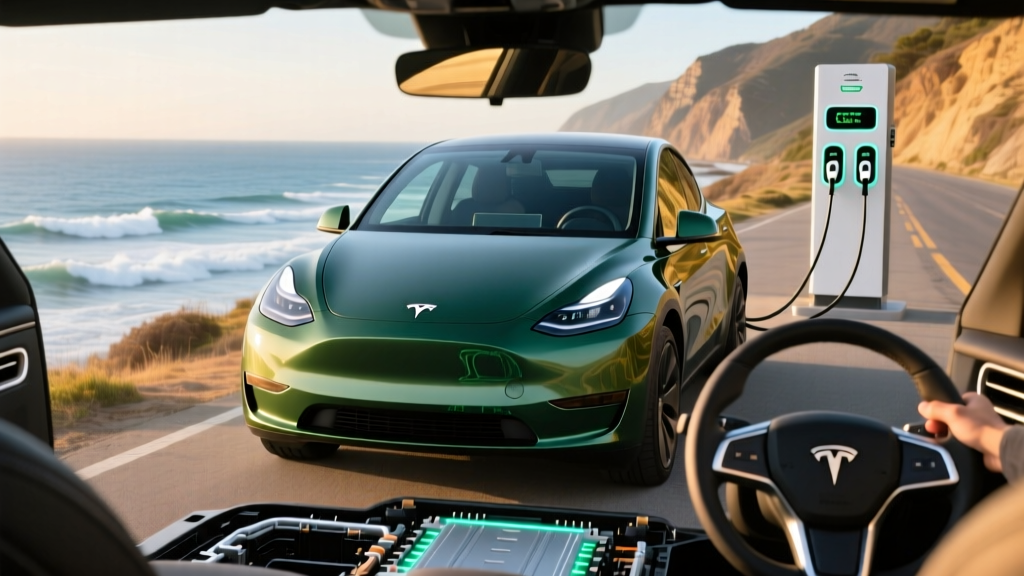
The Tesla Model Y has been the best-selling electric vehicle globally for good reason: it blends crossover practicality with sedan-like efficiency. For 2026, Tesla has continued iterating on its refreshed "Juniper" platform, tightening panel gaps, improving ride quality, and pushing the aerodynamic efficiency of what engineers internally call a SAC (Sports Activity Crossover) — a term that captures the Model Y's blend of coupe-like roofline and utility-vehicle cargo space. If you've been searching for a deep-dive on the SAC Tesla offers in the Model Y lineup, this review breaks down every number that matters: real-world range, charging curves, tax credit math, and how it stacks up against the Hyundai Ioniq 5 and Ford Mustang Mach-E.
Quick Verdict: Who Should Buy the 2026 Model Y?
The 2026 Model Y is the default choice for buyers who want a proven Supercharger network, best-in-class efficiency, and enough cargo room for a family of four with gear. It's not the most luxurious interior in the segment, and the ride on the base 19-inch wheels is noticeably improved over prior years but still firm. If you road-trip frequently and value charging infrastructure above all else, the Model Y remains the benchmark. If you prioritize interior material quality or want a more buttoned-down highway ride, competitors like the Ioniq 5 or Mach-E deserve a look.
Range, Efficiency, and Real-World Expectations
The 2026 Model Y Long Range AWD carries an EPA-estimated range of 320 miles on its 78.1 kWh usable battery pack (NMC chemistry, 4680 cells in a structural pack). The rear-wheel-drive base model is rated at 295 miles EPA.
EPA 320 mi (Long Range AWD) — but plan for:
- Highway driving at 75 mph: ~270–285 mi in mild weather (65–75°F)
- Cold weather (below 32°F): ~230–260 mi, depending on cabin heat usage and whether you precondition
- City/stop-and-go: Can exceed EPA, up to ~340 mi thanks to regenerative braking
Source: fueleconomy.gov
Efficiency is where the Model Y's SAC aerodynamic profile pays dividends. The Long Range AWD achieves 122 MPGe combined (28 kWh/100 mi), making it one of the most efficient all-wheel-drive crossovers on the market. The RWD model bumps that to 127 MPGe combined (26 kWh/100 mi). For context, the Hyundai Ioniq 5 AWD returns 110 MPGe combined, and the Mach-E Extended Range AWD lands at 101 MPGe. Tesla's heat pump — standard on all trims — is a significant factor in cold-weather efficiency, reducing the range penalty of cabin heating by roughly 15–20% compared to resistive heating systems.
Battery Chemistry, Capacity, and Longevity
| Specification | Long Range AWD | Rear-Wheel Drive |
|---|---|---|
| Battery Chemistry | NMC (Nickel Manganese Cobalt) | LFP (Lithium Iron Phosphate) |
| Usable Capacity | 78.1 kWh | 60.0 kWh |
| Cell Format | 4680 Structural Pack | Prismatic (CATL) |
| EPA Range | 320 mi | 295 mi |
| Battery Warranty | 8 yr / 120,000 mi | 8 yr / 100,000 mi |
| Warranty Threshold | ≥70% capacity retention | ≥70% capacity retention |
The LFP chemistry in the RWD model is a critical ownership detail: LFP cells tolerate regular 100% charging without the accelerated degradation concerns that apply to NMC. Tesla recommends charging LFP packs to 100% at least weekly for calibration. The NMC pack in the Long Range should be kept between 20–80% for daily use, charging to 100% only before long trips. Long-term degradation data from Tesla's fleet suggests NMC packs lose roughly 8–12% capacity over 100,000 miles, while LFP packs show flatter degradation curves but start with lower energy density.
Charging Speed: DC Fast, Level 2, and Level 1
The Model Y supports the NACS (North American Charging Standard) connector natively — the same plug used across Tesla's Supercharger network. For 2026, all trims support peak DC fast charging at 250 kW at V3/V4 Superchargers.
| Charging Level | Power / Voltage | Speed (Long Range) | Notes |
|---|---|---|---|
| Level 1 (120V) | ~1.4 kW | ~4 mi/hr | Emergency/trickle only |
| Level 2 (240V, 48A) | 11.5 kW | ~44 mi/hr | Home Wall Connector; ~7 hr for full charge |
| Level 2 (240V, 32A) | 7.7 kW | ~30 mi/hr | Mobile Connector on NEMA 14-50 |
| DC Fast (V3 Supercharger) | 250 kW peak | 10–80% in ~25 min | Sustained rate tapers above 60% |
| DC Fast (CCS adapter) | ~150 kW peak | 10–80% in ~38 min | Non-Tesla networks; adapter required for older stalls |
A critical real-world note on the DC fast-charge curve: the 250 kW peak rate is sustained only between roughly 10–40% State of Charge (SoC). Above 60%, the curve tapers significantly — expect roughly 80–100 kW through the 60–80% window. This means the 10–80% time of ~25 minutes is realistic only if you arrive at a low SoC and the battery is preconditioned (navigate to a Supercharger using the car's built-in routing, and it will warm the pack automatically). Arriving at a Supercharger with a cold, un-preconditioned battery can add 10–15 minutes to your charge session.
Performance and Drivetrain
| Metric | Long Range AWD | RWD | Performance (if available) |
|---|---|---|---|
| 0–60 mph | 4.8 sec | 6.5 sec | 3.5 sec |
| Horsepower | 384 hp | 295 hp | 456 hp |
| Drivetrain | Dual-Motor AWD | Single-Motor RWD | Dual-Motor AWD |
| Top Speed | 125 mph | 135 mph | 155 mph |
| Towing Capacity | 3,500 lbs | 2,000 lbs | 3,500 lbs |
The dual-motor AWD system uses an induction motor on the front axle and a permanent-magnet synchronous motor on the rear. This allows the front motor to freewheel (zero drag) during light-load cruising, contributing to the strong efficiency figures. Acceleration is brisk and linear, with the characteristic instant torque that makes highway merging effortless. The 2026 Juniper refresh improved suspension tuning — the ride is more compliant over sharp impacts than the 2023–2024 models, though it still favors sporty firmness over plush isolation.
Interior, Cargo, and Technology
The 2026 Model Y interior reflects Tesla's minimalist philosophy: a single 15.4-inch center touchscreen handles infotainment, climate, and vehicle controls. A rear 8-inch screen serves second-row passengers. The Juniper refresh added ambient lighting, ventilated front seats, and a power-folding second row — all meaningful quality-of-life upgrades.
Cargo and passenger dimensions:
- Cargo volume (behind 2nd row): 30.2 cu ft
- Cargo volume (2nd row folded): 72.1 cu ft
- Front trunk (frunk): 4.1 cu ft
- Rear legroom: 41.6 in
- Front headroom: 41.0 in
The sloping SAC roofline does cut into maximum cargo height — tall items like upright dressers or large dog crates require the seats folded and careful positioning. Compared to the boxier Ford Mustang Mach-E (29.7 / 59.7 cu ft) or the Hyundai Ioniq 5 (27.2 / 59.3 cu ft), the Model Y actually leads in total cargo volume thanks to its longer wheelbase and deeper load floor.
Standout tech features:
- Autopilot (standard): SAE Level 2 driver-assist with adaptive cruise, lane centering, and automatic emergency braking. Driver must remain engaged at all times.
- Full Self-Driving (Supervised) ($8,000 option): Adds automatic lane changes, traffic light/stop sign recognition, and Navigate on Autopilot. Still SAE Level 2 — hands-on-wheel supervision required.
- Sentry Mode: 360° camera-based security monitoring with cloud clip storage
- Over-the-air updates: Continuous feature additions and performance refinements
- Vehicle-to-load (V2L): Not natively supported — a notable omission vs. Hyundai/Kia
Both Autopilot and FSD (Supervised) are SAE Level 2 driver-assistance systems. The driver must maintain full situational awareness and be prepared to take over instantly. Tesla's "Full Self-Driving" name is a product label, not a description of capability. True driverless operation (SAE Level 4) is currently available only in limited robotaxi services like Waymo.
Pricing, Trims, and Federal Tax Credit Eligibility
| Trim | Base MSRP | Est. §30D Credit | Effective Price |
|---|---|---|---|
| RWD | $44,990 | Up to $7,500* | ~$37,490* |
| Long Range AWD | $48,990 | Up to $7,500* | ~$41,490* |
| Long Range AWD (as-tested w/ FSD) | $56,990 | Up to $7,500* | ~$49,490* |
*Federal tax credit eligibility under IRS §30D depends on multiple requirements that change frequently. As of 2026, buyers must verify:
- MSRP cap: SUVs/crossovers must be ≤$80,000 — all Model Y trims qualify
- Buyer income cap: AGI ≤$150,000 (single), ≤$300,000 (joint filing)
- Battery sourcing: Critical minerals and battery components must meet escalating domestic-content thresholds (check IRS.gov §30D guidance for current-year percentages)
- Point-of-sale transfer: Eligible buyers can apply the credit as an immediate price reduction at the dealer, rather than waiting for a tax refund
- FEOC restriction: Vehicles with battery components from a "foreign entity of concern" may lose partial or full credit — verify current Model Y supply chain status at purchase
The RWD model's LFP battery (sourced from CATL in China) has historically complicated full credit eligibility under the FEOC rules. The Long Range AWD with domestically assembled 4680 cells has a stronger case for the full $7,500. Always confirm eligibility with your tax professional and the dealer's point-of-sale documentation before committing. State incentives (California's CVRP, Colorado's innovative motor vehicle credit, etc.) may stack on top — check your state's energy office for current amounts.
Pros, Cons, and the Competition
- Best-in-class efficiency (122 MPGe combined AWD)
- Supercharger network: 60,000+ stalls globally, highest reliability of any public network
- Class-leading cargo volume (72.1 cu ft max)
- Strong over-the-air update cadence
- Excellent real-world fast-charge preconditioning
- LFP option (RWD) allows daily 100% charging without degradation anxiety
- Minimalist interior polarizes — no physical buttons, no traditional instrument cluster
- Ride quality improved but still firm vs. Hyundai Ioniq 5
- No V2L (vehicle-to-load) capability
- FSD ($8,000) remains Level 2 despite the name
- Insurance premiums run 20–40% higher than segment average
- RWD LFP credit eligibility uncertain under FEOC rules
Versus key competitors: The Hyundai Ioniq 5 offers an 800V architecture (10–80% in ~18 min at 350 kW chargers), a more spacious-feeling interior, and V2L — but sacrifices ~30 miles of range and has no access to native Superchargers (though NACS adapters and Hyundai's own NACS port on 2025+ models close the gap). The Ford Mustang Mach-E delivers a more engaging driving feel and BlueCruise hands-off highway assist, but its efficiency lags (101 MPGe AWD) and DC charging peaks at 150 kW. For pure efficiency and road-trip charging ease, the Model Y wins. For interior ambiance and ultra-fast charging on Electrify America, the Ioniq 5 has the edge.
Warranty and Ownership Costs
Tesla covers the Model Y with a 4-year/50,000-mile basic warranty and an 8-year battery and drive unit warranty (120,000 miles for Long Range/Performance, 100,000 miles for RWD), with a capacity-retention threshold of 70%. Tire wear tends to be higher than ICE crossovers due to the vehicle's weight (~4,400 lbs for Long Range) and instant torque — budget for replacement rubber every 25,000–35,000 miles. Insurance averages $2,200–$2,800/year nationally, varying heavily by state, age, and driving record.
Five-year estimated total cost of ownership (Long Range AWD, 15,000 mi/yr, national average electricity at $0.16/kWh):
- Depreciation: ~$18,500
- Electricity (home + Supercharger mix): ~$4,800
- Insurance: ~$12,500
- Maintenance (tires, cabin filter, wiper fluid): ~$2,200
- Total: ~$38,000 over 5 years (before tax credit)
Frequently Asked Questions
What is the real-world range of the 2026 Tesla Model Y?
The Long Range AWD is EPA-rated at 320 miles. In real-world highway driving at 75 mph in mild temperatures, expect 270–285 miles. In freezing weather, plan for 230–260 miles. The RWD model is EPA-rated at 295 miles with similar proportional reductions.
How fast does the Model Y charge at home and on the road?
At home on a 48A Level 2 Tesla Wall Connector (11.5 kW), the Long Range adds ~44 miles per hour of charging, reaching a full charge in about 7 hours. On a V3 Supercharger at 250 kW peak, a 10–80% session takes approximately 25 minutes with proper preconditioning.
Does the 2026 Model Y qualify for the $7,500 federal tax credit?
It can, but eligibility depends on the buyer's AGI (≤$300,000 joint / ≤$150,000 single), the vehicle's MSRP (≤$80,000 for SUVs — all trims qualify), and battery-sourcing requirements under the FEOC rules. The Long Range AWD with US-assembled 4680 cells has the strongest case for the full credit. Always verify at point of sale and consult a tax professional.
Is the Model Y worth buying over the Ioniq 5 or Mach-E?
If your priority is charging infrastructure and efficiency, yes — the Supercharger network and 122 MPGe combined are unmatched. If you value interior quality, 800V ultra-fast charging on non-Tesla networks, or V2L capability, the Ioniq 5 is a compelling alternative. The Mach-E appeals to driving enthusiasts who want a sportier feel and hands-off BlueCruise.
What does SAC mean in the Tesla context?
SAC stands for "Sports Activity Crossover" — a body-style descriptor for vehicles that combine a coupe-like sloping roofline with crossover ground clearance and cargo utility. The Model Y's fastback silhouette is a defining SAC trait, trading some rear headroom and maximum vertical cargo space for improved aerodynamic efficiency.
Can I charge a Model Y on non-Tesla charging networks?
Yes. The 2026 Model Y uses the NACS connector natively. Tesla's Supercharger network is now opening to other brands, and most non-Tesla DC fast chargers (Electrify America, EVgo, ChargePoint) offer CCS connectors — Tesla provides a CCS adapter, and an increasing number of stations are adding NACS cables. For Level 2 public charging, a J1772-to-NACS adapter is included with the car.