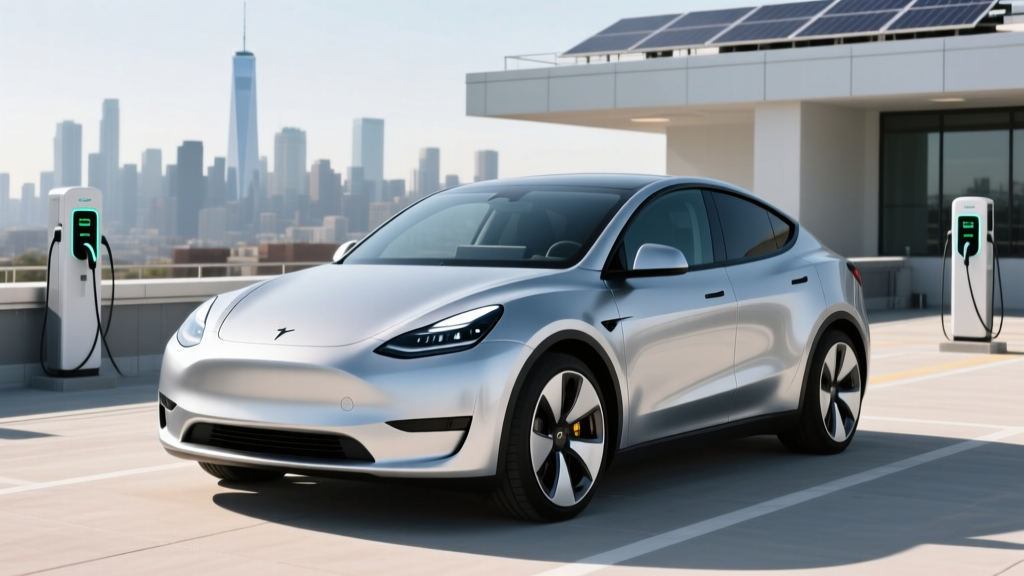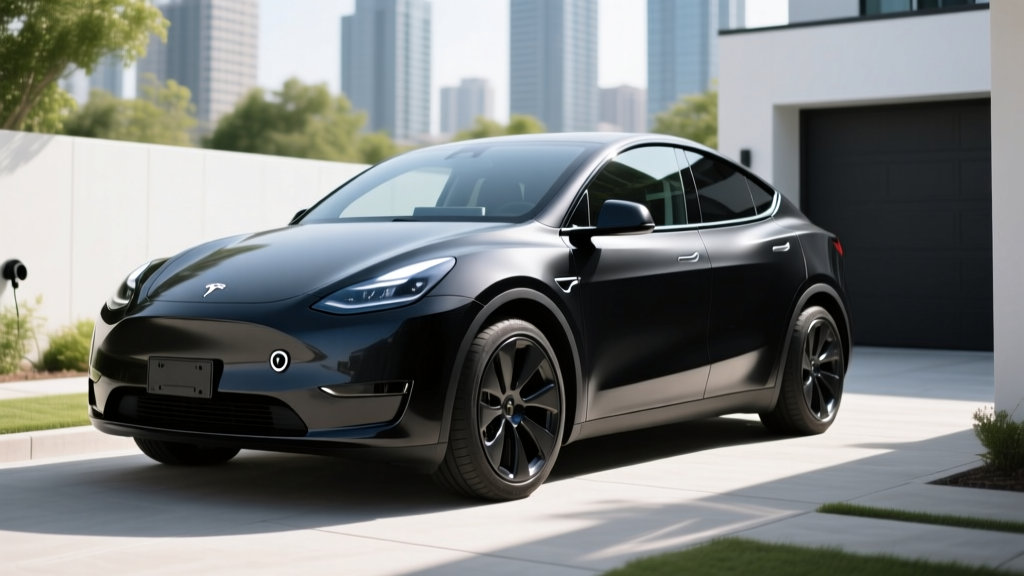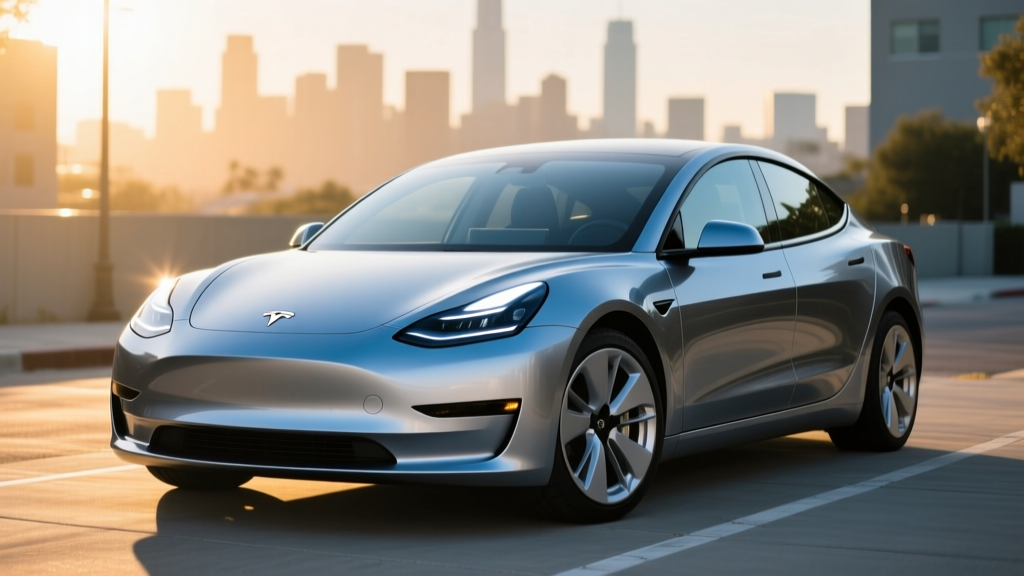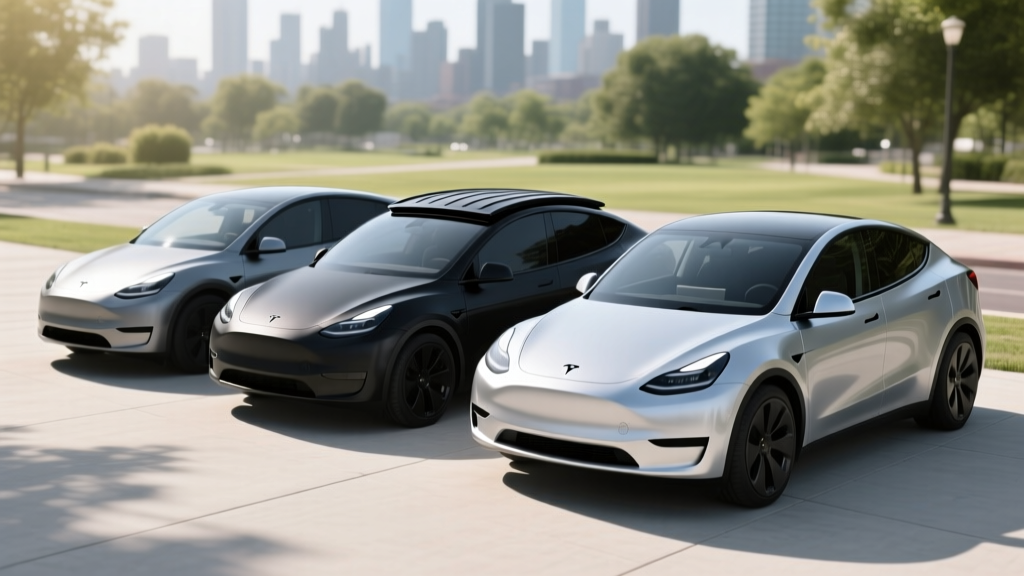
The Tesla Model Y remains one of the best-selling electric vehicles in the United States, and for good reason: it blends crossover utility with sedan-like efficiency. But one of the most searched and debated features among prospective buyers is the Tesla Model Y roof — specifically, its expansive panoramic glass design, its impact on cabin temperature, cargo versatility, and whether it enhances or detracts from the ownership experience. This review covers the 2025/2026 Model Y lineup end-to-end, from the glass roof design to real-world range, charging speeds, pricing, and federal tax credit eligibility.
The Tesla Model Y Glass Roof: Design and Real-World Impact
The Model Y comes standard with a fixed panoramic glass roof that spans nearly the entire length of the cabin, from the windshield header to the rear hatch. Unlike a traditional sunroof, it does not open or tilt. Tesla engineers designed it this way to maximize headroom, reduce mechanical complexity, and lower the vehicle's center of gravity by eliminating heavy moving parts.
The glass uses a multi-layer construction with an infrared-reflective coating intended to reject heat. In practice, owners report mixed results. During mild weather, the roof floods the cabin with natural light and creates an airy, open feel that makes the interior seem larger than its physical dimensions suggest. In peak summer heat, however, the glass can radiate warmth into the cabin, particularly for rear-seat passengers sitting directly beneath it.
The fixed glass design also contributes to the Model Y's structural rigidity and its excellent safety ratings. The roof strength is a key factor in the vehicle's performance in rollover tests conducted by the National Highway Traffic Safety Administration (NHTSA), where the Model Y has consistently earned a 5-star overall rating.
Cargo Space and Roof Rack Capability
Behind the second row, the Model Y provides approximately 30.2 cubic feet of cargo volume. Fold the 60/40 split rear seats flat, and that figure expands to roughly 72.1 cubic feet. The liftgate opening is wide, and the load floor is flat, making it practical for furniture, camping gear, or large grocery hauls.
Up front, the Model Y retains a frunk (front trunk) offering about 4.1 cubic feet — enough for a charging cable bag, a small cooler, or a backpack.
Regarding roof-mounted cargo: Tesla offers an official roof rack system designed for the glass-roof Model Y. The crossbars mount to fixed points along the roof rails and are rated for a dynamic load of up to 165 lbs (75 kg). This supports roof boxes, bike racks, and kayak carriers. However, adding a loaded roof rack typically reduces highway range by 10–18% due to increased aerodynamic drag — a meaningful penalty on road trips.
| Measurement | Specification |
|---|---|
| Cargo (rear seats up) | 30.2 cu ft |
| Cargo (rear seats folded) | 72.1 cu ft |
| Frunk Volume | 4.1 cu ft |
| Front Legroom | 41.8 in |
| Rear Legroom | 37.0 in |
| Front Headroom (with glass roof) | 41.0 in |
| Rear Headroom | 37.7 in |
| Roof Rack Dynamic Capacity | 165 lbs |
Range, Battery, and Efficiency
The 2025–2026 Model Y is offered in several trims, each with different battery configurations and range ratings. Here's the current lineup at a glance:
| Trim | Drivetrain | EPA Range | Battery (usable) | Chemistry | 0–60 mph | HP | Base MSRP |
|---|---|---|---|---|---|---|---|
| Long Range RWD | RWD | 320 mi | ~75 kWh | LFP | 6.5 s | ~295 | $44,990 |
| Long Range AWD | Dual-Motor AWD | 310 mi | ~75 kWh | NMC | 4.8 s | ~384 | $47,990 |
| Performance AWD | Dual-Motor AWD | 285 mi | ~75 kWh | NMC | 3.5 s | ~510 | $52,490 |
EPA estimates assume a mix of city and highway driving at moderate temperatures. In real-world conditions:
• Highway-only (70–80 mph): Expect 10–15% less than EPA — roughly 265–280 mi for Long Range AWD.
• Cold weather (below 32°F): Range can drop 20–30% due to battery resistance and cabin heating. A Long Range AWD rated at 310 mi may deliver 220–250 mi in freezing conditions.
• City driving with regen: You may match or slightly exceed the EPA number thanks to regenerative braking recapturing energy.
Always plan road trips around 80% of the EPA figure for a comfortable margin.
Efficiency varies by trim. The Long Range RWD achieves approximately 123 MPGe combined (roughly 27 kWh/100 mi), making it one of the most efficient electric crossovers on the market. The Performance trim drops to around 111 MPGe due to stickier tires, more aggressive tuning, and the weight of dual motors.
Chemistry note: The Long Range RWD uses a lithium iron phosphate (LFP) battery. LFP cells are heavier and slightly less energy-dense than NMC (nickel manganese cobalt) cells, but they offer longer cycle life, better thermal stability, and can be charged to 100% daily without accelerating degradation. The AWD and Performance trims use NMC chemistry, which Tesla recommends charging to 80% for daily use, reserving 100% for trips.
Charging Speed: DC Fast and Home Level 2
Charging speed is a top concern for EV buyers, and the Model Y's capabilities depend on the trim and battery chemistry.
| Charging Method | Long Range RWD (LFP) | Long Range AWD / Performance (NMC) |
|---|---|---|
| Max DC Fast Charge | ~170 kW peak | ~250 kW peak |
| 10–80% DC Time | ~30 min | ~20 min |
| Level 2 (240V, 48A) | ~11.5 kW / ~44 mi/hr | ~11.5 kW / ~44 mi/hr |
| Level 1 (120V, 12A) | ~1.4 kW / ~5 mi/hr | ~1.4 kW / ~5 mi/hr |
| Connector | NACS (native) | NACS (native) |
The Model Y uses the NACS (North American Charging Standard) connector natively — the same connector used by Tesla's Supercharger network. This gives Model Y owners access to over 20,000 Supercharger stalls across North America, widely regarded as the most reliable public charging network.
Charging curve reality: The peak 250 kW rate on NMC trims is only sustained at low states of charge (roughly 10–30%). As the battery fills, the rate tapers progressively. From 50–80%, expect speeds closer to 80–120 kW. This is why the 10–80% time is a more useful metric than peak kW alone.
For home charging, Tesla's Wall Connector (hardwired, 240V, up to 48 amps) adds approximately 44 miles of range per hour of charging. An overnight session of 6–8 hours will fully replenish the battery for most daily driving needs. Installation costs typically run $500–$1,500 depending on your electrical panel capacity and the distance from the panel to the charging location.
Tech, Driver Assistance, and Interior
The Model Y's interior follows Tesla's minimalist philosophy. A single 15.4-inch touchscreen dominates the dashboard and handles all infotainment, climate, navigation, and vehicle settings. There is no traditional instrument cluster — speed and range information appear in the upper-left corner of the main display.
Standard tech features include:
- Over-the-air (OTA) software updates that add features post-purchase
- Native navigation with real-time Supercharger routing and preconditioning
- Sentry Mode (360° camera-based security recording)
- Dashcam recording (front, rear, and side cameras)
- Phone-as-key via Bluetooth
- HEPA air filtration with Bioweapon Defense Mode
Driver assistance: Every Model Y ships with Basic Autopilot, which includes Traffic-Aware Cruise Control and Autosteer (lane centering). This is an SAE Level 2 system — the driver must keep hands on the wheel and eyes on the road at all times. It does not drive the car autonomously.
The optional Full Self-Driving (Supervised) package ($8,000 one-time or $99/month as of 2025) adds features like automatic lane changes, Navigate on Autopilot (highway on/off-ramp handling), traffic light and stop sign recognition, and enhanced parking assist. Despite its name, FSD (Supervised) still requires active driver supervision and does not make the vehicle self-driving.
Notable drawbacks:
- No physical buttons for climate, volume, or glovebox — everything routes through the touchscreen
- No Apple CarPlay or Android Auto support
- Rear visibility is limited by the thick rear roof pillar and high-mounted rear window
- Ride quality on the Performance trim can be firm on rough pavement
Pricing, Trims, and Federal Tax Credit Eligibility
| Trim | Base MSRP | Destination | Est. After §30D Credit |
|---|---|---|---|
| Long Range RWD | $44,990 | $1,390 | ~$38,880* |
| Long Range AWD | $47,990 | $1,390 | ~$41,880* |
| Performance AWD | $52,490 | $1,390 | ~$46,380* |
*Estimated after-tax-credit pricing assumes full §30D eligibility. Actual credit amount and eligibility vary.
The federal EV tax credit under IRS §30D can reduce your tax liability by up to $7,500 — and since 2024, it can be transferred to the dealer as a point-of-sale discount, making it an immediate price reduction rather than a tax-time rebate. However, eligibility depends on several factors:
- MSRP cap: The vehicle's MSRP must not exceed $80,000 for SUVs/crossovers (the Model Y qualifies).
- Buyer income cap: Modified adjusted gross income must not exceed $150,000 (single), $225,000 (head of household), or $300,000 (joint filers).
- Battery sourcing: A percentage of critical minerals and battery components must be sourced from the U.S. or free-trade-agreement countries. These thresholds increase annually. Verify current-year compliance on fueleconomy.gov.
- Assembly: The vehicle must undergo final assembly in North America (the Model Y is assembled in Fremont, CA, and Austin, TX).
Tax credit rules change frequently. Always verify your specific eligibility with a tax professional and check the latest guidance at IRS.gov before purchasing.
Warranty and Ownership Costs
Tesla provides the following warranty coverage for the Model Y:
| Component | Coverage |
|---|---|
| Basic Vehicle | 4 years / 50,000 miles |
| Battery & Drive Unit (Long Range/Performance) | 8 years / 120,000 miles |
| Battery Capacity Retention | Minimum 70% over warranty period |
The 70% capacity retention guarantee means that if your battery degrades below 70% of its original capacity within 8 years or 120,000 miles, Tesla will repair or replace it. Based on fleet data from sources like Recurrent Auto, most Tesla batteries retain 90%+ capacity after 100,000 miles, suggesting that out-of-warranty replacements are uncommon for typical owners.
Insurance costs for the Model Y tend to run 15–30% higher than comparable gas-powered crossovers, reflecting higher repair costs and Tesla's direct repair network limitations. Expect annual premiums of $1,800–$2,800 depending on your location, driving record, and coverage level.
Maintenance is minimal: no oil changes, no spark plugs, no transmission fluid. Budget for cabin air filter replacement (~$50–$100/year), tire rotation (~$50 every 6,000–8,000 miles), and wiper fluid. Brake pads last significantly longer than on gas cars thanks to regenerative braking.
Pros, Cons, and Who Should Buy
Pros
- Excellent efficiency (27 kWh/100 mi on RWD)
- Supercharger network access — best-in-class public charging reliability
- Spacious cargo area with versatile hatchback design
- OTA updates keep the vehicle current years after purchase
- Strong safety ratings (NHTSA 5-star, IIHS Top Safety Pick+)
- LFP battery option allows daily 100% charging without degradation concerns
- Native NACS connector — no adapter needed at Superchargers
Cons
- Glass roof can cause cabin heat buildup in summer
- No Apple CarPlay or Android Auto
- All climate and vehicle controls routed through touchscreen
- Performance trim ride quality is firm
- Insurance premiums above segment average
- Rear visibility compromised by roof design
- FSD (Supervised) costs $8,000 and is still Level 2
Who the Model Y suits best:
- Commuters with home charging access who want a low-maintenance, efficient daily driver
- Small families needing 5-passenger seating and generous cargo space without stepping up to a larger SUV
- Road trippers who value the Supercharger network's reliability for long-distance travel
- Tech-forward buyers who prefer OTA updates and touchscreen-based controls over physical buttons
Who should look elsewhere:
- Buyers who want Apple CarPlay/Android Auto integration
- Those in extreme heat climates who are sensitive to glass-roof heat gain
- Drivers who prefer traditional physical controls for climate and volume
- Heavy towing needs (Model Y is rated for only 3,500 lbs)
Frequently Asked Questions
Does the Tesla Model Y roof open?
No. The Model Y's panoramic glass roof is fixed — it does not open, tilt, or slide. This design maximizes headroom, reduces weight, and contributes to structural rigidity. If you want open-air driving, a retractable shade panel is available as an accessory, but the glass itself is stationary.
Does the glass roof make the cabin hot in summer?
The glass includes an infrared-reflective coating that reduces heat transmission, but many owners in hot climates report noticeable warmth radiating from the roof, especially in the rear seats. A factory or aftermarket shade panel ($30–$80) is a popular solution. Using Tesla's cabin overheat protection and preconditioning via the app also helps significantly.
What is the real-world range of the Tesla Model Y?
The EPA rates the Long Range AWD at 310 miles, but real-world highway driving at 75+ mph typically yields 265–280 miles. In freezing temperatures, expect 220–250 miles due to battery resistance and heating loads. The LFP-equipped Long Range RWD (320 mi EPA) shows similar proportional reductions.
How fast does the Model Y charge at home and on the road?
On a Level 2 home charger (240V, 48A), the Model Y gains approximately 44 miles of range per hour, fully charging overnight. On DC fast chargers, NMC trims (Long Range AWD, Performance) peak at 250 kW and charge from 10–80% in roughly 20 minutes. The LFP Long Range RWD peaks at ~170 kW with a 10–80% time of about 30 minutes.
Does the Tesla Model Y qualify for the federal EV tax credit?
The Model Y is assembled in the U.S. and priced below the $80,000 SUV MSRP cap, making the vehicle itself eligible. However, buyer eligibility also depends on income limits ($150K single / $300K joint), battery component and critical mineral sourcing thresholds, and personal tax liability. Always verify current-year rules on IRS.gov and consult a tax professional.
Is the Tesla Model Y worth buying over competitors like the Hyundai Ioniq 5 or Ford Mustang Mach-E?
The Model Y's primary advantages are Supercharger network access, best-in-class efficiency, and continuous OTA improvements. The Ioniq 5 offers faster 800V charging (10–80% in ~18 min on compatible chargers) and physical buttons, while the Mach-E provides a more traditional crossover feel. If Supercharger reliability and efficiency are top priorities, the Model Y remains a strong choice. If you prefer physical controls, CarPlay, or a softer ride, test-drive the competitors before deciding.
Can I install a roof rack on the Model Y's glass roof?
Yes. Tesla sells an official roof rack with crossbars that mount to fixed points along the integrated roof rails. The system is rated for 165 lbs dynamic load and supports cargo boxes, bike racks, and kayak carriers. Expect a 10–18% range reduction when the rack is loaded due to aerodynamic drag.