The Tesla Model Y remains the benchmark compact electric SUV that buyers cross-shop against the Hyundai Ioniq 5, Ford Mustang Mach-E, and BMW iX3. For 2026, Tesla continues to refine the Juniper-refreshed Model Y with updated styling, improved ride quality, and the same industry-leading Supercharger network access. But beyond the spec sheet, many owners are exploring vinyl wraps to protect paint or customize their SUV — adding a new variable to total cost of ownership. This review covers the Model Y's real-world range, charging performance, tax-credit pricing, and exactly what a professional wrap costs in 2026.
2026 Tesla Model Y: Core Specifications at a Glance
| Attribute | Long Range RWD | Long Range AWD | Performance |
|---|---|---|---|
| EPA Range | 320 mi | 308 mi | 277 mi |
| Battery (usable) | ~75 kWh (NMC) | ~75 kWh (NMC) | ~75 kWh (NMC) |
| Drivetrain | Rear-Wheel Drive | Dual-Motor AWD | Dual-Motor AWD |
| Horsepower | 346 hp | 384 hp | 456 hp |
| 0-60 mph | 5.8 sec | 4.8 sec | 3.5 sec |
| Max DC Fast Charge | 250 kW | 250 kW | 250 kW |
| 10-80% DC Time | ~25 min | ~25 min | ~25 min |
| Level 2 (11.5 kW) | ~44 mi/hr | ~44 mi/hr | ~44 mi/hr |
| MPGe (combined) | 122 MPGe | 117 MPGe | 111 MPGe |
| Base MSRP | $44,990 | $47,990 | $52,490 |
| Battery Warranty | 8 yr / 120,000 mi | 8 yr / 120,000 mi | 8 yr / 120,000 mi |
Real-World Range: EPA vs. Highway and Cold Weather
The Model Y's NMC (nickel manganese cobalt) battery pack delivers strong energy density, but like all lithium-ion chemistry, it's temperature-sensitive. Tesla's heat pump — standard across all trims — helps mitigate winter efficiency loss by scavenging waste heat from the drivetrain rather than relying solely on resistive cabin heating. On a 70°F day with mixed driving, owners consistently report 290-310 miles before needing a charge stop.
For context, the Hyundai Ioniq 5 Long Range (310 mi EPA) and Ford Mustang Mach-E Extended Range (312 mi EPA) deliver similar real-world results, though the Ioniq 5's 800-volt architecture enables faster DC charging when available.
Charging Performance: DC Fast, Level 2, and the Supercharger Advantage
| Charging Method | Power (kW) | Miles Added per Hour | Notes |
|---|---|---|---|
| Level 1 (120V household) | ~1.4 kW | ~3-4 mi/hr | Emergency/trickle only |
| Level 2 (240V, 48A) | 11.5 kW | ~44 mi/hr | Home Wall Connector or public L2 |
| DC Fast (V3 Supercharger) | 250 kW peak | ~162 mi in 15 min | 10-80% in ~25 min; tapers above 80% |
| DC Fast (CCS adapter, non-Tesla) | Up to 150-175 kW typical | Varies | Requires Tesla CCS adapter ($175) |
The Model Y peaks at 250 kW on Tesla V3 Superchargers, but that peak is brief. The charge curve tapers significantly above 50% state of charge (SoC), and charging from 80-100% can take as long as 10-80%. For road trips, plan stops at 15-20% remaining SoC and charge to 80% — this optimizes both time and battery longevity.
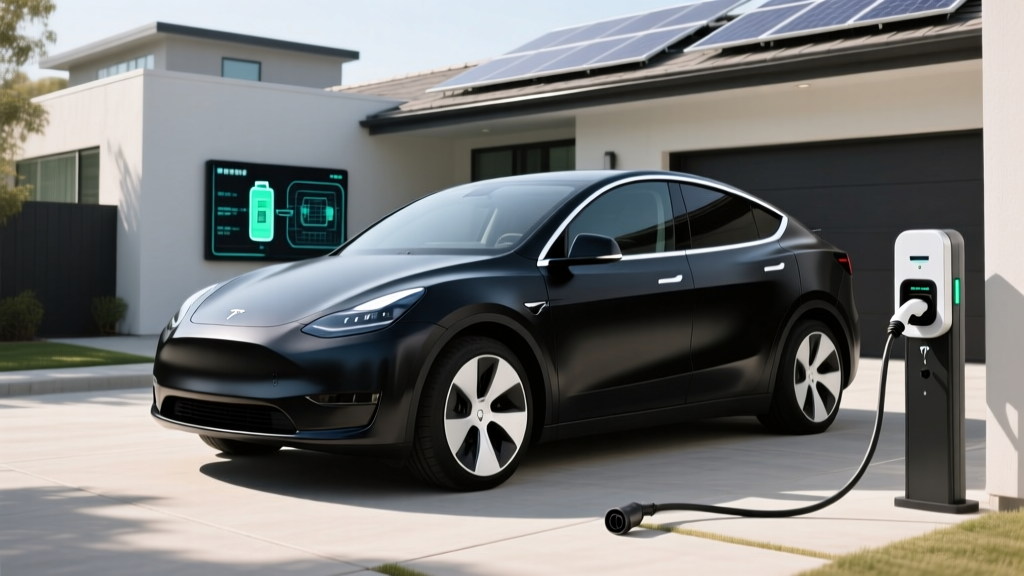
Home charging with a Tesla Wall Connector (hardwired, 60-amp circuit) delivers 11.5 kW, adding roughly 44 miles of range per hour. A full overnight charge from 20% to 90% takes about 7-8 hours. Installation typically runs $800-$2,000 depending on panel capacity and conduit distance — factor this into your purchase budget if you don't already have a 240V outlet.
Tesla's NACS (North American Charging Standard) connector is now the industry standard, with Ford, GM, Rivian, and others adopting it. This future-proofs Supercharger access, though it also means increased competition for stalls at peak travel times.
Performance, Efficiency, and Daily Driving
The Long Range AWD's 4.8-second 0-60 mph time is brisk for a family SUV, while the Performance trim's 3.5 seconds rivals sports sedans. Dual-motor AWD provides confident traction in rain and light snow, though winter tires remain the upgrade for serious cold-weather drivers.
Efficiency hovers around 27-29 kWh/100 miles in mixed driving — translating to 117-122 MPGe depending on trim. That's competitive with the Ioniq 5 (114 MPGe combined) and slightly better than the Mach-E (101 MPGe). At the U.S. average electricity rate of $0.16/kWh, fueling costs roughly $0.045 per mile — about one-third the cost of a 25 MPG gas SUV at $3.50/gallon.
Ride quality improved markedly with the Juniper refresh: revised suspension tuning and acoustic glass reduce road noise and harshness. The cabin is minimalist — some say stark — with a 15.4-inch touchscreen controlling nearly every function. Physical buttons are limited to steering wheel controls and hazard lights.
Cargo, Passenger Space, and Practicality
The Model Y offers 30.2 cubic feet of cargo space behind the second row and 72.1 cu ft with the rear seats folded. That's less than the Mach-E (29.7 / 59.7 cu ft — though Tesla's measurement methodology differs) but more than the Ioniq 5 (27.2 / 59.3 cu ft). The rear trunk is deep and square, though the sloping roofline limits vertical space for tall items.
Rear legroom measures 38.7 inches — adequate for adults on long trips, though the Mach-E's 38.9 inches and Ioniq 5's 39.4 inches feel slightly roomier. The optional third row (available on Long Range trims) adds two small seats suitable only for children under ~5 feet tall.
The front trunk (frunk) provides 4.1 cu ft of additional storage — enough for a charging cable bag or small groceries. Tesla's power liftgate is standard.
Pricing, Tax Credits, and Total Cost
| Trim | Base MSRP | Destination | Est. Total | §30D Credit Eligible? | Net Price (if eligible) |
|---|---|---|---|---|---|
| Long Range RWD | $44,990 | $1,390 | $46,380 | Yes (MSRP under $80K cap) | ~$38,880 |
| Long Range AWD | $47,990 | $1,390 | $49,380 | Yes | ~$41,880 |
| Performance | $52,490 | $1,390 | $53,880 | Yes | ~$46,380 |
All 2026 Model Y trims qualify for the full $7,500 federal tax credit under IRS §30D, provided the buyer meets income caps ($150K single / $300K joint modified adjusted gross income) and the vehicle's battery components and critical minerals satisfy U.S. sourcing requirements. As of 2026, Tesla's battery supply chain meets these thresholds. The credit can be transferred to the dealer at point of sale, reducing your purchase price directly — no waiting for tax filing.
Always verify current eligibility at IRS.gov before purchase, as sourcing rules tighten annually. State incentives vary widely (California's CVRP, Colorado's innovative motor vehicle credit, etc.) — check your local energy office.
Vinyl Wrapping Cost for the Model Y
Many Model Y owners opt for a full vinyl wrap to protect the factory paint (Tesla's paint is notoriously thin and chip-prone) or to customize color without a respray. Based on 2026 installer quotes:
- Full exterior wrap (standard gloss/matte vinyl): $2,800-$4,200
- Premium finishes (satin, metallic, color-shift): $4,000-$6,000
- Partial wrap (roof, hood, mirrors): $800-$1,500
- Paint protection film (PPF, full front): $1,800-$2,500
- PPF (full vehicle): $5,000-$7,500
A quality wrap lasts 5-7 years with proper care (hand wash, no automatic brush washes). It's removable without paint damage if done by a certified installer using 3M or Avery Dennison materials. Factor in $200-$400 for removal when you sell or trade the vehicle.
Pros and Cons: The Model Y Verdict
✓ Pros
- Class-leading Supercharger network reliability
- Strong real-world range (260-310 mi typical)
- Fast DC charging (10-80% in ~25 min)
- Spacious cargo area, practical frunk
- Over-the-air updates add features post-purchase
- Strong resale value vs. competitors
✗ Cons
- Minimalist interior not for everyone (no physical knobs)
- Paint quality inconsistent — chips easily
- Rear visibility compromised by thick C-pillars
- Autopilot/FSD is Level 2 driver assist, NOT self-driving
- Ride firmness on rough pavement (improved but still present)
- Insurance premiums 15-25% higher than gas SUVs
Who Should Buy the 2026 Tesla Model Y?
Choose the Model Y if: You want proven long-range capability, access to the most reliable DC fast-charging network, and strong cargo versatility for family gear or road trips. It's ideal for suburban commuters with home charging who take 2-4 road trips per year.
Consider the Hyundai Ioniq 5 instead if: You prioritize 800V ultra-fast charging (10-80% in 18 min on 350 kW chargers), prefer a more conventional interior with physical climate controls, or want a flatter load floor.
Consider the Ford Mustang Mach-E instead if: You want a sportier driving feel, more rear legroom, or prefer a traditional dealership experience for service.
Frequently Asked Questions
What is the real-world range of the 2026 Tesla Model Y?
Expect 260-310 miles depending on driving style, speed, and temperature. Highway driving at 75 mph yields ~260-280 miles; city driving with regen can approach or exceed the 320-mile EPA estimate. Cold weather (below freezing) reduces range 20-30%.
How fast does the Model Y charge at home and on the road?
At home on a 240V Level 2 charger (11.5 kW), it adds ~44 miles per hour, fully charging overnight. On a Tesla V3 Supercharger (250 kW peak), 10-80% takes ~25 minutes. Non-Tesla DC chargers via CCS adapter typically deliver 150-175 kW.
Does the 2026 Model Y qualify for the $7,500 federal tax credit?
Yes, all trims qualify under current IRS §30D rules, provided the buyer's income is under $150K (single) or $300K (joint) and the vehicle's battery meets U.S. sourcing requirements. The credit can be applied at point of sale. Verify at IRS.gov before purchase.
Is the Model Y worth buying vs. the Ioniq 5 or Mach-E?
The Model Y wins on charging network reliability and cargo space. The Ioniq 5 wins on DC charge speed (800V architecture) and interior ergonomics. The Mach-E wins on driving dynamics and rear legroom. Test-drive all three — your preference for interface and ride quality will decide.
How much does it cost to wrap a Tesla Model Y?
A full exterior vinyl wrap costs $2,800-$6,000 depending on material quality. Paint protection film (PPF) for the full front runs $1,800-$2,500; full-vehicle PPF is $5,000-$7,500. Wraps protect Tesla's thin factory paint and are removable without damage.
What's the battery warranty, and how long will it last?
Tesla covers the battery and drive unit for 8 years or 120,000 miles (whichever comes first), with a minimum 70% capacity retention threshold. Real-world data from Tesla's fleet shows typical degradation of 10-12% over 100,000 miles. Replacement cost (out of warranty) is $12,000-$16,000.
Sources: EPA Fuel Economy, Tesla Specifications, IRS Clean Vehicle Credit