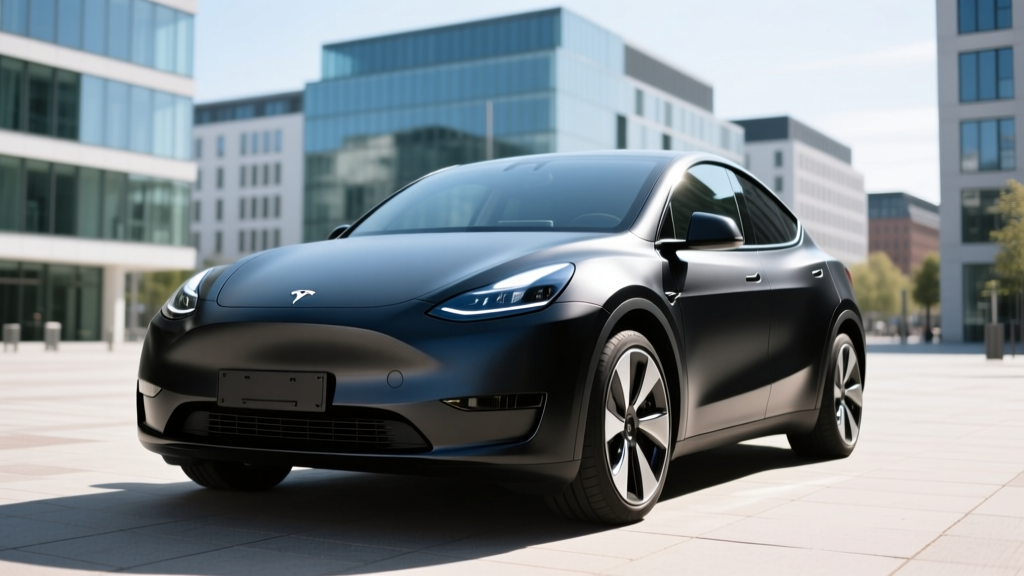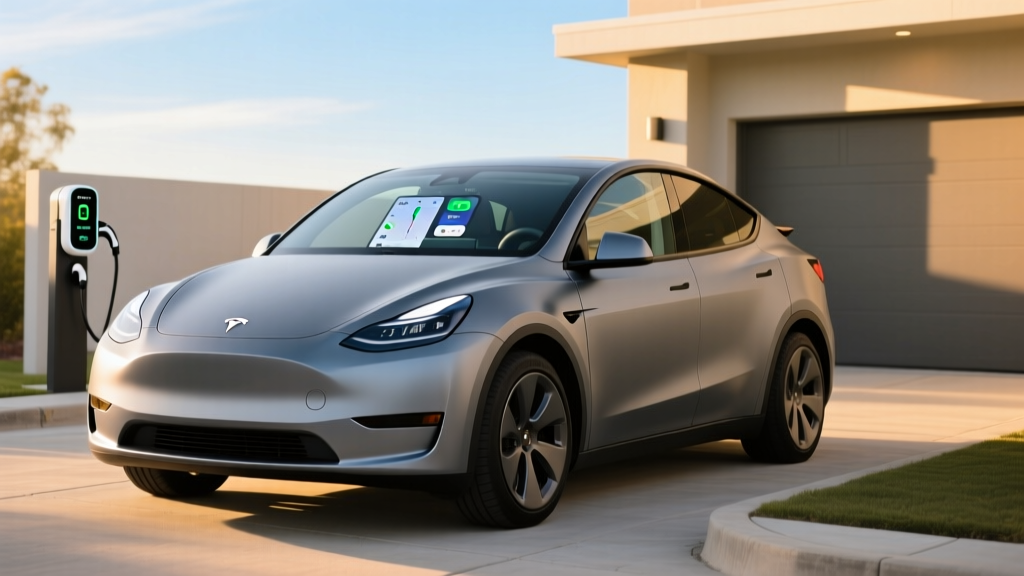
The Tesla Model Y remains the best-selling electric vehicle in the United States for good reason: it offers strong range, access to the Supercharger network, and a software ecosystem that extends well beyond the drive itself. For 2026, the refreshed Model Y (internally dubbed "Juniper") brings updated styling, a quieter cabin, ambient lighting, and ventilated front seats. But beyond the spec sheet, one feature that quietly shapes ownership satisfaction is Tesla app roadside assistance — a digitally integrated safety net that dispatches help for flat tires, dead 12V batteries, and tow requests without a phone call.
This review covers the 2026 Model Y Long Range AWD and Performance trims with exact EPA figures, real-world range expectations, charging speeds, tax credit eligibility, and a deep look at what the Tesla app can and cannot do when you're stranded.
2026 Tesla Model Y: Key Specifications at a Glance
| Spec | Long Range AWD | Performance |
|---|---|---|
| EPA Range | 320 miles | 293 miles |
| Battery (usable) | ~75 kWh, NMC | ~75 kWh, NMC |
| Drivetrain | Dual-motor AWD | Dual-motor AWD |
| Horsepower | 384 hp | 456 hp |
| 0–60 mph | 4.8 sec | 3.5 sec |
| Peak DC Fast Charge | 250 kW | 250 kW |
| 10–80% DC Time | ~25 min | ~25 min |
| Level 2 Home Charge | 11.5 kW (~44 mi/hr) | 11.5 kW (~44 mi/hr) |
| MPGe (combined) | 111 MPGe | 102 MPGe |
| Energy Consumption | 30 kWh/100 mi | 33 kWh/100 mi |
| Cargo (rear seats up) | 30.2 cu ft | 30.2 cu ft |
| Cargo (rear seats folded) | 72.1 cu ft | 72.1 cu ft |
| Rear Legroom | 41.6 in | 41.6 in |
| Towing Capacity | 3,500 lbs | 3,500 lbs |
| Base MSRP | $44,990 | $49,990 |
| Battery Warranty | 8 yr / 120,000 mi | 8 yr / 120,000 mi |
Source: fueleconomy.gov, Tesla.com (2026 model year).
Real-World Range: What the EPA Sticker Doesn't Tell You
EPA Estimated: 320 miles (Long Range AWD)
Real-World Highway (70–75 mph): ~265–285 miles
Cold Weather (below 32°F): ~230–260 miles
Best-Case City/Moderate Climate: ~300–320 miles
The 320-mile EPA rating for the Long Range AWD is achievable under moderate conditions — city and suburban driving in 55–75°F weather with moderate climate control use. On sustained highway trips at 70–75 mph, expect to use roughly 280–310 Wh/mi, bringing effective range to the 265–285 mile window. In sub-freezing temperatures, the NMC battery loses some efficiency to cabin heating and battery warming. Even with Tesla's heat pump (standard on all 2026 Model Y trims), plan for 20–25% range reduction in sustained cold.
For road-trip planning, the built-in navigation automatically factors in elevation, wind, temperature, and traffic when routing through Superchargers. In practice, this trip planner is among the most accurate in the industry — a genuine advantage over competitors whose range estimators tend to be overly optimistic.
Charging Speed: Supercharger Network and Home Setup
The 2026 Model Y supports up to 250 kW on DC fast chargers via its NACS (North American Charging Standard) connector — the port that has now become the industry standard, with Ford, GM, Rivian, and others adopting it.
| Charging Level | Power | Speed (Miles Added) | Use Case |
|---|---|---|---|
| Level 1 (120V outlet) | ~1.4 kW | ~3–5 mi/hr | Emergency / overnight trickle |
| Level 2 (240V, 48A) | 11.5 kW | ~44 mi/hr | Daily home charging |
| DC Fast (Supercharger V3/V4) | Up to 250 kW | ~162 mi in 15 min | Road trips |
| DC Fast (third-party CCS via adapter) | Up to 150–250 kW | Varies by station | Non-Tesla networks |
A critical nuance: the 250 kW peak is not sustained. The Model Y's charge curve peaks around 250 kW at low state of charge (SoC), then tapers to roughly 100–120 kW by 50% SoC, and drops further above 80%. A 10–80% session takes approximately 25 minutes at a V3 Supercharger. Charging from 80–100% adds another 15–20 minutes — so plan your stops to 80% unless you need the extra miles.
For home charging, a Tesla Wall Connector on a 60-amp circuit delivers 11.5 kW (48A), adding about 44 miles of range per hour. Most owners who plug in overnight wake up fully charged. Installation typically runs $800–$2,000 depending on panel proximity and whether a service upgrade is needed. Always use a licensed electrician and check local permit requirements.
Tesla App Roadside Assistance: How It Works in Practice
This is where the Tesla ownership experience diverges from legacy automakers. The Tesla app roadside assistance feature is built directly into the Tesla mobile app (iOS and Android), eliminating the need to call a toll-free number or dig through a glovebox manual.
What Tesla App Roadside Assistance Covers
- Flat tire: Tesla dispatches a service vehicle with a loaner wheel or tow. The app shows real-time ETA.
- 12V battery failure: If the low-voltage battery dies (preventing the car from "waking up"), Tesla can dispatch a jump or tow.
- Towing (warranty-related): If the vehicle is disabled due to a warranty-covered failure, Tesla covers towing to the nearest Service Center (typically within 50 miles).
- Lockout assistance: Though rare (the app itself is a key), Tesla can help if you're locked out without your phone or key card.
- Breakdown/immobilization: Motor or inverter failure, coolant leak, etc.
What It Does NOT Cover
- Collision damage or accident towing (handled by your insurance)
- Out-of-warranty towing beyond the included roadside assistance period (4 years / 50,000 miles for the basic warranty)
- Off-road recovery
- Flat-tire replacement if the tire itself is damaged (you'll pay for the tire; Tesla covers the service call during warranty)
How to Request Help in the App
- Open the Tesla app and select your vehicle.
- Tap Service → Request Roadside Assistance.
- Select the issue type (flat tire, won't start, tow needed, etc.).
- Confirm your GPS location (auto-detected) and submit.
- Track the service vehicle's ETA in real time on a map — similar to a rideshare app.
In real-world use, Tesla's roadside response times vary by metro area. In major cities, expect 30–60 minutes. In rural areas, it can be significantly longer, as Tesla contracts with third-party tow companies. The key advantage over traditional roadside programs is transparency: you see the truck's location and don't sit on hold with a dispatcher.
Pro tip: Keep your Tesla app logged in on a secondary device (tablet, partner's phone) as a backup. If your primary phone dies or is lost, you'll still have app-based access to your vehicle and roadside assistance.
Pricing, Trims, and Federal Tax Credit Eligibility
| Trim | Base MSRP | Destination | Total Before Credit | Est. After §30D Credit |
|---|---|---|---|---|
| Long Range AWD | $44,990 | $1,390 | $46,380 | ~$38,880* |
| Performance | $49,990 | $1,390 | $51,380 | ~$43,880* |
*Tax credit estimate assumes full $7,500 §30D eligibility. Actual credit depends on buyer income, battery sourcing, and MSRP caps. See details below.
Federal §30D Tax Credit: Current Rules (2026)
The Model Y qualifies for up to $7,500 under the IRS §30D Clean Vehicle Credit, but eligibility is not automatic. Here's what you need to know:
- MSRP cap: The Model Y is classified as an SUV, so the cap is $80,000. Both trims clear this easily.
- Buyer income cap: Modified AGI must not exceed $150,000 (single), $225,000 (head of household), or $300,000 (joint).
- Battery sourcing: At least a percentage of critical minerals and battery components must be sourced from the U.S. or free-trade-agreement countries. Tesla's Fremont-built Model Y has historically met these requirements, but the exact qualifying amount ($3,750 or $7,500) can shift as sourcing rules tighten annually. Always verify on the IRS qualified vehicles list at the time of purchase.
- Point-of-sale transfer: As of 2024, you can transfer the credit to the dealer at purchase, reducing your out-of-pocket cost immediately rather than waiting for tax filing.
Tesla's website shows real-time credit eligibility at checkout. Consult a tax professional if your income is near the cap or if you're unsure about transfer eligibility.
Performance, Tech, and Daily Usability
Driving Dynamics
The Long Range AWD hits 0–60 mph in 4.8 seconds — quick for a family crossover. The Performance trim drops that to 3.5 seconds, which is sports-car territory. Both trims use a dual-motor setup with independent front and rear motors, providing excellent traction in rain and light snow. The 2026 Juniper refresh improved ride quality with retuned dampers and additional sound insulation, making it noticeably quieter at highway speeds than the pre-refresh model.
Interior and Cargo
The minimalist interior centers on a 15.4-inch touchscreen that controls nearly every vehicle function. The 2026 update adds ambient lighting, ventilated front seats, power-folding second-row seats, and a rear-seat touchscreen for climate and entertainment. Cargo space is generous: 30.2 cubic feet behind the second row and 72.1 cubic feet with seats folded. The front trunk (frunk) adds additional storage for charging cables or a small bag.
Driver Assistance: Autopilot and FSD (Supervised)
Tesla Autopilot and Full Self-Driving (Supervised) are SAE Level 2 driver-assistance systems. The driver must remain fully engaged — hands on the wheel (or torque-confirmed), eyes on the road — at all times. These systems do not make the vehicle autonomous. Tesla's FSD (Supervised) can navigate on-ramps, stop signs, and some city streets, but it requires constant supervision and can make errors. Only Level 4 robotaxi services (Waymo, Zoox) operate without a human driver.
Autopilot (basic) is included standard and provides adaptive cruise control and lane centering on highways. FSD (Supervised) is a $8,000 add-on or $99/month subscription. It adds automatic lane changes, traffic light/stop sign recognition, and city-street navigation. Real-world performance varies significantly by geography and road complexity — impressive on well-marked highways, less reliable in construction zones or unmapped areas.
Standout Tech
- Over-the-air (OTA) updates that add features post-purchase
- Sentry Mode (360° parking surveillance with phone alerts)
- Dog Mode and Camp Mode for climate management when parked
- Integrated trip planner with Supercharger routing
- Phone-as-key with automatic lock/unlock
Pros and Cons
- 320-mile EPA range (Long Range) covers most commutes and road trips
- Supercharger network: most reliable DC fast-charging ecosystem
- Best-in-class app integration (remote control, service, roadside)
- Strong cargo space and towing capacity for the class
- OTA updates keep the vehicle current
- Qualifies for up to $7,500 federal tax credit
- No physical stalks (turn signals on steering wheel buttons in 2026 refresh)
- FSD (Supervised) remains Level 2 — not autonomous, $8K add-on
- Service Center wait times can be long in some markets
- Panel gaps and paint quality still inconsistent vs. luxury rivals
- Rear visibility is limited; relies heavily on cameras
- Insurance premiums tend to be higher than comparable crossovers
Who Should Buy the 2026 Tesla Model Y?
Choose the Model Y Long Range AWD if: You want a daily-driver EV with strong range, access to the best DC fast-charging network, and a tech-forward ownership experience. Ideal for commuters, small families, and road-trippers who value trip-planner integration.
Choose the Model Y Performance if: You prioritize acceleration and handling and don't mind sacrificing ~27 miles of range for a 3.5-second 0–60 time.
Look elsewhere if: You want a luxury interior (consider BMW iX or Genesis GV70 Electrified), need three rows (Kia EV9), or prefer physical controls and a more traditional driving interface (Hyundai Ioniq 5, Ford Mustang Mach-E).
Warranty and Long-Term Ownership
Tesla's warranty structure for the 2026 Model Y:
- Basic Vehicle: 4 years / 50,000 miles
- Battery & Drive Unit: 8 years / 120,000 miles (whichever comes first), with a guaranteed minimum 70% battery capacity retention over that period
- Roadside Assistance: 4 years / 50,000 miles (included; accessible via the Tesla app)
The 8-year/120,000-mile battery warranty is competitive. Real-world data from high-mileage Tesla owners suggests NMC batteries in the Model Y typically retain 85–90% capacity at 100,000 miles when charged primarily on Level 2 and kept between 20–80% SoC for daily use. Tesla recommends charging to 100% only for trips — the vehicle's built-in charge-limit slider makes this easy to manage.
Long-term maintenance costs are low compared to gas vehicles: no oil changes, no spark plugs, minimal brake wear (thanks to regenerative braking). The primary recurring costs are tire replacement (EVs tend to wear tires faster due to weight and instant torque), cabin air filter replacement, and windshield washer fluid.
Frequently Asked Questions
What is the real-world range of the 2026 Tesla Model Y?
The EPA rates the Long Range AWD at 320 miles. In real-world highway driving at 70–75 mph, expect 265–285 miles. In sustained cold weather (below freezing), plan for 230–260 miles. City driving in moderate temperatures can approach or match the EPA figure.
How fast does the Model Y charge at home and on road trips?
At home on a 240V Level 2 charger (11.5 kW), the Model Y adds about 44 miles of range per hour — a full overnight charge covers most needs. On a Tesla V3/V4 Supercharger, it peaks at 250 kW and charges from 10–80% in approximately 25 minutes. Above 80%, the charge rate tapers significantly.
How much does the 2026 Model Y cost after the federal tax credit?
The Long Range AWD starts at $46,380 (including destination). With the full $7,500 §30D credit, the effective price drops to approximately $38,880. Eligibility depends on buyer income (≤$300K joint), battery sourcing compliance, and MSRP under $80K. Verify current eligibility on IRS.gov before purchasing.
Is the Tesla Model Y worth buying vs. competitors like the Ioniq 5 or Mach-E?
The Model Y wins on charging network access (Superchargers), app integration (including Tesla app roadside assistance), and cargo space. The Hyundai Ioniq 5 charges faster on 800V architecture (~18 min 10–80%) and offers a more distinctive design. The Ford Mustang Mach-E provides a more traditional cockpit layout. If Supercharger reliability and software integration are your top priorities, the Model Y is still the benchmark.
Does the 2026 Model Y qualify for the $7,500 federal EV tax credit?
Yes, the Model Y is eligible for up to $7,500 under IRS §30D, subject to buyer income caps ($150K single / $300K joint), battery critical-mineral and component sourcing requirements, and the $80K MSRP cap for SUVs. The credit can be transferred to the dealer at point of sale to reduce your purchase price immediately. Always confirm eligibility at the time of purchase, as sourcing rules evolve annually.
How do I use Tesla app roadside assistance?
Open the Tesla app → tap Service → select Request Roadside Assistance → choose your issue (flat tire, tow, 12V battery, lockout) → confirm your location. A service vehicle is dispatched, and you can track its ETA in real time. Coverage is included for 4 years / 50,000 miles under the basic warranty.
For official EPA data, see fueleconomy.gov. For safety ratings, check NHTSA and IIHS.