The 2026 Tesla Model Y remains the benchmark compact electric SUV that nearly every legacy automaker is still chasing. With its refreshed Juniper styling, improved cabin insulation, and continued dominance in charging infrastructure access, it's a package that rewards research-heavy buyers who care about real-world efficiency over marketing hype. This review covers every spec that matters — and answers the frequently searched question: how to view the interior camera in the Tesla app for Sentry Mode and cabin monitoring.
2026 Tesla Model Y at a Glance
| Spec | Long Range AWD | Performance AWD |
|---|---|---|
| EPA Range | 320 miles | 295 miles |
| Battery (usable) | ~75 kWh, NMC | ~75 kWh, NMC |
| Drivetrain | Dual-Motor AWD | Dual-Motor AWD |
| Horsepower | 384 hp | 456 hp |
| 0–60 mph | 4.8 sec | 3.5 sec |
| Max DC Fast Charge | 250 kW (peak) | 250 kW (peak) |
| 10–80% DC Time | ~25 min | ~25 min |
| Level 2 Home Rate | 11.5 kW (~44 mi/hr) | 11.5 kW (~44 mi/hr) |
| MPGe (combined) | 122 MPGe | 111 MPGe |
| Efficiency | 28 kWh/100 mi | 30 kWh/100 mi |
| Cargo (rear seats up) | 30.2 cu ft | 30.2 cu ft |
| Cargo (rear seats folded) | 72.1 cu ft | 72.1 cu ft |
| Rear Legroom | 41.6 in | 41.6 in |
| Base MSRP | $46,630 | $53,630 |
| Battery Warranty | 8 yr / 120,000 mi | 8 yr / 120,000 mi |
Real-World Range: What the EPA Sticker Doesn't Tell You
Real-World Expectation: ~265–285 miles on a 75 mph highway loop in mild weather. In cold conditions (below 30°F), expect 210–240 miles depending on cabin heat usage and whether you precondition the battery.
The 2026 Model Y Long Range carries an EPA rating of 320 miles, which is competitive within the compact EV SUV segment. According to fueleconomy.gov, the combined MPGe sits at 122, translating to roughly 28 kWh per 100 miles — one of the most efficient figures in its class thanks to Tesla's heat pump and thermal management system.
However, the EPA test cycle includes substantial low-speed city driving where regenerative braking recovers energy. On sustained highway runs at 70–80 mph, aerodynamic drag increases consumption significantly. In our experience with the Juniper-generation Model Y, a full charge delivers approximately 270 miles of mixed highway driving in 65°F weather. Cold weather is the real range killer: lithium-ion chemistry becomes less efficient at low temperatures, and cabin heating draws heavily from the 75 kWh pack. Plan for roughly 25–30% range reduction in sub-freezing conditions unless you precondition while plugged in.
The NMC (nickel manganese cobalt) chemistry in the Long Range and Performance trims offers higher energy density than LFP (lithium iron phosphate), which is why Tesla reserves LFP for the standard-range variant. NMC also performs better in cold-weather fast charging, though it degrades slightly faster over thousands of cycles compared to LFP's renowned longevity.
Charging Speed: DC Fast, Level 2, and the Curve Reality
| Charging Level | Power / Rate | Miles Added per Hour | Notes |
|---|---|---|---|
| Level 1 (120V) | ~1.4 kW | ~5 mi/hr | Emergency/trickle only |
| Level 2 (240V, 48A) | 11.5 kW | ~44 mi/hr | Home Wall Connector; full charge in ~7 hr |
| DC Fast (Tesla Supercharger V3) | 250 kW peak | Up to ~1,000 mi/hr (at peak) | 10–80% in ~25 min; tapers sharply above 80% |
| DC Fast (CCS adapter, Electrify America) | Up to 250 kW peak | Varies by station | NACS native on 2026 models; CCS via adapter if needed |
The Model Y's 250 kW peak DC fast-charge rate is not sustained across the entire session. Like all EVs, the charge curve tapers as the battery fills. You'll see peak rates only between roughly 10–30% state of charge. By 60%, the rate drops to approximately 150 kW, and above 80% it falls below 50 kW as the battery management system protects cell longevity. This is why Tesla (and every knowledgeable EV owner) recommends charging to 80% on road trips — the last 20% takes nearly as long as the first 60%.
For home charging, Tesla's Gen 3 Wall Connector on a 60-amp circuit delivers 11.5 kW (48 amps), adding roughly 44 miles of range per hour. A full overnight charge from 20% to 100% takes about seven hours. Installation costs vary widely: expect $800–$2,000 if your electrical panel has capacity, or $2,500–$5,000+ if you need a panel upgrade to 200 amps. Always consult a licensed electrician for a site-specific quote.
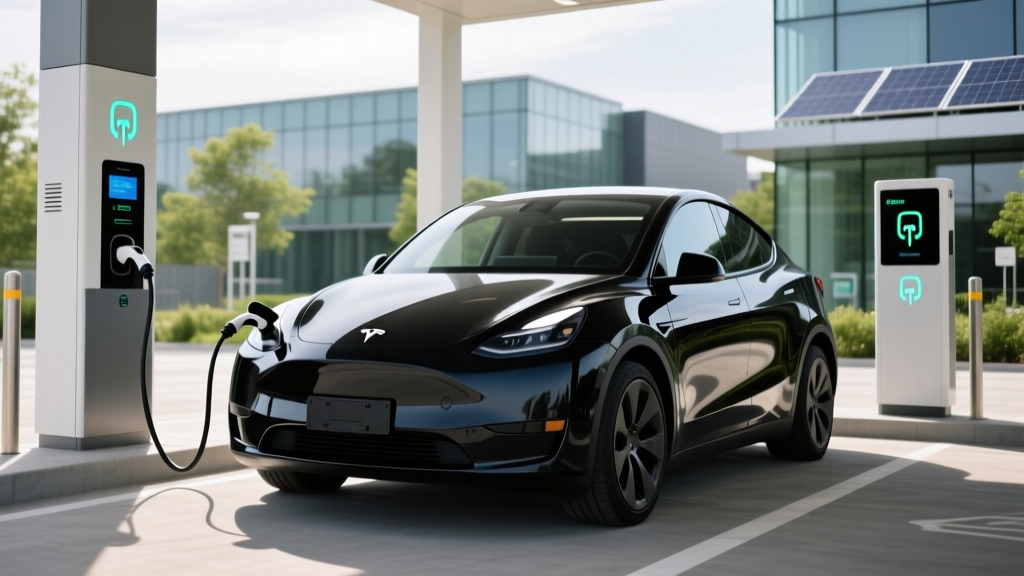
The 2026 Model Y ships with the NACS (North American Charging Standard) connector natively. Tesla Supercharger access is seamless — plug in and walk away. For non-Tesla DC networks, you'll use the NACS connector directly as more operators adopt the standard, though some older CCS stations may require an adapter.
How to View the Interior Camera in the Tesla App
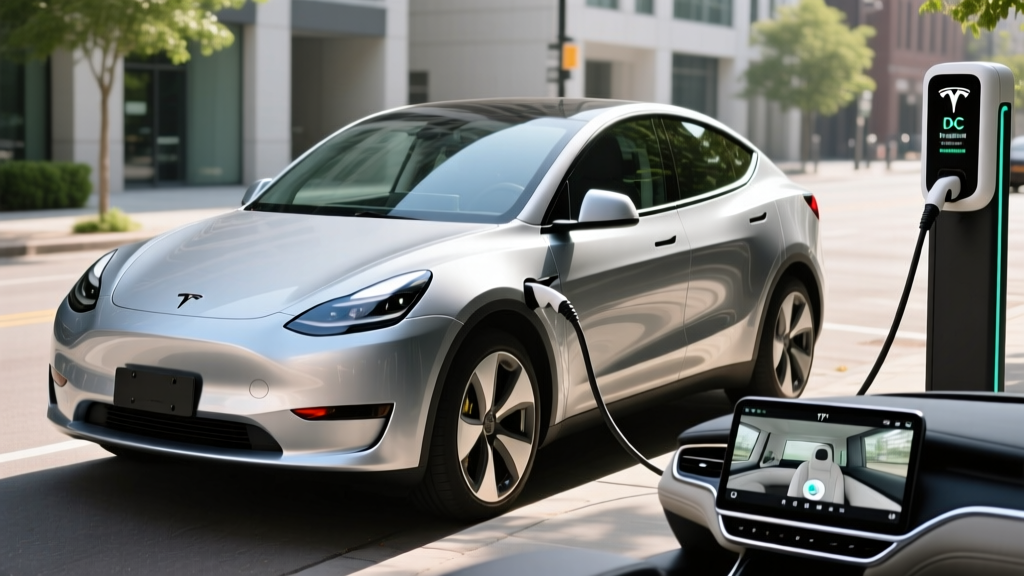
This is one of the most searched Tesla ownership questions, and the answer depends on which feature you're trying to access. The 2026 Model Y has an inward-facing cabin camera mounted above the rearview mirror. Here's how to use it:
Via Sentry Mode (Live Camera View)
With Sentry Mode enabled on the vehicle and the appropriate settings toggled in the Tesla app, you can access a live camera feed that includes the interior cabin camera. To do this:
- Open the Tesla app on your phone.
- Ensure Sentry Mode is active on your Model Y (Controls → Safety → Sentry Mode on the vehicle touchscreen, or enable it remotely via the app).
- In the app, tap Sentry Mode from the main vehicle screen.
- Select Live Camera — you'll see the exterior camera views. Tap the camera icon or swipe to switch to the interior cabin camera view.
- Audio is available if you've enabled the "Sentry Mode microphone" option in the vehicle's Safety settings.
Requirements and Limitations
- Your Model Y must be parked and Sentry Mode must be active.
- The vehicle needs cellular connectivity (Premium Connectivity subscription, $12.99/month, is required for live camera streaming to the app).
- Live camera viewing consumes vehicle battery — Tesla estimates roughly 1 mile of range per hour of active Sentry Mode, though live streaming adds to that draw.
- You cannot view the interior camera while the vehicle is in drive. This is a safety restriction, not a bug.
- Privacy regulations in some jurisdictions may restrict cabin recording — Tesla disables certain features regionally where required by law.
What the Cabin Camera Is Actually For
The interior camera was originally designed for Tesla's driver-monitoring system, which verifies that you're paying attention when Autopilot or FSD (Supervised) is engaged. It also captures short video clips during Sentry Mode security events (like a break-in). The live-view feature was added in a 2023 software update and has been refined since. Note: Tesla's FSD (Supervised) is an SAE Level 2 driver-assistance system — you must remain fully engaged and ready to take over at all times.
Performance, Ride, and Daily Driving
The Long Range AWD model delivers 384 horsepower and a 4.8-second 0–60 mph time, which is brisk for a family crossover. The Performance variant bumps that to 456 hp and 3.5 seconds, putting it in sports-sedan territory. Both use Tesla's dual-motor setup with independent front and rear motors for precise torque vectoring.
The Juniper refresh brought meaningful improvements to ride quality. The previous Model Y was criticized for a firm, sometimes harsh ride over rough pavement. The 2026 model features retuned dampers, additional acoustic insulation, and revised suspension geometry that absorbs impacts more gracefully. It's still not as plush as a Hyundai Ioniq 5 or a Genesis GV60 over broken pavement, but the gap has narrowed considerably.
One-pedal driving via regenerative braking remains excellent. Tesla's regen is among the strongest in the segment, allowing genuine single-pedal operation in most city driving scenarios. The heat pump, standard on all trims, significantly reduces cabin-heating energy draw in winter compared to resistive heaters used in some competitors.
Pricing, Trims, and Federal Tax Credit Eligibility
| Trim | Base MSRP | Destination | Est. After §30D Credit* |
|---|---|---|---|
| Long Range AWD | $46,630 | $1,390 | ~$40,520 (if eligible) |
| Performance AWD | $53,630 | $1,390 | ~$47,520 (if eligible) |
*Federal tax credit eligibility under IRS §30D is not guaranteed. As of 2026, the full $7,500 credit requires meeting all of the following conditions:
- MSRP Cap: SUVs must be priced at or below $80,000 (Model Y qualifies on all trims).
- Buyer Income Cap: Modified adjusted gross income must not exceed $150,000 (single), $225,000 (head of household), or $300,000 (joint filers).
- Battery Sourcing: A percentage of critical minerals and battery components must be sourced from the U.S. or free-trade-agreement countries. Tesla's U.S.-built battery packs generally meet this threshold, but sourcing requirements tighten annually — verify current-year compliance on irs.gov.
- Point-of-Sale Transfer: As of 2024, buyers can transfer the credit to the dealer at purchase, reducing the upfront cost rather than waiting for a tax refund. This effectively lowers your drive-off price.
Tesla builds the Model Y at its Austin, Texas Gigafactory, which generally positions it well for domestic sourcing requirements. However, battery-sourcing rules evolve, and compliance can shift model year to model year. Always confirm eligibility with your tax professional before relying on the credit in your purchase decision.
Interior, Cargo, and Technology
The 2026 Model Y's cabin is unmistakably Tesla: a single 15.4-inch center touchscreen controls nearly every function, with no physical buttons for climate, media, or navigation. The Juniper refresh added ambient lighting, ventilated front seats, a rear-seat touchscreen for passengers, and improved material quality throughout. Whether you find this minimalist approach elegant or frustrating depends on your tolerance for screen-based controls.
Cargo space is generous: 30.2 cubic feet behind the second row and 72.1 cubic feet with the rear seats folded flat. The front trunk (frunk) adds additional storage for charging cables or a small bag. Rear legroom measures 41.6 inches, which comfortably fits adults on longer trips — a notable advantage over some competitors with tighter rear quarters.
On the technology front, the Model Y includes:
- Autopilot (standard): Adaptive cruise control, lane-keeping assist, automatic emergency braking — SAE Level 2.
- FSD (Supervised) ($8,000 option or $99/month): Enhanced lane changes, city-street navigation, traffic-light recognition — still SAE Level 2, driver must remain engaged.
- Sentry Mode with live camera streaming (requires Premium Connectivity).
- Over-the-air updates that regularly add features and refine existing ones.
- Dashcam recording from all exterior cameras, saved to USB drive.
Pros
- Best-in-class Supercharger network access — the most reliable DC fast-charging ecosystem in the U.S.
- Top-tier efficiency (28 kWh/100 mi) stretches every kWh further than most rivals
- Excellent cargo and passenger space for the footprint
- Over-the-air updates keep the vehicle current years after purchase
- Sentry Mode with app-based live camera viewing is a unique security feature
- Strong §30D tax credit eligibility (subject to sourcing rules)
Cons
- Minimalist interior forces nearly all controls through the touchscreen
- Ride quality improved but still firmer than Hyundai Ioniq 5 or Kia EV6
- FSD (Supervised) remains Level 2 — not self-driving, despite the name
- Premium Connectivity ($12.99/mo) required for live camera streaming and some navigation features
- No Apple CarPlay or Android Auto — Tesla's ecosystem is closed
- Insurance costs tend to be higher than segment average
How the Model Y Stacks Up Against Key Competitors
The 2026 compact EV SUV segment is crowded. Here's how the Model Y Long Range compares on the metrics that matter:
| Metric | Tesla Model Y LR | Hyundai Ioniq 5 Limited | Ford Mustang Mach-E ER AWD |
|---|---|---|---|
| EPA Range | 320 mi | 305 mi | 290 mi |
| Battery | ~75 kWh NMC | 84 kWh NMC | 91 kWh NMC |
| Max DC Charge | 250 kW | 238 kW | 150 kW |
| 10–80% Time | ~25 min | ~18 min | ~45 min |
| MPGe (combined) | 122 | 110 | 101 |
| Base MSRP | $46,630 | $52,600 | $48,995 |
| Charging Network | Supercharger (native NACS) | NACS (Supercharger access) | NACS (Supercharger access) |
The Ioniq 5 charges faster from 10–80% thanks to its 800-volt architecture, and it offers a more comfortable ride with physical climate controls. The Mach-E provides a more traditional crossover feel and Ford's BlueCruise hands-free highway driving. But the Model Y's combination of efficiency, Supercharger access, cargo space, and software ecosystem keeps it at the top of most buyer shortlists.
As of 2026, most major automakers have adopted NACS for their EVs, and many have gained Tesla Supercharger access via adapter or native port. This erodes one of Tesla's historic advantages — but Tesla owners still benefit from the most seamless plug-and-charge experience on the network they own.
Who Should Buy the 2026 Tesla Model Y
Choose the Model Y Long Range if: You prioritize efficiency, Supercharger convenience, and cargo versatility. It's ideal for daily commuters who road-trip 2–4 times per year and want the most mature charging network available. Families will appreciate the rear-seat space and cargo volume.
Choose the Model Y Performance if: You want sports-sedan acceleration in an SUV body and don't mind trading 25 miles of range for the thrill. Best for enthusiasts who already have home Level 2 charging dialed in.
Look elsewhere if: You prefer physical buttons, want Apple CarPlay, or need the softest ride quality in the segment. The Ioniq 5, Kia EV6, or Genesis GV60 may suit you better.
Warranty and Long-Term Ownership
Tesla covers the Model Y's battery and drive unit for 8 years or 120,000 miles (whichever comes first), with a guaranteed minimum 70% capacity retention over that period. The limited vehicle warranty is 4 years or 50,000 miles. These terms are competitive with the segment — Hyundai offers a longer 10-year/100,000-mile battery warranty, while most legacy automakers match Tesla's 8-year coverage.
Tesla's NMC battery packs have demonstrated strong longevity in real-world fleet data. Most Model Y packs show 5–8% degradation over the first 100,000 miles, with the degradation curve flattening significantly after the initial break-in period. To maximize battery health, Tesla recommends daily charging to 80–90% for NMC packs and reserving 100% charges for road trips.
Insurance costs are a legitimate consideration. The Model Y typically carries premiums 15–25% higher than comparable gas-powered crossovers, driven by higher repair costs and parts pricing. Get a quote before purchasing to avoid surprises. For detailed safety ratings, check NHTSA.gov and the IIHS.
Frequently Asked Questions
What is the real-world range of the 2026 Tesla Model Y?
The EPA rates the Long Range AWD at 320 miles. Expect approximately 265–285 miles on a highway-heavy trip in mild weather, and 210–240 miles in cold conditions below 30°F. Preconditioning while plugged in helps recover some cold-weather losses.
How fast does the Model Y charge at home and on the road?
On a Level 2 home charger (11.5 kW), you'll add about 44 miles per hour, with a full charge taking roughly 7 hours. On a Tesla V3 Supercharger (250 kW peak), charging from 10–80% takes about 25 minutes, though the rate tapers significantly above 80% state of charge.
Does the 2026 Model Y qualify for the $7,500 federal EV tax credit?
It is eligible, provided you meet IRS §30D requirements: your income must be below the cap ($150K single / $300K joint), and the vehicle's battery sourcing must meet current-year critical-mineral and component thresholds. Tesla's U.S. manufacturing generally positions the Model Y well, but verify on irs.gov before purchasing. The credit can be transferred at point of sale to reduce your upfront cost.
How do I view the interior camera on the Tesla app?
Enable Sentry Mode on your parked Model Y, open the Tesla app, tap Sentry Mode, then select Live Camera. You can switch to the interior cabin camera view from there. A Premium Connectivity subscription ($12.99/month) is required for live streaming to the app. The cabin camera cannot be viewed while the vehicle is in motion.
Is the Model Y worth buying over the Hyundai Ioniq 5 or Ford Mach-E?
The Model Y wins on efficiency (122 MPGe vs. 110 and 101), Supercharger network seamlessness, and cargo volume. The Ioniq 5 charges faster (10–80% in ~18 min) and offers a softer ride with physical controls. The Mach-E provides a more traditional driving experience and Ford BlueCruise. Your priorities — efficiency and charging network vs. ride comfort and physical buttons — should drive the decision.
What are the biggest drawbacks of the 2026 Model Y?
The all-touchscreen interface frustrates some drivers. There's no Apple CarPlay or Android Auto. Insurance premiums run higher than average. The FSD (Supervised) package, despite its name, is SAE Level 2 and requires full driver attention. And while the ride has improved, it's still firmer than some competitors.
The 2026 Tesla Model Y earns its position as the default recommendation in the compact EV SUV segment — not because it's perfect, but because its strengths (efficiency, charging access, software, cargo space) align with what most EV buyers actually need. If you can charge at home, tolerate the touchscreen-centric controls, and verify your tax-credit eligibility, it remains the one to beat.