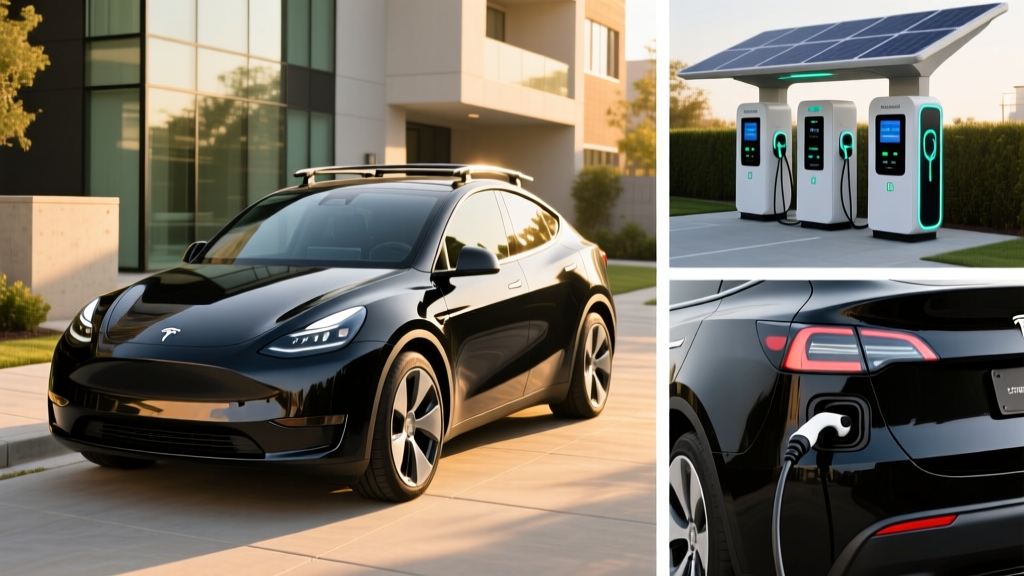
Quick Verdict: Still the Default EV Crossover
The 2026 Tesla Model Y remains the best-selling electric vehicle in the United States for good reason: a compelling blend of range, charging speed, cargo utility, and access to the largest fast-charging network on the continent. But as the Model Y ages and competitors close the gap, a growing concern among buyers and owners is long-term repair exposure — and whether a Tesla aftermarket warranty makes financial sense once the factory coverage expires.
This review covers every spec that matters for a purchase decision, then tackles the aftermarket warranty question head-on with real cost data.
| Spec | Long Range AWD | Performance |
|---|---|---|
| EPA Range | 320 miles | 295 miles |
| Battery (usable) | ~78 kWh (NMC) | ~78 kWh (NMC) |
| Max DC Fast Charge | 250 kW peak | 250 kW peak |
| 10–80% DC Time | ~25 minutes | ~25 minutes |
| Level 2 Home Rate | 11.5 kW (~44 mi/hr) | 11.5 kW (~44 mi/hr) |
| 0–60 mph | 4.8 seconds | 3.5 seconds |
| Horsepower | 384 hp (dual motor) | 456 hp (dual motor) |
| Drivetrain | AWD | AWD |
| MPGe (combined) | 117 MPGe | 111 MPGe |
| Efficiency | 28 kWh/100 mi | 30 kWh/100 mi |
| Cargo (rear seats up) | 30.2 cu ft | 30.2 cu ft |
| Cargo (rear seats folded) | 72.1 cu ft | 72.1 cu ft |
| Rear Legroom | 39.0 in | 39.0 in |
| Base MSRP | $47,990 | $52,490 |
| Battery/Drive Unit Warranty | 8 yr / 120,000 mi | 8 yr / 120,000 mi |
| Basic Vehicle Warranty | 4 yr / 50,000 mi | 4 yr / 50,000 mi |
Real-World Range: What the EPA Sticker Doesn't Tell You
Long Range AWD: EPA 320 miles — expect ~270–290 miles on a mixed highway trip at 70 mph; ~230–250 miles in freezing temperatures with cabin heat running.
Performance: EPA 295 miles — expect ~250–265 miles highway; ~210–230 miles in sub-32°F conditions.
The Model Y Long Range's 320-mile EPA estimate is competitive, but EPA testing uses relatively mild driving cycles. On sustained highway runs at 70–75 mph, efficiency drops to roughly 30–32 kWh/100 mi, cutting practical range to around 270–290 miles. That's still enough for most road-trip legs between Supercharger stops.
Cold weather is the bigger wildcard. Tesla's heat pump is among the best in the industry, but lithium-ion chemistry loses efficiency below freezing. Expect 15–25% range reduction in sustained sub-32°F driving, depending on whether you precondition the battery (always do this — the car's navigation system automatically triggers preconditioning when a Supercharger is set as your destination).
According to fueleconomy.gov, the Long Range AWD achieves 117 MPGe combined, which translates to roughly 3.4 miles per kWh — one of the most efficient all-wheel-drive electric crossovers available.
Charging Speed: DC Fast and Home Level 2
| Charging Level | Power / Rate | Speed |
|---|---|---|
| Level 1 (120V outlet) | ~1.4 kW | ~5 miles per hour |
| Level 2 (240V, 48A Wall Connector) | 11.5 kW | ~44 miles per hour |
| DC Fast Charge (Supercharger V3/V4) | 250 kW peak | 10–80% in ~25 min |
| DC Fast Charge (CCS adapter, third-party) | Up to 250 kW (varies) | Station-dependent |
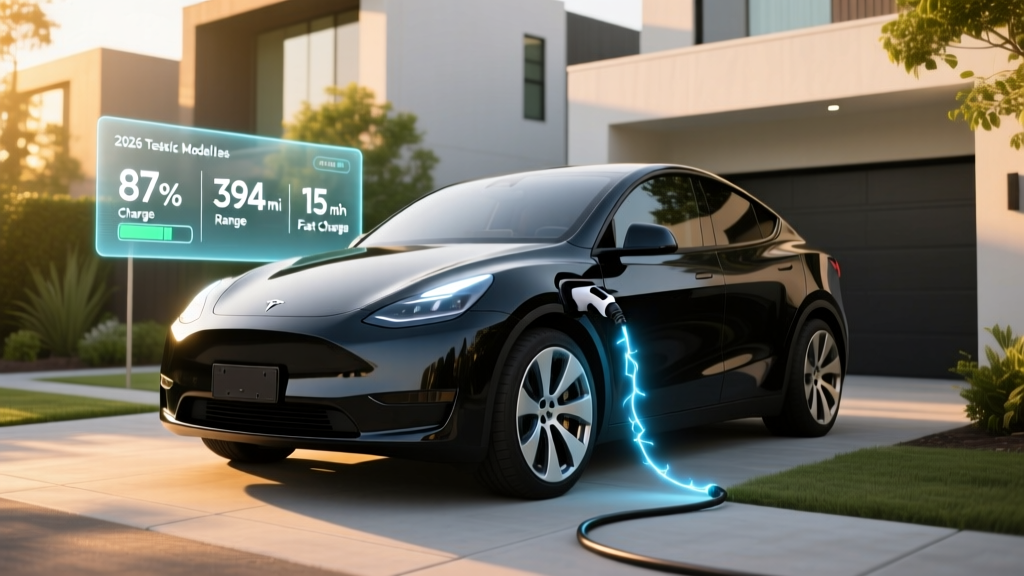
Tesla's charging architecture remains an advantage. At a V3 or V4 Supercharger, the Model Y peaks at 250 kW and sustains roughly 170–200 kW through the 20–60% state-of-charge window before tapering. The 10–80% fill takes approximately 25 minutes under optimal thermal conditions (battery preconditioned, ambient temps above 50°F).
Above 80% SoC, the charge curve tapers sharply — going from 80% to 100% can take an additional 20–25 minutes. For road trips, plan to charge to 80% and move on; the math always favors more, shorter stops over fewer, longer ones.
For home charging, the Tesla Wall Connector on a 60-amp circuit delivers up to 11.5 kW (48 amps continuous), adding roughly 44 miles of range per hour. A full overnight charge from 20% to 80% takes about 4 hours. Installation costs for a dedicated 240V/60A circuit typically range from $500 to $2,000 depending on panel proximity and local permitting, though older homes may need a $2,000–$4,000 panel upgrade to support the additional load. Always consult a licensed electrician for a site-specific quote.
Performance, Ride, and Daily Livability
The Long Range AWD's 4.8-second 0–60 mph time is brisk for a family crossover, and the dual-motor all-wheel-drive system provides confident traction in rain and light snow. The Performance trim drops that to 3.5 seconds with 456 hp — sports-car acceleration in a vehicle with 72 cubic feet of cargo space.
Ride quality has improved with the recent "Juniper" refresh: revised suspension tuning, acoustic glass, and ventilated front seats bring the Model Y closer to luxury-crossover refinement. The 15.4-inch touchscreen handles all vehicle controls, navigation, and entertainment. Rear-seat passengers get a dedicated 8-inch screen for climate and media.
Standout tech:
- Autopilot (standard) — adaptive cruise + lane centering, SAE Level 2 (driver must remain engaged)
- Full Self-Driving (Supervised) — optional, $8,000 or $99/month; adds automatic lane changes, traffic-light recognition, and parking assist. Still SAE Level 2 — not autonomous
- Over-the-air updates that add features post-purchase
- Sentry Mode dashcam/security system
- Dog Mode and Camp Mode for climate management while parked
Tesla Autopilot and FSD (Supervised) are SAE Level 2 driver-assistance systems. The driver must maintain steering-wheel contact, monitor the road, and be prepared to take over at any time. These systems do not make the vehicle self-driving. Only Level 4 services like Waymo operate without a human driver in defined operational domains.
Pricing, Trims, and Federal Tax Credit Eligibility
| Trim | Base MSRP | Est. As-Tested* | §30D Credit Eligible? |
|---|---|---|---|
| Long Range AWD | $47,990 | $49,490–$54,000 | Yes (if under MSRP/income caps) |
| Performance | $52,490 | $54,000–$60,000 | Yes (if under MSRP/income caps) |
*As-tested pricing includes typical options: paint color ($1,000–$2,500), 20" wheels ($2,000), FSD ($8,000 if purchased).
Under current IRS §30D rules, the Model Y qualifies for up to $7,500 in federal tax credits — which can now be transferred to the dealer at point of sale as an instant discount — but only if you meet all of the following:
- MSRP cap: SUVs/crossovers must be under $80,000 (both trims qualify)
- Income cap: Modified AGI ≤ $150,000 (single), $225,000 (head of household), $300,000 (joint)
- Battery sourcing: Critical minerals and battery components must meet phased-in domestic/free-trade sourcing thresholds — Tesla has largely secured compliant supply chains for US-built Model Y, but verify the specific VIN's eligibility at the point of sale
- Filed Form 8936 with your tax return (or elect point-of-sale transfer at purchase)
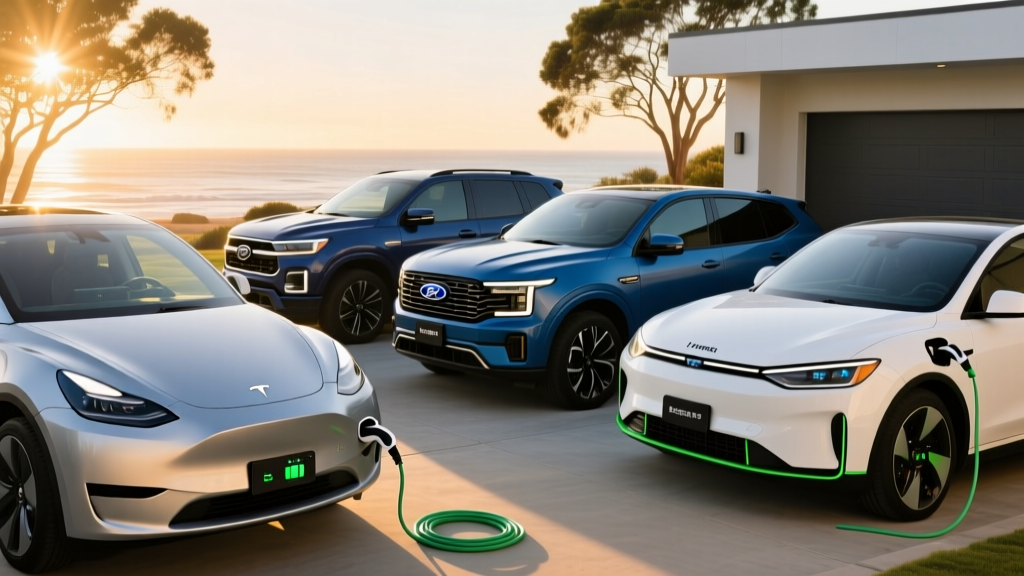
After the maximum $7,500 credit, a Long Range AWD effectively starts around $40,490 — a price point that competes directly with the Hyundai Ioniq 5 and Ford Mustang Mach-E, both of which offer similar range but lack Supercharger network access without adapters.
Warranty Coverage and the Tesla Aftermarket Warranty Question
Tesla's factory warranty is straightforward:
- Basic Vehicle: 4 years / 50,000 miles (bumper-to-bumper)
- Battery & Drive Unit: 8 years / 120,000 miles (Long Range/Performance), with a minimum 70% capacity retention guarantee
The basic warranty is shorter than many competitors (Hyundai offers 5yr/60,000mi basic, 10yr/100,000mi powertrain). Once you pass 50,000 miles or 4 years, anything outside the battery and motors — touchscreen, HVAC compressor, window regulators, suspension components, 12V lithium battery — is out of pocket.
Do You Need a Tesla Aftermarket Warranty?
This is where the calculus gets interesting. Third-party extended warranties (technically vehicle service contracts) for Teslas have proliferated, with providers like Endurance, CARCHEX, and Olive offering EV-specific plans. Costs typically range from $2,500 to $5,500 for 3–5 years of additional coverage, depending on deductible ($0–$250) and component scope.
Arguments for an aftermarket warranty:
- Tesla's proprietary parts and limited service-center network mean repairs are expensive and can take weeks for parts. A single HVAC compressor replacement can exceed $2,000; a touchscreen replacement can approach $2,500.
- The 12V lithium auxiliary battery, while improved in recent model years, is not covered beyond the basic 4yr/50k warranty and can cost $500–$800 to replace.
- Suspension components (control arms, bushings) on heavier EVs wear faster than on ICE vehicles due to the extra mass (~4,400 lbs for the Model Y).
Arguments against:
- The most expensive components — battery pack and drive motors — are already covered for 8 years / 120,000 miles.
- Many third-party warranty providers have exclusions for "software-related" issues, which can be a gray area with Tesla's heavily software-dependent architecture.
- Some providers require Tesla-certified service centers for claims, and Tesla's mobile service and limited walk-in availability can complicate the claims process.
- If you plan to sell or trade the Model Y before 80,000 miles, you may never recoup the warranty cost.
Bottom line: A Tesla aftermarket warranty is most worth considering if you plan to keep the vehicle past 70,000 miles, live far from a Tesla service center, or want predictable repair budgeting. For owners who trade every 3–4 years, the factory coverage is usually sufficient.
Pros
- 320-mile EPA range; efficient at 28 kWh/100 mi
- Supercharger network access (17,000+ stalls in North America)
- 250 kW DC fast charging, 10–80% in ~25 min
- Class-leading cargo space (72.1 cu ft)
- OTA updates continuously improve the vehicle
- $7,500 federal tax credit eligible (with caveats)
- 8-year battery/drive unit warranty
Cons
- Basic warranty only 4yr/50,000 mi — shorter than rivals
- No Apple CarPlay or Android Auto
- All controls via touchscreen — no physical buttons for climate/media
- Ride quality improved but still firm over sharp impacts
- FSD (Supervised) remains Level 2 despite the name
- Repair times can be long due to parts availability
- Insurance premiums 15–25% above segment average
Who Should Buy the 2026 Model Y?
Choose the Model Y if: You want maximum Supercharger access, need a practical family EV with strong cargo capacity, plan road trips regularly, and value OTA feature updates.
Look at competitors if: You want a longer basic warranty (Hyundai Ioniq 5: 5yr/60k), prefer physical controls (Ford Mach-E), need 800V ultra-fast charging (Ioniq 5/Porsche Macan Electric), or want a more premium interior (BMW iX, Genesis GV70 Electrified).
The Model Y is the default answer for a first-time EV buyer who wants a do-everything crossover and values charging infrastructure above all else. For two-car households where one vehicle handles road trips (or where a gas car is the backup), competitors with longer warranties or more distinctive interiors may offer better value.
Frequently Asked Questions
What is the real-world range of the 2026 Tesla Model Y?
The Long Range AWD is EPA-rated at 320 miles. In real-world highway driving at 70 mph, expect 270–290 miles. In freezing weather with cabin heat, plan for 230–250 miles. The Performance trim drops to 295 EPA / ~250 highway / ~215 cold.
How fast does the Model Y charge at home and on the road?
On a 240V Level 2 Wall Connector (11.5 kW), it adds ~44 miles per hour — a full overnight session covers most daily needs. On a V3/V4 Supercharger (250 kW peak), 10–80% takes roughly 25 minutes with a preconditioned battery.
How much does the Model Y cost after the federal tax credit?
The Long Range AWD starts at $47,990 MSRP. With the maximum $7,500 §30D credit (subject to income, MSRP, and battery-sourcing requirements), the effective price drops to ~$40,490. Verify your specific eligibility with a tax professional and the IRS guidelines.
Does the Model Y qualify for the federal EV tax credit?
Yes, both trims fall under the $80,000 SUV MSRP cap, and Tesla's US-built Model Y has generally met critical-mineral and battery-component sourcing requirements. However, buyer income limits ($150k/$225k/$300k MAGI) apply, and sourcing rules tighten annually. Check current IRS guidance before purchasing.
Is a Tesla aftermarket warranty worth it?
It depends on ownership duration and risk tolerance. The battery and drive motors are covered for 8yr/120k miles, but the 4yr/50k basic warranty is short. If you plan to keep the vehicle past 70,000 miles and want protection against touchscreen, HVAC, and suspension repairs (which can each exceed $2,000), a $2,500–$5,500 extended service contract can provide peace of mind. Read the exclusion list carefully — software-related failures are often gray-area claims.
Is the Model Y worth buying over the Ioniq 5 or Mach-E?
The Model Y wins on charging infrastructure (Supercharger access), cargo space (72.1 cu ft vs ~55–60 cu ft), and software ecosystem. The Ioniq 5 wins on 800V charging speed (10–80% in ~18 min on a 350 kW charger) and interior design. The Mach-E wins on driving dynamics and physical controls. All three qualify for the federal credit. Your priority — infrastructure, charge speed, or driving feel — should determine the pick.
Sources: fueleconomy.gov, IRS §30D Clean Vehicle Credit, Tesla Warranty Guide, IIHS.