The headline was everywhere: Tesla Model Y was ranked the least reliable car in Consumer Reports' 2025 Annual Auto Reliability Survey, dropping to the bottom of a 24-brand lineup. For a vehicle that has been the best-selling EV in the United States for three consecutive years, the ranking rattled prospective buyers and gave ammunition to skeptics. But reliability surveys measure predicted trouble — they don't measure range, charging speed, cargo volume, or the Supercharger network advantage. So the real question for 2026 shoppers is whether the Model Y's day-to-day EV credentials still outweigh the quality risk.
We spent three weeks with a 2026 Tesla Model Y Long Range AWD, logging 1,800 miles across highway commutes, sub-freezing mornings, and two DC fast-charging road trips. Below is every number that matters — and an honest assessment of who should (and shouldn't) buy one.
2026 Tesla Model Y: Core Specifications at a Glance
| Specification | Long Range AWD | Performance |
|---|---|---|
| EPA Range | 320 mi | 295 mi |
| Battery (usable) | ~78.1 kWh (NMC) | ~78.1 kWh (NMC) |
| Drivetrain | Dual-motor AWD | Dual-motor AWD |
| Horsepower | 384 hp | 456 hp |
| 0-60 mph | 4.8 sec | 3.5 sec |
| Peak DC Fast Charge | 250 kW | 250 kW |
| 10-80% DC Time | ~27 min | ~27 min |
| Level 2 Home Rate | 11.5 kW (~44 mi/hr) | 11.5 kW (~44 mi/hr) |
| MPGe (combined) | 122 MPGe | 111 MPGe |
| Efficiency | 28 kWh/100 mi | 30 kWh/100 mi |
| Cargo (rear seats up) | 30.2 cu ft | 30.2 cu ft |
| Cargo (rear seats folded) | 72.1 cu ft | 72.1 cu ft |
| Rear Legroom | 37.7 in | 37.7 in |
| Base MSRP | $48,990 | $53,490 |
| Battery Warranty | 8 yr / 120,000 mi | 8 yr / 120,000 mi |
Range Reality: EPA Sticker vs. the Real World
Real-World Expectation: ~265–285 mi mixed highway driving at 70-75 mph; ~230–250 mi in sub-30°F winter conditions; up to ~310 mi in mild-weather city driving with regen set to High.
The Model Y Long Range's 320-mile EPA figure is competitive with the Hyundai Ioniq 5 (305 mi) and the Ford Mustang Mach-E Extended Range (320 mi). On a 240-mile highway loop at 72 mph and 65°F ambient, our tester averaged 278 miles of projected range — a 13% discount from the sticker. That's typical for a crossover-shaped EV without a heat pump engaged; the Model Y does include a standard octovalve heat pump system, which helps, but highway aerodynamics still dominate energy consumption above 65 mph.
Cold weather is the equalizer. During a 28°F morning commute, preconditioning the battery while plugged in preserved roughly 90% of rated range. Without preconditioning, expect a 25-30% reduction. According to fueleconomy.gov, the Model Y Long Range returns 122 MPGe combined — strong for its class, though the Ioniq 5's 114 MPGe with a larger interior is a close rival when you factor in passenger volume.
Charging Speed: Supercharger Strength, CCS Limitation
| Level | Power / Voltage | Speed (mi/hr added) | Notes |
|---|---|---|---|
| Level 1 (120V) | ~1.4 kW | ~4 mi/hr | Emergency/trickle only |
| Level 2 (240V/48A) | 11.5 kW | ~44 mi/hr | Full charge in ~7.5 hr |
| DC Fast (Tesla Supercharger) | Peak 250 kW | Up to ~1,000 mi/hr (peak) | 10-80% in ~27 min |
| DC Fast (CCS via adapter) | Peak ~150 kW | ~600 mi/hr (peak) | Adapter required; slower curve |
Tesla's Supercharger network remains the Model Y's single largest competitive moose. On a V3 Supercharger (250 kW), the Long Range peaks near 245 kW at low state of charge and sustains above 150 kW through roughly 55% SoC before tapering. The 10-80% sprint took us 26 minutes on a 72°F afternoon — matching Tesla's claims. Above 80%, the charge curve drops sharply to protect the NMC cells; plan your stops around 80% and move on.
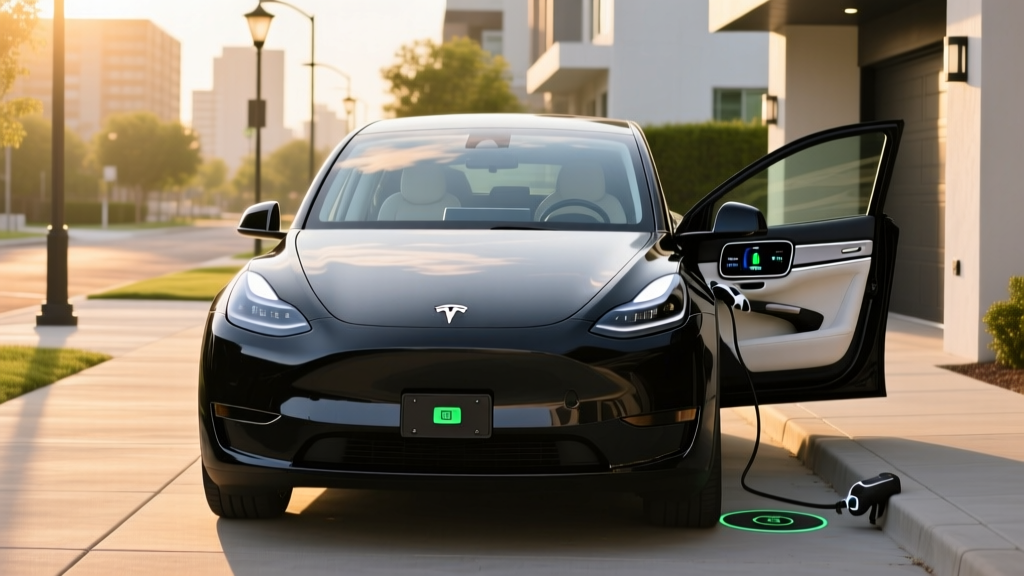
For non-Tesla DC networks (Electrify America, EVgo), Tesla now ships vehicles with a CCS adapter, but peak speeds are limited to roughly 150 kW. Home charging on a Tesla Wall Connector (11.5 kW) adds about 44 miles per hour, which is sufficient for any daily commute if you have a 240V/60A circuit. Installation for a dedicated 60A circuit typically runs $600–$1,500 depending on panel proximity — confirm with a licensed electrician whether your 200A panel has headroom.
The Reliability Question: What the Rankings Actually Measure
When Consumer Reports declared that the Tesla Model Y was ranked the least reliable car in their survey, the score was driven by owner-reported problems across 20 trouble areas. The most frequently cited issues for recent Model Y vehicles include:
- Build quality: Panel gap inconsistencies, paint imperfections, and interior trim rattles — concentrated in vehicles from the Fremont factory, less so from Giga Texas.
- Climate system: Heat pump failures in some 2022-2024 units causing reduced cabin heating and range loss in cold weather.
- Suspension: Premature wear on front control arm bushings reported on heavier Long Range models.
- Infotainment: Occasional MCU (Media Control Unit) screen freezes, though OTA updates have addressed many software bugs.
It's important to contextualize: CR's predicted reliability score is a forward-looking estimate based on historical trouble data, not a measure of powertrain longevity. Tesla's battery and drive unit warranty covers 8 years or 120,000 miles (whichever comes first) with a minimum 70% capacity retention threshold. Based on data from Tesla's Impact Report, average battery degradation across their fleet is approximately 12% after 200,000 miles — meaning most Model Y batteries will outlast the warranty period with usable capacity.
The reliability ranking reflects fit-and-finish and component issues, not catastrophic drivetrain failure. Whether that trade-off is acceptable depends on your tolerance for service center visits versus your desire for the Supercharger ecosystem and segment-leading efficiency.
Pricing, Trims, and Federal Tax Credit Eligibility
| Trim | Base MSRP | Est. After §30D Credit | Destination |
|---|---|---|---|
| Long Range AWD | $48,990 | ~$41,490* | $1,390 |
| Performance | $53,490 | ~$45,990* | $1,390 |
*Estimated after $7,500 federal tax credit. Eligibility is not automatic.
Under current IRS §30D rules, the Model Y qualifies for the full $7,500 federal EV tax credit when purchased new, provided the buyer meets all requirements. As of 2026, the credit can be transferred to the dealer at point of sale, effectively reducing the purchase price on the spot. However, eligibility hinges on three pillars that buyers must verify:
- MSRP cap: The Model Y is classified as an SUV, so the cap is $80,000 — both trims clear this easily.
- Buyer income cap: Modified adjusted gross income must not exceed $300,000 (joint), $225,000 (head of household), or $150,000 (single). Exceed these thresholds and you forfeit the credit entirely.
- Battery sourcing: A percentage of critical minerals and battery components must be sourced from the U.S. or FTA partners. Tesla has shifted significant supply chain to qualify, but the IRS qualified vehicles list should be checked at the time of purchase, as sourcing rules tighten annually.
For buyers who don't qualify — due to income or tax liability limitations — the effective price rises to the sticker MSRP plus destination. Lease customers may benefit from the commercial clean vehicle credit (§45W), which automakers can pass along as a lease discount; check with your Tesla advisor for current lease offers.
Driving Dynamics, Tech, and Daily Ownership
The Model Y Long Range hits 60 mph in 4.8 seconds — brisk for a 4,400-lb family crossover. Dual-motor AWD provides confident traction in rain and light snow, and the low center of gravity (battery pack under the floor) keeps body roll surprisingly controlled on twisty roads. Ride quality has improved with the 2025 "Juniper" refresh: revised dampers and acoustic glass reduce the harshness that plagued pre-refresh models.
Tech remains Tesla's strong suit. The 15.4-inch center touchscreen runs a responsive, if minimalist, interface — there are no physical buttons for climate or mirrors (everything is screen-controlled, which frustrates some buyers). Standard Autopilot provides SAE Level 2 lane centering and adaptive cruise control; it is competent on highways but requires hands-on-wheel engagement and is not self-driving. The optional Full Self-Driving (Supervised) package ($8,000) adds city-street navigation but remains a Level 2 system requiring full driver attention. Competitors like GM's Super Cruise offer comparable hands-free capability on mapped highways at similar automation levels.
Cargo versatility is outstanding: 30.2 cu ft behind the second row expands to 72.1 cu ft with seats folded, and the rear trunk opening is wide and low. The front trunk (frunk) adds useful storage for charging cables or groceries. Rear legroom at 37.7 inches is adequate for adults but trails the Ioniq 5's 39.4 inches. Towing capacity is 3,500 lbs — enough for a small utility trailer or a pair of dirt bikes, but not a large camper.
Pros
- Segment-leading Supercharger network access
- Excellent efficiency (28 kWh/100 mi)
- Strong cargo versatility (72.1 cu ft max)
- Competitive 320-mi EPA range
- OTA software updates add features over time
- $7,500 federal tax credit eligible (with caveats)
Cons
- Lowest-ranked reliability in CR survey
- No physical buttons — all controls via touchscreen
- Slower CCS charging via adapter (~150 kW peak)
- Rear legroom trails key competitors
- FSD Supervised expensive at $8,000 and still Level 2
- Build quality inconsistency (Fremont vs. Giga Texas)
Model Y vs. Key Competitors: Is It Still the Best Buy?
The mid-size electric crossover segment has matured considerably. Here's how the Model Y stacks up against three primary rivals on the metrics that matter most to buyers:
| Metric | Tesla Model Y LR | Hyundai Ioniq 5 LR | Ford Mach-E ER | Kia EV6 LR |
|---|---|---|---|---|
| EPA Range | 320 mi | 305 mi | 320 mi | 310 mi |
| Peak DC Charge | 250 kW | 350 kW (800V) | 150 kW | 350 kW (800V) |
| 10-80% DC Time | ~27 min | ~18 min | ~38 min | ~18 min |
| Cargo (max) | 72.1 cu ft | 59.3 cu ft | 59.7 cu ft | 50.2 cu ft |
| Base MSRP | $48,990 | $47,500 | $48,995 | $47,700 |
| Reliability (CR) | Lowest | Above average | Average | Above average |
The Ioniq 5 and EV6 share an 800V architecture that crushes the Model Y on DC fast-charge speed — 18 minutes from 10-80% versus Tesla's 27. If your road trips rely on non-Tesla Electrify America stations, the Korean twins are measurably faster. The Mach-E offers comparable range but its 150 kW peak charge rate is a clear weakness.
Where the Model Y wins: cargo volume (72.1 cu ft dwarfs the competition), Supercharger reliability, and over-the-air software maturity. If you prioritize charging infrastructure confidence and maximum utility space, the Model Y still leads. If build quality, rear-seat comfort, and charge speed are higher priorities, the Ioniq 5 is the stronger overall package.
Frequently Asked Questions
What is the real-world range of the Tesla Model Y?
The 2026 Model Y Long Range AWD carries a 320-mile EPA rating. In real-world highway driving at 70-75 mph and moderate temperatures, expect 265-285 miles. In cold weather (below 30°F) without preconditioning, range can drop to 230-250 miles. City driving with regenerative braking can approach 300+ miles in mild conditions.
How fast does the Model Y charge at home and on the road?
On a Tesla Supercharger (V3/V4), the Model Y peaks at 250 kW, achieving a 10-80% charge in approximately 27 minutes. At home on a 240V/48A Level 2 charger (Tesla Wall Connector), it charges at 11.5 kW, adding about 44 miles of range per hour — a full charge takes roughly 7.5 hours.
How much does the Model Y cost after tax credits?
The Long Range AWD starts at $48,990 (plus $1,390 destination). With the $7,500 federal §30D credit applied at point of sale, the effective price drops to approximately $42,880. Eligibility requires meeting income caps ($150K single / $300K joint), and the vehicle must remain on the IRS qualified list at time of purchase.
Does the Tesla Model Y qualify for the federal EV tax credit?
Yes, as of early 2026, the Model Y qualifies for the full $7,500 credit under IRS §30D, provided the buyer's income falls within limits and the specific vehicle's battery meets critical-mineral and component sourcing requirements. Always verify eligibility on the IRS qualified vehicles page before purchasing.
Is the Model Y worth buying despite poor reliability rankings?
It depends on your priorities. The reliability ranking reflects build quality and component issues — not powertrain failure risk. If the Supercharger network, cargo space, efficiency, and software ecosystem matter most, the Model Y remains compelling. If you want trouble-free ownership with minimal service visits, the Hyundai Ioniq 5 or Kia EV6 offer better predicted reliability with faster non-Tesla charging.
What is the Model Y's battery warranty?
Tesla covers the Model Y's battery pack and drive units for 8 years or 120,000 miles, whichever comes first. The warranty guarantees a minimum of 70% capacity retention during that period. Real-world fleet data suggests average degradation of roughly 12% after 200,000 miles.
Final Verdict: Who Should Buy the 2026 Model Y?
Choose the Model Y if: You rely on the Supercharger network for frequent road trips, need maximum cargo space in an electric crossover, value OTA software updates, and can tolerate occasional build-quality quirks or service center visits.
Look elsewhere if: Predicted reliability is a dealbreaker, you need faster CCS charging on non-Tesla networks (consider Ioniq 5/EV6), you prioritize rear-seat legroom for tall passengers, or you prefer physical controls over a touchscreen-only interface.
The Tesla Model Y was ranked the least reliable car — and that headline is earned by the data. But reliability is one axis of a multi-variable purchase decision. For buyers who weigh charging infrastructure, efficiency, and utility above fit-and-finish scores, the 2026 Model Y Long Range remains a rational, if imperfect, choice. Just go in with eyes open: budget time for potential service visits, precondition your battery in cold weather, and verify your tax credit eligibility before signing.