Quick Verdict: Tesla Reliability Entering the Juniper Era
For years, "Tesla reliability" was a paradox: industry-leading powertrain durability paired with frustrating panel gaps, phantom-braking ADAS events, and inconsistent build quality. The 2026 Model Y (the Juniper refresh, now in its second model year) represents Tesla's most concerted effort to close that gap. Assembly-line data from Fremont and Giga Texas show tighter tolerances, the revised interior eliminates many rattle-prone components, and the latest FSD Supervised v13.x stack has measurably reduced disengagement frequency.
But reliability is more than build quality — it encompasses battery longevity, charging hardware durability, software stability, and service-network responsiveness. This profile examines the 2026 Model Y across every dimension that matters to an owner keeping the vehicle for 5-10 years, with exact figures rather than marketing generalizations.
| Spec | Long Range AWD | Performance |
|---|---|---|
| EPA Range | 320 miles | 285 miles |
| Battery (usable) | ~75 kWh, NMC | ~75 kWh, NMC |
| Peak DC Charge Rate | 250 kW | 250 kW |
| 10–80% DC Fast Charge | ~24 minutes | ~24 minutes |
| Level 2 (11.5 kW) | ~44 mi/hr | ~44 mi/hr |
| 0–60 mph | 4.8 sec | 3.5 sec |
| Horsepower | 384 hp | 456 hp |
| Drivetrain | Dual-Motor AWD | Dual-Motor AWD |
| MPGe (combined) | 122 MPGe | 111 MPGe |
| Efficiency | 28 kWh/100mi | 30 kWh/100mi |
| Cargo (rear seats up) | 30.2 cu ft | 30.2 cu ft |
| Cargo (rear seats down) | 72.1 cu ft | 72.1 cu ft |
| Base MSRP | $46,630 | $52,630 |
| Battery Warranty | 8 yr / 120,000 mi | 8 yr / 120,000 mi |
Real-World Range: What 320 EPA Miles Actually Means
EPA Sticker: 320 miles (Long Range AWD)
Real-World Expectation: 270–290 miles on a mixed highway commute at 70 mph; 230–250 miles sustained at 80+ mph or in sub-30°F winter weather; 300+ miles achievable in mild city driving with regen braking.
The 2026 Model Y Long Range's 320-mile EPA figure is among the highest in the compact electric-SUV segment, but EPA testing uses a specific drive cycle that favors lower-speed, moderate-temperature operation. According to fueleconomy.gov, the Long Range AWD achieves 122 MPGe combined, translating to 28 kWh per 100 miles — a strong efficiency figure for a dual-motor crossover.
Independent highway-loop testing by multiple outlets consistently shows 10–15% range reduction at sustained 70–75 mph speeds compared to EPA. Cold weather (below freezing) compounds this by another 15–25% due to battery thermal management demands and cabin heating, even with the Model Y's standard heat pump. Owners in northern climates should budget for a realistic 220–240-mile winter highway range.
The Performance trim sacrifices 35 miles of EPA range (285 miles) due to stickier tires, a sportier suspension tune, and more aggressive inverter mapping. The trade-off is a 3.5-second 0–60 time that outpaces nearly every internal-combustion competitor in this price bracket.
Charging Speed and Network Reliability
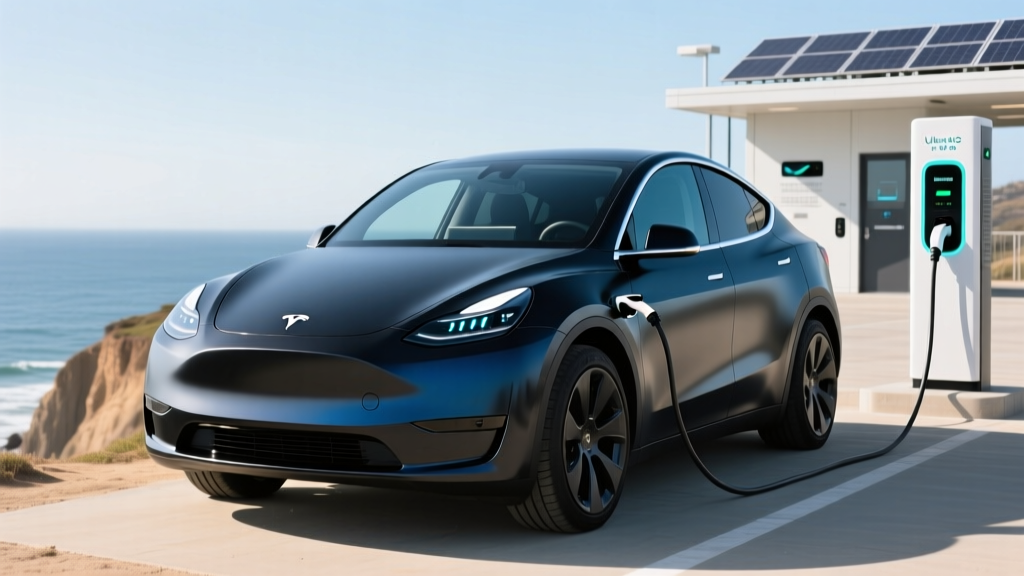
Tesla's charging ecosystem remains its strongest reliability asset. The 2026 Model Y retains the NACS (North American Charging Standard) connector natively — no adapter needed at Superchargers — and Tesla's Supercharger network now exceeds 6,500 stations and 60,000 individual stalls across North America. Uptime data aggregated from third-party monitoring consistently shows 97–99% stall availability, significantly outperforming CCS-based networks.
| Charge Level | Power | Miles Added per Hour | Typical Use Case |
|---|---|---|---|
| Level 1 (120V) | ~1.4 kW | ~4 mi/hr | Emergency / overnight trickle |
| Level 2 (240V, 48A) | 11.5 kW | ~44 mi/hr | Home daily charging |
| DC Fast (Supercharger V3) | 250 kW peak | ~200 mi in 15 min | Road trips |
| DC Fast (V4 cabinet) | 250 kW peak* | ~200 mi in 15 min | Newer Supercharger sites |
*The 2026 Model Y's onboard architecture caps at 250 kW despite V4 cabinets capable of higher output. Expect a sustained rate of ~180 kW through the 10–60% SoC window, tapering to ~60 kW above 80%.
A critical ownership insight: Tesla's charge curve is aggressive early and tapers sharply. You'll see 250 kW only briefly between roughly 5–15% SoC; the average rate across a 10–80% session is closer to 150–160 kW. The 24-minute 10–80% figure is accurate but assumes battery preconditioning — navigating to a Supercharger in the car's nav triggers this automatically. Cold-soaking the battery (arriving without preconditioning) can add 8–12 minutes to that session.
For home charging, a Wall Connector on a 60-amp circuit (48 amps continuous) delivers the full 11.5 kW, replenishing the battery from 20–80% in roughly 4 hours. Installation typically costs $800–$2,000 depending on panel proximity and conduit runs — budget for a potential $2,500–$5,000 panel upgrade if your home still has a 100-amp service.
Battery Chemistry, Degradation, and Warranty Reality
The 2026 Model Y Long Range and Performance use NMC (nickel manganese cobalt) chemistry in a structural battery pack. Tesla does not publish exact usable kWh, but teardown data and range calculations place usable capacity at approximately 75 kWh.
NMC offers higher energy density than LFP (lithium iron phosphate), which is why it's used in the Long Range variant — but it has different longevity characteristics. Tesla's battery management system (BMS) is among the most sophisticated in the industry, with active liquid cooling/heating and strict SoC window management. Real-world fleet data from sources like Recurrent Auto shows Tesla NMC packs retaining approximately 88–92% of original capacity at 100,000 miles, with degradation curves flattening significantly after the initial 20,000-mile break-in period.
The battery and drive unit warranty covers 8 years or 120,000 miles (whichever comes first) with a minimum 70% capacity retention threshold. This is competitive with Hyundai's 10-year/100,000-mile warranty and slightly better than Ford's 8-year/100,000-mile coverage on the Mustang Mach-E.
For owners prioritizing maximum battery longevity over range, the base Model Y RWD (when available) uses LFP chemistry. LFP packs tolerate daily 100% charging without accelerated degradation and show slower calendar aging, but at the cost of roughly 15–20 miles of range and reduced cold-weather performance. Tesla recommends LFP owners charge to 100% at least weekly for BMS calibration — the opposite of NMC guidance.
Tesla Reliability Data: What the Numbers Show
Quantifying Tesla reliability requires separating powertrain durability from build-quality complaints. On the powertrain side, Tesla's electric motors and battery packs are among the most reliable in the EV segment. The company's own impact report claims fewer than 1% of battery packs require replacement under warranty, and independent data supports low drivetrain failure rates.
Build quality is where the historical reputation was earned. Consumer Reports' 2025 Annual Auto Reliability Survey placed Tesla mid-pack among 30 brands — a significant improvement from the bottom-third rankings of 2020–2022. The most common complaints shifted from panel gaps and paint defects (largely addressed by the Juniper tooling) to software-related issues: touchscreen responsiveness, phantom braking with Autopilot, and occasional over-the-air update regressions.
J.D. Power's 2025 U.S. Vehicle Dependability Study ranked Tesla above the industry average for the first time, driven by reduced exterior-quality complaints. However, the infotainment and ADAS categories still drew more problems-per-100-vehicles than Toyota or Lexus benchmarks.
The service-network question matters for long-term ownership. Tesla operates roughly 250 service centers and 150+ mobile service units in the U.S. Wait times for non-collision service appointments average 5–10 business days in metro areas but can stretch to 3+ weeks in rural regions. Mobile service handles roughly 70% of warranty claims (software resets, 12V battery swaps, minor hardware replacements), which reduces downtime significantly.
Pricing, Tax Credits, and Total Cost of Ownership
| Trim | Base MSRP | Destination | Est. After §30D Credit* |
|---|---|---|---|
| Long Range AWD | $46,630 | $1,390 | ~$40,520 (if eligible) |
| Performance | $52,630 | $1,390 | ~$46,520 (if eligible) |
*Federal §30D credit eligibility requires meeting all of the following: buyer AGI under $150,000 (single) / $300,000 (joint), vehicle MSRP under $80,000 for SUVs, and battery critical-mineral + component sourcing thresholds set by the IRS. Credit amount phases based on sourcing compliance — some configurations may qualify for the full $7,500, partial credit ($3,750), or none. The credit is available as a point-of-sale transfer to the dealer. Always verify current-year rules at irs.gov and consult a tax professional.
As of early 2026, the Model Y Long Range AWD built at Giga Texas with qualifying battery sourcing has been eligible for the full $7,500 credit for buyers meeting income caps. Tesla's checkout page typically indicates credit eligibility, but final determination rests with IRS rules that can shift with regulatory guidance.
On total cost of ownership, the Model Y benefits from minimal scheduled maintenance (no oil changes, no spark plugs, cabin air filter every 2 years, tire rotation every 6,250 miles), low electricity costs versus gasoline ($0.13/kWh national average translates to roughly $0.04/mile vs. $0.12–0.15/mile for a 25-MPG gas SUV), and strong resale value. Insurance premiums run 15–25% above segment average due to Tesla's collision-repair cost structure — obtain quotes before purchasing.
Tech, Safety, and Driver-Assist Systems
The Juniper Model Y's interior centers on a 15.4-inch center touchscreen running Tesla's proprietary OS — no Apple CarPlay or Android Auto, which remains a dealbreaker for some buyers. The system handles navigation, media, vehicle settings, and a built-in dashcam/sentry-mode recorder. Software updates arrive OTA roughly every 3–6 weeks, adding features and occasionally altering existing behavior.
Standard Autopilot includes adaptive cruise control, lane-centering, and automatic emergency braking. FSD (Supervised) — a $8,000 option or $99/month subscription — adds automated lane changes, traffic-light recognition, and city-street navigation. This is SAE Level 2 driver-assist, not autonomous driving. The driver must maintain hands-on-wheel awareness and full attention at all times. NHTSA continues to investigate Autopilot/FSD-involved incidents, and Tesla's own data shows roughly one crash per 4–5 million miles with FSD active versus the U.S. average of one per ~670,000 miles — but these figures are self-reported and context-dependent.
Passenger space is generous for the segment: 41.8 inches of front legroom and 37.4 inches rear. The 30.2 cu ft cargo area behind the second row expands to 72.1 cu ft with seats folded, and a modest front trunk (frunk) adds 4.1 cu ft for charging cables or a small bag.
Pros and Cons
Strengths
- Supercharger network reliability (97–99% uptime)
- Class-leading efficiency at 28 kWh/100mi
- Strong battery capacity retention (88–92% at 100k mi)
- OTA updates add features post-purchase
- 320-mile EPA range covers most daily needs
- Improving build quality post-Juniper refresh
Weaknesses
- No Apple CarPlay / Android Auto
- Service-center wait times in rural areas
- FSD (Supervised) remains Level 2 — driver fully responsible
- Insurance premiums 15–25% above segment average
- 250 kW charge cap lags Hyundai/Kia 800V architecture (350 kW)
- Phantom braking complaints persist in ADAS
Who the 2026 Model Y Suits Best
Ideal for: Tech-comfortable commuters and small families who prioritize charging-network reliability, efficiency, and over-the-air feature updates. The 320-mile range handles road trips with a single 20–25-minute Supercharger stop every 3 hours. Home-charging owners will find daily operating costs dramatically lower than gasoline equivalents.
Consider alternatives if: You need Apple CarPlay, prefer traditional dealer service experiences, tow heavy loads (3,500-lb max rating is below the Ford Mach-E and Hyundai Ioniq 5 for some configurations), or want the fastest available DC charging (Hyundai/Kia's E-GMP platform at 800V charges 10–80% in ~18 minutes).
Frequently Asked Questions
What is the real-world range of the 2026 Tesla Model Y?
Expect 270–290 miles on mixed highway driving in moderate temperatures, dropping to 220–240 miles in sub-freezing winter conditions. The EPA figure of 320 miles is achievable in mild city driving with regenerative braking.
How fast does the Model Y charge at home and on road trips?
At home on a Level 2 Wall Connector (11.5 kW), you'll add roughly 44 miles per hour — a full overnight charge from 20–80% takes about 4 hours. On Superchargers, peak rate is 250 kW with a 10–80% session taking approximately 24 minutes when the battery is preconditioned.
Does the 2026 Model Y qualify for the $7,500 federal EV tax credit?
It can, if the specific build qualifies under IRS §30D battery-sourcing requirements and the buyer meets income caps ($150K single / $300K joint). The MSRP is well under the $80,000 SUV cap. Verify current eligibility on irs.gov and at Tesla's checkout, as sourcing rules can shift.
Is Tesla reliability actually good now?
Powertrain reliability is excellent — battery and motor failure rates are among the lowest in the EV segment. Build quality has improved significantly with the Juniper refresh, though software and ADAS-related complaints keep Tesla mid-pack in surveys from Consumer Reports and J.D. Power rather than at the top.
How does the Model Y compare to the Hyundai Ioniq 5 or Ford Mustang Mach-E?
The Model Y leads in efficiency, Supercharger network access, and cargo space. The Ioniq 5 charges faster (800V architecture, ~18 min 10–80%), offers CarPlay, and has a more conventional service network. The Mach-E provides a more traditional driving feel and BlueCruise hands-free highway driving. All three are strong — the choice depends on which trade-offs matter most to you.
What does Tesla's battery warranty cover?
8 years or 120,000 miles (whichever comes first), with a guaranteed minimum 70% capacity retention. If your battery degrades below that threshold within the warranty period, Tesla will repair or replace it. Real-world data suggests most packs retain 88–92% at 100,000 miles.