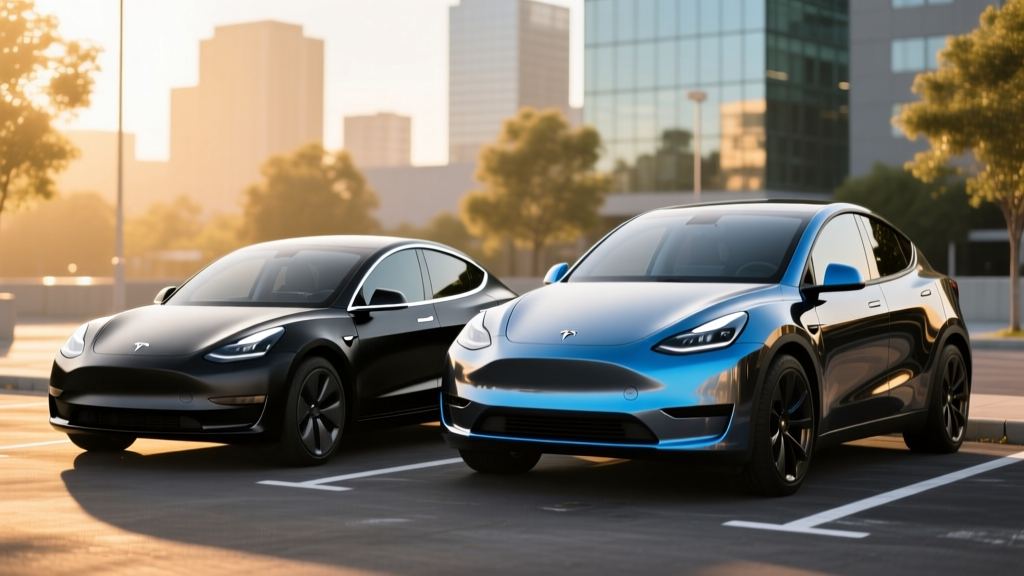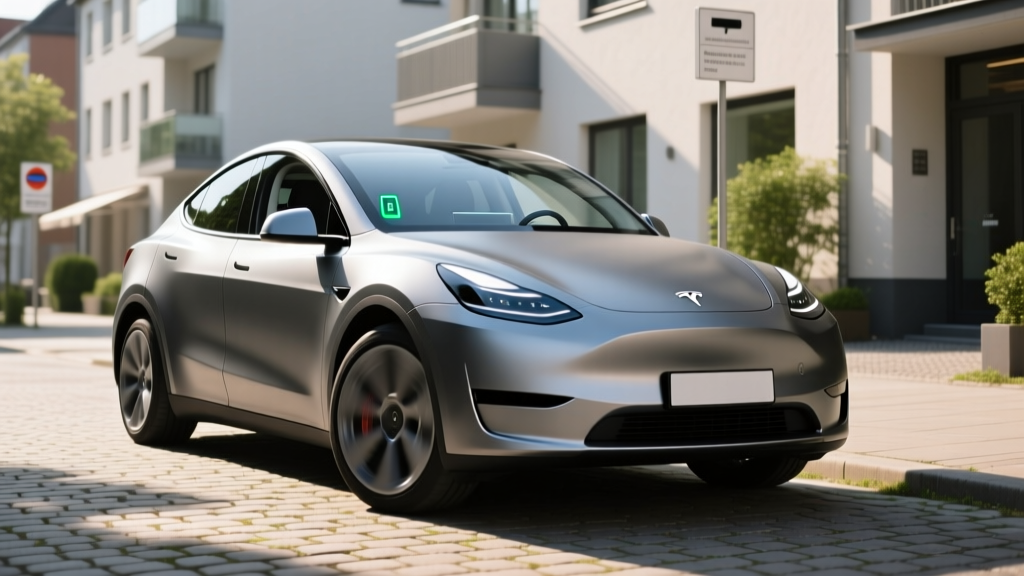
The Tesla Model Y is built in Grünheide, Germany, at Giga Berlin — a fact that shapes how European buyers and reliability auditors view the crossover. But when searchers look for model y reliability ranking germany, they're often trying to answer a more practical question: is this the right EV to buy, whether you're in Bavaria or Boston?
This review bridges that gap. We examine the German reliability data — specifically TÜV and ADAC findings — then ground the analysis in the US-spec 2026 Model Y with the exact numbers American buyers need: EPA range, charging speeds, tax credit eligibility, and real-world ownership costs.
Where the Model Y Ranks in German Reliability Surveys
Germany's most cited vehicle reliability benchmark is the TÜV Report, published annually by Germany's technical inspection associations. The TÜV evaluates vehicles during mandatory periodic inspections (Hauptuntersuchung), tracking defect rates by model and age cohort.
For the Model Y — which began production at Giga Berlin in March 2022 — the TÜV data is still maturing. Most inspected units are 2-3 years old, placing them in the "young used" category. Key findings from recent TÜV cycles and supplementary ADAC (German automobile club) breakdown statistics:
- Suspension and chassis components show lower defect rates than the segment average for compact SUVs, partly because EVs eliminate engine-mount and exhaust-system wear.
- Lighting and electrical systems perform well, consistent with Tesla's LED-heavy, minimal-component exterior design.
- Brake systems show very low wear — regenerative braking handles most deceleration, preserving friction brake pads well past 60,000 miles in many owner reports.
- Body and trim quality remains the most common complaint. Panel-gap inconsistency, paint defects, and interior trim rattles are documented across European owner forums and align with J.D. Power's US Initial Quality Study findings, where Tesla consistently ranks below average in build quality.
Importantly, the Model Y does not appear in the TÜV's "top defect" lists for its age class, which is a positive signal. But it also doesn't top the reliability rankings the way a Toyota RAV4 Hybrid might. It occupies a middle tier: mechanically sound, cosmetically imperfect.
2026 Model Y: US Specs at a Glance
German reliability context matters, but US buyers need US numbers. Here's what the 2026 Model Y lineup delivers, based on current EPA and manufacturer data.
| Spec | Long Range AWD | Performance | Rear-Wheel Drive |
|---|---|---|---|
| EPA Range | 310 mi | 285 mi | 260 mi |
| Battery (usable) | ~75 kWh (NMC) | ~75 kWh (NMC) | ~60 kWh (LFP) |
| Drivetrain | Dual-Motor AWD | Dual-Motor AWD | Single-Motor RWD |
| Horsepower | 384 hp | 510 hp | 295 hp |
| 0-60 mph | 4.8 sec | 3.5 sec | 6.6 sec |
| MPGe (combined) | 117 MPGe | 111 MPGe | 123 MPGe |
| Efficiency | 28 kWh/100 mi | 30 kWh/100 mi | 27 kWh/100 mi |
| Base MSRP | $47,990 | $52,490 | $44,990 |
| Cargo (rear seats up) | 30.2 cu ft | 30.2 cu ft | 30.2 cu ft |
| Cargo (seats folded) | 72.1 cu ft | 72.1 cu ft | 72.1 cu ft |
Charging Speed: DC Fast, Level 2, and the Curve
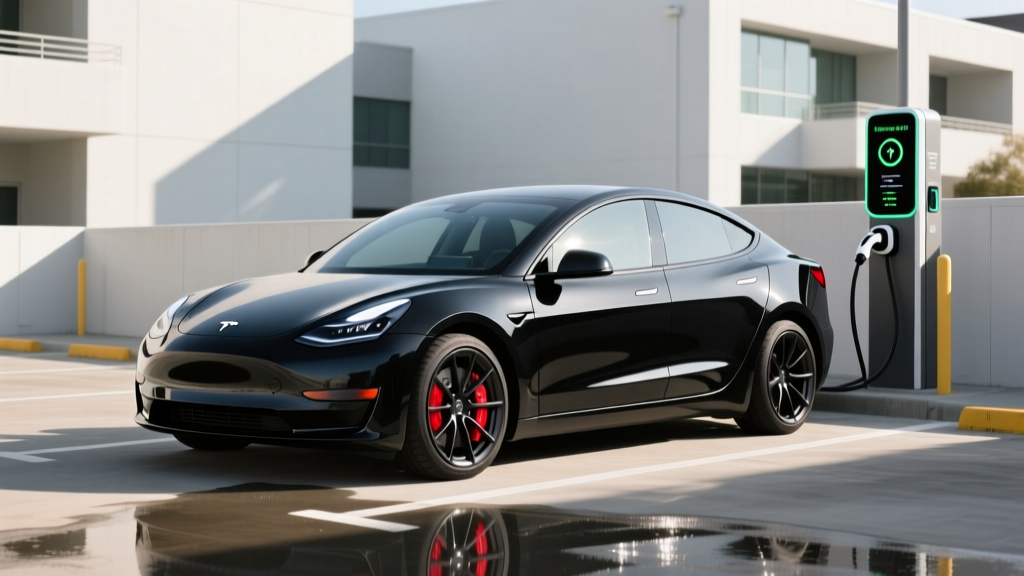
Charging speed is often the make-or-break factor for EV buyers, and the Model Y remains one of the fastest-charging crossovers available. The Long Range and Performance trims support up to 250 kW DC fast charging on Tesla's V3 Supercharger network and compatible CCS stations (via the integrated NACS port, which now supports CCS adapters for non-Tesla networks).
| Charging Level | Power | Speed | Notes |
|---|---|---|---|
| DC Fast (V3 Supercharger) | Peak 250 kW | 10-80% in ~22 min | Sustained rate ~150-170 kW avg; tapers sharply above 80% |
| DC Fast (V4 Supercharger) | Peak 250 kW | 10-80% in ~22 min | Newer stalls; same peak for current Model Y architecture |
| Level 2 (Home, 48A) | 11.5 kW | ~37 mi/hr added | Requires NEMA 14-50 or hardwired Wall Connector; full charge ~7-8 hrs |
| Level 2 (Home, 32A) | 7.7 kW | ~25 mi/hr added | Common for 40A circuits; full charge ~10-11 hrs |
| Level 1 (120V outlet) | ~1.4 kW | ~3-4 mi/hr added | Emergency/trickle only; not practical for daily use |
Charging-curve reality check: The "250 kW" peak is reached only between roughly 10-25% state of charge with a preconditioned battery. The rate steps down progressively — to ~175 kW around 40%, ~100 kW around 60%, and ~50 kW above 80%. The 10-80% time of ~22 minutes reflects this taper. If you regularly charge from 5% to 100% on road trips, add another 25-30 minutes for that final 20%.
For home Level 2 charging, Tesla's Wall Connector ($420) is the most cost-effective dedicated unit and integrates with the Tesla app for scheduling and energy management. A 60-amp circuit with hardwired installation delivers the full 48A/11.5 kW rate. Most US homes with 200A panels can accommodate this without a panel upgrade, but always consult a licensed electrician to verify.
Pricing, Tax Credits, and What You Actually Pay
The 2026 Model Y lineup starts at $44,990 for the RWD and climbs to $52,490 for the Performance trim. But the sticker price isn't the final number — federal tax credits under IRS §30D can reduce the effective cost significantly, provided you meet the eligibility requirements.
| Trim | MSRP | Potential §30D Credit | Effective Price |
|---|---|---|---|
| Rear-Wheel Drive | $44,990 | Up to $7,500 | ~$37,490* |
| Long Range AWD | $47,990 | Up to $7,500 | ~$40,490* |
| Performance | $52,490 | Up to $7,500 | ~$44,990* |
*Effective price assumes full $7,500 credit eligibility. Actual credit depends on battery sourcing, income, and MSRP cap compliance. See checklist below.
- MSRP cap: SUVs/crossovers must be ≤$80,000 — all Model Y trims qualify.
- Buyer income cap: Modified AGI ≤$150,000 (single), ≤$225,000 (head of household), ≤$300,000 (joint).
- Battery sourcing: Critical minerals and battery components must meet escalating domestic/free-trade-partner thresholds. Tesla's US-built Model Y with LFP (RWD) and NMC (Long Range/Performance) batteries has historically qualified for at least partial credit; full $7,500 eligibility shifts as sourcing rules tighten annually. Verify current-year status at IRS.gov.
- Point-of-sale transfer: As of 2024+, eligible buyers can transfer the credit to the dealer at purchase, reducing the out-of-pocket price immediately rather than waiting for a tax return.
- VIN and assembly: Vehicle must undergo final assembly in North America. All US-market Model Y units are assembled at Giga Texas, satisfying this requirement.
Always confirm eligibility with a tax professional and the IRS's official clean vehicle credit page before purchase, as battery-sourcing rules change annually and can shift mid-year.
Performance, Efficiency, and Daily Driving
The Model Y's efficiency is one of its strongest selling points. At 27-30 kWh per 100 miles depending on trim, it converts electricity into distance more effectively than nearly every competing electric crossover. For context, the Hyundai Ioniq 5 AWD consumes roughly 32 kWh/100 mi, and the Ford Mustang Mach-E Extended Range AWD sits around 34 kWh/100 mi. That efficiency gap translates directly into lower charging costs and longer real-world range from a smaller battery.
The Long Range AWD's 4.8-second 0-60 time is brisk without being excessive — it's a family crossover, not a track car. The Performance trim's 3.5 seconds is genuinely fast, rivaling a Porsche Macan GTS, but comes with a ~25-mile range penalty and a stiffer ride.
Ride quality is the Model Y's most common dynamic complaint. The suspension is firm, and road imperfections transmit clearly into the cabin, especially on models equipped with the optional 21-inch wheels. The 19-inch Gemini wheels deliver a noticeably more compliant ride and better range — a trade-off worth considering if comfort matters more than aesthetics.
Tech, Interior, and Driver Assistance
The Model Y's interior is minimalist by design: a single 15-inch center touchscreen handles navigation, media, climate, and vehicle settings. There is no instrument cluster, no head-up display, and physical buttons are limited to steering-wheel scroll wheels and a few capacitive controls. This approach divides opinion — some owners love the clean aesthetic, others find it distracting while driving.
Autopilot and FSD (Supervised): Every Model Y includes basic Autopilot (traffic-aware cruise control and lane centering). Full Self-Driving (Supervised) is an $8,000 option or $99/month subscription that adds automatic lane changes, navigate-on-autopilot for highway exits, and city-street traffic-light and stop-sign recognition.
Infotainment features include native Spotify, Netflix, YouTube (while parked), a web browser, and over-the-air software updates that regularly add functionality. The Tesla app provides remote preconditioning, charge monitoring, Sentry Mode camera access, and Summon (low-speed remote parking).
Notable drawbacks: No Apple CarPlay or Android Auto. No blind-spot monitoring display in the instrument area (blind-spot cameras appear on the center screen when turn signals are activated, which requires looking away from the road). No rear-seat entertainment screens. Ventilated seats, now standard on many competitors, were added to the refreshed Model Y.
Warranty Coverage
| Coverage | Terms |
|---|---|
| Basic Vehicle | 4 years / 50,000 miles |
| Battery & Drive Unit (Long Range/Performance, NMC) | 8 years / 120,000 miles, ≥70% capacity retention |
| Battery & Drive Unit (RWD, LFP) | 8 years / 100,000 miles, ≥70% capacity retention |
Tesla's battery warranty guarantees that the pack will retain at least 70% of its original capacity during the warranty period. If degradation falls below that threshold, Tesla will repair or replace the battery. Real-world data from high-mileage Model Y owners suggests that NMC packs typically retain 90-95% capacity at 50,000 miles and 85-90% at 100,000 miles, well above the warranty floor. LFP packs, used in the RWD trim, tend to degrade more slowly in the early years but may show slightly different long-term curves.
Model Y vs. the Competition
- You want access to Tesla's Supercharger network — still the most reliable and widespread DC fast-charging network in the US, with over 6,000 V3/V4 stalls nationwide.
- Efficiency is a priority: the Model Y's ~28 kWh/100 mi is best-in-class for AWD electric crossovers.
- You value over-the-air updates and a large, active owner community.
- Cargo space is important: 72.1 cu ft with seats folded beats the Ioniq 5 (56.2 cu ft) and Mach-E (59.7 cu ft).
- Ride comfort is paramount — the Hyundai Ioniq 5 and Kia EV6 are more supple on rough pavement.
- You need Apple CarPlay/Android Auto — neither is available in any Tesla.
- Build-quality consistency is a dealbreaker — Hyundai and Kia have higher initial quality scores.
- You want a more traditional interior with physical controls — the BMW iX or Volvo EX30 may feel more intuitive.
- Best-in-class efficiency (27-30 kWh/100 mi)
- 250 kW DC fast charging; 10-80% in ~22 min
- Supercharger network access (native, no adapter needed)
- Class-leading cargo volume (72.1 cu ft)
- Strong over-the-air update cadence
- LFP battery option (RWD) for longevity-focused buyers
- Firm ride, especially on 21-inch wheels
- No Apple CarPlay or Android Auto
- Build quality inconsistency (panel gaps, paint)
- Blind-spot camera display requires looking at center screen
- FSD (Supervised) remains SAE Level 2 despite the name
- Minimalist interior not for everyone
Who Should Buy the Model Y?
The Model Y is best suited for commuters and small families who have access to home Level 2 charging and want a versatile, efficient EV that handles road trips confidently via the Supercharger network. Its 30+ cu ft of rear cargo space handles strollers, groceries, and luggage without compromise, and the optional third-row seat (for small children) makes it a rare EV that can technically seat seven.
It is less ideal for buyers who prioritize ride refinement, need CarPlay integration, or live in areas where Tesla service centers are sparse. Rural owners should verify mobile service availability and nearest Supercharger distance before committing.
Frequently Asked Questions
What is the real-world range of the Tesla Model Y?
The EPA rates the Long Range AWD at 310 miles. In real-world highway driving at 70-75 mph, expect 270-290 miles. In freezing temperatures, that drops to roughly 215-250 miles. The RWD (LFP) model is rated at 260 miles EPA, with real-world highway range around 225-240 miles in moderate conditions.
How fast does the Model Y charge at home and on the road?
On a V3 Supercharger, the Model Y peaks at 250 kW and charges from 10-80% in approximately 22 minutes. At home on a 48A Level 2 Wall Connector, it adds roughly 37 miles of range per hour, fully charging overnight in 7-8 hours.
Does the 2026 Model Y qualify for the $7,500 federal tax credit?
All Model Y trims fall under the $80,000 SUV MSRP cap. Eligibility depends on buyer income (≤$150K single / ≤$300K joint), battery-sourcing compliance, and North American assembly (all US Model Y units are built in Texas). Check current-year sourcing requirements at fueleconomy.gov and IRS.gov before purchasing, as rules tighten annually.
How does the Model Y's reliability in Germany compare to the US?
German TÜV inspections focus on safety-critical mechanical and electrical systems, where the Model Y performs adequately — low brake wear, solid lighting and chassis scores. Cosmetic build-quality issues (panel gaps, paint) are the primary complaint in both markets. The Giga Berlin-built European Model Y has shown incremental build-quality improvements over early Fremont-built units.
Is the Model Y worth buying over the Hyundai Ioniq 5 or Ford Mustang Mach-E?
If Supercharger access, efficiency, and cargo space are your top priorities, the Model Y is hard to beat. If you prefer a smoother ride, CarPlay, or more conventional interior controls, the Ioniq 5 and Mach-E are strong alternatives with competitive range and charging speeds.
What's the battery replacement cost out of warranty?
Out-of-warranty Model Y battery replacement currently costs between $12,000 and $16,000 depending on the pack configuration and labor. However, real-world degradation data suggests most Model Y batteries retain 85%+ capacity at 100,000 miles, making out-of-warranty replacement uncommon within the vehicle's typical first-owner lifespan.