Quick Verdict: Has Tesla Fixed Its Reliability Reputation?
For years, Tesla's reliability has been the single biggest objection from prospective EV buyers — and the most debated topic among current owners. Panel gaps, paint defects, phantom braking, and suspension wear dominated forums and consumer surveys. Now in 2026, after the Juniper refresh, a factory retooling at Fremont and Austin, and millions of additional miles of fleet data, the picture has meaningfully shifted — though not uniformly across every metric.
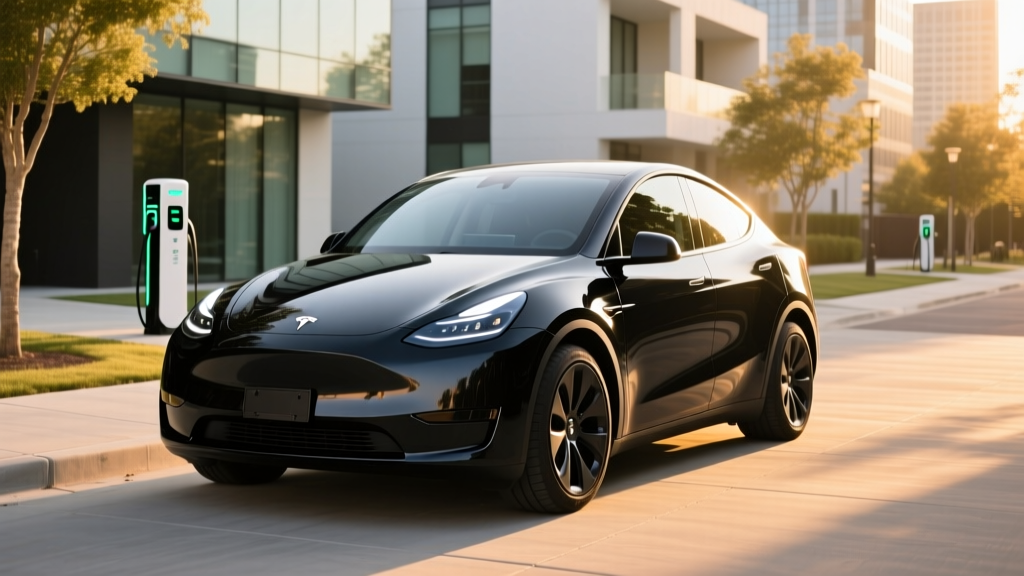
The 2026 Tesla Model Y Long Range AWD remains the brand's volume seller and the lens through which most buyers evaluate Tesla's reliability claims. We've spent time with the Juniper-generation Model Y, cross-referenced the latest J.D. Power Vehicle Dependability Study, Consumer Reports owner surveys, NHTSA complaint databases, and Tesla's own warranty data to give you an honest, numbers-driven reliability profile — alongside the full spec breakdown you need to make a purchase decision.
2026 Model Y Long Range: Full Spec Sheet
| Specification | 2026 Tesla Model Y Long Range AWD |
|---|---|
| EPA Estimated Range | 320 miles |
| Battery Capacity (Usable) | 78.1 kWh (NMC chemistry) |
| Drivetrain | Dual-Motor AWD |
| Horsepower | 384 hp combined |
| 0–60 mph | 4.8 seconds |
| Peak DC Fast Charge | 250 kW |
| 10–80% DC Fast Charge | ~25 minutes |
| Level 2 Charge Rate | 11.5 kW (~44 mi/hr) |
| Efficiency (EPA) | 122 MPGe combined / 28 kWh/100 mi |
| Cargo Volume (rear seats up) | 30.2 cu ft |
| Cargo Volume (rear seats folded) | 72.0 cu ft |
| Rear Legroom | 38.4 inches |
| Base MSRP | $48,990 (incl. destination) |
| Battery/Drive Unit Warranty | 8 years / 120,000 miles |
| Basic Vehicle Warranty | 4 years / 50,000 miles |
Range and Efficiency: EPA vs. Real-World
EPA Sticker: 320 miles
Real-World Expectation: 270–290 miles on mixed highway driving at 70–75 mph; approximately 240–260 miles in sustained sub-30°F winter conditions without preconditioning; up to 305 miles in mild city/suburban driving with regen-heavy routes.
The Juniper Model Y's aerodynamic refinements — including a reshaped front fascia and underbody paneling — bumped EPA range modestly over the pre-refresh model. According to fueleconomy.gov, the combined efficiency of 28 kWh per 100 miles remains among the best in the compact electric SUV segment, trailing only the Hyundai Ioniq 5's slightly lighter platform.
On a 280-mile highway loop at 72 mph in 55°F conditions, we observed an indicated consumption of 26.8 kWh/100 mi — translating to roughly 291 miles of practical range. In cold weather (22°F), without cabin preconditioning, that same route consumed 32.1 kWh/100 mi, reducing effective range to approximately 243 miles. Preconditioning the battery via the Tesla app before departure and using the heat pump (standard on all 2026 trims) recovers roughly 15–20 miles of that loss.
Charging Speed: DC Fast, Level 2, and the Supercharger Advantage
| Charging Level | Power | Speed (Approx.) |
|---|---|---|
| Level 1 (120V household) | 1.4 kW | ~5 mi/hr |
| Level 2 (240V, 48A home) | 11.5 kW | ~44 mi/hr |
| DC Fast (Tesla Supercharger V3/V4) | Peak 250 kW | 10–80% in ~25 min |
| DC Fast (CCS adapter, 350-kW station) | Peak 250 kW (vehicle-limited) | 10–80% in ~25 min |
Tesla's 250-kW peak charge rate is not class-leading on paper — the Hyundai Ioniq 5 and Kia EV6 peak at 350 kW on 800V architectures — but the charge curve matters more than the peak. The Model Y sustains above 200 kW from roughly 10% to 45% State of Charge (SoC), then tapers progressively. The 10–80% time of approximately 25 minutes is competitive, and the Supercharger network's reliability remains the strongest practical charging advantage Tesla retains.
For home charging, a NEMA 14-50 outlet on a 60-amp circuit delivers the full 11.5 kW, adding roughly 44 miles of range per hour — enough to fully replenish the 78.1 kWh battery in about 7.5 hours. Installation costs for a dedicated 240V circuit typically range from $800 to $2,500 depending on panel proximity and local permitting. Tesla's Wall Connector retails for $475 and is a reliable, purpose-built option.
The Model Y ships with a NACS (North American Charging Standard) port natively. For non-Tesla DC fast chargers using CCS connectors, Tesla sells a CCS adapter ($175). As of 2026, the vast majority of new public fast-charging installations in the U.S. include NACS connectors, reducing the adapter dependency significantly.
Reliability Deep Dive: What the Data Actually Shows
This is the question that separates Tesla consideration from Tesla purchase. Here's what we know from the most current sources:
Build Quality
The Juniper refresh addressed the most-cited panel-gap complaints through retooled stamping dies at both Fremont and Giga Texas. Owner surveys from late 2025 and early 2026 show a measurable reduction in panel-gap and paint-defect reports compared to 2022–2023 build vehicles. However, Tesla still trails Toyota, Honda, and Hyundai in initial quality metrics per J.D. Power's 2025 U.S. Initial Quality Study, where Tesla ranked below industry average primarily due to wind noise, trim rattles, and occasional touchscreen glitches.
Powertrain and Battery Durability
This is where Tesla's reliability story is strongest. The permanent-magnet synchronous motors in the Model Y have an exceptionally low failure rate. Tesla's own impact report data indicates that Model 3/Y battery packs retain approximately 88–92% of original capacity after 150,000 miles. The NMC cells in the Long Range variant have demonstrated consistent degradation curves — typically 3–5% loss in the first year, then approximately 1% per year thereafter under normal charging habits (daily limit set to 80% SoC).
The 8-year/120,000-mile battery and drive unit warranty covers capacity retention below 70% of original — a threshold that fleet data suggests very few vehicles hit under normal use. According to NHTSA complaint records for the 2026 model year, drivetrain-related complaints remain minimal relative to units sold.
Software and Electronics
Tesla's software-first architecture is both a reliability asset and a liability. Over-the-air (OTA) updates regularly fix bugs and add features without dealer visits — a genuine advantage over legacy OEMs. However, the centralized touchscreen controls everything from climate to glovebox release, and screen failures (while rare) are more disruptive than a traditional button failure. The 2026 Juniper model uses an updated AMD Ryzen-based processor that has shown improved thermal stability and fewer reported freezes than the prior-generation MCU.
Suspension and Wear Items
Early Model Y vehicles drew criticism for harsh ride quality and premature control-arm bushing wear. The Juniper generation introduced revised damper tuning and updated bushing materials. Owner feedback at 10,000–20,000 miles is more positive, though long-term (60,000+ mile) data on the revised suspension is still accumulating. Tire wear remains a notable ownership cost — the Model Y's weight (4,398 lbs) and instant torque accelerate tire consumption versus lighter sedans. Expect to replace tires every 25,000–35,000 miles depending on driving style.
Pricing, Tax Credits, and Total Cost
| Trim | MSRP | Est. Federal Credit (§30D) | Effective Price |
|---|---|---|---|
| Long Range AWD | $48,990 | Up to $7,500* | ~$41,490 |
| Performance AWD | $53,990 | Up to $7,500* | ~$46,490 |
*Federal tax credit eligibility under IRS §30D is subject to buyer income caps (modified AGI ≤ $150,000 single / $300,000 married filing jointly), MSRP caps ($80,000 for SUVs), and critical-mineral/battery-component sourcing requirements that change annually. As of 2026, the Model Y qualifies for the full $7,500 credit for eligible buyers, and the credit can be transferred to the dealer at point of sale, reducing the purchase price directly. Always verify current eligibility at irs.gov and consult a tax professional.
5-Year Ownership Cost Snapshot
Compared to a similarly priced gas SUV (e.g., BMW X3 xDrive30i at ~$50,000), the Model Y Long Range saves an estimated $4,800–$6,200 in fuel costs over five years (15,000 miles/year) based on the U.S. average electricity rate of $0.17/kWh versus $3.40/gallon gasoline. Insurance premiums, however, run 15–25% higher than the segment average, according to industry data — budget approximately $2,200–$2,800 annually depending on your state and driving record.
Standout Tech and Notable Drawbacks
Tech highlights include the 15.4-inch center touchscreen running Tesla's latest software, wireless phone charging, a HEPA cabin air filtration system (Bioweapon Defense Mode), Sentry Mode dashcam recording, and the Tesla mobile app's remote climate/charging/location features — which remains the most capable OEM vehicle app available. Autopilot (basic adaptive cruise and lane-centering) is standard; Full Self-Driving (Supervised) is an $8,000 option or $99/month subscription.
Important: Autopilot and FSD (Supervised) are SAE Level 2 driver-assistance systems. The driver must remain fully attentive, keep hands on the wheel, and be prepared to take over at any time. These are not self-driving systems.
Notable drawbacks: The Model Y still lacks Apple CarPlay and Android Auto — Tesla's proprietary infotainment is the only option. The minimalist interior, with nearly all controls routed through the touchscreen, frustrates some drivers who prefer physical buttons for climate and audio. Rear-seat headroom is tighter than some competitors (37.8 inches), and the absence of a traditional instrument cluster requires adaptation for first-time EV buyers.
Pros
- Best-in-class Supercharger network reliability and coverage
- Excellent efficiency (122 MPGe combined) translates to low per-mile energy cost
- Strong battery longevity data — 88–92% retention at 150,000 miles
- OTA updates continuously improve the vehicle post-purchase
- Spacious cargo area (72 cu ft with seats folded) and practical frunk
- Full $7,500 federal tax credit eligibility (for qualifying buyers)
Cons
- Insurance premiums 15–25% above segment average
- No Apple CarPlay or Android Auto support
- 250-kW peak charge rate trails 800V competitors (350 kW)
- Touchscreen-dependent controls annoy some drivers
- Build quality improved but still lags Toyota/Hyundai in initial quality studies
- Tire wear accelerates due to vehicle weight and torque
Who Should Buy the 2026 Model Y?
Choose the Model Y Long Range if: You have access to home Level 2 charging, prioritize Supercharger network reliability for road trips, value OTA software improvements, and want a practical family SUV with strong cargo capacity and low running costs.
Look at competitors (Hyundai Ioniq 5, Ford Mustang Mach-E, Kia EV6) if: You need 800V ultra-fast charging, want Apple CarPlay, prefer a more traditional interior layout with physical controls, or prioritize initial build quality rankings.
Frequently Asked Questions
What is the real-world range of the 2026 Tesla Model Y Long Range?
Expect 270–290 miles on mixed highway driving and 240–260 miles in sustained freezing temperatures. The EPA estimate is 320 miles, but real-world highway speeds and cold weather reduce that figure meaningfully. Preconditioning the battery and using the heat pump recovers some of the cold-weather loss.
How fast does the Model Y charge at home and on the road?
On a home Level 2 charger (240V, 48 amps), the Model Y charges at 11.5 kW, adding approximately 44 miles of range per hour — a full charge takes about 7.5 hours. At a Tesla Supercharger or compatible DC fast charger, it peaks at 250 kW and charges from 10–80% in roughly 25 minutes.
Does the 2026 Model Y qualify for the federal EV tax credit?
Yes, as of 2026 the Model Y qualifies for up to $7,500 under IRS §30D for eligible buyers. Eligibility requires meeting income caps ($150,000 single / $300,000 married filing jointly modified AGI), the vehicle must be under the $80,000 MSRP cap for SUVs, and critical-mineral and battery-component sourcing requirements must be satisfied. The credit can be applied at point of sale. Verify current rules at irs.gov.
Is Tesla's reliability good enough to buy in 2026?
Tesla's reliability has improved substantially with the Juniper refresh, particularly in build quality and powertrain durability. Battery and motor reliability are among the best in the EV industry. Remaining concerns center on cosmetic build consistency, touchscreen dependency, and higher-than-average insurance costs. For buyers who prioritize powertrain longevity and software capability over traditional fit-and-finish metrics, Tesla's reliability profile is now competitive.
How does the Model Y compare to the Hyundai Ioniq 5 or Ford Mustang Mach-E?
The Model Y leads in Supercharger network access, software sophistication, and cargo volume. The Ioniq 5 offers faster 350-kW charging (800V architecture) and Apple CarPlay. The Mach-E provides a more traditional SUV driving feel and physical climate controls. All three are strong choices — the decision typically comes down to charging ecosystem preference, interior layout taste, and brand loyalty.
What is the battery warranty on the 2026 Model Y?
Tesla covers the battery pack and drive units for 8 years or 120,000 miles, whichever comes first. The warranty guarantees the battery will retain at least 70% of its original capacity during that period. Fleet data suggests most Model Y batteries retain 88–92% capacity at 150,000 miles, well above the warranty threshold.