The 2026 Tesla Model Y: What Buyers Need to Know Before Placing a Deposit
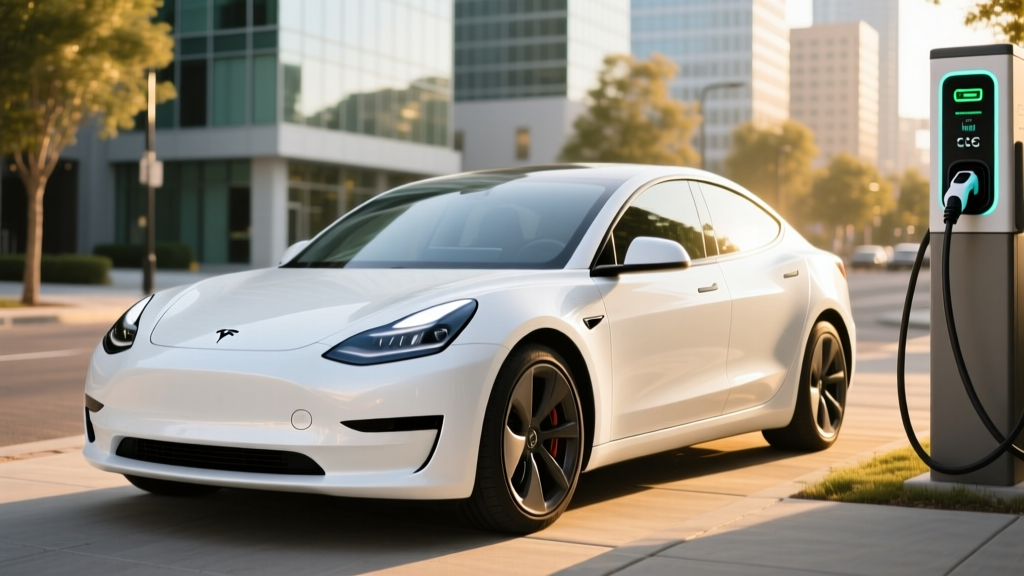
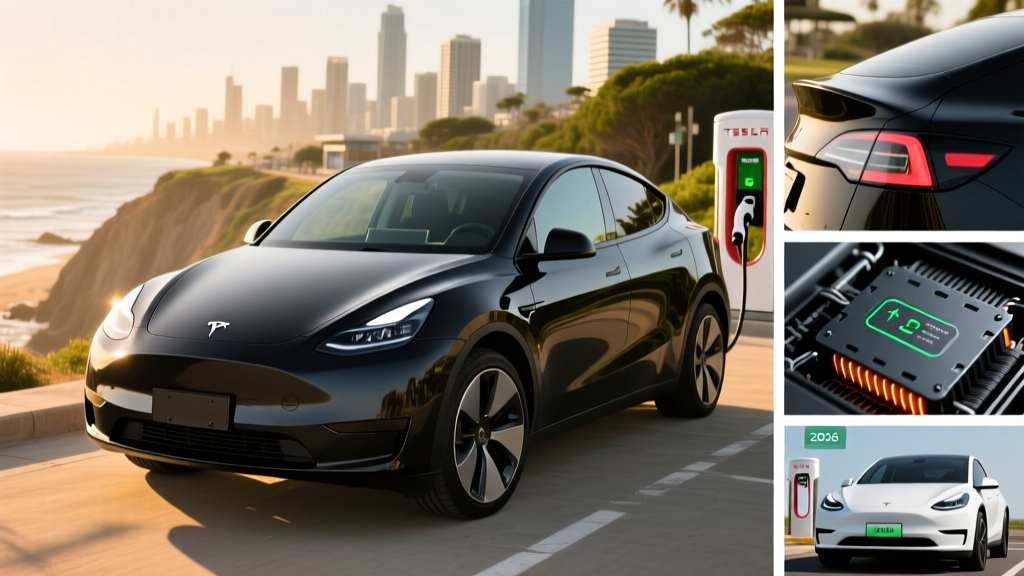
The Tesla Model Y remains one of the best-selling electric vehicles in the United States for good reason: strong range, access to the Supercharger network, and a practical crossover form factor. But before you hand over money to reserve one, understanding the Tesla refundable deposit process — and what you're actually getting for the money — is essential. This review covers the 2026 Model Y's real-world specs, charging performance, pricing after federal tax credits, and whether it still holds up against an increasingly competitive field of electric SUVs.
Tesla's order process differs from traditional dealerships. You configure your vehicle online and place a refundable deposit (currently $250) to hold your place in the production queue. That deposit is fully refundable at any time before delivery, giving you flexibility if your situation changes or a better deal surfaces elsewhere. Let's break down what you're committing to.
Range, Battery, and Real-World Efficiency
The 2026 Model Y lineup offers two primary battery and drivetrain configurations, each with distinct range and efficiency profiles.
| Spec | Long Range AWD | Performance AWD |
|---|---|---|
| EPA Range | 320 miles | 298 miles |
| Battery Capacity (usable) | ~78 kWh | ~78 kWh |
| Battery Chemistry | NMC (Nickel Manganese Cobalt) | NMC (Nickel Manganese Cobalt) |
| Efficiency | 122 MPGe / 28 kWh/100mi | 115 MPGe / 30 kWh/100mi |
| Drivetrain | Dual-Motor AWD | Dual-Motor AWD |
The Model Y's NMC battery chemistry delivers higher energy density than LFP (lithium iron phosphate), which translates to more range in a lighter pack. The tradeoff: NMC cells are more sensitive to sustained 100% state-of-charge storage. Tesla recommends daily charging to 80–90% and only charging to 100% before long trips. This preserves long-term battery health and is standard practice for NMC-equipped EVs.
Charging Speed: DC Fast Charging and Home Level 2
Charging speed is where the Model Y's V4 Supercharger compatibility matters. Here's what you can expect across charging scenarios:
| Charging Level | Power / Rate | Speed |
|---|---|---|
| DC Fast Charge (V3 Supercharger) | Peak 250 kW | 10–80% in ~22 minutes |
| DC Fast Charge (V4 Supercharger) | Peak 250 kW (current vehicles) | 10–80% in ~22 minutes |
| Level 2 Home (Tesla Wall Connector, 48A) | 11.5 kW | ~44 miles per hour of charging |
| Level 2 Home (40A circuit) | 9.6 kW | ~37 miles per hour of charging |
| Level 1 (120V household outlet) | ~1.4 kW | ~4–5 miles per hour |
Charging curve reality: The 250 kW peak rate only holds between roughly 10–30% state of charge. From 50–80%, the rate tapers to 80–120 kW. This is normal lithium-ion behavior — no EV sustains peak rate to 80%. Plan Supercharger stops around the 10–80% window for the fastest experience; charging past 80% adds significant time and is best done at your destination overnight.
The Model Y uses the NACS (North American Charging Standard) connector natively — the same plug Tesla has used since 2012, now adopted industry-wide. This gives you seamless access to over 20,000 Tesla Superchargers across North America without adapters.
Performance and Driving Dynamics
| Spec | Long Range AWD | Performance AWD |
|---|---|---|
| 0–60 mph | 4.8 seconds | 3.5 seconds |
| Horsepower | ~384 hp (combined) | ~456 hp (combined) |
| Top Speed | 125 mph | 155 mph |
| Towing Capacity | 3,500 lbs | 3,500 lbs |
Both trims deliver instant torque and confident acceleration. The Long Range's 4.8-second 0–60 is quicker than most gas-powered compact SUVs, while the Performance trim's 3.5-second sprint enters sports-car territory. Dual-motor AWD provides excellent traction in rain and snow, and the low center of gravity (battery pack under the floor) keeps body roll minimal through corners.
Ride quality has improved with the 2025 Juniper refresh, which the 2026 model carries forward. Revised suspension tuning and additional sound insulation make the cabin noticeably quieter at highway speeds compared to pre-2025 models.
Interior Space, Tech, and Driver Assistance
Cargo volume: 30.2 cubic feet behind the second row, expanding to 72.1 cubic feet with seats folded. The rear trunk includes a deep under-floor storage well, and a front trunk (frunk) adds 4.1 cubic feet for charging cables or a small bag.
Passenger space: Front legroom measures 41.8 inches; rear legroom is 37.2 inches — adequate for adults on longer trips, though taller passengers may wish for more knee room. The panoramic glass roof creates an airy feel but does reduce headroom slightly compared to vehicles with a conventional steel roof.
Infotainment: The 15.4-inch center touchscreen handles navigation, media, climate, and vehicle settings. There are no physical buttons for climate or volume — everything routes through the screen or steering-wheel scroll wheels. The system is responsive and well-organized, but the all-touch interface remains divisive. A rear 8-inch screen for second-row passengers handles climate and entertainment controls.
Driver Assistance (SAE Level 2): Standard Autopilot includes traffic-aware cruise control and lane-centering. Full Self-Driving (Supervised) is an optional upgrade ($8,000 one-time or $99/month) that adds automatic lane changes, intersection handling, and parking assistance. Important: FSD Supervised is an SAE Level 2 system — the driver must remain fully attentive with hands on the wheel at all times. It is not autonomous driving.
Pricing, Tax Credits, and the Refundable Deposit Process
| Trim | Base MSRP | Est. Federal Credit (§30D) | Effective Price |
|---|---|---|---|
| Long Range AWD | $44,990 | Up to $7,500* | ~$37,490* |
| Performance AWD | $48,990 | Up to $7,500* | ~$41,490* |
*Federal tax credit eligibility under IRS §30D depends on multiple factors. Consult a tax professional for your specific situation.
- Buyer income caps: Modified AGI must not exceed $150,000 (single), $225,000 (head of household), or $300,000 (joint filers)
- MSRP cap: SUVs/vans/pickups must have an MSRP at or below $80,000 — both Model Y trims qualify
- Battery sourcing: Critical minerals and battery components must meet escalating domestic-content thresholds (per IRS guidelines)
- Point-of-sale transfer: Eligible buyers can transfer the credit to the dealer at purchase, reducing the upfront cost immediately rather than waiting for tax filing
How the Tesla Refundable Deposit Works
When you configure a Model Y on Tesla's website, the final step before order confirmation is a $250 refundable deposit. Here's what to know:
- Fully refundable: You can cancel your order and receive a complete refund at any point before taking delivery. There is no restocking fee or penalty.
- Refund method: Refunds are processed back to the original payment method (credit/debit card) within approximately 5–10 business days.
- What it does: The deposit holds your configuration and estimated delivery window. It does not lock in pricing — Tesla adjusts MSRP periodically, and your final price reflects the current list price at the time of delivery paperwork.
- Delivery timeline: Estimated delivery windows typically range from 2–8 weeks depending on configuration and region, though this fluctuates with production volume.
- Price protection: Tesla has historically offered the lower of the price at order time or delivery time, but this policy is not contractually guaranteed — confirm current terms at order.
The refundable deposit structure gives buyers meaningful flexibility. You can place a deposit to secure your spot, continue researching competitors, and cancel without financial risk if you change your mind. This is a notable advantage over some legacy automakers that require non-refundable deposits for EV reservations.
Warranty Coverage
| Coverage | Term |
|---|---|
| Basic Vehicle Limited Warranty | 4 years / 50,000 miles |
| Battery & Drive Unit Warranty | 8 years / 120,000 miles |
| Battery Capacity Retention Guarantee | Minimum 70% over warranty period |
The 8-year/120,000-mile battery warranty covers defects and capacity loss below 70%. Based on fleet data from Tesla's Impact Reports, Model Y battery packs typically retain approximately 90% capacity at 100,000 miles — well above the warranty threshold. Battery replacement outside warranty coverage currently runs $12,000–$16,000 depending on pack configuration, though prices have trended downward as cell manufacturing scales.
How It Stacks Up Against Competitors
Pros
- Access to Tesla's Supercharger network — the most reliable and extensive DC fast-charging network in the US
- Class-leading efficiency (122 MPGe Long Range) reduces per-mile electricity cost
- Strong resale value relative to non-Tesla EVs
- Over-the-air updates continuously add features and refinements
- $250 fully refundable deposit lowers purchase-commitment risk
- 3,500-lb towing capability exceeds most electric crossovers in this class
Cons
- Minimalist interior with no physical climate or volume controls
- Rear-seat legroom is tighter than the Hyundai Ioniq 5 or Ford Mustang Mach-E
- FSD (Supervised) remains a Level 2 system despite the $8,000 price tag
- Service center availability varies significantly by region — some areas face multi-week wait times
- No Apple CarPlay or Android Auto integration
The Model Y competes directly with the Hyundai Ioniq 5, Ford Mustang Mach-E, Chevrolet Equinox EV, and Volkswagen ID.4. Its advantages — Supercharger access, efficiency, and software — remain compelling. But competitors have closed the gap on interior quality, rear-seat space, and starting price. The Equinox EV undercuts the Model Y on base price, while the Ioniq 5 offers faster 800V charging architecture (10–80% in ~18 minutes on a 350 kW charger) and more rear-seat room.
According to EPA data on fueleconomy.gov, the Model Y Long Range's 122 MPGe still leads the compact electric SUV segment, though the gap has narrowed. For buyers who prioritize charging infrastructure reliability and long-term software support, the Model Y remains the default choice.
Who Should Buy the 2026 Tesla Model Y?
- You road-trip frequently and want the most reliable public DC fast-charging network available
- You value efficiency and low per-mile energy costs over interior luxury
- You want a proven platform with extensive real-world ownership data
- You need 3,500-lb towing for a small trailer or boat
- Rear-seat passenger comfort is a top priority (look at Ioniq 5 or Mach-E)
- You want Apple CarPlay/Android Auto
- You prefer physical buttons and a more traditional interior layout
- You need the absolute lowest entry price (Equinox EV starts lower)
Frequently Asked Questions
Is the Tesla deposit really refundable?
Yes. The $250 deposit is fully refundable at any time before you take delivery. Cancel through your Tesla account and the refund processes back to your original payment method within 5–10 business days. There is no cancellation fee.
Does the 2026 Tesla Model Y qualify for the $7,500 federal tax credit?
The Model Y qualifies for up to $7,500 under §30D, provided you meet income limits (up to $300,000 joint AGI), the vehicle MSRP is at or below $80,000 (it is), and the battery meets critical-mineral and component sourcing requirements for the 2026 tax year. Tesla's point-of-sale transfer option lets eligible buyers apply the credit at purchase. Always verify current eligibility on IRS.gov and consult a tax professional.
What is the real-world range on a road trip?
Expect approximately 270–290 miles at highway speeds (70–80 mph) in moderate temperatures. In freezing weather, plan for 230–250 miles. Use Tesla's built-in trip planner, which factors in elevation, temperature, and speed to estimate arrival state of charge — it's consistently accurate within 2–3%.
How long does home charging take?
With a Tesla Wall Connector on a 60A circuit (48A continuous), you'll add roughly 44 miles of range per hour. A full overnight charge from 20% to 80% takes about 5–6 hours — more than enough for daily driving needs. Installation typically costs $500–$1,500 depending on panel proximity and local electrical codes.
Is FSD (Supervised) worth $8,000?
FSD Supervised is an SAE Level 2 driver-assist system that requires your full attention at all times. It handles highway lane changes, some city intersections, and parking maneuvers more smoothly than basic Autopilot, but it is not autonomous driving. Most buyers are better served by the standard Autopilot unless you regularly drive in heavy stop-and-go traffic and want the reduced workload — with the understanding that supervision is mandatory.