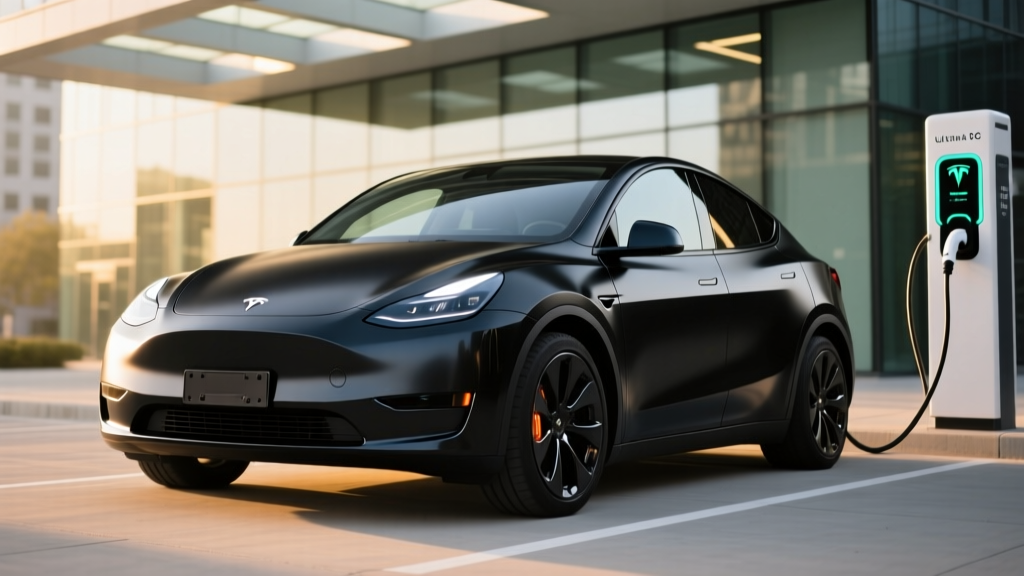
The Tesla Model Y has been the world's best-selling vehicle — not just EV — for consecutive years, and the 2025-2026 "Juniper" refresh is engineered to extend that dominance. With a redesigned exterior, a revamped interior featuring a rear touchscreen and ventilated seats, and meaningful efficiency gains from improved aerodynamics and thermal management, the updated Model Y isn't resting on its sales laurels. But does the refresh actually deliver where it counts for buyers: real-world range, charging speed, pricing, and federal tax-credit eligibility? We break down every number.
Why the Model Y Refresh Is Driving Tesla's Sales Performance in 2026
Tesla's decision to overhaul the Model Y (internally dubbed "Juniper") mirrors the successful Model 3 "Highland" refresh strategy. The results have been immediate. After initial launch-market rollouts in early 2025, the refreshed Model Y became the fastest-selling variant in Tesla's lineup, reversing a 2024 sales dip and reclaiming top positions in EV registration data across the US, Europe, and China. The sales performance story isn't just marketing — it's driven by tangible product improvements that address the top complaints from first-generation owners: cabin noise, ride harshness, rear-seat comfort, and aging aesthetics.
For 2026, the US lineup consolidates into three main configurations: the Long Range RWD, the Long Range AWD, and the Performance AWD. Tesla discontinued the base Standard Range RWD for the US market with the Juniper generation, pushing the entry point higher but loading more standard equipment.
Range, Efficiency, and Battery Specs
The 2026 Model Y Long Range AWD carries an EPA-estimated range of 320 miles, up from 308 miles in the pre-refresh model. That gain comes not from a larger battery but from a lower drag coefficient (approximately 0.22 Cd), a more efficient heat pump, and revised motor calibration. The Long Range RWD variant pushes slightly higher at an EPA-estimated 335 miles.
| Spec | Long Range RWD | Long Range AWD | Performance AWD |
|---|---|---|---|
| EPA Range | 335 mi | 320 mi | 295 mi |
| Battery (usable) | ~75 kWh (NMC) | ~75 kWh (NMC) | ~75 kWh (NMC) |
| Drivetrain | RWD (single motor) | Dual Motor AWD | Dual Motor AWD |
| Horsepower | ~346 hp | ~384 hp | ~510 hp |
| 0-60 mph | 5.8 sec | 4.8 sec | 3.5 sec |
| MPGe (combined) | 123 MPGe | 117 MPGe | 111 MPGe |
| kWh/100 mi | 27 | 29 | 30 |
| Top Speed | 125 mph | 125 mph | 155 mph |
| Towing Capacity | 3,500 lbs | 3,500 lbs | 3,500 lbs |
Tesla uses nickel-manganese-cobalt (NMC) chemistry in the Long Range and Performance packs, chosen for its higher energy density compared to LFP. This allows the ~75 kWh usable capacity to fit within the Model Y's structural battery pack while keeping weight manageable. NMC does carry a slightly faster degradation profile than LFP over very high cycle counts, though Tesla's battery management system and thermal controls have historically kept degradation modest — typically 8-12% over 100,000 miles based on fleet data.
The EPA sticker says 320 miles for the Long Range AWD. In practice, expect ~270-290 miles on mixed highway driving at 70-75 mph, and ~230-250 miles in freezing temperatures (below 32°F) where cabin heating and battery cold-soak take a toll. City driving with regenerative braking can actually exceed the EPA number, occasionally hitting 330+ miles in mild weather. For road trips, plan charging stops at roughly 200-220 mile intervals to keep a comfortable buffer.
Charging Speed: DC Fast Charging and Home Level 2
Charging infrastructure remains Tesla's strongest competitive moat, and the refreshed Model Y takes full advantage. The Juniper Model Y supports a peak DC fast-charge rate of 250 kW on V3 Superchargers and compatible third-party stations via the native NACS connector.
| Charging Level | Power / Rate | Speed (mi/hr added) | Notes |
|---|---|---|---|
| Level 1 (120V household) | ~1.4 kW | ~3-4 mi/hr | Emergency/trickle only |
| Level 2 (240V, 48A) | 11.5 kW | ~37 mi/hr | Full charge in ~8-9 hrs |
| DC Fast (V3 Supercharger) | Peak 250 kW | ~162 mi in 15 min | 10-80% in ~25 min |
| DC Fast (V4 Supercharger) | Peak 250 kW* | Similar to V3 | *Model Y capped at 250 kW |
A critical nuance: while Tesla's V4 Supercharger cabinets can deliver higher peak power, the Model Y's onboard architecture caps intake at 250 kW. The charge curve is aggressive in the 10-50% state-of-charge window (sustaining close to peak rate) but tapers noticeably above 60% and drops sharply past 80%. For optimal road-trip charging, navigate away from the charger at 80% SoC — the time spent from 80-100% is often longer than 10-80%.
For home charging, the Model Y's onboard charger accepts up to 11.5 kW (48 amps) on a 240V Level 2 circuit. This requires a 60-amp dedicated breaker. A typical overnight session from 20% to 80% takes roughly 4-5 hours. Tesla's Wall Connector remains the best-value home unit at $420, though any J1772/NACS Level 2 EVSE rated at 48A or higher will work. Installation costs for a 60-amp circuit typically run $800-$2,000 depending on panel proximity and whether a service upgrade is needed — always consult a licensed electrician for a site-specific quote.
Pricing, Trims, and Federal Tax Credit Eligibility
The 2026 Model Y's pricing reflects Tesla's strategy of consolidating trims while loading more standard features. Here's where each variant lands before and after potential incentives:
| Trim | Base MSRP | Est. §30D Credit | Effective Price |
|---|---|---|---|
| Long Range RWD | $44,990 | Up to $7,500 | ~$37,490 |
| Long Range AWD | $47,990 | Up to $7,500 | ~$40,490 |
| Performance AWD | $52,490 | Up to $7,500 | ~$44,990 |
All three trims fall under the IRS §30D MSRP cap of $80,000 for SUVs/trucks, so the vehicle-side price requirement is satisfied. However, the full $7,500 federal tax credit is not guaranteed for every buyer. Eligibility depends on three layered requirements that change periodically:
- Buyer income caps: Modified AGI must not exceed $150,000 (single), $225,000 (head of household), or $300,000 (joint filing).
- Battery sourcing rules: A percentage of critical minerals and battery components must be sourced from the US or free-trade-agreement partners. Tesla has progressively shifted Model Y battery supply chains to meet these thresholds, but the exact credit amount ($3,750 or $7,500) can vary by production batch. Check the latest fueleconomy.gov listing for the specific VIN-qualified amount.
- Point-of-sale transfer: As of 2024, buyers can elect to transfer the credit to the dealer at purchase, reducing the upfront price rather than waiting for a tax refund. Tesla supports this at checkout.
Always verify current eligibility on IRS.gov before purchasing, as battery-sourcing compliance is updated throughout the year.
Interior, Cargo, and Technology
The Juniper refresh transforms the Model Y cabin from spartan to genuinely premium. Acoustic glass on all windows (previously front-only) drops highway noise by a noticeable margin. Ambient lighting, ventilated front seats, and power-folding second-row seats are now standard on Long Range trims.
The most significant addition is a rear-seat 8-inch touchscreen for climate and entertainment controls — addressing one of the biggest complaints from families who found the front-only screen setup inconvenient for rear passengers. The front 15.4-inch touchscreen remains the command center, running Tesla's latest software with Netflix, YouTube, and gaming support while parked.
Cargo capacity remains a Model Y strong suit:
- Behind 2nd row: 30.2 cu ft (26.6 cu ft with seats up on 7-seat option)
- Seats folded: 72.1 cu ft
- Front trunk (frunk): 4.1 cu ft
- Rear legroom: 41.6 inches
- Front headroom: 41.0 inches
The optional third row (available on Long Range AWD) adds two small seats best suited for children under 5'4". With the third row deployed, cargo space shrinks dramatically, making it a niche option for occasional use rather than daily family hauling.
On the driver-assistance front, every Model Y ships with Tesla Autopilot (Traffic-Aware Cruise Control and Autosteer). Full Self-Driving (Supervised) remains an $8,000 add-on or $99/month subscription. FSD (Supervised) is an SAE Level 2 system — it does not make the vehicle self-driving. The driver must remain fully attentive, keep hands on the wheel, and be prepared to take over at any moment. Tesla's camera-only vision stack has improved significantly in the Juniper generation with higher-resolution cameras, but it still struggles with construction zones, faded lane markings, and adverse weather.
These are SAE Level 2 driver-assistance systems, not autonomous driving. You are the driver at all times. NHTSA has investigated multiple Tesla Autopilot/FSD incidents. Never use FSD in conditions you wouldn't comfortably drive manually. See NHTSA guidance for safety context.
Warranty Coverage
Tesla's warranty structure remains competitive but not class-leading:
- Basic Vehicle: 4 years / 50,000 miles
- Battery & Drive Unit: 8 years / 120,000 miles (Long Range & Performance)
- Battery retention guarantee: Minimum 70% capacity over the warranty period
The 70% retention threshold is standard across the industry. In practice, Tesla's NMC packs in the Model Y have shown degradation curves that plateau around 90-92% capacity after 30,000-50,000 miles, with gradual decline thereafter. Fleet data from high-mileage owners suggests most packs remain above 85% State of Health at 100,000 miles, well within warranty coverage.
Pros, Cons, and the Verdict
- Best-in-class Supercharger network access (native NACS, 20,000+ US stalls)
- 320-mile EPA range with strong real-world highway efficiency
- 250 kW DC fast charging, 10-80% in ~25 minutes
- Massive cargo capacity (72 cu ft) and practical hatchback form factor
- Over-the-air updates continuously add features post-purchase
- Strong resale value relative to non-Tesla EVs
- Refreshed cabin is genuinely quiet and well-finished
- No physical buttons or stalks — turn signals and wipers are steering-wheel buttons
- FSD (Supervised) remains expensive ($8,000) and is still Level 2, not autonomous
- Ride quality improved but still firmer than Hyundai Ioniq 5 or Ford Mustang Mach-E
- Third-row seat is cramped and impractical for most buyers
- Service center wait times remain long in some metro areas
- NMC battery chemistry requires charge-limiting habits (20-80% daily) vs. LFP's 100% tolerance
Who Should Buy the 2026 Model Y Refresh?
The refreshed Model Y is best suited for tech-forward families and commuters who prioritize charging convenience, cargo versatility, and software sophistication. If you have home Level 2 charging access and your daily driving is under 80 miles, the Model Y Long Range AWD at roughly $40,490 (after credit) is one of the most capable electric SUVs available.
It's less ideal if you want a plush, quiet ride above all else (the Ioniq 5 and Rivian R2 are more refined in this regard), if you need genuine seven-passenger seating (look at the Kia EV9), or if you frequently drive in areas with limited Supercharger coverage and no CCS adapter plans.
The sales performance numbers confirm what the spec sheet suggests: the Juniper refresh addressed the Model Y's weakest points without breaking the formula that made it a global best-seller. For most EV shoppers cross-referencing competitors, the Model Y remains the default benchmark — and the 2026 refresh gives it real engineering substance to back up those sales figures.
Frequently Asked Questions
What is the real-world range of the 2026 Tesla Model Y?
The EPA rates the Long Range AWD at 320 miles. In real-world highway driving at 70-75 mph, expect 270-290 miles. In cold weather (below freezing), plan for 230-250 miles. City driving with regen can exceed the EPA estimate in mild temperatures.
How fast does the Model Y charge at home and on the road?
On DC fast charging, the Model Y peaks at 250 kW, reaching 10-80% in approximately 25 minutes. At home on a 240V Level 2 charger (48A/11.5 kW), you'll add roughly 37 miles of range per hour, with a full 10-80% session taking about 4-5 hours.
Does the 2026 Model Y qualify for the $7,500 federal EV tax credit?
All Model Y trims are under the $80,000 SUV MSRP cap. However, the full $7,500 credit depends on your income (must be under $150K single / $300K joint), and the battery must meet critical-mineral and component sourcing thresholds for the specific production batch. Verify at fueleconomy.gov and IRS.gov before purchase. The credit can be transferred at point of sale.
Is the Model Y refresh worth buying over competitors like the Ioniq 5 or Mach-E?
The Model Y wins on charging network access (native Supercharger), cargo space, and software ecosystem. The Hyundai Ioniq 5 offers 800V charging (faster 10-80% times on compatible stations) and a more comfortable ride. The Ford Mustang Mach-E offers a more traditional driving feel. If Supercharger access and Tesla's tech ecosystem matter most, the Model Y remains the strongest pick.
What are the biggest drawbacks of the 2026 Model Y?
The lack of physical controls (turn signals, wipers on steering wheel buttons), the $8,000 FSD add-on that remains Level 2 only, and service-center capacity in some regions are the top complaints. The NMC battery also benefits from daily charge limits of 20-80%, unlike LFP packs that tolerate 100% daily charging.
How does the Model Y battery hold up over time?
Tesla warranties the battery for 8 years / 120,000 miles with a 70% minimum capacity retention guarantee. Real-world fleet data shows most Model Y NMC packs retain 85-90% capacity at 100,000 miles when charged within the recommended 20-80% daily window.