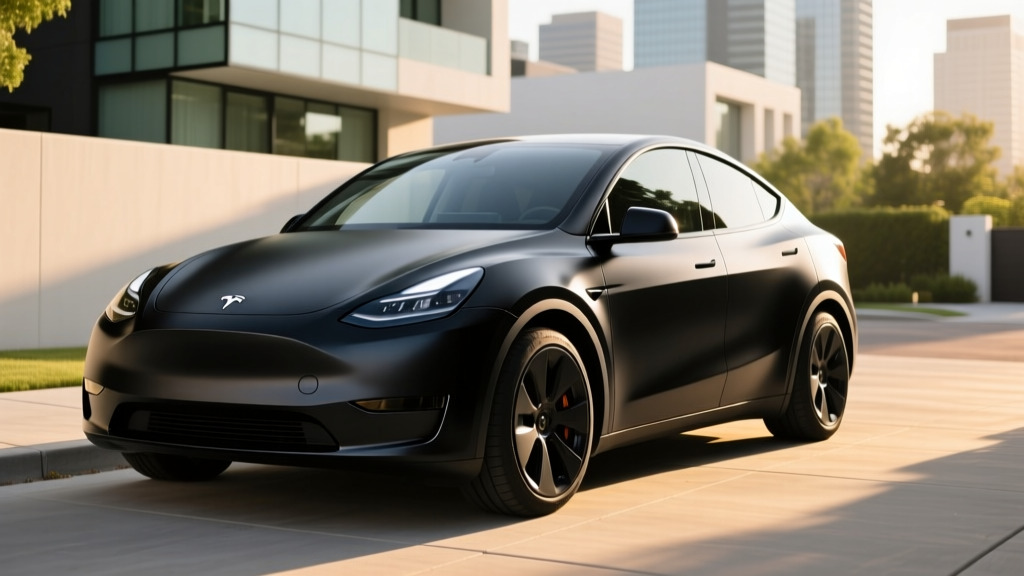
The Tesla Model Y has been the best-selling electric vehicle in the world for good reason: practical packaging, access to the Supercharger network, and relentless software updates. But the 2026 Model Y refresh — internally known as "Juniper" — represents the most substantial overhaul since the crossover launched. New exterior surfacing, a redesigned cabin, acoustic glass, a rear touchscreen, and updated suspension tuning all aim to close the comfort gap with rivals like the Hyundai Ioniq 5 and Ford Mustang Mach-E while keeping the efficiency advantage that made the Model Y dominant.
We've driven the refreshed Model Y, scrutinized the spec sheet, and run the numbers on charging, range, and tax-credit eligibility. Here's everything you need to know before configuring one.
2026 Model Y Refresh: Full Spec Snapshot
| Specification | Value |
|---|---|
| EPA Range | 320 miles (Long Range AWD) |
| Battery Capacity (usable) | ~79 kWh, NMC chemistry |
| Drivetrain | Dual-motor AWD |
| Horsepower | 384 hp combined |
| 0–60 mph | 4.8 seconds |
| Peak DC Fast Charge | 250 kW (Supercharger V3/V4) |
| 10–80% DC Charge Time | ~27 minutes |
| Level 2 Home Charge Rate | 11.5 kW (44 mi/hr) |
| EPA Efficiency | 111 MPGe combined / 30 kWh/100 mi |
| Cargo Volume (rear seats up / folded) | 30.2 / 72.1 cu ft |
| Rear Legroom | 41.6 inches |
| Battery Warranty | 8 years / 120,000 miles |
| Base MSRP (Long Range AWD) | $44,990 |
| As-Tested (w/ FSD + Paint) | ~$55,480 |
Real-World Range: What the EPA Sticker Doesn't Tell You
The Long Range AWD Model Y refresh carries an EPA-estimated 320 miles of range, up slightly from the pre-refresh figure thanks to improved aerodynamics (drag coefficient drops to ~0.22 Cd) and revised thermal management. The base Rear-Wheel Drive model uses an LFP (lithium iron phosphate) battery pack and is rated at approximately 300 miles EPA.
EPA sticker: 320 miles (Long Range AWD)
Highway (70–75 mph, 65°F): Expect ~270–285 miles
Cold weather (30°F, highway): Expect ~225–250 miles (15–25% reduction)
City / mixed driving with regen: Near-EPA or slightly above, ~310–330 miles
The Juniper refresh's heat pump and improved cabin insulation help mitigate cold-weather losses compared to the pre-2025 Model Y, but physics still applies: sustained highway speeds and freezing temperatures will cut range meaningfully. Plan road trips around ~250 miles of usable buffer to avoid sweating the last 10%.
For context, fueleconomy.gov lists the Long Range AWD at 111 MPGe combined, which translates to roughly 30 kWh consumed per 100 miles driven — among the most efficient all-wheel-drive EVs in its class.
Charging Speed: DC Fast Charge and Home Level 2
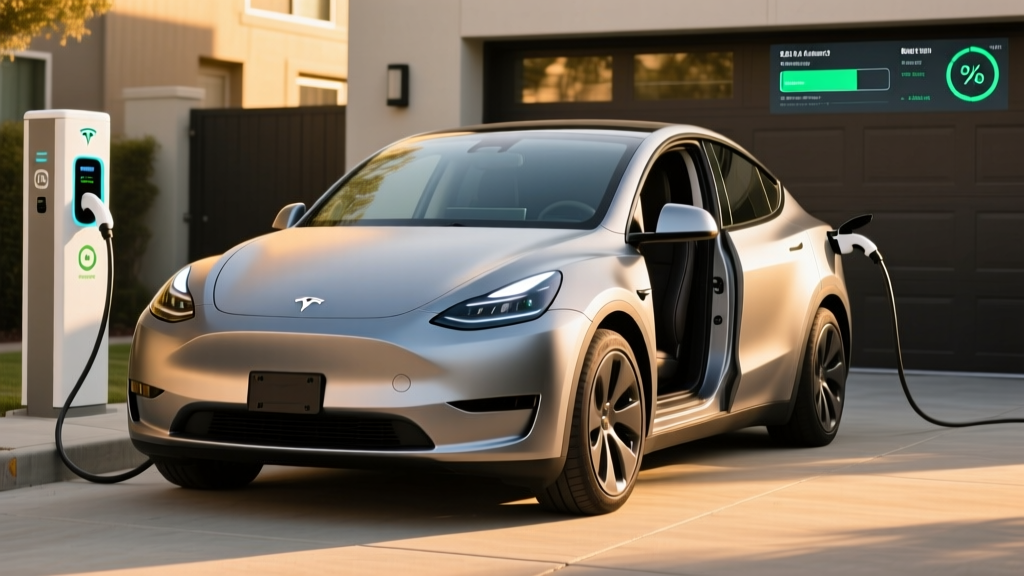
Charging remains a Model Y strong suit, primarily because Tesla's Supercharger network is the most reliable and expansive DC fast-charging ecosystem in North America. The 2026 refresh maintains the 250 kW peak charge rate on V3 and V4 Superchargers and now natively uses the NACS (North American Charging Standard) connector — no adapter needed. As other automakers adopt NACS through 2025–2026, Supercharger access is opening up, but Tesla owners still enjoy the most seamless plug-and-charge experience.
| Charging Level | Power (kW) | Miles Added per Hour | Notes |
|---|---|---|---|
| Level 1 (120V household) | ~1.4 kW | ~5 mi/hr | Emergency/trickle only |
| Level 2 (240V, 48A Wall Connector) | 11.5 kW | ~44 mi/hr | Full charge in ~7–8 hours |
| DC Fast (Supercharger V3/V4) | Up to 250 kW | ~162 mi in 15 min | 10–80% in ~27 min; tapers sharply above 80% |
| DC Fast (3rd-party CCS w/ adapter) | Up to 150 kW | Varies | CCS adapter included; Electrify America compatible |
Charging curve reality: The 250 kW peak only holds between roughly 10–30% state of charge. From 30–60%, expect sustained rates around 150–170 kW. Above 80%, the rate drops to under 50 kW to protect the NMC cells — this is normal behavior for lithium-ion packs. If you're road-tripping, plan to unplug at 80% and move on; sitting at a Supercharger from 80–100% can add 25+ minutes for only ~60 miles of range.
At home, Tesla's Gen 3 Wall Connector on a 60A circuit delivers 11.5 kW (48A continuous). That's enough to replenish a full day's driving (~40 miles) in under an hour, or a full battery overnight. Installation costs typically range from $500–$1,500 depending on panel proximity, assuming you have a 200A electrical panel with spare capacity.
Performance and Driving Impressions
The Long Range AWD pairs dual permanent-magnet motors for 384 combined horsepower and a 4.8-second 0–60 mph time. That's quick by any measure, and the instant torque delivery makes highway merging effortless. The Performance variant (if available in your market) drops that to roughly 3.5 seconds.
Where the Juniper refresh truly differentiates itself from the outgoing Model Y is ride quality. Tesla has retuned the suspension with frequency-selective dampers and softer bushings, and the addition of acoustic laminated glass on all four doors noticeably reduces wind and road noise at highway speeds. The result is a crossover that finally feels premium at 75 mph — an area where the pre-refresh Model Y drew consistent criticism.
Regenerative braking remains single-mode (strong, one-pedal-capable) and the steering is precise if characteristically numb. The Model Y is not a sports SUV, but it handles corners with less body roll than a Mach-E or Ioniq 5 thanks to its low center of gravity and firm spring rates.
Interior, Tech, and the Juniper Cabin Overhaul
The 2026 interior is the most visible departure. Tesla has ditched the minimalist austerity of the outgoing cabin for ambient lighting strips, ventilated front seats (finally), power-folding second-row seats, and a rear 8-inch touchscreen for climate and media control. The steering wheel now includes a turn-signal stalk — the controversial touch-capacitive buttons on the pre-refresh wheel are gone.
The 15.4-inch front touchscreen remains the command center for navigation, media, vehicle settings, and Tesla's visualization-heavy Autopilot interface. Software is snappy, over-the-air updates continue to add features, and the new ventilated seats address one of the most common owner complaints in hot climates.
Driver assistance: Basic Autopilot (lane centering + adaptive cruise) remains standard. Enhanced Autopilot ($6,000) adds auto lane change, autosteer on city streets, and summon. Full Self-Driving (Supervised) adds traffic-light and stop-sign recognition and more assertive city navigation. FSD remains a SAE Level 2 system — you must keep your hands on the wheel and eyes on the road at all times. It is not self-driving, and it does not absolve you of liability.
Tesla Autopilot and FSD (Supervised) are SAE Level 2 driver-assistance systems. The driver must remain fully engaged, monitor the road, and be prepared to take over instantly. These systems do not handle construction zones, emergency vehicles, or adverse weather reliably. They are not autonomous.
Pricing, Trims, and Federal Tax Credit Eligibility
| Trim | Base MSRP | Federal §30D Credit | Effective Price |
|---|---|---|---|
| Long Range RWD (LFP) | $39,990 | Up to $7,500* | ~$32,490 |
| Long Range AWD (NMC) | $44,990 | Up to $7,500* | ~$37,490 |
| Performance AWD | $48,990 | Up to $7,500* | ~$41,490 |
*Federal tax credit eligibility under IRS §30D is subject to multiple requirements:
- MSRP cap: SUVs/crossovers must have a base MSRP under $80,000 — all Model Y trims qualify.
- Buyer income cap: Modified AGI must not exceed $150,000 (single), $225,000 (head of household), or $300,000 (joint).
- Battery sourcing: The $7,500 credit is split into two halves — $3,750 for critical-minerals sourcing and $3,750 for battery-component manufacturing. Tesla's supply chain has progressively localized, but eligibility for the full $7,500 vs. $3,750 can vary by production batch and model year. Always verify the specific VIN's eligibility on the manufacturer's compliance disclosure before purchasing.
- Point-of-sale transfer: As of 2024+, you can transfer the credit to the dealer at purchase, reducing your out-of-pocket cost immediately rather than waiting for a tax refund.
Consult a tax professional to confirm your personal eligibility. State and utility incentives may stack on top — check AFDC's state incentive database for your jurisdiction.
Pros, Cons, and the Competition
- Best-in-class Supercharger network access (native NACS)
- Excellent efficiency: 111 MPGe combined, 30 kWh/100 mi
- Strong real-world range (270+ mi highway in mild weather)
- Significantly improved ride comfort and cabin noise with Juniper refresh
- Ventilated front seats and rear touchscreen address top complaints
- Class-leading cargo space (72.1 cu ft seats folded)
- Over-the-air updates continue to add features post-purchase
- No Apple CarPlay or Android Auto — Tesla-only infotainment
- FSD remains Level 2 and costs $8,000 extra (or $99/mo subscription)
- Single-pedal regen cannot be adjusted (no creep/coast mode)
- 250 kW peak charge rate trails Hyundai's 350 kW E-GMP platform
- Rear visibility is limited; relies heavily on cameras
- Insurance premiums run 15–25% higher than comparable gas crossovers
How it stacks up: The Hyundai Ioniq 5 charges faster (up to 350 kW on 800V architecture, 10–80% in ~18 minutes) and offers a more conventional interior with physical buttons. The Ford Mustang Mach-E provides a sportier driving feel and available CarPlay. But neither matches the Model Y's combination of Supercharger access, cargo volume, efficiency, and software ecosystem. If charging convenience and road-trip readiness are your top priorities, the Model Y refresh remains the default choice.
Who Should Buy the 2026 Model Y Refresh?
- You road-trip regularly and want the most reliable DC fast-charging network
- You need maximum cargo versatility for family gear, dogs, or camping
- You value OTA software updates and a tech-forward cabin
- You can charge at home and want a 44 mi/hr Level 2 refill rate
- You want Apple CarPlay/Android Auto (Ioniq 5, Mach-E, EV6)
- You prioritize the fastest possible DC charging (Ioniq 5 / EV6 at 350 kW)
- You prefer a traditional dealership experience with in-person service
- You want a sportier, more engaging drive (Mach-E GT, BMW iX)
Frequently Asked Questions
What is the real-world range of the 2026 Model Y refresh?
The EPA rates the Long Range AWD at 320 miles. In real-world highway driving at 70–75 mph in mild temperatures, expect 270–285 miles. In cold weather (below freezing), plan for 225–250 miles. City driving with regenerative braking can match or slightly exceed the EPA estimate.
How fast does the Model Y refresh charge at home and on the road?
On a Tesla Supercharger (V3/V4), the Model Y peaks at 250 kW and charges from 10–80% in approximately 27 minutes, adding about 162 miles in 15 minutes. At home on a 48A Level 2 Wall Connector, it charges at 11.5 kW, adding roughly 44 miles per hour — a full charge takes 7–8 hours overnight.
Does the 2026 Model Y qualify for the $7,500 federal EV tax credit?
All Model Y trims fall under the $80,000 SUV MSRP cap. However, full $7,500 eligibility depends on your income (under $150K single / $300K joint), and on the specific vehicle's battery-critical-minerals and component-sourcing compliance. The credit may be $3,750 or $7,500 depending on the production batch. Verify your VIN's status on Tesla's website and consult a tax professional. Point-of-sale transfer is available.
Is the Model Y refresh worth buying over the Hyundai Ioniq 5 or Ford Mach-E?
If Supercharger network access, cargo volume, and software integration matter most, yes — the Model Y is still the benchmark. If you prioritize faster DC charging (Ioniq 5 at 350 kW), physical buttons, or Apple CarPlay, the Ioniq 5 or Mach-E are compelling alternatives. Test-drive both before deciding.
What battery chemistry does the Model Y refresh use?
The Long Range AWD uses an NMC (nickel manganese cobalt) pack of approximately 79 kWh usable capacity. The base Long Range RWD variant uses an LFP (lithium iron phosphate) battery, which is heavier and slightly lower in energy density but offers longer cycle life and can be routinely charged to 100% without degradation concerns. Both are covered by Tesla's 8-year/120,000-mile battery warranty (minimum 70% capacity retention).
Is Tesla's Full Self-Driving actually self-driving?
No. FSD (Supervised) is an SAE Level 2 driver-assistance system. You must keep your hands on the steering wheel, monitor the road, and be ready to intervene at any moment. It does not make the vehicle autonomous, and you remain legally responsible for the car's operation.