Quick Verdict: The Family EV Benchmark Still Holds Up
The Tesla Model Y remains the default answer for buyers who want a practical electric SUV without compromise on range or charging speed. But one question comes up in nearly every forum thread and showroom visit: is the Tesla Model Y rear legroom actually enough for adults and rear-facing car seats? The short answer is yes for most families, but with caveats that matter if you regularly carry taller passengers or bulky child seats.
This review covers every number that matters for a 2026 purchase decision — from the exact rear-seat dimensions to real-world highway range, DC fast-charging curves, and federal tax credit eligibility under current IRS §30D rules.
Interior Space: Tesla Model Y Rear Legroom Measured
The refreshed Model Y (introduced for the 2025 model year and carried into 2026) improved cabin materials and ride quality, but the fundamental cabin architecture — shared with the Model 3 platform — still dictates passenger space. Here is how the numbers stack up:
| Dimension | Measurement |
|---|---|
| Front headroom | 40.0 in |
| Front legroom | 41.8 in |
| Rear headroom | 37.7 in |
| Rear legroom | 41.6 in |
| Rear shoulder room | 54.0 in |
| Cargo (behind 2nd row) | 30.2 cu ft |
| Cargo (seats folded) | 72.1 cu ft |
| Front trunk (frunk) | 4.1 cu ft |
At 41.6 inches, the Tesla Model Y rear legroom is competitive with midsize crossovers like the Ford Mustang Mach-E (38.9 in) and slightly ahead of the Hyundai Ioniq 5 (39.4 in). In practice, a 6-foot adult sitting behind a 6-foot driver will have roughly two fingers of knee clearance — adequate for trips under an hour, tight for cross-country drives.
Rear-Facing Car Seat Fit
Parents should know: a rear-facing infant seat (like the Chicco KeyFit 30 or Graco SnugRide) installed in the Model Y's outboard rear positions will push the front passenger seat forward by approximately 1.5 to 2 inches of rail travel. Front passengers taller than 6'1" may find their seat position compromised. If you run two rear-facing seats simultaneously, plan for the front seats to move noticeably forward.
The Refresh Difference
The 2025+ refresh added acoustic glass, ventilated front seats, and a rear-seat touchscreen. Rear cushion padding was revised for better thigh support, though the seat-bottom height remains low — a consequence of the under-floor battery pack. Taller passengers may notice a knees-up seating posture on longer drives.
Range, Battery & Real-World Efficiency
EPA estimate: 320 miles (Long Range AWD) | 290 miles (RWD)
Real-world highway (70 mph, 68°F): ~275–290 miles (Long Range AWD)
Real-world cold weather (30°F, mixed driving): ~230–255 miles (Long Range AWD)
Highway speeds and cold temperatures reduce range by 10–25%. Preconditioning the battery while plugged in recovers some of this loss.
The 2026 Model Y Long Range AWD uses an ~78 kWh usable battery pack built with NMC (nickel manganese cobalt) cells. NMC chemistry offers higher energy density than LFP, which is why the Long Range achieves 320 EPA miles from a pack that would need to be physically larger if it used lithium iron phosphate.
| Trim | Battery (usable kWh) | Chemistry | EPA Range | MPGe (combined) | kWh/100 mi |
|---|---|---|---|---|---|
| Long Range AWD | ~78 kWh | NMC | 320 mi | 111 MPGe | 30 |
| RWD | ~60 kWh | LFP | 290 mi | 116 MPGe | 29 |
| Performance AWD | ~78 kWh | NMC | 293 mi | 106 MPGe | 32 |
The RWD trim uses an LFP (lithium iron phosphate) battery. LFP cells are heavier and less energy-dense, but they tolerate daily 100% charging without accelerated degradation and generally cost less to replace. If your commute is predictable and under 200 miles round-trip, the RWD's LFP pack is arguably the more durable long-term choice. Source: fueleconomy.gov.
Charging Speed: DC Fast Charge & Home Level 2
The Model Y's charging architecture is one of its strongest selling points, particularly now that the NACS connector is the North American standard and the Supercharger network exceeds 30,000 stalls globally.
| Charging Level | Max Power | Speed / Time |
|---|---|---|
| Level 1 (120V household) | ~1.4 kW | ~3–4 mi/hr |
| Level 2 (240V, 48A Wall Connector) | 11.5 kW | ~37 mi/hr |
| DC Fast Charge (Supercharger V4) | 250 kW peak | 10–80% in ~23 min |
Understanding the Charge Curve
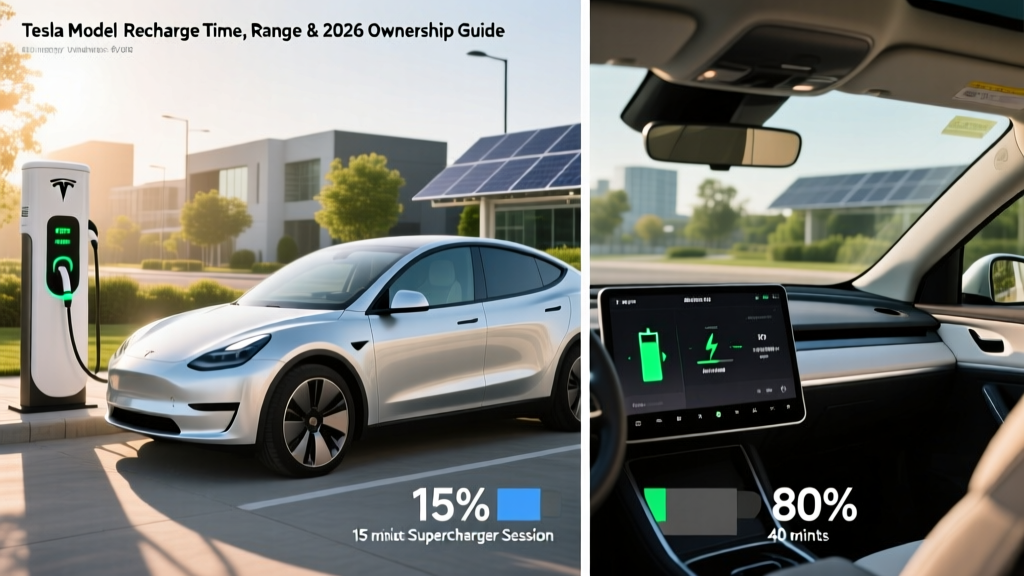
The "250 kW peak" figure is not sustained across the entire session. The Model Y Long Range typically holds peak rate from roughly 10% to 30% state of charge, then tapers to ~170 kW by 50%, and drops below 100 kW past 70%. This taper is why the 10–80% time is ~23 minutes rather than the ~15 minutes a flat 250 kW rate would suggest. Plan road-trip stops accordingly: a 20-minute break gets you from 15% to roughly 75%, which is the sweet spot for minimizing total trip time.
Home Charging Setup
Tesla's Wall Connector ($420) at 48 amps on a 60-amp circuit delivers the fastest practical home charge. Most owners charging overnight from 20% to 80% will replenish ~225 miles in about 6 hours. Installation costs vary widely: expect $500–$1,500 for a straightforward install near the panel, or $2,000–$4,000+ if your home needs a panel upgrade to 200A service. Always get a quote from a licensed electrician before purchasing equipment.
Performance & Drivetrain
| Trim | Drivetrain | 0–60 mph | Horsepower | Top Speed |
|---|---|---|---|---|
| RWD | Rear-wheel drive | 6.5 sec | ~295 hp | 135 mph |
| Long Range AWD | Dual-motor AWD | 4.8 sec | ~384 hp | 135 mph |
| Performance AWD | Dual-motor AWD | 3.5 sec | ~456 hp | 155 mph |
The dual-motor AWD system uses a permanent-magnet motor on the rear axle and an induction motor up front. The front motor can freewheel when not needed, reducing drag and improving efficiency during light-load cruising. Regenerative braking is aggressive enough to enable one-pedal driving in most conditions, though Tesla no longer offers a user-adjustable regen setting — it is fixed at maximum.
Pricing, Trims & Federal Tax Credit Eligibility
| Trim | Base MSRP | Est. After §30D Credit | Credit Eligible? |
|---|---|---|---|
| RWD | $44,990 | ~$37,490 | Yes (if rules met) |
| Long Range AWD | $47,990 | ~$40,490 | Yes (if rules met) |
| Performance AWD | $52,490 | ~$44,990 | Yes (if rules met) |
- MSRP cap: SUVs/vans/pickups must be ≤$80,000 — all Model Y trims qualify
- Buyer income cap: AGI ≤$150,000 (single) / ≤$300,000 (joint) / ≤$225,000 (head of household)
- Battery sourcing: Critical minerals and battery components must meet phased-in domestic/free-trade-partner thresholds — verify current-year compliance at IRS.gov
- Point-of-sale transfer: You can transfer the credit to the dealer at purchase for an immediate price reduction, or claim it on your tax return
- One vehicle per VIN: Credit applies once per vehicle; used vehicles have separate §25E rules
The Long Range AWD at ~$40,490 after the credit (if eligible) represents the value sweet spot: dual-motor capability, 320-mile EPA range, and NMC chemistry for road-trip flexibility. The RWD saves $3,000 upfront and offers LFP durability, but sacrifices AWD traction and ~100 hp.
Technology, Driver Assistance & Safety
The 2026 Model Y ships with Tesla's current infotainment stack on a 15.4-inch center touchscreen, with an 8-inch rear-seat display added in the refresh. Navigation, media, and vehicle controls all route through the screen — there are no physical buttons for climate or mirrors, which requires a learning curve.
Tesla Autopilot and Full Self-Driving (Supervised) are SAE Level 2 driver-assistance systems. The driver must remain attentive, keep hands on the wheel, and be prepared to take over at any moment. These systems do not make the vehicle self-driving.
Standard Autopilot includes Traffic-Aware Cruise Control and Autosteer. The $8,000 FSD (Supervised) upgrade adds automatic lane changes, traffic-light and stop-sign recognition, and navigational routing on highways. Real-world FSD performance varies significantly by geography and road complexity — it excels on well-marked divided highways but can hesitate in construction zones or unmapped intersections.
The Model Y holds a 5-star overall NHTSA safety rating and earns top marks from IIHS in crashworthiness testing. Standard active safety features include automatic emergency braking, blind-spot monitoring, and lane-departure avoidance.
Warranty & Ownership Costs
| Component | Coverage |
|---|---|
| Basic vehicle | 4 years / 50,000 miles |
| Battery & drive unit | 8 years / 120,000 miles (Long Range/Performance) |
| Battery & drive unit (RWD) | 8 years / 100,000 miles |
| Battery capacity retention threshold | 70% of original capacity during warranty period |
Tesla's battery warranty guarantees that the pack will retain at least 70% of its original capacity over the warranty term. In practice, NMC packs in the Long Range typically show 5–8% degradation over the first 50,000 miles based on fleet data, then stabilize. LFP packs in the RWD model tend to degrade more slowly but have a lower starting capacity.
Insurance costs for the Model Y remain higher than average for the compact SUV segment — expect $1,800–$2,800 annually depending on your state, age, and driving record. Get a quote before purchasing; the premium difference versus a RAV4 Hybrid can offset some of the fuel savings.
Pros, Cons & Who Should Buy
Pros
- 320-mile EPA range (Long Range) eliminates range anxiety for most trips
- 250 kW Supercharger network — most reliable public charging in the US
- 41.6 in rear legroom accommodates most families and car seats
- Class-leading cargo volume (72.1 cu ft with seats folded)
- Strong §30D tax credit eligibility keeps effective price competitive
- Over-the-air updates continuously add features
Cons
- Rear seat cushion is low — knees-up posture for tall adults on long drives
- No Apple CarPlay or Android Auto
- No physical buttons — all controls via touchscreen
- FSD (Supervised) costs $8,000 and remains Level 2 — not autonomous
- Insurance premiums run 20–40% above segment average
- Ride quality improved in refresh but still firm over sharp impacts
Who This EV Suits Best
Ideal for: Families of 3–4 who want one vehicle for commuting, road trips, and daily errands. The Model Y Long Range AWD at ~$40,490 after the tax credit delivers the best balance of range, space, charging speed, and all-weather capability in the segment.
Consider alternatives if: You regularly carry three adults in the rear seat (the Ioniq 5 or Kia EV6 offer wider rear benches), you need Apple CarPlay, or you want a softer ride (the Hyundai Ioniq 5 and Chevrolet Equinox EV are more compliant over rough pavement).
Frequently Asked Questions
What is the real-world range of the Tesla Model Y?
The Long Range AWD is EPA-rated at 320 miles. In real-world highway driving at 70 mph in moderate temperatures, expect 275–290 miles. In cold weather (below 35°F), range drops to approximately 230–255 miles due to battery resistance and cabin heating demands. Preconditioning while plugged in mitigates some of this loss.
How fast does the Model Y charge at home and on the road?
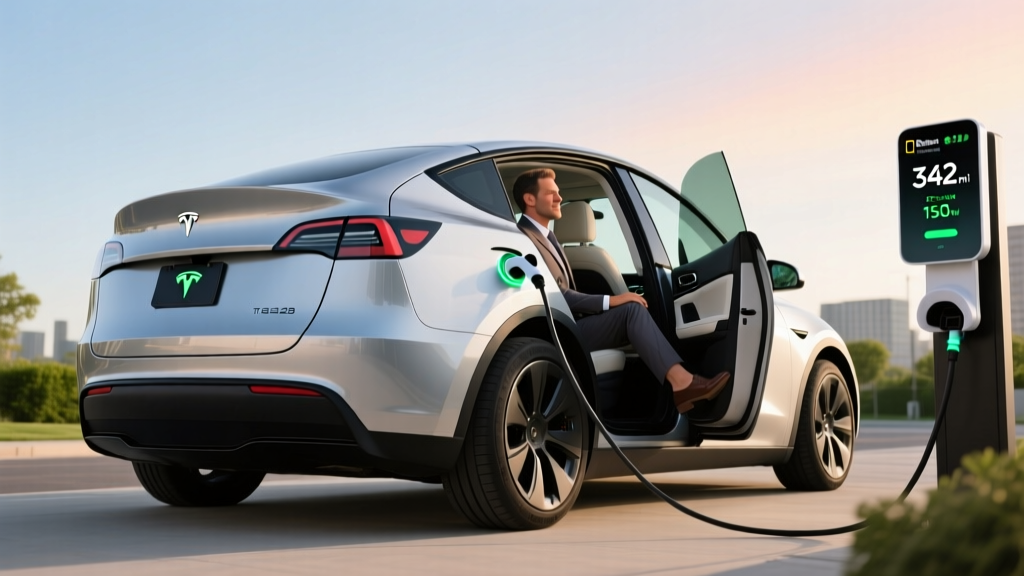
On a Level 2 Tesla Wall Connector (11.5 kW / 48A), the Model Y adds about 37 miles of range per hour — a full overnight session easily replenishes daily driving. On a V4 Supercharger at 250 kW peak, a 10–80% session takes approximately 23 minutes, though the rate tapers significantly above 70% SoC.
Does the Tesla Model Y qualify for the $7,500 federal EV tax credit?
All 2026 Model Y trims fall under the $80,000 SUV MSRP cap. Eligibility depends on your adjusted gross income (≤$300,000 joint / ≤$150,000 single) and whether the battery meets current-year critical-mineral and component sourcing thresholds. Verify at IRS.gov before purchasing, as sourcing rules tighten annually.
Is the Tesla Model Y rear legroom enough for adults?
At 41.6 inches, the Model Y rear legroom is adequate for adults up to about 6 feet tall on trips of an hour or less. Taller passengers may find the low seat cushion creates a knees-up posture that becomes uncomfortable on long drives. It outperforms the Mach-E (38.9 in) and Ioniq 5 (39.4 in) on paper, though the cushion angle affects perceived comfort.
Is the Model Y worth buying versus the Hyundai Ioniq 5 or Ford Mustang Mach-E?
The Model Y wins on charging infrastructure (Supercharger network), cargo volume (72.1 cu ft), and software integration. The Ioniq 5 offers 800V architecture for faster peak charging on compatible Electrify America stalls and a more comfortable rear seat. The Mach-E provides Apple CarPlay and a more traditional interior layout. If Supercharger access matters most to you, the Model Y is still the pragmatic choice.
How much does a full battery replacement cost out of warranty?
Out-of-warranty battery replacement for the Model Y Long Range currently ranges from $12,000 to $16,000 including labor, based on Tesla service center estimates. However, fleet data suggests most NMC packs retain 85–90% capacity at 100,000 miles, making full replacement uncommon within the vehicle's typical ownership life.