Tesla Model Y Rear Leg Room: The Dimension Buyers Actually Care About
Search traffic doesn't lie. When shoppers type "Tesla Model Y rear leg room" into Google, they're asking a practical question: Can my family actually live with this car? The 2026 Tesla Model Y (the refreshed "Juniper" generation that launched in early 2025) answers that question with a measurable improvement over its predecessor, while simultaneously reworking the SUV's range, charging architecture, and cabin materials.
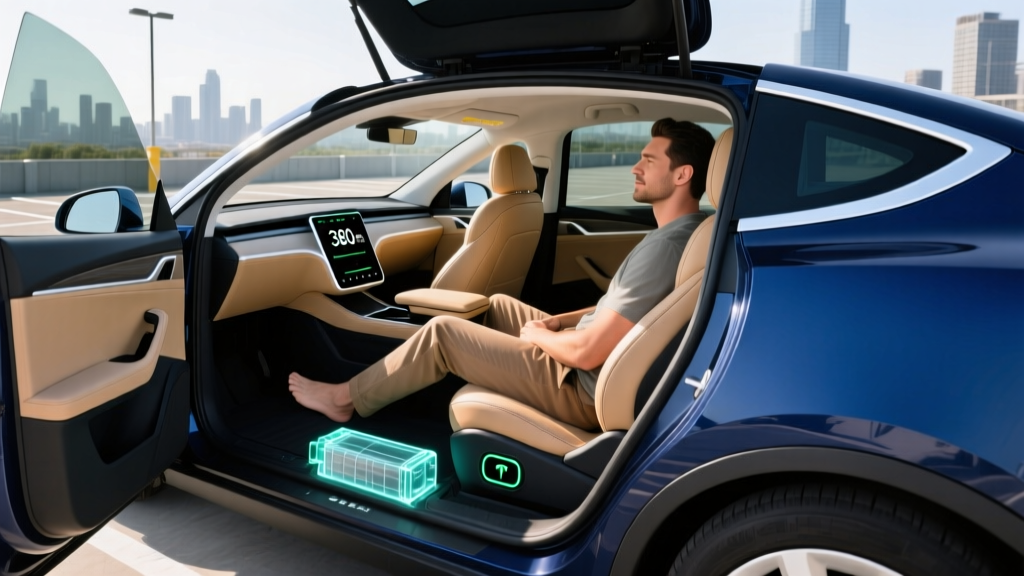
The headline number: 41.0 inches of rear leg room in the 2026 Model Y Long Range AWD, up roughly an inch from the pre-refresh model. That gain comes from a redesigned rear seat cushion with a slightly more reclined backrest angle (now adjustable up to 13 degrees via a manual lever in the cargo area), thinner front seatbacks, and a longer wheelbase packaging trick. For context, the Hyundai Ioniq 5 offers 39.4 inches and the Ford Mustang Mach-E sits at 38.9 inches. A six-foot passenger behind a six-foot driver will have roughly a fist of knee clearance — adequate for long trips, not limousine-generous.
Headroom in the second row measures 38.4 inches (panoramic glass roof doesn't intrude), hip room is 54.0 inches (three-across is feasible for car seats but tight for adult shoulders), and shoulder room is 56.4 inches. The 60/40 split-folding rear bench still folds nearly flat, preserving the Model Y's core utility pitch.
| Measurement | Front | Rear |
|---|---|---|
| Leg room | 41.8 in | 41.0 in |
| Head room | 40.7 in | 38.4 in |
| Shoulder room | 57.1 in | 56.4 in |
| Hip room | 55.2 in | 54.0 in |
Behind the rear seats, cargo volume measures 30.2 cubic feet (up from 26.6 in the prior generation thanks to a deeper under-floor well). Fold the bench and you get 72.1 cu ft. The front trunk (frunk) adds 4.1 cu ft — useful for charging cables or a soft duffel. Towing capacity remains 3,500 lbs with the optional tow package.
Range, Efficiency, and Real-World Expectations
The 2026 Model Y Long Range AWD carries an EPA-estimated 320 miles of range on its standard 19-inch Gemini wheels. Step up to the 20-inch Helix wheels and the EPA figure drops to approximately 295 miles — a ~8% penalty for stickier rubber and higher aero drag.
Real-World Range Reality Check
EPA sticker: 320 mi (Long Range AWD, 19-in wheels)
Highway cruising (70 mph, 70°F): ~265–280 mi
Cold weather (30°F, mixed driving): ~220–250 mi (LFP chemistry loses less than NMC, but cabin heating still bites)
City/regenerative-heavy: ~300–315 mi
Plan road trips around ~260 miles of usable range to keep a safety buffer and avoid charging above 80%, where the charge curve tapers sharply.
Efficiency lands at 122 MPGe combined (28 kWh/100 mi) on 19-inch wheels per fueleconomy.gov. That's among the most efficient vehicles in its class — a direct result of Tesla's heat pump, SiC inverter, and low-drag Juniper bodywork (Cd 0.23).
Battery Chemistry: LFP vs NMC in the 2026 Lineup
Tesla splits the 2026 Model Y lineup by chemistry, and it matters for how you own the car:
- Standard Range RWD: ~60 kWh usable, LFP (lithium iron phosphate) from CATL. Heavier, lower energy density, but more cycle life and can be charged to 100% daily without accelerated degradation.
- Long Range AWD & Performance: ~78 kWh usable, NMC (nickel manganese cobalt) from Panasonic's 4680 cells. Higher energy density, better cold-weather performance, but Tesla recommends daily charge limits of 80%.
If you can charge at home every night and want the lowest long-term degradation risk, LFP on the Standard Range is compelling. If you need the 320-mile envelope for road trips or live in sub-freezing climates, the NMC Long Range is the better fit.
Charging Speed: DC Fast, Level 2, and the Supercharger Advantage
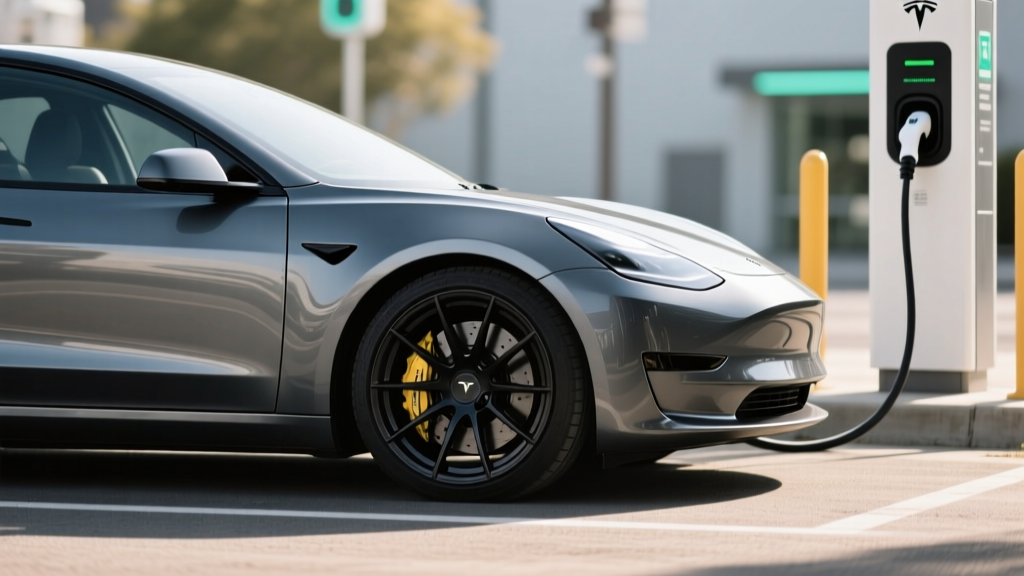
The 2026 Model Y Long Range AWD peaks at 250 kW on DC fast chargers (CCS1 via the native port — no adapter needed since MY2025). The 10–80% session takes approximately 25 minutes at a V3 or V4 Supercharger or any 250+ kW CCS station. Above 80% SoC, power tapers to ~60 kW, then ~25 kW past 95% — a typical NMC curve. Always precondition the battery via the car's navigation-routed preconditioning before arriving at a charger; skipping this step in cold weather can double your session time.
| Charging Level | Power / Rate | Typical Gain |
|---|---|---|
| Level 1 (120V, 12A) | ~1.4 kW | ~4 mi/hr |
| Level 2 (240V, 48A, Wall Connector) | 11.5 kW | ~44 mi/hr |
| DC Fast (peak) | 250 kW | 10–80% in ~25 min |
| DC Fast (sustained 10–80%) | ~150 kW avg | ~175 mi added |
At home on a 48-amp Tesla Wall Connector (hardwired, 60A circuit), expect a full overnight replenishment from 20% in roughly 6.5 hours. Installation typically runs $800–$2,000 depending on panel proximity and whether your home needs a 200A service upgrade — a licensed electrician should confirm your panel headroom before purchase.
Performance, Drivetrain, and Ride Quality
The Long Range AWD uses a dual-motor setup: a permanent-magnet rear motor and an induction front motor that decouples under light load for efficiency. Combined output is approximately 384 hp and 376 lb-ft of torque, delivering a 0–60 mph time of 4.8 seconds. The Performance trim bumps that to 3.3 seconds with track-tuned dampers and larger brakes.
The Juniper refresh also retuned the suspension — new frequency-selective dampers and revised bushings absorb sharp impacts noticeably better than the pre-2025 Model Y, which drew frequent complaints for a brittle ride on broken pavement. It's still firm by luxury-SUV standards, but no longer punishing.
Pricing, Trims, and Federal Tax Credit Eligibility
| Trim | Base MSRP | Federal Credit (est.) | Effective Price |
|---|---|---|---|
| Standard Range RWD | $44,990 | Up to $7,500 | ~$37,490 |
| Long Range AWD | $48,990 | Up to $7,500 | ~$41,490 |
| Performance AWD | $53,990 | Up to $7,500 | ~$46,490 |
Destination fee ($1,390) and options additional. Credit applied as point-of-sale reduction per IRS §30D rules.
The federal §30D clean vehicle credit is available up to $7,500, but eligibility hinges on three moving targets that shift yearly:
- MSRP cap: SUVs must be at or below $80,000 — all Model Y trims qualify.
- Buyer income cap: AGI ≤ $150,000 (single), $225,000 (head of household), $300,000 (joint).
- Battery sourcing & critical minerals: Increasingly strict percentages must be sourced from US or FTA-partner countries. Verify the specific VIN on the IRS qualified-vehicle list at purchase — Tesla publishes compliance status per build month.
Since January 2024, the credit can transfer to the dealer (Tesla, in this case) as a point-of-sale price reduction, eliminating the need to wait for tax filing. Confirm eligibility with a tax professional; rules change annually and state incentives (California, Colorado, etc.) stack on top.
Tech, Driver Assistance, and the FSD Supervised Caveat
The Juniper cabin centers on a 15.4-inch touchscreen (slightly larger than before) with a rear-seat 8-inch display for climate and media controls. Ambient lighting, ventilated front seats, and power-folding second-row seats are now standard on Long Range and above. The turn-signal stalk is gone — signals live on the steering wheel and touchscreen, a decision that continues to divide owners.
Every Model Y ships with Basic Autopilot: adaptive cruise + lane centering, a Level 2 SAE system. Full Self-Driving (Supervised) is a $8,000 option (or $99/month subscription) that adds city-street navigation, stop-sign/light recognition, and lane changes on navigation — but remains Level 2. The driver must keep hands on or near the wheel and eyes on the road. This is not autonomous driving; it's supervised driver assistance, and NHTSA continues to scrutinize its misuse patterns.
Warranty and Long-Term Ownership
- Basic vehicle: 4 years / 50,000 miles
- Battery & drive units: 8 years / 120,000 miles (Long Range/Performance) with minimum 70% capacity retention; 8 years / 100,000 miles on Standard Range
- Roadside assistance: 4 years / 50,000 miles
Tesla's 70% retention threshold is industry-standard but conservative — most owners report 5–8% degradation at 100k miles based on aggregated fleet data. LFP packs historically show slower long-term fade but are harder to diagnose for SoH because their voltage curve is flatter.
Pros, Cons, and the Verdict
Pros
- Class-leading rear leg room (41.0 in) post-refresh
- 320-mi EPA range with best-in-class efficiency (122 MPGe)
- Supercharger network access + native CCS — widest charging footprint
- Strong residual value vs. legacy-brand EVs
- Point-of-sale federal credit reduces upfront cost
Cons
- Stalkless steering wheel (turn signals on wheel/screen) is an adjustment
- Firm ride still evident on rough concrete, even post-refresh
- No Apple CarPlay / Android Auto — Tesla-only interface
- FSD Supervised remains Level 2 despite the "self-driving" name
- Insurance premiums run 15–30% above segment average
Who the 2026 Model Y Suits Best
The 2026 Model Y is the default answer for families of four who need daily electric commuting plus 2–3 road trips per year, particularly those with home Level 2 charging access. Its combination of rear-seat space, cargo utility, efficiency, and Supercharger access is still unmatched on paper. Single buyers who rarely carry rear passengers may find the Ioniq 5 or a smaller EV more cost-effective; buyers who regularly haul three adults across the rear bench should cross-shop the Hyundai Ioniq 9 or Kia EV9 for true three-row space.
Frequently Asked Questions
Does the 2026 Tesla Model Y fit three car seats across the rear bench?
Tight, but possible with slim-profile seats. Hip room is 54.0 inches. Most families report success with two full-size seats plus a booster, or three narrow infant carriers. Test-fit your specific seats before committing.
How much does a home Level 2 charger cost to install for a Model Y?
Expect $800–$2,000 for a Tesla Wall Connector installation on an existing 200A panel with short conduit runs. Older homes with 100A service may need a $2,000–$4,000 panel upgrade. Get a quote from a licensed electrician before purchasing equipment.
Is the Model Y still eligible for the $7,500 federal tax credit in 2026?
Yes — all trims fall under the $80,000 SUV MSRP cap. Buyer income caps ($150k/$225k/$300k by filing status) and battery-sourcing rules still apply. Verify the specific VIN on the IRS qualified list and consult a tax professional. The credit can be applied at point of sale.
What's the real highway range at 75–80 mph?
Expect 265–280 miles on the Long Range AWD with 19-inch wheels in mild weather. Cold temps (below freezing) and headwinds can drop this to 220–240 miles. Plan Supercharger stops around the 240-mile mark for a safety buffer.
How does rear leg room compare to the Ford Mustang Mach-E and Hyundai Ioniq 5?
Model Y: 41.0 in. Ioniq 5: 39.4 in. Mach-E: 38.9 in. The Model Y currently leads the midsize electric SUV segment on this specific metric after the Juniper refresh.
Is Full Self-Driving worth $8,000?
For most buyers, no. FSD Supervised is a Level 2 driver-assist system that requires constant supervision. It reduces fatigue on long highway stretches but does not eliminate driver responsibility. The $99/month subscription is a lower-risk way to trial it before committing.