2026 Tesla Model Y: The Benchmark Compact Electric SUV
The Tesla Model Y remains the best-selling electric vehicle in America for good reason: it delivers practical range, access to the most reliable fast-charging network, and continuous over-the-air improvements. For 2026, Tesla has refined the Juniper-refreshed Model Y with updated battery chemistry options, slightly improved efficiency, and the same expansive Supercharger ecosystem that makes road-trip ownership viable. But beyond the spec sheet, many owners are exploring personalization options — including vinyl wraps — to protect paint and stand out. This review covers everything from EPA range and charging speeds to the often-asked question of tesla car wrap cost.
| Spec | Long Range AWD | Performance | Rear-Wheel Drive |
|---|---|---|---|
| EPA Range | 320 miles | 295 miles | 280 miles |
| Battery (usable) | 75 kWh (NMC) | 75 kWh (NMC) | 60 kWh (LFP) |
| 0-60 mph | 4.8 sec | 3.5 sec | 6.6 sec |
| Horsepower | 384 hp | 456 hp | 295 hp |
| Drivetrain | Dual-Motor AWD | Dual-Motor AWD | Single-Motor RWD |
| Max DC Charge | 250 kW | 250 kW | 170 kW |
| 10-80% Time | ~27 min | ~27 min | ~32 min |
| Level 2 Rate | 11.5 kW (~44 mi/hr) | 11.5 kW (~44 mi/hr) | 11.5 kW (~44 mi/hr) |
| MPGe (combined) | 122 MPGe | 111 MPGe | 129 MPGe |
| Base MSRP | $48,990 | $54,990 | $44,990 |
| Battery Warranty | 8 yr / 120,000 mi | 8 yr / 120,000 mi | 8 yr / 100,000 mi |
Source: EPA fueleconomy.gov
Real-World Range: What the EPA Sticker Doesn't Tell You
EPA Estimate: 320 miles (Long Range AWD)
Real-World Expectation: Plan for 250-275 miles on highway-heavy road trips at 70-80 mph. In cold weather (below 32°F), expect a 20-30% reduction, dropping usable range to roughly 200-230 miles before needing to charge. City driving with regenerative braking recovers more energy, often matching or exceeding the EPA combined figure.
The Model Y Long Range AWD's 320-mile EPA estimate is achievable in mild conditions with mixed driving. But efficiency drops at sustained highway speeds due to aerodynamic drag — the Model Y's crossover profile creates more wind resistance than the Model 3 sedan at 75+ mph. Cold weather is the bigger range killer: lithium-ion batteries lose efficiency in freezing temperatures, and cabin heating draws significant power even with Tesla's heat pump. Preconditioning the battery while plugged in mitigates some cold-weather loss, but owners in northern climates should budget for 200-220 miles of usable winter range on long trips.
The RWD trim's smaller 60 kWh LFP (lithium iron phosphate) battery sacrifices range for lower cost and longer cycle life. LFP chemistry tolerates frequent 100% charging better than NMC, making it practical for daily commuters who can charge at home nightly. However, LFP batteries are heavier and less energy-dense, which is why the RWD model gives up 40 miles of range despite being lighter overall.
Charging Speed: Supercharger Network Advantage
| Charging Level | Power | Speed (Long Range) | Speed (RWD) |
|---|---|---|---|
| Level 1 (120V) | 1.4 kW | ~5 mi/hr | ~5 mi/hr |
| Level 2 (240V home) | 11.5 kW | ~44 mi/hr | ~44 mi/hr |
| DC Fast (Supercharger V3) | 250 kW peak | 10-80% in ~27 min | 170 kW peak, 10-80% in ~32 min |
| DC Fast (Supercharger V4) | Up to 350 kW | Model Y currently capped at 250 kW | Capped at 170 kW |
Tesla's Supercharger network remains the gold standard for public fast charging — reliable, plentiful, and seamlessly integrated into the navigation system. The Model Y Long Range peaks at 250 kW on V3 Superchargers, but that peak is sustained only between 10-30% state of charge. Above 50%, the charge curve tapers significantly, dropping to under 100 kW by 70% SoC. This is why Tesla (and most EV makers) quote 10-80% times rather than 0-100% — charging above 80% is painfully slow and unnecessary for most trips.
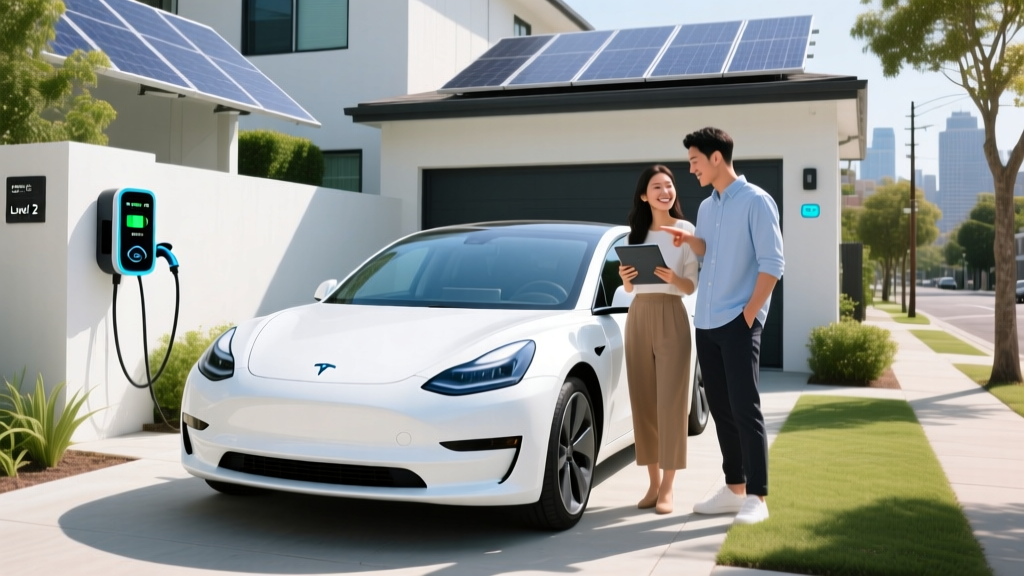
For home charging, a Level 2 wall connector at 11.5 kW adds roughly 44 miles of range per hour, fully replenishing the Long Range battery in about 7 hours. Most owners charge overnight and wake up to a full battery daily. Installation costs for a home Level 2 setup typically run $500-$2,000 depending on electrical panel proximity and local permitting — a licensed electrician should assess your 200-amp panel capacity before installation.
The Model Y uses Tesla's NACS (North American Charging Standard) connector natively. With Ford, GM, Rivian, and other automakers adopting NACS for 2025-2026 models, Tesla's connector is becoming the industry standard, reducing the adapter hassle that CCS-equipped vehicles face at non-Tesla chargers.
Tesla Car Wrap Cost: Pricing, Options, and Practical Considerations
Beyond performance specs, many Model Y owners explore vinyl wraps to personalize their vehicle, protect the factory paint, or achieve colors Tesla doesn't offer. The tesla car wrap cost varies significantly based on material quality, installer expertise, and coverage scope.
Full exterior wrap: $2,500-$5,000 for a quality installation using premium vinyl (3M, Avery Dennison, or XPEL). Budget shops may quote $1,800-$2,500, but cheap vinyl lifts at edges within 1-2 years and can damage paint upon removal. A reputable installer with Tesla experience will charge $3,500-$4,500 for a full wrap with 5-7 year durability.
Partial wraps and accents: Roof wraps ($400-$800), hood and trunk combos ($600-$1,200), or mirror caps ($150-$300) offer customization without the full-vehicle investment. Chrome-delete wraps (blacking out window trim) run $300-$600 and are popular among Tesla owners seeking a stealthier look.
Paint protection film (PPF) vs. vinyl wrap: PPF is a clear urethane layer that protects against rock chips and minor scratches without changing color. Full-vehicle PPF costs $4,000-$7,000 — significantly more than a color-change wrap — but preserves the factory paint underneath. Many owners combine PPF on high-impact areas (hood, fenders, mirrors) with a vinyl wrap on the roof or lower body panels.
Does a wrap void the Tesla warranty? No. Vinyl wraps do not affect the battery, powertrain, or electronics warranty. However, improper installation or removal that damages paint or trim isn't covered. Tesla Service Centers won't refuse warranty work for wrapped vehicles, but they may require wrap removal for certain body repairs.
Longevity and maintenance: Premium wraps last 5-7 years with proper care (hand-wash only, no automatic car washes with abrasive brushes, avoid prolonged sun exposure when parked). Matte and satin finishes show swirl marks less than gloss wraps but require specific cleaning products. Budget for $100-$200 annually in wrap-safe detailing supplies.
Pricing, Tax Credits, and Total Cost of Ownership
| Trim | Base MSRP | Federal Credit (§30D) | Effective Price |
|---|---|---|---|
| Rear-Wheel Drive | $44,990 | Up to $7,500 (if eligible) | ~$37,490 |
| Long Range AWD | $48,990 | Up to $7,500 (if eligible) | ~$41,490 |
| Performance | $54,990 | Up to $7,500 (if eligible) | ~$47,490 |
The federal EV tax credit under IRS §30D offers up to $7,500, but eligibility is complex and changes annually. For 2026, key requirements include:
- MSRP caps: SUVs must be priced under $80,000 (all Model Y trims qualify)
- Buyer income limits: Modified AGI under $150,000 (single), $225,000 (head of household), or $300,000 (married filing jointly)
- Battery sourcing: Critical minerals and battery components must meet escalating domestic-content thresholds. Tesla's U.S. battery production gives the Model Y an advantage, but final eligibility depends on the specific battery batch and IRS guidance at time of purchase.
- Point-of-sale transfer: Eligible buyers can transfer the credit to the dealer at purchase, reducing the upfront price rather than waiting for a tax refund.
Consult a tax professional or the IRS clean vehicle credit page to confirm your specific eligibility before purchasing.
Total cost of ownership (5 years, 60,000 miles): Assuming $0.15/kWh home charging and $0.35/kWh public fast charging (70% home, 30% public mix), expect roughly $4,200 in electricity costs over 5 years. Compare that to $9,000-$11,000 in gasoline for a comparable AWD crossover at 25 MPG and $3.50/gallon. Maintenance savings are significant — no oil changes, fewer brake replacements (regenerative braking reduces pad wear), and no transmission service. However, EV insurance premiums run 15-25% higher than gas equivalents, and tire replacement costs more due to the Model Y's weight and instant torque.
Interior, Tech, and Daily Usability
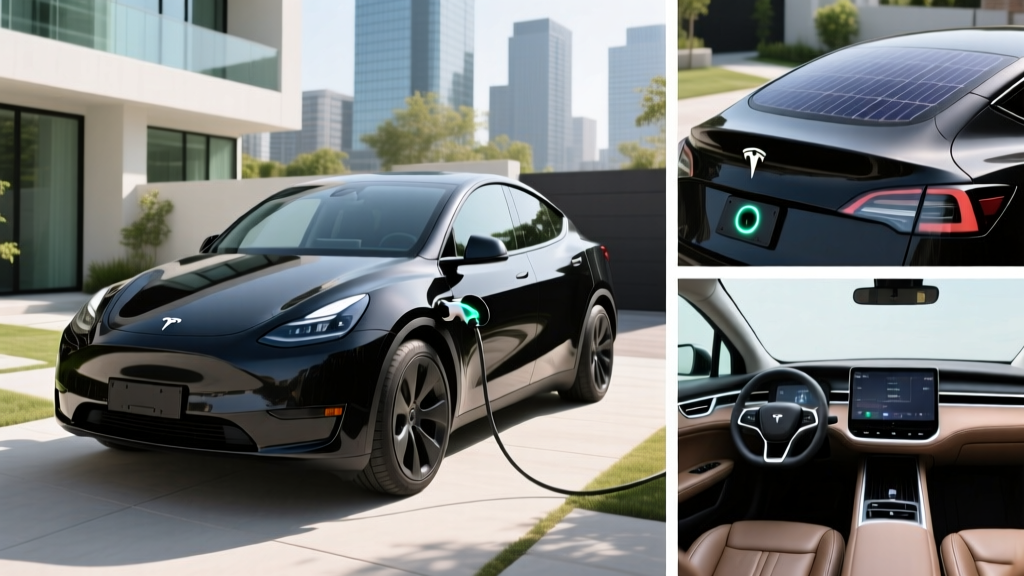
The Model Y's interior is minimalist to a fault — a single 15.4-inch touchscreen handles navigation, climate, media, and vehicle settings. There's no instrument cluster, no head-up display, and no physical buttons for common functions like wipers or glovebox release. This works for tech-comfortable owners but frustrates those who prefer tactile controls.
Cargo space: 30.2 cubic feet behind the second row, expanding to 72.1 cubic feet with rear seats folded. The rear trunk opening is wide and low, making loading easier than many SUVs. A small front trunk (frunk) adds 4.1 cubic feet for charging cables or groceries.
Passenger space: Front legroom is generous at 41.8 inches, but rear legroom (38.4 inches) is tighter than competitors like the Hyundai Ioniq 5 or Ford Mustang Mach-E. The panoramic glass roof creates an airy cabin but contributes to heat buildup in summer — many owners add aftermarket sunshades.
Driver assistance: Tesla's Autopilot (standard) includes adaptive cruise control, lane-keeping, and automatic emergency braking. Full Self-Driving (FSD) Supervised ($8,000 option or $99/month subscription) adds automated lane changes, traffic-light recognition, and city-street navigation. However, FSD is SAE Level 2 — the driver must remain engaged and ready to take over at any time. It is not autonomous driving. For true Level 4 robotaxi service, Waymo operates in select cities but isn't available for consumer purchase.
Important: Tesla FSD (Supervised) requires constant driver attention. It does not make the Model Y self-driving. You are legally responsible for the vehicle at all times. NHTSA has investigated multiple crashes involving Autopilot/FSD, and misuse can result in injury or death.
Who Should Buy the Model Y (And Who Shouldn't)
Choose the Model Y if:
- You want access to the most reliable and extensive fast-charging network (Tesla Superchargers)
- You prioritize over-the-air updates and tech-forward features
- You need practical cargo space for a small family or active lifestyle
- You're comfortable with a minimalist, screen-centric interface
- You plan to keep the vehicle 5+ years and value Tesla's resale value retention
Consider competitors if:
- You prefer physical buttons and a traditional instrument cluster (Hyundai Ioniq 5, Ford Mach-E)
- You need more rear-seat legroom for adults or tall teens
- You want faster DC charging speeds (Ioniq 5 peaks at 350 kW, 10-80% in 18 min)
- You need towing capacity above 3,500 pounds (Rivian R1S, Ford F-150 Lightning)
- You want Apple CarPlay/Android Auto integration (Tesla uses proprietary software only)
Pros and Cons: The Honest Assessment
Pros:
- Access to 6,000+ Tesla Superchargers with seamless plug-and-charge integration
- Strong efficiency (122 MPGe combined) and competitive real-world range
- Continuous OTA updates add features post-purchase
- Practical cargo space and available third-row seat (small children only)
- Strong resale value and brand recognition
- LFP battery option (RWD) allows daily 100% charging without degradation concerns
Cons:
- Minimalist interior lacks physical controls and traditional instrument cluster
- Rear-seat legroom is tighter than key competitors
- DC fast charging capped at 250 kW — slower than 800V competitors
- No Apple CarPlay or Android Auto support
- Panel gaps and paint quality remain inconsistent despite improvements
- FSD is expensive and still requires full driver engagement
- Ride quality is firm, especially on 20-inch wheels
Frequently Asked Questions
What is the real-world range of the 2026 Tesla Model Y?
The Long Range AWD achieves 320 miles EPA, but expect 250-275 miles on highway-heavy trips and 200-230 miles in cold weather (below 32°F). The RWD model's 280-mile EPA range drops to roughly 220-240 miles highway, 180-200 miles in winter conditions.
How fast does the Model Y charge at home and on road trips?
Home Level 2 charging at 11.5 kW adds ~44 miles per hour, fully charging in 7 hours. On Tesla Superchargers, the Long Range peaks at 250 kW, achieving 10-80% in about 27 minutes. The RWD model peaks at 170 kW with a 10-80% time of roughly 32 minutes.
How much does a Tesla car wrap cost?
A quality full-vehicle wrap costs $3,500-$4,500 using premium vinyl (3M, Avery Dennison, XPEL). Budget wraps run $1,800-$2,500 but often fail within 1-2 years. Partial wraps (roof, hood, chrome-delete) cost $300-$1,200. Paint protection film (PPF) is more expensive at $4,000-$7,000 but preserves factory paint.
Does the 2026 Model Y qualify for the $7,500 federal tax credit?
The Model Y is eligible for up to $7,500 under IRS §30D, but buyer eligibility depends on income limits ($150K single / $300K married), MSRP (under $80K for SUVs — all trims qualify), and battery sourcing requirements. Tesla's U.S. battery production helps, but final eligibility varies by production batch. Confirm with a tax professional or the IRS before purchasing.
Is the Model Y worth buying vs. the Hyundai Ioniq 5 or Ford Mach-E?
The Model Y wins on charging infrastructure (Supercharger network), software updates, and resale value. The Ioniq 5 offers faster 350 kW charging, more rear-seat space, and physical controls. The Mach-E provides a more traditional driving experience and Apple CarPlay. Test-drive all three and prioritize what matters most: charging convenience (Tesla), interior comfort (Ioniq 5), or familiar tech (Mach-E).
What are the biggest drawbacks of owning a Model Y?
The minimalist interior frustrates some owners (no physical buttons, no instrument cluster). Rear-seat space is tighter than competitors. DC charging is slower than 800V rivals. Panel gaps and paint quality remain inconsistent. And FSD, while impressive, is expensive and still requires full driver attention — it's not autonomous driving.
How long will the Model Y battery last, and what does replacement cost?
Tesla warranties the battery for 8 years / 120,000 miles (Long Range/Performance) or 8 years / 100,000 miles (RWD), guaranteeing at least 70% capacity retention. Real-world data suggests Model Y batteries retain 85-90% capacity at 100,000 miles with proper care (avoid frequent 100% charges on NMC, minimize DC fast charging when possible). Out-of-warranty replacement costs $12,000-$16,000, but most owners never need one.
For more on EV ownership costs and charging setup, see our home charging installation guide.