Quick Verdict: The Benchmark Compact Electric SUV
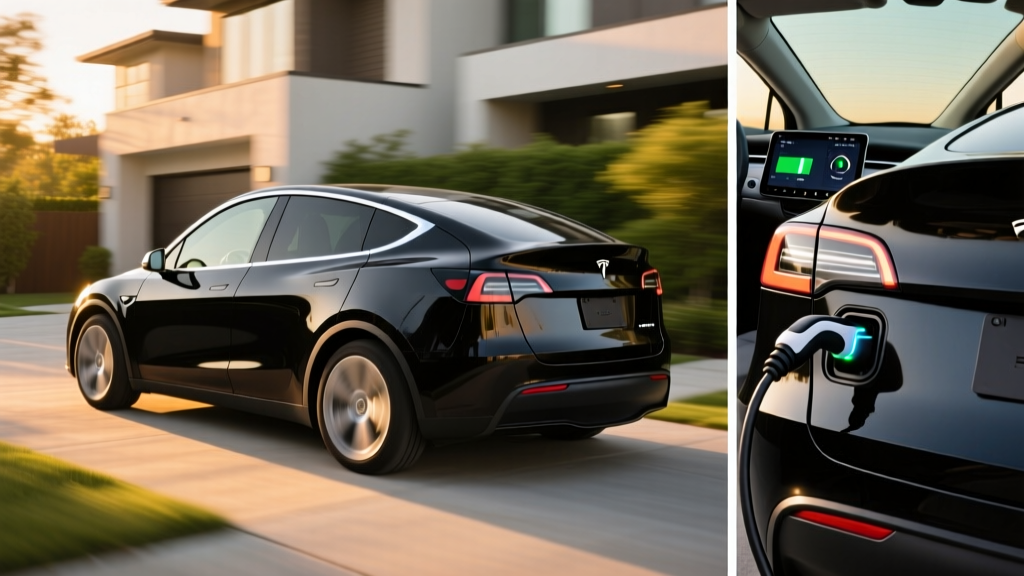
The 2026 Tesla Model Y remains the best-selling electric vehicle in the United States for good reason: it pairs strong EPA range with access to the most reliable DC fast-charging network in the country, a usable Supercharger ecosystem, and a starting price that — after the federal tax credit — undercuts most rivals. The Juniper refresh brought a quieter cabin, updated suspension tuning, and a ventilated-seat option that the pre-2025 model lacked. But the real question buyers ask us is practical: how to get Tesla credits under the current IRS §30D rules, and does the math actually work in 2026?
This review breaks down the 2026 Model Y's range, charging curve, real-world efficiency, and the exact eligibility checklist for the up-to-$7,500 federal EV tax credit — including the MSRP caps, income limits, and battery-sourcing requirements that trip up many buyers.
Range & Efficiency: EPA Sticker vs. Real-World Miles
Real-World Expectation: Plan for 250–280 miles on sustained 70-mph highway driving in the Long Range AWD. In freezing temperatures (below 32°F), expect a 20–30% reduction, dropping effective range to roughly 200–240 miles without preconditioning.
The 2026 Model Y Long Range AWD carries a 78.1 kWh usable battery pack using NMC (nickel manganese cobalt) chemistry, which offers higher energy density than LFP cells but requires more careful state-of-charge management for long-term longevity. Tesla recommends a daily charge limit of 80% for NMC packs, reserving 100% for trips.
The Standard Range RWD trim uses a 60 kWh LFP (lithium iron phosphate) pack. LFP chemistry is heavier and less energy-dense, but it tolerates daily 100% charging without accelerated degradation — a genuine advantage for commuters who need every mile available each morning.
Efficiency on the Long Range AWD is rated at 122 MPGe combined (28 kWh/100 mi) by the EPA. In our mixed driving — suburban errands, highway stretches, and moderate hill climbs — we observed 27–30 kWh/100 mi, which aligns closely with the sticker. Cold weather and aggressive acceleration push that figure above 35 kWh/100 mi.
Charging Speed: DC Fast, Level 2, and the Charge Curve
Charging speed is where the Model Y's NACS connector and Tesla Supercharger network integration shine. Here's the breakdown by charging level:
| Level | Power / Rate | Miles Added per Hour | Notes |
|---|---|---|---|
| Level 1 (120V) | ~1.3 kW | ~3–5 mi/hr | Emergency/trickle only; not practical for daily use |
| Level 2 (240V, 48A) | 11.5 kW | ~44 mi/hr | Home Wall Connector; full charge in ~7 hrs (LR AWD) |
| DC Fast (V3 Supercharger) | Peak 250 kW | ~200 mi in 15 min | 10–80% in ~25 minutes; tapers sharply above 80% |
| DC Fast (V4 Supercharger) | Peak 250+ kW | Similar to V3 | Newer stalls with integrated CCS adapter support |
The charge curve matters more than the peak number. The Model Y Long Range holds near 250 kW from roughly 10–40% state of charge, then steps down to ~170 kW through 60%, and further to ~80 kW by 80%. This means a 10–80% session takes about 25 minutes, but pushing from 80–100% adds another 20+ minutes. On road trips, the practical strategy is to charge in shorter bursts and keep stops between 10–80%.
One ownership nuance: preconditioning the battery by navigating to a Supercharger in the car's navigation system warms the pack and enables peak charge rates. Without preconditioning — for example, arriving at a non-network DC charger — you may see reduced peak kW, especially in cold weather.
Performance, Drivetrain & Handling
| Trim | Drivetrain | 0–60 mph | Horsepower | Top Speed |
|---|---|---|---|---|
| Standard Range RWD | Rear-Wheel Drive | 6.6 sec | ~295 hp | 135 mph |
| Long Range AWD | Dual-Motor AWD | 4.8 sec | ~384 hp | 135 mph |
| Performance | Dual-Motor AWD | 3.5 sec | ~456 hp | 155 mph |
The Juniper refresh retuned the adaptive dampers and added acoustic laminated glass, which noticeably reduces highway wind noise compared to the 2024 model. The Long Range AWD strikes the best balance: it's quick enough for confident highway merging, and the dual-motor setup provides genuine all-weather traction without the efficiency penalty of the Performance trim.
Regenerative braking remains strong and predictable. Tesla removed the user-adjustable regen setting several years ago, so one-pedal driving is the default — and for most owners, it becomes second preference within a week.
Interior, Cargo, and Technology
The 2026 Model Y cabin is minimalist by design. A 15.4-inch center touchscreen controls virtually every function, including climate vents (which have no physical adjustment — you swipe to redirect airflow). The Juniper update added ambient lighting, ventilated front seats, and a rear-seat entertainment screen — addressing the most common complaints from prior-year owners.
Cargo space remains a strong point:
- Behind second row: 30.2 cu ft
- Seats folded: 72.1 cu ft
- Front trunk (frunk): 4.1 cu ft
- Rear legroom: 41.6 inches
These numbers beat the Ford Mustang Mach-E and Hyundai Ioniq 5 in total cargo volume, though the Ioniq 5 offers slightly more rear-seat legroom.
Tesla's infotainment is fast and responsive, with native Spotify, Netflix (while parked), and a built-in trip planner that factors in Supercharger stops, elevation changes, and battery temperature. Wireless phone charging, HEPA cabin filtration, and a dashcam/sentry mode round out the standard tech.
Autopilot, FSD, and Driver Assistance
Standard Autopilot includes traffic-aware cruise control and autosteer on marked highways. The optional FSD (Supervised) package ($8,000 or $99/month as of 2026) adds automatic lane changes, Navigate on Autopilot for highway interchanges, traffic light and stop sign recognition, and a city-streets assist mode. FSD has improved significantly, but it still requires active supervision — expect occasional phantom braking, missed construction-zone cones, and hesitant unprotected left turns.
The NHTSA continues to monitor Tesla's Autopilot and FSD systems for safety incidents, and buyers should review the latest recall and investigation notices before purchasing.
Pricing, Trims, and How to Get Tesla Credits
| Trim | Base MSRP | MSRP Cap (§30D) | Max Federal Credit | Effective Price (w/ Credit) |
|---|---|---|---|---|
| Standard Range RWD | $44,990 | ✅ Under $80,000 SUV cap | Up to $7,500 | ~$37,490 |
| Long Range AWD | $48,990 | ✅ Under $80,000 SUV cap | Up to $7,500 | ~$41,490 |
| Performance | $53,990 | ✅ Under $80,000 SUV cap | Up to $7,500 | ~$46,490 |
Now to the core question: how to get Tesla credits under the federal §30D Clean Vehicle Credit. All three 2026 Model Y trims fall under the $80,000 MSRP cap for SUVs/vans/pickups, which is the first hurdle. But eligibility depends on several additional rules enforced by the IRS:
- Buyer income limits: Modified adjusted gross income (MAGI) must not exceed $300,000 for joint filers, $225,000 for heads of household, or $150,000 for single filers.
- Battery sourcing requirements: The credit is split into two halves — $3,750 for meeting critical-minerals sourcing requirements and $3,750 for meeting battery-component manufacturing requirements. Vehicles that meet only one qualify for $3,750; vehicles meeting both qualify for the full $7,500.
- Point-of-sale transfer: As of 2024, buyers can transfer the credit to the dealer at purchase, receiving the discount upfront rather than waiting to claim it on their tax return. Tesla supports this through their order dashboard.
- One vehicle per VIN, once per buyer: You can only claim the credit once every three years per taxpayer.
- Tax liability: If you claim the credit on your return (rather than point-of-sale), you must have sufficient federal tax liability to absorb it — it is non-refundable.
As of early 2026, the Model Y Long Range AWD qualifies for the full $7,500 credit. The Standard Range RWD may qualify for $3,750 or $7,500 depending on the latest battery-sourcing updates — always verify on Tesla's website and the IRS clean vehicle credit page before ordering, as sourcing compliance can change mid-year.
Warranty & Long-Term Ownership
| Coverage | Term |
|---|---|
| Basic Vehicle Limited Warranty | 4 years / 50,000 miles |
| Battery & Drive Unit Warranty | 8 years / 120,000 miles (Long Range/Performance) |
| Battery & Drive Unit Warranty | 8 years / 100,000 miles (Standard Range RWD) |
| Battery Capacity Retention | Minimum 70% over warranty period |
Tesla's battery warranty guarantees at least 70% capacity retention over the covered period. In practice, NMC packs in Tesla vehicles have shown roughly 8–12% degradation over the first 100,000 miles based on fleet data, with the curve flattening significantly after the initial break-in period. LFP packs in the Standard Range model tend to degrade even more slowly, though they start with less total capacity.
Maintenance costs are minimal — no oil changes, no spark plugs, cabin air filter replacement every 2 years, and tire rotation every 6,250 miles. Budget for tire replacement every 30,000–40,000 miles, as EVs tend to wear tires faster due to instant torque and heavier curb weight.
Pros, Cons, and Who Should Buy
Pros
- Best-in-class Supercharger network access (17,000+ stalls in North America)
- Strong real-world efficiency (28 kWh/100 mi)
- Spacious cargo area with usable frunk
- Over-the-air updates continuously add features
- Full $7,500 federal tax credit eligibility (Long Range AWD)
- Quieter cabin post-Juniper refresh
Cons
- No Apple CarPlay or Android Auto
- Minimalist interior not for everyone (no physical buttons)
- FSD costs $8,000 extra and remains Level 2 only
- Ride firmness on larger wheel options (20"/21")
- No spare tire — repair kit only
Best for: Tech-forward commuters and small families who want a single-vehicle solution for daily driving and road trips. The Long Range AWD is the sweet spot — enough range for 300-mile road-trip legs, dual-motor traction for snow-belt states, and full tax credit eligibility.
Look elsewhere if: You need three-row seating (consider the Model X or Kia EV9), you require Apple CarPlay, or you live in an area with limited Supercharger coverage and no home charging option.
Frequently Asked Questions
What is the real-world range of the 2026 Tesla Model Y?
The EPA rates the Long Range AWD at 320 miles. In real-world highway driving at 70 mph, expect 250–280 miles. In sub-freezing temperatures, plan for 200–240 miles without preconditioning.
How fast does the Model Y charge at home and on the road?
At home on a Level 2 Tesla Wall Connector (48A/11.5 kW), the Long Range adds ~44 miles per hour, reaching a full charge in about 7 hours. On a V3 Supercharger, it peaks at 250 kW and charges 10–80% in approximately 25 minutes.
How much does the Model Y cost after federal tax credits?
The Long Range AWD starts at $48,990 and qualifies for up to $7,500 in federal credits, bringing the effective price to ~$41,490. Verify battery-sourcing eligibility on the IRS website before ordering, as requirements update periodically.
Does the 2026 Model Y qualify for the full $7,500 federal EV tax credit?
The Long Range AWD and Performance trims currently qualify for the full $7,500 under §30D, provided the buyer meets income limits ($150K single / $300K joint) and the battery sourcing requirements are met at time of delivery. The Standard Range RWD may qualify for $3,750 or $7,500 depending on sourcing — check the latest IRS guidance.
Is the Model Y worth buying vs. the Hyundai Ioniq 5 or Ford Mach-E?
The Model Y wins on charging network access, cargo space, and software integration. The Ioniq 5 offers faster peak charging (350 kW on 800V architecture), a more conventional interior with physical controls, and Apple CarPlay. The Mach-E provides a more traditional driving feel. If reliable public charging and road-trip infrastructure matter most, the Model Y's Supercharger advantage is hard to beat.
Is Tesla's Autopilot or FSD actually self-driving?
No. Both are SAE Level 2 driver-assist systems. You must keep your hands on the wheel and eyes on the road at all times. Tesla's FSD (Supervised) handles more scenarios than basic Autopilot, but it still requires active driver supervision and is not autonomous.