Quick Verdict: Still the Default EV, but Insurance Costs Tell a Deeper Story
The 2026 Tesla Model Y remains the best-selling electric vehicle in the United States for good reason: strong range, access to the Supercharger network, and a practical crossover footprint. But if you're researching insurance for Tesla vehicles, you've likely already noticed that premiums run significantly higher than comparable EVs from Hyundai, Ford, or Chevrolet. This review breaks down the Model Y's specs, real-world ownership costs, and exactly what drives those insurance quotes so high — so you can decide if the total package still makes financial sense.
| Spec | Long Range AWD | Performance |
|---|---|---|
| EPA Range | 320 mi | 295 mi |
| Battery (usable) | ~75 kWh, NMC | ~75 kWh, NMC |
| Peak DC Fast Charge | 250 kW | 250 kW |
| 10–80% DC Time | ~27 min | ~27 min |
| Level 2 Home Rate | 11.5 kW (~44 mi/hr) | 11.5 kW (~44 mi/hr) |
| 0–60 mph | 4.8 sec | 3.5 sec |
| Horsepower | 384 hp | 456 hp |
| Drivetrain | Dual-Motor AWD | Dual-Motor AWD |
| MPGe (combined) | 111 MPGe | 103 MPGe |
| Efficiency | 30 kWh/100 mi | 33 kWh/100 mi |
| Cargo (rear seats up) | 30.2 cu ft | 30.2 cu ft |
| Cargo (seats folded) | 72.1 cu ft | 72.1 cu ft |
| Base MSRP | $44,990 | $52,490 |
| Battery Warranty | 8 yr / 120,000 mi | 8 yr / 120,000 mi |
Real-World Range: What the EPA Sticker Doesn't Tell You
The 2026 Model Y Long Range AWD carries an EPA-estimated 320 miles of range. That's competitive with the Hyundai Ioniq 5 (305 mi) and slightly behind the Chevrolet Equinox EV (319 mi on lower trims, up to 336 mi). But EPA numbers assume a blended driving cycle that rarely matches daily life.
EPA sticker: 320 mi (Long Range AWD)
Highway (70–80 mph, 75°F): Expect ~260–280 mi. The Model Y's boxy crossover profile creates more drag at speed than a sedan like the Model 3.
Cold weather (20–30°F, highway): Expect ~200–230 mi. The NMC battery loses efficiency in cold, and while Tesla's heat pump helps cabin heating, battery preconditioning consumes energy.
City / stop-and-go: Near or slightly above EPA, thanks to aggressive regenerative braking recapturing energy.
The ~75 kWh usable battery uses NMC (nickel manganese cobalt) chemistry. NMC offers higher energy density than LFP, which is why Tesla reserves it for Long Range and Performance trims. However, NMC degrades slightly faster than LFP over time — expect roughly 8–12% capacity loss over 8 years based on fleet data from sources like fueleconomy.gov and third-party battery trackers. Tesla's battery warranty guarantees at least 70% capacity retention over 8 years or 120,000 miles, whichever comes first.
Charging Speed: Supercharger Access Is the Real Advantage
The Model Y charges at a peak of 250 kW on a V3 Supercharger or any CCS-compatible DC fast charger (Tesla opened the Supercharger network to non-Tesla EVs, but Tesla owners still get the most seamless plug-and-charge experience). The 10–80% session takes approximately 27 minutes under ideal conditions — battery preconditioned, ambient temperature above 60°F.
| Level | Power | Speed | Best Use Case |
|---|---|---|---|
| Level 1 (120V) | ~1.4 kW | ~5 mi/hr | Emergency / trickle top-off |
| Level 2 (240V, 48A) | 11.5 kW | ~44 mi/hr | Daily home charging, ~7 hr for full |
| DC Fast (V3 Supercharger) | Peak 250 kW | 10–80% in ~27 min | Road trips, rapid top-up |
| DC Fast (CCS station) | Up to 250 kW* | Varies by station | Non-Tesla networks with adapter |
*Sustained rate depends on station output and battery temperature. Expect the charge curve to taper significantly above 80% SoC — a 10–90% session can take 40+ minutes.
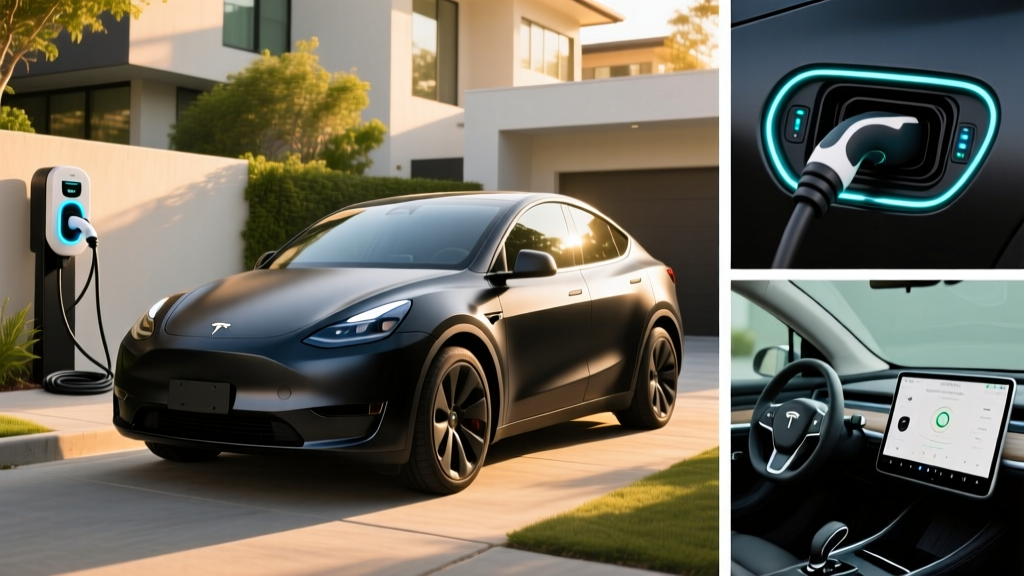
At home on a Level 2 Wall Connector, most owners add roughly 44 miles of range per hour of charging. A full overnight session easily replenishes a day's driving. The key advantage Tesla retains: Supercharger reliability. While Electrify America and EVgo have improved uptime, Tesla's network consistently delivers advertised power levels with minimal downtime, according to JD Power EV charging satisfaction surveys.
Insurance for Tesla: Why Premiums Run 30–60% Higher
If you're specifically searching for insurance for Tesla models, here's the data-driven reality: the average annual premium for a 2026 Model Y ranges from $2,800 to $4,200 depending on your state, driving record, age, and coverage levels. That's roughly 30–60% more than insuring a Hyundai Ioniq 5 or Ford Mustang Mach-E with similar MSRP.
Several structural factors drive Tesla insurance costs higher:
- Repair costs: Tesla's unibody construction uses aluminum-intensive panels and integrated casting ("gigacastings"). Minor fender damage that a body shop could patch on a conventional vehicle often requires full panel replacement on a Tesla, inflating claim amounts.
- Parts availability: Tesla controls its parts supply chain tightly. Independent body shops often face longer wait times for Tesla-specific components, extending rental car coverage on claims.
- ADAS complexity: The windshield, front bumper, and mirror housings contain cameras and sensors. A windshield replacement that costs $400 on a Toyota can run $1,200+ on a Tesla due to camera recalibration requirements.
- Performance profile: Even the Long Range AWD does 0–60 in 4.8 seconds. Insurers correlate rapid acceleration with higher collision frequency in their actuarial models.
- Total-loss threshold: Because battery packs represent a large share of the vehicle's value, moderate collision damage can push repair costs past the total-loss threshold more quickly.
Tesla Insurance (available in most states) uses real-time driving data from the vehicle's telemetry to calculate a monthly "Safety Score." Drivers who maintain high scores (90+) can see premiums 10–20% below traditional carriers. However, aggressive braking, hard cornering, or frequent Autopilot disengagement warnings can push your score — and your premium — higher. It's a double-edged sword that conventional insurers don't impose.
Our recommendation: get quotes from at least four carriers — Tesla Insurance, Geico, Progressive, and State Farm — before taking delivery. Rates vary enormously by ZIP code, and some traditional carriers have recently improved their Tesla underwriting models.
Pricing, Tax Credits, and Total Cost of Ownership
| Trim | MSRP | §30D Credit Eligibility | Effective Price (if eligible) |
|---|---|---|---|
| Long Range AWD | $44,990 | Up to $7,500* | ~$37,490 |
| Performance | $52,490 | Up to $7,500* | ~$44,990 |
*Under IRS §30D rules for 2026, the full $7,500 credit requires meeting BOTH critical-mineral and battery-component sourcing thresholds. Buyer income caps apply ($150K single / $300K joint MAGI). The Model Y MSRP is under the $80,000 SUV cap. Credit can be transferred to the dealer at point of sale as a purchase-price reduction. Verify eligibility with a tax professional — sourcing requirements tighten annually.
When you factor insurance for Tesla ownership into a 5-year total cost of ownership (TCO) calculation, the picture shifts. Here's a realistic breakdown for a Long Range AWD owner driving 12,000 miles/year:
- Purchase price (after credit): ~$37,490
- 5-year insurance (avg $3,200/yr): ~$16,000
- 5-year electricity (home charging, $0.14/kWh avg): ~$2,520
- Maintenance (tires, cabin filter, wiper fluid): ~$1,800
- Estimated 5-year TCO: ~$57,810
Compare that to a similarly equipped Hyundai Ioniq 5 SEL AWD (~$48,000 MSRP, $7,500 credit, ~$2,100/yr insurance): roughly $52,000 over 5 years. The Model Y's insurance premium gap accounts for most of the difference.
Interior, Tech, and Driver Assistance
The 2026 Model Y's interior remains minimalist — a single 15.4-inch touchscreen handles navigation, climate, media, and vehicle settings. There's no instrument cluster; speed and range display on the left edge of the main screen. The updated "Juniper" refresh brought ventilated front seats, a rear-seat touchscreen, ambient lighting, and a power-folding second row — addressing the most common complaints from earlier model years.
Cargo space is excellent: 30.2 cubic feet behind the second row, expanding to 72.1 cu ft with seats folded. The front trunk (frunk) adds 4.1 cu ft for charging cables or a small bag. Rear legroom measures 37.4 inches — adequate for adults on shorter trips, tight for anyone over 6 feet on long drives.
Autopilot comes standard and includes adaptive cruise control, lane-centering, and automatic emergency braking. Full Self-Driving (Supervised) remains a $8,000 add-on (or $99/month subscription) and enables city-street navigation, traffic-light recognition, and automated lane changes.
Both Autopilot and FSD (Supervised) are SAE Level 2 driver-assistance systems. The driver must remain fully engaged, hands on or near the wheel, and eyes on the road at all times. These are NOT self-driving systems. Tesla's cabin camera monitors attentiveness and will issue warnings and eventually disable the system if you look away. Only Level 4 robotaxi services (Waymo, Zoox) operate without a human driver in the loop.
The biggest tech drawback: no Apple CarPlay or Android Auto. Tesla's native infotainment is capable (Spotify, Tidal, YouTube while parked, solid navigation with Supercharger routing), but if you rely on phone-mirroring for your daily drive, this remains a dealbreaker for some buyers.
Pros, Cons, and Who Should Buy the Model Y
- Supercharger network reliability — still the gold standard for road-trip charging
- Class-leading efficiency (30 kWh/100 mi) keeps per-mile electricity cost low
- Strong cargo capacity (72.1 cu ft) and practical hatchback form factor
- Over-the-air updates continuously add features post-purchase
- Point-of-sale tax credit transfer simplifies the buying process
- Insurance for Tesla vehicles runs $800–$1,800/yr more than competitors
- Repair costs and parts delays inflate collision claim severity
- No Apple CarPlay or Android Auto support
- Rear-seat comfort trails competitors (Ioniq 5, EV9) for long trips
- FSD (Supervised) is impressive but still requires constant driver attention
- Choose the Model Y if: You road-trip regularly and value Supercharger access, want a proven EV with strong resale value, and can absorb higher insurance premiums in exchange for lower daily running costs.
- Look at the Ioniq 5 or Equinox EV if: Insurance costs are a budget concern, you prefer CarPlay integration, or you want a more comfortable rear seat for family passengers.
- Consider a PHEV (e.g., RAV4 Prime) if: You lack home charging access or frequently drive in areas with sparse DC fast-charging infrastructure.
Frequently Asked Questions
What is the real-world range of the 2026 Tesla Model Y?
The EPA rates the Long Range AWD at 320 miles. In real-world highway driving at 75 mph in moderate temperatures, expect 260–280 miles. In cold weather (below 30°F), plan for 200–230 miles of usable range before needing to charge.
How fast does the Model Y charge at home and on road trips?
At home on a Level 2 (240V, 48A) Wall Connector, the Model Y charges at 11.5 kW, adding roughly 44 miles of range per hour — a full charge takes about 7 hours. On a V3 Supercharger, peak rate is 250 kW, and a 10–80% session takes approximately 27 minutes with a preconditioned battery.
Does the 2026 Model Y qualify for the federal EV tax credit?
Yes, the Model Y is eligible for up to $7,500 under IRS §30D, provided you meet income caps ($150K single / $300K joint), and the vehicle meets critical-mineral and battery-component sourcing requirements (which tighten each year). The MSRP is well under the $80,000 SUV cap. The credit can be applied as a point-of-sale reduction through the dealer. Always verify current-year sourcing compliance on irs.gov and consult a tax professional.
Why is insurance for Tesla vehicles more expensive?
Higher repair costs (aluminum body, gigacasting, sensor-laden panels), longer parts wait times, a performance profile that actuarial models associate with higher collision risk, and battery-driven total-loss thresholds all contribute. Average annual premiums run $2,800–$4,200 depending on state and driver profile.
Is the Model Y worth buying over the Hyundai Ioniq 5 or Ford Mustang Mach-E?
If Supercharger access and resale value matter most, the Model Y still leads. If insurance cost, rear-seat comfort, or CarPlay support are priorities, the Ioniq 5 or Mach-E may be a better fit. The gap has narrowed considerably — test-drive all three before deciding.
How long will the Model Y battery last?
Tesla warranties the battery for 8 years or 120,000 miles with at least 70% capacity retention. Fleet data suggests NMC packs in Tesla vehicles retain roughly 88–92% capacity at 100,000 miles under normal use. Replacement cost, if needed out of warranty, ranges from $12,000–$16,000 including labor.
Sources: fueleconomy.gov (EPA range and MPGe data), IRS §30D Clean Vehicle Credit, Tesla manufacturer specifications. Insurance figures based on aggregated quote data from major carriers; your actual premium will vary by state, age, driving record, and coverage selections.