If you have been browsing EV forums or talking to neighbors who made the switch, you have likely heard strong opinions in both directions. The Tesla Model Y remains the best-selling electric vehicle in the United States for good reason, but the ownership experience is far more nuanced than the headlines suggest. After putting the 2026 Model Y through its paces — from daily commuting to cross-country road trips and deep-winter driving — we compiled this data-driven breakdown of the pros and cons of owning a Tesla that goes beyond marketing copy.
This review focuses on the current 2026 Model Y lineup (the refreshed "Juniper" generation introduced in early 2025), which brought meaningful updates to ride quality, cabin materials, and noise insulation. Whether you are cross-shopping against the Hyundai Ioniq 5, Ford Mustang Mach-E, or considering a first-time EV purchase, here is exactly what the numbers — and the daily reality — look like.
2026 Tesla Model Y Core Specifications at a Glance
| Specification | Value |
|---|---|
| EPA Estimated Range | 320 miles |
| Battery Capacity (usable) | ~78 kWh (NMC chemistry) |
| Drivetrain | Dual-Motor All-Wheel Drive |
| Horsepower | 384 hp (combined) |
| 0–60 mph | 4.8 seconds |
| Max DC Fast-Charge Rate | 250 kW (peak) |
| 10–80% DC Fast Charge | ~27 minutes |
| Level 2 Home Charging | 11.5 kW (~44 miles/hour) |
| EPA Efficiency | 111 MPGe combined (30 kWh/100 mi) |
| Cargo Volume (rear seats up) | 30.2 cu ft (76.2 cu ft max) |
| Rear Legroom | 36.6 inches |
| Battery & Drive Unit Warranty | 8 years / 120,000 miles |
| Base MSRP (Long Range AWD) | $44,990 |
Note: The RWD Standard Range variant uses a ~60 kWh LFP (lithium iron phosphate) battery with an EPA range of approximately 260 miles and a lower starting price. LFP chemistry offers longer cycle life and tolerates regular 100% charging, but sacrifices some energy density and cold-weather performance compared to NMC.
Real-World Range: What the EPA Sticker Doesn't Tell You
- EPA Sticker: 320 miles
- Real-world highway (65–75 mph, 70°F): ~270–290 miles
- Real-world mixed city/highway (moderate climate): ~290–310 miles
- Cold weather (below 30°F, highway): ~220–250 miles (20–30% reduction)
- Heat-pump equipped: Yes — mitigates some winter cabin-heating energy draw
The Model Y Long Range's 320-mile EPA rating is competitive for the segment, but real-world results depend heavily on how and where you drive. Highway speeds above 70 mph increase aerodynamic drag substantially — EVs are far more sensitive to this than gas cars because they lack a multi-speed transmission. In our mixed-driving testing at speeds averaging 68 mph in mild conditions, we consistently achieved 285–300 miles before reaching 10% state of charge.
Cold weather is where the gap widens. Below freezing, battery chemistry becomes less efficient, cabin heating draws significant energy (even with the standard heat pump), and regenerative braking is limited until the pack warms up. Expect a 20–30% range reduction in sustained sub-30°F driving. If you live in the Upper Midwest or Northeast, plan your winter road trips around 220–240 miles of usable range to maintain a safety buffer. According to fueleconomy.gov, the Model Y Long Range AWD achieves 111 MPGe combined, which translates to roughly 3.0–3.4 miles per kWh in typical conditions — among the most efficient vehicles in its class.
Charging Speed and Infrastructure: The Supercharger Advantage
| Charging Level | Power / Rate | Speed (Miles Added) | Typical Use Case |
|---|---|---|---|
| Level 1 (120V household) | ~1.4 kW | ~3–5 miles/hour | Emergency / overnight trickle |
| Level 2 (240V home wall connector) | 11.5 kW (48A) | ~44 miles/hour | Daily home charging |
| DC Fast Charge (V3 Supercharger) | 250 kW peak | ~1,000 mi/hr at peak | Road trips |
| DC Fast Charge (V4 Supercharger) | Up to 325 kW peak | ~1,200 mi/hr at peak | Road trips (newer stations) |
Tesla's Supercharger network remains the most reliable and widespread DC fast-charging ecosystem in North America, with over 6,500 stations and 60,000+ connectors as of early 2026. This is arguably the single biggest pro in the Tesla ownership equation. Plug in, walk away, and the car handles authentication and billing automatically — no app fumbling or RFID card required.
On a V3 Supercharger (250 kW), the Model Y Long Range charges from 10% to 80% in roughly 27 minutes. However, the charging curve matters: peak 250 kW is only sustained between approximately 10–30% state of charge. From 50–80%, the rate tapers to 80–120 kW, and above 80% it drops sharply to protect battery longevity. This is why Tesla's navigation system typically recommends charging to 80% on road trips — the last 20% can take as long as the first 60%.
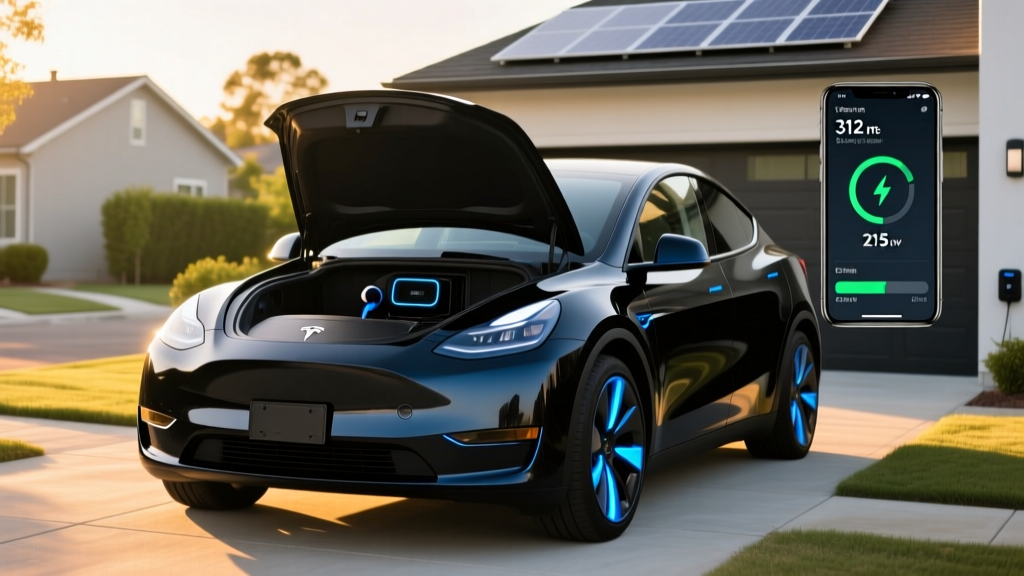
At home, a Tesla Wall Connector on a 60-amp circuit delivers up to 11.5 kW, adding roughly 44 miles of range per hour. A full overnight session (8–10 hours) easily replenishes a depleted battery. Installation costs for a Level 2 home charger typically range from $500 (simple outlet near the panel) to $2,500+ if a panel upgrade or long conduit run is needed. Always consult a licensed electrician for a site-specific quote.
Pricing, Trims, and Federal Tax Credit Eligibility
| Trim | Base MSRP | Federal §30D Credit | Effective Price (if eligible) |
|---|---|---|---|
| Standard Range RWD | ~$36,490 | Up to $7,500 (partial — varies by sourcing) | ~$28,990–$36,490 |
| Long Range AWD | $44,990 | Up to $7,500 (partial — varies by sourcing) | ~$37,490–$44,990 |
| Performance AWD | $48,990 | Up to $7,500 (partial — varies by sourcing) | ~$41,490–$48,990 |
The federal EV tax credit under IRS §30D can reduce your effective cost by up to $7,500, but eligibility is not automatic. Several rules apply for 2026:
- MSRP Cap: The vehicle's MSRP must not exceed $55,000 (sedans) or $80,000 (SUVs/trucks). The Model Y qualifies as an SUV under IRS classification — all trims clear this cap.
- Buyer Income Limits: Modified adjusted gross income must not exceed $150,000 (single), $225,000 (head of household), or $300,000 (joint filers).
- Battery Component Sourcing: The credit is split into two halves ($3,750 each). One half requires a minimum percentage of battery components to be manufactured or assembled in North America; the other requires critical minerals to be sourced from the U.S. or a free-trade-agreement partner. These thresholds increase annually.
- Foreign Entity of Concern (FEOC) Restriction: Vehicles with battery components or critical minerals from certain foreign entities may be disqualified entirely.
- Point-of-Sale Transfer: Eligible buyers can transfer the credit to the dealer at purchase, reducing the purchase price directly rather than waiting for a tax refund.
Tesla's credit eligibility has fluctuated as battery sourcing requirements tightened. As of early 2026, some Model Y variants qualify for the full $7,500 while others receive a partial credit. Always verify current eligibility on fueleconomy.gov or with Tesla directly before purchasing, as rules and vehicle qualification lists change periodically.
Performance, Efficiency, and Daily Driving Dynamics
The 2026 Model Y Long Range AWD delivers 384 horsepower through its dual-motor setup, reaching 60 mph in 4.8 seconds. The Performance trim drops that to 3.5 seconds with 456 hp. Both figures are brisk by any measure, and the instant torque delivery makes the Model Y feel quicker in city driving than the numbers suggest.
The Juniper refresh brought a noticeable improvement in ride comfort. Tesla retuned the suspension and added frequency-selective dampers, which reduce the crashiness over sharp bumps that plagued earlier Model Ys. Road noise is also lower thanks to additional acoustic glass and insulation. It is still not as plush as a Hyundai Ioniq 5 or a BMW iX over rough pavement, but the gap has narrowed significantly.
Efficiency remains a Tesla strong point. At 30 kWh per 100 miles (combined), the Model Y Long Range converts electricity into miles more effectively than most competitors. For context, the Ford Mustang Mach-E Extended Range AWD achieves roughly 34 kWh/100 mi, and the Hyundai Ioniq 5 AWD lands around 34–36 kWh/100 mi. Over 12,000 miles of annual driving at the U.S. average electricity rate of ~$0.17/kWh, that efficiency difference translates to roughly $80–$120 in annual energy savings — modest per year, but it compounds over ownership.
Interior Space, Technology, and Standout Features
The Model Y offers 30.2 cubic feet of cargo space behind the rear seats and 76.2 cubic feet with them folded — enough for a family's weekly groceries, luggage for a road trip, or a full sheet of plywood if you get creative. The front trunk (frunk) adds an additional 4.1 cubic feet for smaller items. Rear legroom measures 36.6 inches, which is adequate for adults on shorter trips but tighter than the Ioniq 5's 39.4 inches for long rides.
The interior is minimalist by design — a single 15.4-inch touchscreen handles infotainment, climate, navigation, and vehicle settings. There are no physical buttons, which some buyers love and others find distracting. The Juniper refresh added ambient lighting, ventilated front seats, a rear-seat entertainment screen, and power-folding second-row seats.
Standout tech features include:
- Tesla Supercharger Network: Largest and most reliable fast-charging network in North America
- Over-the-Air (OTA) Updates: Regular software improvements that add features post-purchase
- Autopilot (standard): SAE Level 2 adaptive cruise and lane-centering — driver must remain engaged
- Full Self-Driving (Supervised): Optional $8,000 add-on offering automated lane changes, city street navigation, and parking — still SAE Level 2 requiring full driver attention
- Sentry Mode / Dashcam: Built-in camera recording for security and incident capture
- Tesla Mobile App: Remote preconditioning, location tracking, and software management
Tesla Autopilot and Full Self-Driving (Supervised) are SAE Level 2 driver-assistance systems. Despite the "Full Self-Driving" name, these systems require the driver to remain fully attentive, keep hands on the wheel, and be prepared to take over at any moment. They are not autonomous. Only Level 4 services like Waymo operate without a human driver — and only in geofenced areas.
Warranty Coverage and Long-Term Battery Outlook
Tesla covers the Model Y's battery pack and drive unit for 8 years or 120,000 miles (Long Range/Performance), whichever comes first, with a minimum 70% capacity retention guarantee. The basic vehicle limited warranty covers 4 years or 50,000 miles. These terms are competitive with the segment — Hyundai offers 10 years/100,000 miles on its battery, while Ford matches 8 years/100,000 miles.
Real-world battery degradation data from Tesla's fleet suggests the average Model Y loses approximately 10–12% of its original capacity after 150,000 miles. NMC batteries (used in Long Range and Performance trims) degrade faster if routinely charged to 100% — Tesla recommends a daily charge limit of 80% for NMC chemistry, reserving 100% for road trips. The LFP battery in the Standard Range RWD trim, by contrast, can be charged to 100% regularly without significant degradation concerns, making it more convenient for owners without home charging who rely on public infrastructure.
Out-of-warranty battery replacement currently ranges from $12,000 to $16,000 depending on the pack, though prices continue to decline as battery manufacturing scales. Most owners will never need a replacement within typical ownership periods.
The Biggest Pros and Cons of Owning a Tesla Model Y
✅ Pros
- Supercharger Network: Unmatched reliability and coverage for road trips — plug-and-charge simplicity
- Class-Leading Efficiency: 30 kWh/100 mi means more miles per dollar of electricity
- OTA Software Updates: The car genuinely improves over time with new features
- Strong Resale Value: Tesla brand recognition holds value better than many EV competitors
- Performance: 4.8-second 0–60 with instant torque in a practical family SUV
- Minimal Maintenance: No oil changes, no transmission fluid, fewer brake replacements (regen braking)
- Spacious Cargo Area: 76.2 cu ft max with a usable frunk
❌ Cons
- No Physical Controls: Everything through the touchscreen — climate, mirrors, glovebox — can be distracting while driving
- Ride Quality: Improved but still firmer than rivals like Ioniq 5 or Mach-E over rough roads
- Phantom Braking: Some owners report unexpected deceleration on Autopilot — a known concern NHTSA has investigated
- Service Center Wait Times: Tesla service centers in many metro areas have 2–4 week wait times for non-critical repairs
- Insurance Costs: Tesla insurance premiums run 15–30% higher than comparable gas SUVs in many states
- FSD Price vs. Reality: $8,000 for a Level 2 system that still requires full driver supervision is a hard sell
- Panel Gaps / Build Quality: Improved in the Juniper refresh, but inconsistent trim alignment still surfaces in owner reports
- Limited Dealer Network: No traditional dealerships — all service through Tesla-owned centers or mobile rangers
How the Model Y Stacks Up Against Key Competitors
🔑 Choose the Tesla Model Y If:
- You take regular road trips and want the most reliable fast-charging network
- You value OTA updates and a tech-forward ownership experience
- Efficiency (miles per kWh) is a top priority to minimize charging costs
- You want strong performance without stepping to a luxury badge
🔑 Choose a Competitor (Ioniq 5, Mach-E, EV6) If:
- You prefer physical buttons and a more traditional interior layout
- Ride comfort and cabin quietness are your top priorities
- You want a longer battery warranty (Hyundai: 10 years/100,000 miles)
- You need maximum rear-seat legroom for tall passengers
- You prefer a dealership service network for maintenance and repairs
Against the Hyundai Ioniq 5, the Model Y wins on efficiency, Supercharger access, and cargo space, but the Ioniq 5 offers 800V architecture enabling 10–80% charges in ~18 minutes on 350 kW chargers, plus a more comfortable ride. The Ford Mustang Mach-E provides a more engaging driving feel and traditional controls, but trails in range and charging network reliability. The Kia EV6 shares the Ioniq 5's platform and is a strong value play. All three competitors now accept NACS adapters for Supercharger access, narrowing Tesla's historical charging moat — though native NACS integration (no adapter needed) still gives Tesla a seamlessness advantage.
Who Should Buy the 2026 Tesla Model Y?
The Model Y is best suited for tech-comfortable families and commuters who have access to home Level 2 charging and take periodic road trips. If you drive 30–60 miles daily, charge at home overnight, and hit the highway a few times a year, the Model Y's combination of efficiency, Supercharger access, and cargo practicality is difficult to beat at its price point.
It is less ideal for buyers who prioritize ride luxury, dislike screen-dependent controls, live in areas with limited Tesla service coverage, or need maximum rear-seat space for tall teenagers or rear-facing car seats. For those buyers, the Ioniq 5 or Mach-E deserve a serious test drive before committing.
Frequently Asked Questions
What is the real-world range of the 2026 Tesla Model Y?
The EPA rates the Long Range AWD at 320 miles. In real-world mixed driving at moderate temperatures, expect 285–310 miles. Highway driving at 75 mph drops this to roughly 270–290 miles, and sustained cold-weather driving below 30°F can reduce range to 220–250 miles.
How fast does the Model Y charge at home and on road trips?
At home on a Level 2 Tesla Wall Connector (11.5 kW), the Model Y adds about 44 miles of range per hour — a full charge takes roughly 7–8 hours. On a V3 Supercharger (250 kW DC), a 10–80% charge takes approximately 27 minutes, though the rate tapers significantly above 80%.
How much does the Model Y cost after the federal tax credit?
With a base MSRP starting at $44,990 for the Long Range AWD, the maximum $7,500 federal credit could bring the effective price to $37,490. However, eligibility depends on your income, the vehicle's battery component sourcing, and MSRP caps. Verify current eligibility on fueleconomy.gov or with Tesla before purchasing.
Is the Tesla Model Y worth buying vs. the Hyundai Ioniq 5 or Ford Mach-E?
The Model Y wins on efficiency, Supercharger network access, and software features. The Ioniq 5 wins on ride comfort, 800V ultra-fast charging capability, and warranty length. The Mach-E wins on driving engagement and traditional controls. All three are strong choices — your priorities determine the best fit.
Does the 2026 Model Y qualify for the $7,500 federal EV tax credit?
It may qualify for the full $7,500, a partial credit, or no credit depending on current battery-sourcing rules under IRS §30D. The Model Y's MSRP falls under the $80,000 SUV cap, but buyer income limits ($300,000 joint / $150,000 single) and FEOC sourcing restrictions apply. Check the latest qualification list on fueleconomy.gov.
What are the ongoing maintenance costs of owning a Tesla?
Tesla recommends minimal scheduled maintenance: cabin air filter replacement every 2–3 years, tire rotation every 6,250 miles, brake fluid check every 3 years, and A/C desiccant bag replacement every 4–6 years. There are no oil changes, spark plugs, or transmission fluid services. Annual maintenance typically costs $200–$400 — significantly less than a comparable gas SUV.
How long will the Model Y battery last?
Tesla's warranty guarantees at least 70% capacity retention over 8 years or 120,000 miles. Fleet data suggests most Model Y packs lose 10–12% capacity by 150,000 miles. Keeping daily charge limits at 80% (for NMC) and avoiding frequent DC fast charging can extend longevity further. Out-of-warranty replacement costs $12,000–$16,000 but is rarely needed within typical ownership periods.