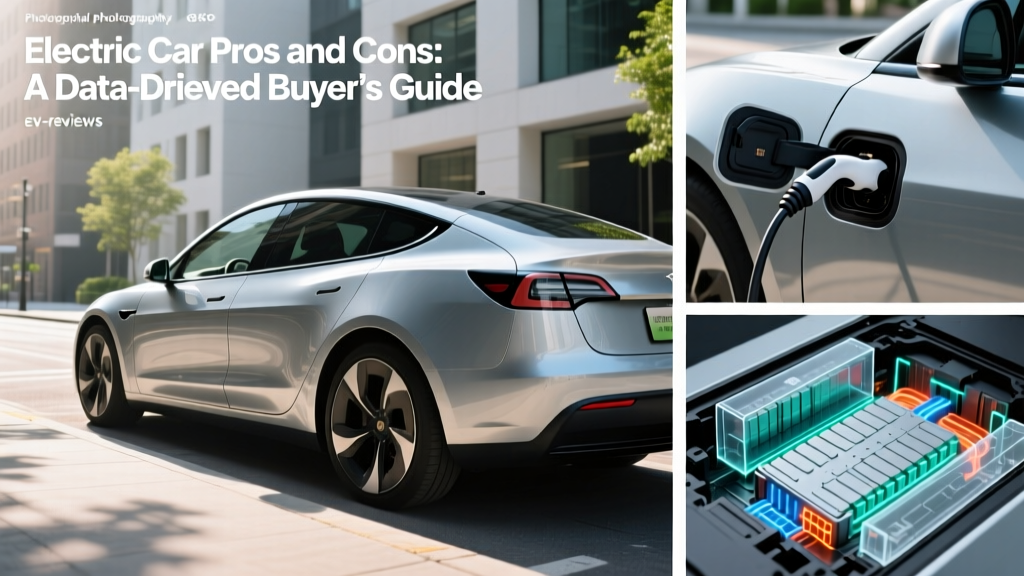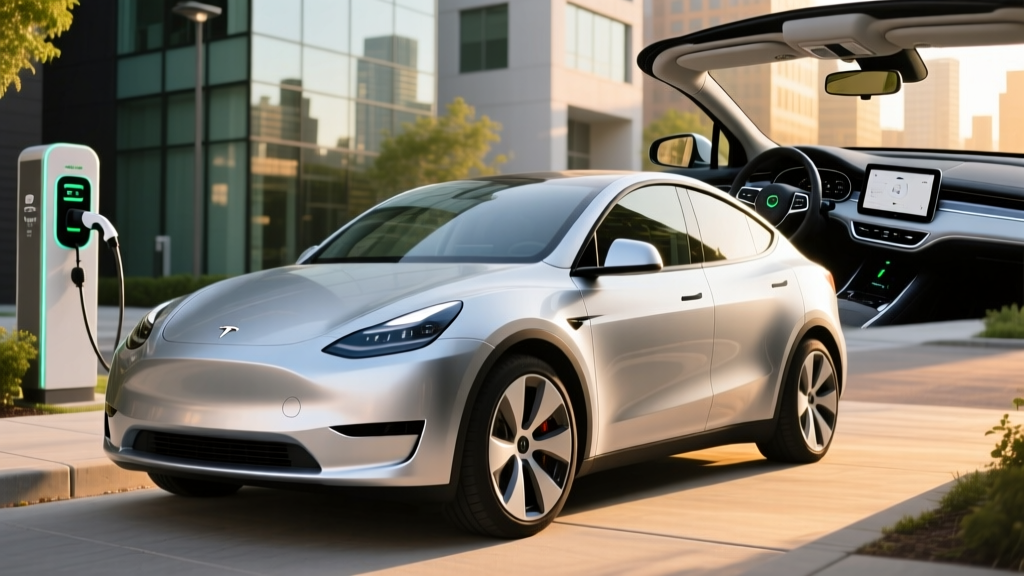
The Tesla Model Y remains the best-selling electric vehicle in the United States for good reason: it pairs crossover practicality with the most mature charging network in the country. But after years of market dominance, competitors have closed the gap — and Tesla's own refresh (internally called "Juniper") has reshuffled the spec sheet. If you're researching the pros and cons of a Tesla before committing roughly $45,000 to $55,000, you need more than marketing copy. You need hard numbers, real-world range data, and an honest look at what ownership actually feels like in 2026.
This review covers the refreshed Model Y lineup — Long Range AWD, Long Range RWD, and Performance — with exact EPA figures, charging curves, battery chemistry details, and federal tax credit eligibility under current IRS §30D rules. We've driven, charged, and lived with the Model Y platform across multiple model years. Here's what the data says.
2026 Tesla Model Y: Core Specifications at a Glance
| Spec | Long Range RWD | Long Range AWD | Performance AWD |
|---|---|---|---|
| Base MSRP | $44,990 | $47,990 | $52,490 |
| EPA Range | 320 mi | 300 mi | 277 mi |
| Battery (usable) | ~75 kWh (LFP) | ~75 kWh (NMC) | ~75 kWh (NMC) |
| Drivetrain | Rear-Wheel Drive | Dual-Motor AWD | Dual-Motor AWD |
| Horsepower | 346 hp | 384 hp | 456 hp |
| 0–60 mph | 5.8 sec | 4.8 sec | 3.5 sec |
| Peak DC Charge Rate | 250 kW | 270 kW | 270 kW |
| 10–80% DCFC Time | ~25 min | ~22 min | ~22 min |
| Level 2 Home Charge | 11.5 kW (~37 mi/hr) | 11.5 kW (~37 mi/hr) | 11.5 kW (~37 mi/hr) |
| MPGe (combined) | 123 MPGe | 117 MPGe | 111 MPGe |
| Efficiency | 27 kWh/100mi | 29 kWh/100mi | 30 kWh/100mi |
| Cargo (rear seats up) | 30.2 cu ft | 30.2 cu ft | 30.2 cu ft |
| Cargo (rear seats folded) | 72.1 cu ft | 72.1 cu ft | 72.1 cu ft |
| Rear Legroom | 40.5 in | 40.5 in | 40.5 in |
| Battery Warranty | 8 yr / 120,000 mi | 8 yr / 120,000 mi | 8 yr / 120,000 mi |
Source: fueleconomy.gov and Tesla's official 2026 spec sheets. Performance figures reflect manufacturer estimates.
Real-World Range: What the EPA Sticker Doesn't Tell You
Tesla's efficiency advantage has historically been real — the Model Y's heat pump, integrated thermal management, and low drag coefficient (0.23 Cd post-refresh) help it squeeze more miles per kWh than most competitors. The Long Range RWD at 320 miles EPA and 27 kWh/100mi is among the most efficient crossovers in the segment. But the gap has narrowed. The Hyundai Ioniq 5 and Kia EV6 now deliver comparable efficiency, and the refreshed Chevrolet Equinox EV pushes 319 miles EPA on a larger battery.
The key variable most buyers overlook is the charging buffer. Tesla recommends daily charging to 80% for NMC batteries (Long Range AWD and Performance), which effectively gives you a daily usable range of about 240 miles on the AWD model. The LFP battery in the Long Range RWD, however, can be charged to 100% daily without accelerated degradation — giving you the full 320 miles as your everyday range. This is a significant practical advantage for the RWD trim and one reason it may suit more commuters than the AWD variant.
Charging Speed and Infrastructure: Tesla's Enduring Advantage
| Charging Level | Power / Rate | Miles Added per Hour | Notes |
|---|---|---|---|
| Level 1 (120V household) | ~1.4 kW | ~4–5 mi/hr | Emergency/trickle only |
| Level 2 (240V home, 48A) | 11.5 kW | ~37 mi/hr | Full overnight charge in ~7–8 hrs |
| DC Fast Charge (V3 Supercharger) | Up to 270 kW peak | ~162 mi in 15 min | 10–80% in ~22 min (AWD) |
| DC Fast Charge (V4 Supercharger) | Up to 325 kW peak | Up to ~200 mi in 15 min | Limited V4 station availability |
The Model Y's charging story is two-fold. On DC fast charging, the Long Range AWD and Performance trims peak at 270 kW — respectable but not class-leading. The Hyundai Ioniq 5 and Kia EV6, built on 800V architectures, sustain higher rates deeper into the charge curve and can achieve 10–80% in approximately 18 minutes. Tesla's charge curve is front-loaded: you'll see peak kW only between roughly 10–30% State of Charge (SoC), after which the rate tapers progressively. Above 80%, charging slows dramatically to protect battery health — a universal EV behavior, but one that surprises first-time EV owners on road trips.
Where Tesla dominates is the Supercharger network. With over 6,500 V3 and V4 stalls across the U.S. as of early 2026, Tesla owners enjoy plug-and-charge reliability that third-party networks (Electrify America, EVgo) still struggle to match consistently. The NACS connector is now the North American standard, and while competitors have adopted it for new models, Tesla's integration — automatic stall recognition, billing, and battery preconditioning en route — remains the most seamless experience in public charging.
For home charging, the Model Y's 11.5 kW onboard charger means a full charge from empty takes roughly 7–8 hours on a 48-amp Level 2 circuit. This requires a 60-amp dedicated breaker. Most homeowners will need a licensed electrician to install a NEMA 14-60 outlet or hardwired wall connector — budget $800–$2,000 for installation depending on panel proximity and local permitting. If your electrical panel is at capacity (common in older homes with 100-amp service), a panel upgrade to 200 amps can add $1,500–$3,500.
Performance and Driving Dynamics
The Model Y Performance delivers a 3.5-second 0–60 mph time — sports-car territory in a five-seat crossover. Even the base Long Range RWD at 5.8 seconds is quicker than most gas-powered compact SUVs. Instant torque delivery and a low center of gravity (battery pack mounted under the floor) give every Model Y variant confident acceleration and minimal body roll through corners.
The Juniper refresh brought meaningful improvements to ride quality. The previous-generation Model Y was widely criticized for its firm, sometimes harsh ride over rough pavement. Tesla retuned the suspension, added acoustic glass, and improved sound deadening for 2025–2026 models. The result is a noticeably quieter, more compliant cabin at highway speeds — though it still leans sporty rather than plush compared to a Genesis GV60 or BMW iX.
Regenerative braking remains strong and predictable, enabling one-pedal driving in most conditions. However, Tesla removed the user-adjustable regen setting several model years ago — it's always set to maximum. Most owners adapt quickly, but if you prefer a coasting feel, this is a non-negotiable characteristic of the platform.
Interior, Technology, and Daily Livability
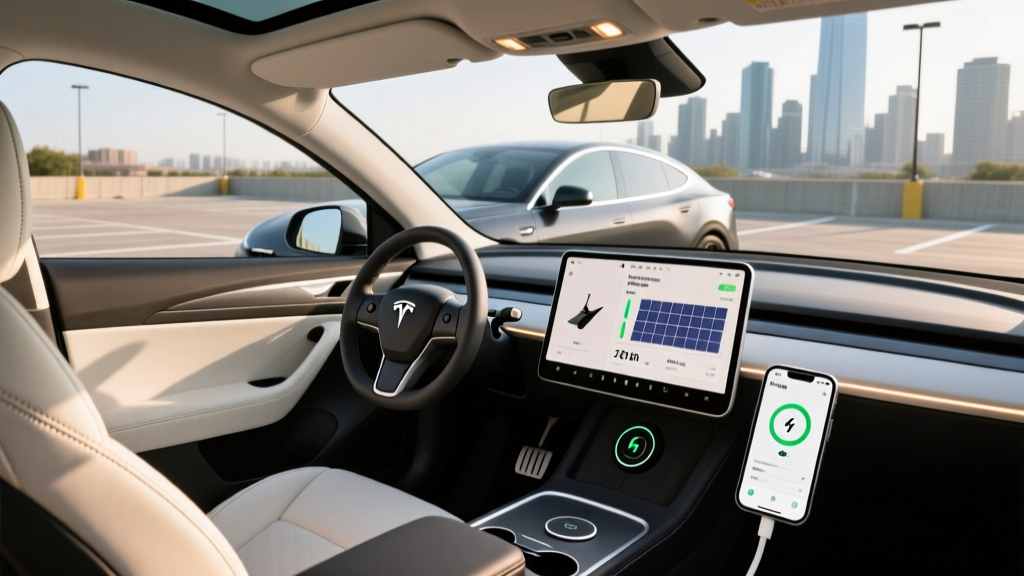
The Model Y's interior follows Tesla's minimalist philosophy: a single 15.4-inch center touchscreen controls virtually every function, from climate to mirrors to glovebox release. The Juniper refresh added a rear 8-inch screen for passengers, ventilated front seats, ambient lighting, and power-folding second-row seats — addressing several longstanding complaints.
Standout tech features:
- Autopilot (standard): Adaptive cruise control, lane centering, automatic emergency braking. This is an SAE Level 2 driver-assistance system — you must keep your hands on the wheel and eyes on the road at all times.
- Full Self-Driving Supervised ($8,000 option): Adds automatic lane changes, traffic light/stop sign recognition, and Navigate on Autopilot. Still SAE Level 2 — not autonomous driving despite the name. FSD capability varies significantly by geography and road type.
- Over-the-air updates: Tesla regularly pushes software updates that add features, improve efficiency, or refine the UI — no dealer visit required.
- Sentry Mode / Dashcam: Built-in camera recording when parked, with motion-triggered alerts via the Tesla app.
- Tesla app integration: Remote climate control, charging status, location tracking, and phone-as-key functionality are best-in-class.
Notable drawbacks:
- No physical buttons: Climate adjustments, wiper speed, and mirror controls all require screen taps — a genuine ergonomic frustration while driving, especially in rain or bright sunlight.
- No Apple CarPlay or Android Auto: Tesla uses its proprietary infotainment system exclusively. If you rely on phone projection, this is a dealbreaker.
- Turn signal stalks removed (post-refresh): Turn signals are now capacitive buttons on the steering wheel — a controversial change that many owners report requires a significant adaptation period, particularly in roundabouts.
- Rear visibility: The sloping roofline and small rear window limit outward visibility. The camera-based rearview mirror option helps but costs extra.
Pricing, Tax Credits, and Total Cost of Ownership
| Trim | Base MSRP | Under §30D MSRP Cap ($80,000 SUV)? | Est. Price After $7,500 Credit* |
|---|---|---|---|
| Long Range RWD | $44,990 | Yes | ~$37,490 |
| Long Range AWD | $47,990 | Yes | ~$40,490 |
| Performance AWD | $52,490 | Yes | ~$44,990 |
*The $7,500 federal tax credit under IRS §30D is not guaranteed for every buyer. Eligibility depends on meeting ALL of the following requirements:
- Buyer income caps: Modified adjusted gross income (MAGI) must not exceed $150,000 (single), $225,000 (head of household), or $300,000 (married filing jointly).
- MSRP cap: Vehicle MSRP must be ≤$80,000 for SUVs/vans/pickups. All Model Y trims qualify.
- Battery sourcing requirements: Critical minerals and battery components must meet phased-in domestic/free-trade sourcing thresholds that tighten annually. As of 2026, the component requirement is stringent — Tesla has shifted some supply chains, but eligibility can change mid-year. Always verify current status on fueleconomy.gov before purchasing.
- Point-of-sale transfer: As of 2024, qualifying buyers can transfer the credit to the dealer at purchase, reducing the upfront price rather than waiting for a tax refund. This is available at Tesla's checkout.
- Tax liability: If claimed as a traditional credit (not transferred), you must have sufficient federal tax liability to absorb the full $7,500.
Beyond the purchase price, the Model Y's total cost of ownership remains competitive. Electricity costs vary by region, but at the national average of ~$0.16/kWh, charging a Model Y Long Range AWD costs roughly $4.35 per 100 miles — compared to approximately $12–$14 per 100 miles for a comparable gas crossover at 25 MPG and $3.50/gallon fuel. Insurance, however, tends to run higher than average for the segment: expect $1,800–$2,600 annually depending on your profile and state, driven by Tesla's higher repair costs and parts pricing.
The Verdict: Biggest Pros and Cons of a Tesla Model Y
Pros
- Supercharger network — most reliable public DC charging in the U.S.
- Best-in-class efficiency (27–30 kWh/100mi)
- LFP option (RWD) allows daily 100% charging without degradation concerns
- Strong performance across all trims (3.5–5.8 sec 0–60)
- Spacious cargo area (72.1 cu ft max) with practical hatchback design
- Over-the-air updates continuously improve the vehicle
- Excellent app integration and remote features
- Improved ride quality and cabin quietness post-refresh
Cons
- No Apple CarPlay / Android Auto — proprietary system only
- Screen-dependent controls (no physical buttons for climate, mirrors, wipers)
- Capacitive turn signals require adaptation and frustrate some drivers
- FSD is expensive ($8,000) and remains SAE Level 2 — not self-driving
- Insurance premiums above segment average
- DC charging speed (270 kW peak) trails 800V competitors (Ioniq 5, EV6)
- Service center wait times can be lengthy in some metro areas
- Rear visibility compromised by design
Who Should Buy the Model Y — And Who Should Look Elsewhere
Decision Framework
Choose the Tesla Model Y if:
- You road-trip frequently and value Supercharger reliability above all else
- You want maximum cargo space in a compact electric crossover
- You prefer a minimalist, tech-forward cabin and don't need CarPlay
- You want the option of daily 100% charging (Long Range RWD with LFP battery)
- Performance matters — even the base trim is genuinely quick
Look at competitors if:
- You rely on Apple CarPlay or Android Auto (Hyundai Ioniq 5, Kia EV6, Ford Mustang Mach-E)
- You want faster peak DC charging on 800V architecture (Ioniq 5, EV6, Genesis GV60)
- You prefer physical buttons and traditional automotive ergonomics (Mach-E, Ioniq 5)
- You want a more luxurious interior at a similar price (Genesis GV60, BMW iX)
- You need three rows of seating — the Model Y's optional third row is extremely tight and best suited for small children only
Frequently Asked Questions
What is the real-world range of the 2026 Tesla Model Y?
The EPA rates the Long Range AWD at 300 miles and the Long Range RWD at 320 miles. In real-world highway driving at 70–75 mph, expect 255–275 miles (AWD) or 280–300 miles (RWD). Cold weather (below freezing) reduces range by 15–25%, bringing the AWD down to approximately 210–240 miles. City driving with regenerative braking can match or slightly exceed the EPA estimate.
How fast does the Model Y charge at home and on the road?
On a 48-amp Level 2 home charger (240V), the Model Y charges at 11.5 kW, adding roughly 37 miles of range per hour — a full charge takes about 7–8 hours. On a Tesla V3 Supercharger, the Long Range AWD peaks at 270 kW and reaches 10–80% in approximately 22 minutes. The RWD model peaks at 250 kW with a 10–80% time of about 25 minutes. Charging slows significantly above 80% SoC.
Does the 2026 Tesla Model Y qualify for the $7,500 federal EV tax credit?
All Model Y trims fall under the $80,000 MSRP cap for SUVs under IRS §30D. However, buyer eligibility also depends on income caps ($150K single / $300K married filing jointly) and battery-sourcing requirements that tighten annually. The credit can be transferred at point of sale to reduce your purchase price directly. Verify current eligibility on irs.gov and fueleconomy.gov before ordering, as sourcing compliance status can change.
Is the Tesla Model Y worth buying versus competitors in 2026?
The Model Y's strongest advantages are the Supercharger network, efficiency, cargo space, and Tesla's software ecosystem. Its main weaknesses relative to competitors are the lack of CarPlay/Android Auto, screen-heavy controls, and DC charging speeds that trail 800V rivals. If Supercharger access and efficiency are your top priorities, the Model Y remains the segment benchmark. If you value faster public charging, traditional controls, or phone integration, the Hyundai Ioniq 5, Kia EV6, or Ford Mustang Mach-E are compelling alternatives at similar price points.
What is the battery warranty on the Model Y?
Tesla provides an 8-year/120,000-mile battery and drive unit warranty for all Model Y trims. The warranty guarantees the battery will retain at least 70% of its original capacity during the warranty period. Real-world degradation data from Tesla's fleet suggests most Model Y batteries retain approximately 88–92% capacity after 100,000 miles, though LFP batteries (in the RWD model) may show slightly different degradation curves than NMC packs. Out-of-warranty battery replacement costs are estimated at $12,000–$16,000 depending on the pack.
Is Tesla's Full Self-Driving actually self-driving?
No. FSD (Supervised) is an SAE Level 2 driver-assistance system. It can handle highway lane changes, navigate on-ramps to off-ramps, and recognize traffic signals — but the driver must remain fully engaged, with hands on the wheel and eyes on the road, at all times. It does not replace the driver. True autonomous (Level 4) driving in consumer vehicles is not currently available; only geofenced robotaxi services like Waymo operate at Level 4 in select cities.