Why Every Department Is Talking About the Tesla Cop Car
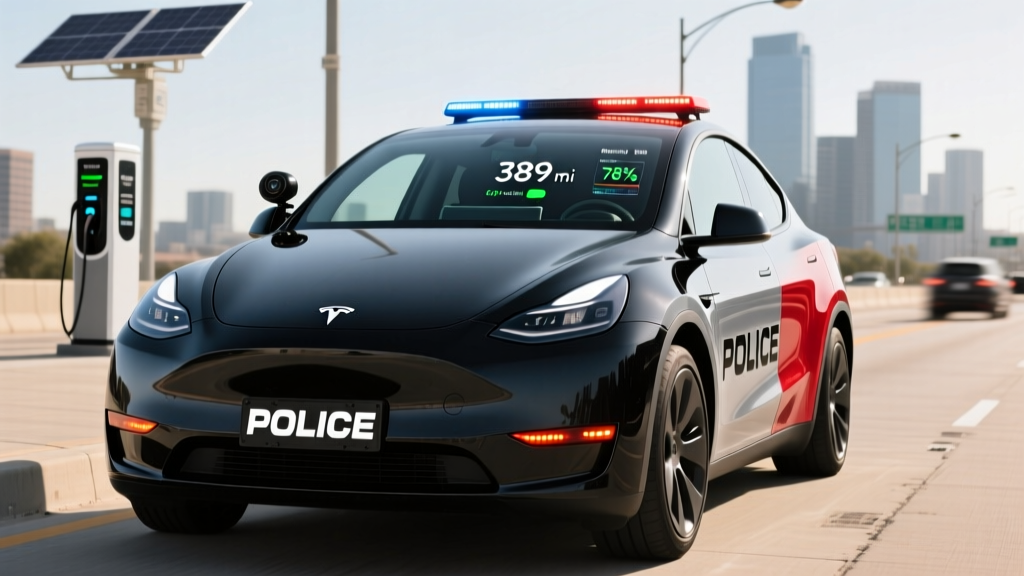
The phrase Tesla cop car has gone from internet novelty to procurement reality. From Fremont, California to South Pasadena and dozens of agencies in between, police fleets are piloting Tesla Model Y Long Range AWD units upfitted with lightbars, cages, and rifle locks. But a patrol EV lives a brutal duty cycle: idling for hours, sprinting to calls, running HVAC at full blast in summer, and needing to charge on a shift schedule that doesn't wait for a Supercharger. This review breaks down the 2026 Model Y Long Range AWD — the platform most commonly chosen for police upfit — through the lens of a fleet buyer and the officer behind the wheel.
Spec Sheet: 2026 Tesla Model Y Long Range AWD (Police Upfit Baseline)
| Spec | Value |
|---|---|
| EPA Range | 320 miles |
| Real-World Patrol Range (w/ HVAC + idle) | ~210–240 miles |
| Usable Battery | ~75 kWh (NMC chemistry) |
| Peak DC Fast Charge | 250 kW |
| 10–80% DCFC Time | ~27 minutes |
| Level 2 Home/Depot Rate | 11.5 kW (~44 mi/hr) |
| 0–60 mph | 4.8 seconds |
| Drivetrain | Dual-motor AWD |
| Horsepower | ~384 hp combined |
| MPGe (combined) | 111 MPGe |
| Efficiency | 28 kWh/100 mi |
| Cargo (behind 2nd row) | 30.2 cu ft |
| Cargo (max) | 72.0 cu ft |
| Battery Warranty | 8 years / 120,000 miles (≥70% retention) |
| Base MSRP (civilian LR AWD) | $46,630 |
| Typical Police Upfit Cost | $18,000–$28,000 |
Sources: fueleconomy.gov, Tesla.com 2026 order guide.
Real-World Range: What a Patrol Shift Actually Looks Like
Police duty cycles are the opposite of the efficiency test loop. Officers idle 30–50% of a shift with HVAC and electronics drawing 2–4 kW continuously. The Model Y's heat pump helps in winter, but battery preconditioning and cabin heating still consume meaningful kWh before the car even rolls. Departments planning a Tesla cop car deployment should size routes around a 200-mile usable buffer and keep depot chargers at 11.5 kW per bay for overnight recovery.
Charging Speed: Can a Tesla Cop Car Turn Around Mid-Shift?
| Charging Level | Power | Miles Added / Hour | Use Case |
|---|---|---|---|
| Level 1 (120V) | 1.4 kW | ~4 mi/hr | Not viable for fleet |
| Level 2 (240V depot) | 11.5 kW | ~44 mi/hr | Overnight shift recovery |
| DC Fast (Supercharger V3) | 250 kW peak | ~1,000 mi/hr (peak) | Mid-shift top-up |
On a V3 Supercharger, the Model Y LR AWD peaks at 250 kW but sustains that rate only up to roughly 30% state of charge, then tapers. A realistic 10–80% session takes 27 minutes; 10–50% (enough for another ~120 miles of patrol) takes about 14 minutes. For agencies, this means a meal-break charge can recover a full shift's worth of range — but only if a Supercharger or 150+ kW DCFC is within the patrol zone. Tesla's Supercharger network remains the most reliable public option, though NACS adoption by Ford and GM in 2025–2026 has crowded some urban stalls.
Pursuit Performance and Drivetrain
The dual-motor AWD Model Y hits 0–60 mph in 4.8 seconds — quicker than the retired Dodge Charger Pursuit V8 and most Explorer Interceptors. Instant torque and a low center of gravity make it surprisingly capable in urban pursuit scenarios, and the AWD system handles rain and light snow without the drivetrain lash of a traditional transfer case. The tradeoff: at roughly 4,400 lbs curb weight, tire wear is aggressive under pursuit driving, and departments should budget for 20,000–25,000-mile tire cycles rather than the 40,000+ typical of civilian use.
Upfitting a Tesla Cop Car: What Departments Actually Spend
A civilian Model Y LR AWD starts at $46,630 (2026 MSRP, destination included). Add a police upfit package from a shop like EV Solutions or Setina — cage, lightbar, siren controller, prisoner seat, rifle lock, upfitted center console, auxiliary 12V bus — and the all-in per-unit cost lands between $65,000 and $75,000. That's comparable to a fully equipped Explorer Interceptor Hybrid, but the Tesla's fuel and maintenance savings typically close the gap within 3–4 years at 25,000+ miles/year.
| Cost Item | Amount |
|---|---|
| Base MSRP (LR AWD) | $46,630 |
| Police Upfit Package | $20,000 |
| Depot Level 2 Charger Install (per bay) | $3,500–$7,500 |
| Total Per-Vehicle Deployment | ~$70,000–$74,000 |
Federal Tax Credit and Fleet Incentive Rules
Under IRS §30D, the Model Y Long Range AWD qualifies for up to $7,500 in federal tax credits for eligible retail buyers — income caps apply ($150k single / $300k joint), MSRP must be under $80,000 (SUV cap), and battery minerals/sourcing thresholds must be met. However, municipal and government fleet purchases generally cannot claim §30D directly; tax-exempt entities instead rely on the Commercial Clean Vehicle Credit (§45W) or direct-pay provisions under the Inflation Reduction Act. Consult IRS.gov §30D guidance and your procurement counsel before budgeting credits into a fleet bid.
Tech, Interior, and Officer Experience
The Model Y's minimalist cabin is polarizing. There are no physical buttons for HVAC or wipers — everything routes through the 15.4-inch touchscreen, which is a liability when an officer is gloved, stressed, and mid-call. Departments typically upfit physical switch panels for lights/siren to compensate. The glass roof adds headroom but increases cabin heat load in desert climates. On the upside, the Tesla app gives fleet managers real-time SoC, location, and cabin preconditioning — a genuine operational advantage over legacy OEM telematics. Autopilot (Level 2 driver assist, not self-driving) can reduce fatigue on highway responses but must remain supervised per NHTSA guidance.
Pros
- 0–60 in 4.8s out-accelerates most gas interceptors
- ~$0.04/mi "fuel" vs ~$0.18/mi gas at fleet scale
- Minimal maintenance: no oil, plugs, belts, transmission
- Overnight depot charging eliminates gas-card abuse
- Strong telematics for fleet managers
Cons
- Real patrol range ~210–240 mi, not 320
- Touchscreen-only HVAC/wipers are a safety concern
- Upfit ecosystem still maturing vs Explorer/Charger
- Tire wear is expensive under pursuit use
- Depot charger install is a capital hurdle
Who the Tesla Cop Car Suits Best
The Model Y patrol upfit is strongest for urban and suburban agencies with predictable shift boundaries, depot charging infrastructure, and moderate pursuit profiles. It excels for community policing, traffic enforcement, and supervisor vehicles. Rural agencies covering 200+ mile beats without DCFC access, or departments in extreme cold climates, should proceed with caution or keep a mixed fleet. For towing or K-9 units, the Model Y's cargo volume (72 cu ft max) is adequate but trails the Explorer Interceptor.
Frequently Asked Questions
What is the real-world range of a Tesla cop car?
Expect 210–240 miles on a typical patrol shift with HVAC and electronics running, dropping to 170–200 miles in freezing weather. The EPA 320-mile sticker assumes a mixed civilian drive cycle that doesn't match police idle and accessory loads.
How fast does the Tesla cop car charge?
On a 250 kW Supercharger, 10–80% takes about 27 minutes; a 14-minute session adds roughly 120 miles. On a depot Level 2 (11.5 kW), expect ~44 miles of range per hour — enough for full overnight recovery.
Does the Tesla Model Y qualify for the federal EV tax credit?
Retail buyers can claim up to $7,500 under §30D if they meet income caps and sourcing rules. Municipal fleets generally use §45W or IRA direct-pay provisions instead — confirm with procurement counsel and IRS guidance.
Is a Tesla cop car worth it vs a Ford Explorer Interceptor?
For urban fleets with depot charging, yes — 5-year TCO is typically $15,000–$25,000 lower per vehicle thanks to fuel and maintenance savings. For rural or extreme-climate agencies, the Explorer Hybrid remains the safer all-weather bet.
What are the biggest drawbacks of a Tesla patrol vehicle?
Touchscreen-dependent controls, faster tire wear, limited upfit vendor maturity, and real-world range well below EPA sticker under police loads. Cold-weather agencies should also plan for 25–35% range compression in winter.