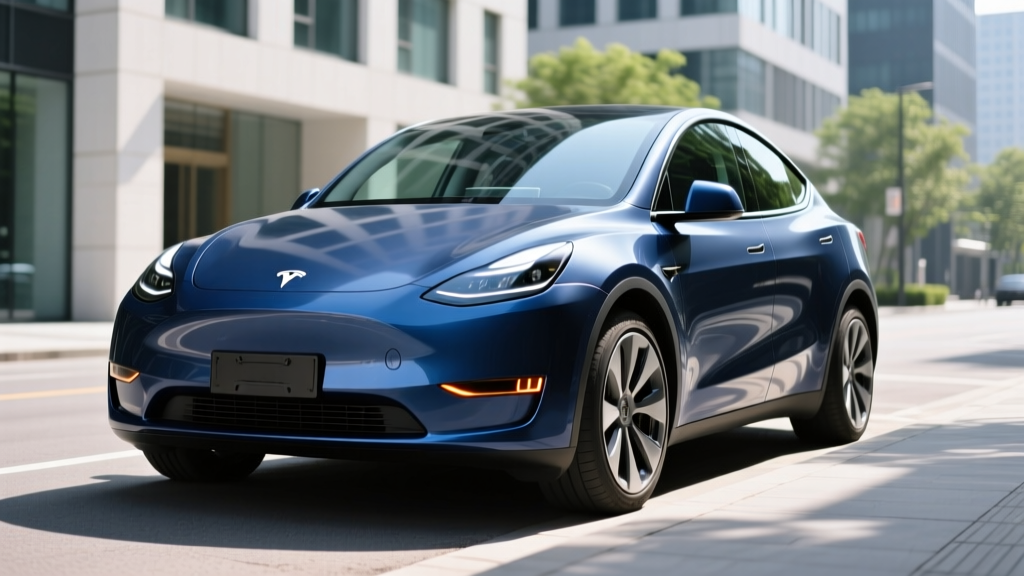
The Tesla Model Y remains one of the best-selling electric vehicles in the world, but a recent regulatory appearance has EV enthusiasts paying close attention. A Tesla Model Y+ China filing surfaced through the Ministry of Industry and Information Technology (MIIT) in late 2025, revealing a refreshed variant with an enlarged battery pack, revised efficiency targets, and a longer claimed range. For US buyers, the big question is whether this higher-capacity model will eventually arrive stateside — and if so, what it means for range, charging, and pricing in a market where the Model Y already dominates the compact electric crossover segment.
Below, we parse the filing data, cross-reference it with known Tesla powertrain architecture, and project what US-spec numbers might look like if the Model Y+ arrives for the 2027 model year. We also cover the current 2026 Model Y Long Range AWD as a baseline, since that is what you can actually buy today.
What the Tesla Model Y+ China Filing Reveals
The MIIT filing — China's equivalent of EPA certification paperwork — lists a Model Y variant designated internally with a higher-capacity battery pack. Key data points extracted from the filing include:
- Battery capacity: Approximately 82 kWh usable (up from the current Long Range's ~75 kWh usable)
- Chemistry: Nickel Manganese Cobalt (NMC) — consistent with Tesla's Long Range and Performance trims globally
- CLTC range claim: Up to 800 km (~497 miles) under China's more generous CLTC test cycle
- Estimated EPA-equivalent range: Roughly 370–390 miles if US certification follows historical CLTC-to-EPA conversion ratios (~75–80% of CLTC)
- Motor configuration: Dual-motor AWD, with a revised rear motor for improved efficiency
- Curb weight: Slightly higher than the current Long Range AWD, reflecting the larger pack
The filing does not confirm US availability or pricing. Tesla has not announced a "Model Y+" trim for North America as of early 2026. However, Tesla frequently uses China as a production and testing ground for powertrain updates before rolling them out globally. The refreshed Model Y (codenamed "Juniper") already launched in China and Europe before reaching the US, so a similar pattern for the Y+ is plausible.
Current 2026 Model Y Long Range: The US Baseline
Since the Model Y+ is not yet available in the US, here is what the current 2026 Tesla Model Y Long Range AWD offers — the trim most likely to be replaced or supplemented by a Y+ variant.
| Spec | 2026 Model Y Long Range AWD |
|---|---|
| EPA Range | 320 miles |
| Battery (usable) | ~75 kWh, NMC |
| Peak DC Fast Charge | 250 kW |
| 10–80% DC Charge Time | ~27 minutes |
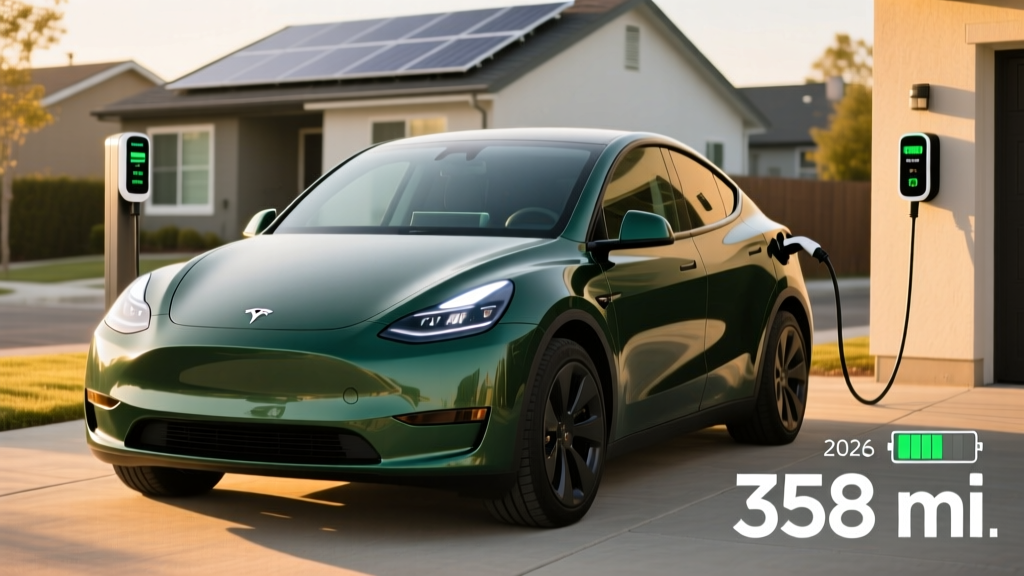
| Level 2 Home Charging | 11.5 kW (~44 mi/hr) |
| 0–60 mph | 4.8 seconds |
| Horsepower | 384 hp (combined) |
| Drivetrain | Dual-motor AWD |
| Efficiency | 122 MPGe / 28 kWh/100 mi |
| Cargo (rear seats up) | 30.2 cu ft |
| Cargo (rear seats folded) | 72.0 cu ft |
| Base MSRP | $44,990 |
| Battery Warranty | 8 years / 120,000 miles |
Projected Model Y+ Specs: What US Buyers Might See
If Tesla brings the Model Y+ to the US market, here is a reasonable projection based on the China filing data and Tesla's historical approach to translating international specs:
| Spec | Projected US Model Y+ | Current LR AWD |
|---|---|---|
| EPA Range (est.) | 370–390 miles | 320 miles |
| Battery (usable) | ~82 kWh, NMC | ~75 kWh, NMC |
| Peak DC Fast Charge | 250 kW (possibly 270+ kW) | 250 kW |
| 10–80% DC Time | ~25–30 min | ~27 min |
| 0–60 mph | ~4.5–4.8 sec | 4.8 sec |
| Base MSRP (est.) | $48,000–$52,000 | $44,990 |
A larger battery pack means more energy stored, but it also means longer charge times at the same peak rate unless Tesla increases the charge acceptance rate. The filing hints at possible improvements to the rear motor's efficiency, which would explain how Tesla achieves a disproportionate range gain relative to the modest 7 kWh capacity increase. Tesla's engineering team has historically been aggressive about squeezing efficiency from drivetrain and thermal management updates.
Charging Speed and Infrastructure Reality
Whether you buy the current Long Range or wait for a potential Y+, Tesla's Supercharger network remains a significant ownership advantage. The Model Y uses the North American Charging Standard (NACS) connector natively — no adapter needed at Tesla Superchargers, and increasingly compatible with third-party networks like Electrify America and EVgo as they add NACS cables.
| Charging Level | Power | Speed (Current LR) | Notes |
|---|---|---|---|
| Level 1 (120V) | ~1.4 kW | ~3–4 mi/hr | Emergency/trickle only |
| Level 2 (240V, 48A) | 11.5 kW | ~44 mi/hr | Full charge in ~8 hours overnight |
| DC Fast (Supercharger V3) | 250 kW peak | ~175 mi in 15 min | Peaks early, tapers above 60% SoC |
| DC Fast (Supercharger V4) | Up to 350 kW | Vehicle-limited to 250 kW | Future Y+ may unlock higher rates |
Charging curve reality: The 250 kW peak rate applies only between roughly 10–40% state of charge. Above 60%, the rate tapers significantly — often dropping below 100 kW by 80%. This is normal for NMC lithium-ion chemistry and thermal management. Plan road-trip stops around the 10–80% window for optimal charge speed; charging from 80–100% can take as long as the 10–80% session.
Pricing, Tax Credits, and Total Cost
The current 2026 Model Y Long Range AWD starts at $44,990 (including destination). Adding Full Self-Driving (Supervised) capability runs $8,000, and premium paint colors add $1,000–$2,000. A reasonably equipped Model Y LR typically lands between $46,000 and $55,000 before incentives.
- MSRP cap: SUVs/crossovers must be ≤ $80,000 — Model Y qualifies ✓
- Buyer income cap: AGI ≤ $150,000 (single) / $300,000 (joint) — verify your situation
- Battery sourcing: Critical minerals and battery components must meet escalating domestic-content thresholds; Tesla's US-built packs have largely met these requirements for 2025–2026
- Point-of-sale transfer: Eligible buyers can apply the credit as an immediate dealer discount rather than waiting for tax filing
- Maximum credit: Up to $7,500 if both critical-mineral and battery-component requirements are met
Always verify current eligibility on IRS.gov and consult a tax professional. Rules change, and individual circumstances vary.
If a Model Y+ arrives at an estimated $48,000–$52,000, it would still fall under the $80,000 SUV MSRP cap. Assuming Tesla continues to source battery materials compliantly, the $7,500 credit would likely apply, bringing a base Y+ to roughly $40,500–$44,500 after incentives — competitive with similarly equipped rivals like the Hyundai Ioniq 5 Long Range AWD and Ford Mustang Mach-E Extended Range.
Technology, Interior, and Driver Assistance
The refreshed Juniper-generation Model Y interior carries over Tesla's minimalist approach: a single 15.4-inch center touchscreen handles all infotainment, climate, and vehicle controls. There is no traditional instrument cluster; a slim secondary display on the dashboard shows speed and basic driving info for the driver.
Standout tech features:
- Tesla Vision-based Autopilot (SAE Level 2) with adaptive cruise and lane centering
- Optional Full Self-Driving (Supervised) — still Level 2, requires active driver engagement
- Over-the-air software updates adding features post-purchase
- Native Supercharger routing with battery preconditioning
- Ventilated front seats, power-folding second row, ambient lighting (Juniper refresh)
- Sentry Mode dashcam recording, Dog Mode climate control
Notable drawbacks: The absence of physical buttons for climate and wipers frustrates some drivers. Panel gap quality, while improved on Juniper models, still trails legacy automakers. The ride on the standard 19-inch wheels is firm, and road noise is noticeable at highway speeds compared to luxury competitors. There is no Apple CarPlay or Android Auto — Tesla's native system is the only option.
Who Should Buy the Model Y (or Wait for the Y+)?
- You need an EV now and value Supercharger network access
- Your daily commute is under 100 miles round-trip (320 mi EPA is ample)
- You want the lowest-friction EV ownership experience with minimal dealer visits
- You can charge at home with Level 2 and use Superchargers for road trips
- You regularly drive 300+ miles between charging stops and want a buffer
- You live in a cold climate where 20–30% winter range loss is a real concern
- You are not in a rush — US availability is unconfirmed and likely 2027 at earliest
- You want maximum range without stepping up to a Model X or Rivian R1S price point
The Model Y's strongest competitive position is its combination of range, charging speed, software integration, and Supercharger access. Rivals like the Hyundai Ioniq 5 and Kia EV6 offer faster peak charging (up to 350 kW on 800V architecture) but lack Tesla's proprietary network. The Ford Mustang Mach-E offers a compelling drive but trails in efficiency. The Model Y remains the default recommendation for buyers who want one EV that does everything competently.
- Class-leading real-world range and efficiency
- Tesla Supercharger network — still the most reliable DC fast-charging ecosystem
- Spacious cargo area (72 cu ft with seats folded) and practical frunk
- Continuous OTA updates improve the vehicle over time
- Strong §30D tax credit eligibility keeps effective pricing competitive
- Minimalist interior lacks physical controls — not for everyone
- No Apple CarPlay or Android Auto support
- Ride quality and road noise trail luxury-brand competitors
- Insurance premiums are above segment average
- FSD (Supervised) costs $8,000 extra and remains Level 2
Frequently Asked Questions
What is the real-world range of the current Tesla Model Y?
The 2026 Model Y Long Range AWD carries a 320-mile EPA estimate. In real-world mixed driving at moderate temperatures, most owners report 280–310 miles. Sustained highway driving at 75 mph drops this to roughly 270–290 miles. In sub-freezing conditions, expect 220–255 miles depending on how aggressively you use cabin heating and whether you precondition.
How fast does the Model Y charge at home and on the road?
At home on a 240V/48A Level 2 charger, the Model Y adds about 44 miles of range per hour — a full overnight session replenishes the battery in roughly 8 hours. On a V3 Supercharger (250 kW peak), a 10–80% session takes about 27 minutes, though the charging curve tapers significantly above 60% SoC. Plan to charge to 80% and go rather than waiting for a full charge on road trips.
Does the Tesla Model Y qualify for the federal EV tax credit?
Yes, the Model Y currently qualifies for up to $7,500 under IRS §30D, subject to buyer income limits ($150K single / $300K joint AGI), the $80,000 SUV MSRP cap, and battery sourcing requirements. The credit can be transferred at point of sale as an immediate discount. Always verify current eligibility, as sourcing rules tighten annually.
Is the Tesla Model Y+ available to buy in the US?
No. As of early 2026, the Model Y+ has appeared only in a China MIIT regulatory filing. Tesla has not announced US availability, pricing, or a timeline. If it follows the Juniper refresh pattern, a US launch could arrive for the 2027 model year, but this is speculative.
Is the Model Y worth buying over the Hyundai Ioniq 5 or Ford Mach-E?
It depends on your priorities. The Model Y wins on Supercharger access, cargo space, and software integration. The Ioniq 5 charges faster on compatible 350 kW chargers (10–80% in ~18 minutes) and has a more conventional interior with physical controls. The Mach-E offers a sportier driving feel. For buyers who road-trip frequently and value charging reliability, the Model Y's ecosystem advantage remains significant. For those who prioritize interior quality or faster peak charging, the Ioniq 5 is a strong alternative.
What is the battery warranty on the Model Y?
Tesla covers the Model Y Long Range battery and drive unit for 8 years or 120,000 miles, whichever comes first, with a minimum 70% capacity retention guarantee. If the battery degrades below 70% of its original capacity within the warranty period, Tesla will repair or replace it. Real-world data from Tesla's annual impact reports suggests average degradation of roughly 12% over 200,000 miles for NMC packs — well within warranty thresholds for most owners.
Sources: EPA fuel economy data via fueleconomy.gov, IRS clean vehicle credit rules at irs.gov, Tesla official specifications.