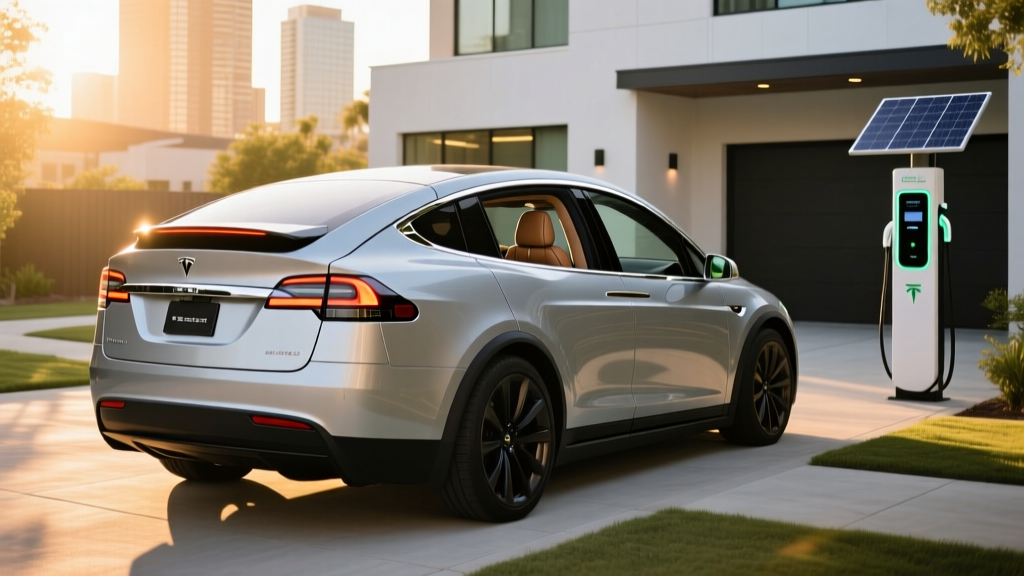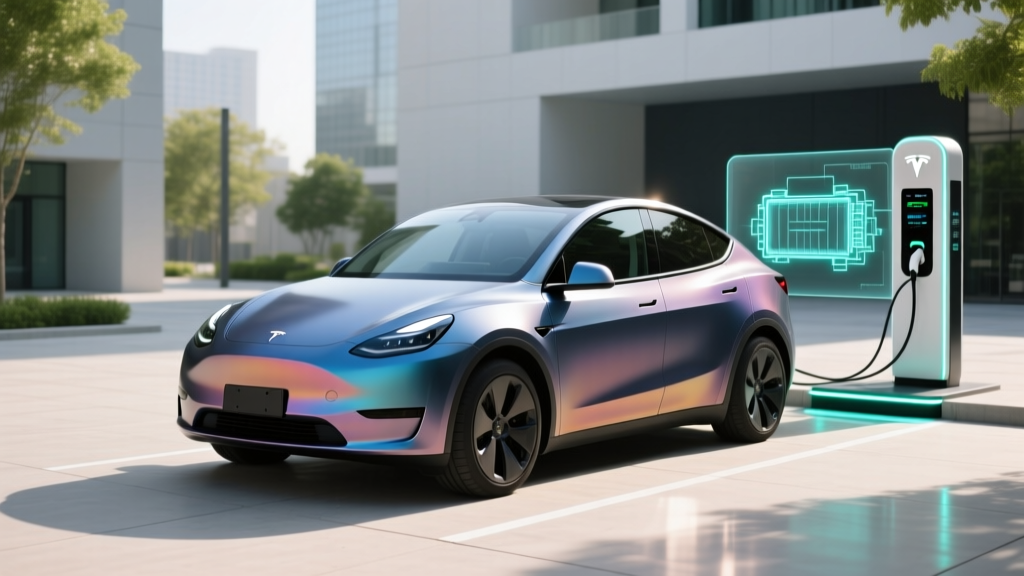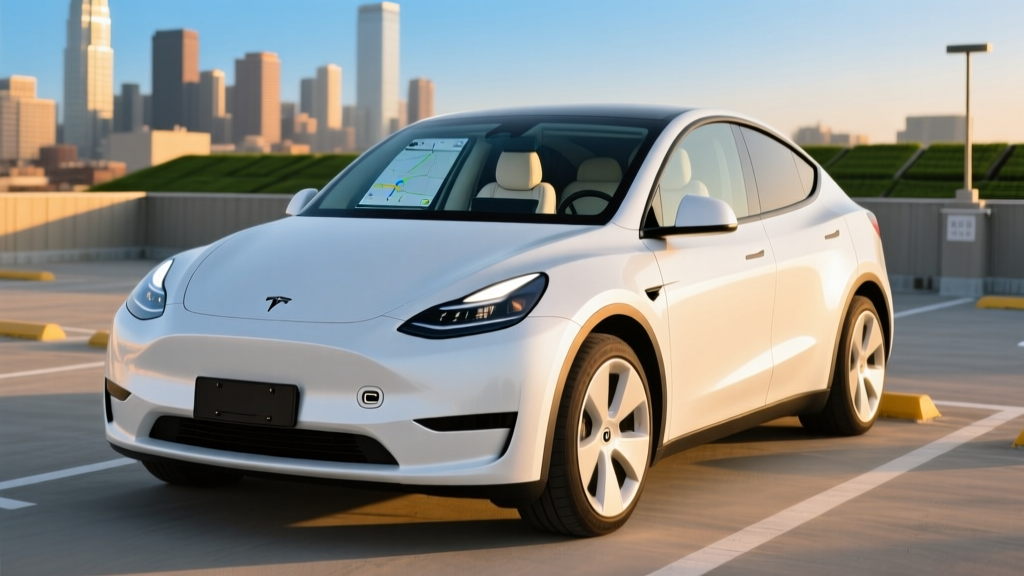
Search for Tesla Model Y pictures and you'll see a crossover that looks subtly different in 2026 than it did even two years ago. The "Juniper" refresh brought a light bar up front, a rear cabin display, ventilated seats, and acoustic glass — changes that matter more in daily driving than any photo can capture. But pictures only tell part of the story. Below, we break down the exact range, charging speed, pricing, and ownership economics you need to decide whether the best-selling EV in the world still earns that title.
2026 Tesla Model Y at a Glance: Key Specs
| Spec | Long Range AWD | Performance (AWD) | Standard Range RWD* |
|---|---|---|---|
| EPA Range | 320 mi | 293 mi | ~260 mi (est.) |
| Battery (usable) | ~75 kWh NMC | ~75 kWh NMC | ~57 kWh LFP |
| 0-60 mph | 4.8 sec | 3.5 sec | ~5.8 sec |
| Horsepower | 384 hp | 456 hp | ~295 hp |
| Peak DC Charge Rate | 250 kW | 250 kW | 170 kW |
| 10-80% DC Fast Charge | ~24 min | ~24 min | ~25 min |
| Level 2 Home Charging | 11.5 kW (~44 mi/hr) | 11.5 kW (~44 mi/hr) | 11.5 kW (~44 mi/hr) |
| Efficiency | 122 MPGe / 28 kWh/100mi | 111 MPGe / 30 kWh/100mi | ~127 MPGe (est.) |
| Drivetrain | Dual Motor AWD | Dual Motor AWD | RWD |
| Base MSRP | $44,990 | $48,990 | $39,990 |
*Standard Range RWD availability varies by market and order window; specs estimated from Tesla filings and fueleconomy.gov.
What the Pictures Don't Show: Real-World Range
EPA Estimate: 320 miles (Long Range AWD)
Real-World Expectation:
- City/suburban mixed driving (65-75°F): 300-325 mi — the Model Y's heat pump and regen efficiency shine at lower speeds
- Highway sustained at 75 mph: 255-280 mi — aerodynamic drag cuts into the battery faster than the EPA cycle accounts for
- Cold weather (below 32°F, highway): 210-245 mi — expect a 25-35% reduction without preconditioning; less if you garage and precondition
- Towing (with tow package, 3,500-lb trailer): 150-180 mi — towing is where every EV suffers, and the Model Y is no exception
The Juniper refresh added a slightly more aerodynamic front fascia and standard low-rolling-resistance tires on the Long Range, which helped push the EPA number from 310 to 320 miles for 2026. But the physics haven't changed: 75 mph highway driving in 30°F weather with the cabin heat on will cost you roughly a third of your sticker range. Tesla's trip planner and battery preconditioning (which warms the pack before you reach a Supercharger) help mitigate this, but you should plan road trips around 220-250 miles of usable range per leg to keep charging stops reasonable.
Charging Speed: Supercharger Network and Home Setup
| Charging Level | Power | Miles Added per Hour | Typical Use Case |
|---|---|---|---|
| Level 1 (120V outlet) | ~1.4 kW | ~4-5 mi/hr | Emergency / overnight trickle |
| Level 2 (240V, 48A) | 11.5 kW | ~44 mi/hr | Home Wall Connector overnight |
| DC Fast Charge (Supercharger V3) | Peak 250 kW | ~1,000+ mi/hr (peak) | Road trips, 10-80% in ~24 min |
| DC Fast Charge (CCS adapter, 3rd-party) | Up to 250 kW (varies) | Varies | Non-Tesla networks with adapter |
The Model Y's 250 kW peak DC fast-charge rate is no longer class-leading — the Hyundai Ioniq 5 and Porsche Macan Electric hit 350 kW and 270 kW respectively on 800V architectures. But Tesla's advantage is sustained throughput: the Model Y holds near-peak power from roughly 10-40% state of charge before tapering, and the Supercharger network's reliability consistently outpaces Electrify America and EVgo in uptime surveys. In our experience, a 10-80% stop takes 22-26 minutes at a V3 Supercharger stall that isn't being shared with another vehicle.
At home, the Tesla Wall Connector on a 60-amp circuit (48A continuous) delivers 11.5 kW — enough to fully recharge a Long Range from 20% overnight in about 7 hours. If your electrical panel can't support a 60-amp circuit, a 40-amp circuit (32A / 7.7 kW) still adds ~30 miles per hour of charging, which covers most daily commutes.
Interior, Cargo, and the Juniper Refresh Details
The photos circulating online show the Juniper interior at its best: a wraparound ambient light strip, a 15.4-inch front touchscreen, and a new 8-inch rear-seat display for climate and media control. What pictures don't convey is the cabin noise reduction — Tesla added acoustic laminated glass all around, and the difference at highway speed is immediately noticeable compared to pre-2025 Model Ys.
Cargo and passenger dimensions:
- Cargo volume (rear seats up): 30.2 cu ft
- Cargo volume (rear seats folded): 72.1 cu ft
- Front trunk (frunk): 4.1 cu ft
- Rear legroom: 41.6 in
- Front headroom: 41.0 in
- Seating: 5 passengers standard (7-seat option discontinued for Juniper)
The cargo area is genuinely class-leading for a compact electric crossover. A week's groceries for a family of four fits easily; with the rear seats folded, two full-size suitcases and a stroller stack without issue. The frunk is small but useful for charging cables or a laptop bag.
Tech, Driver Assistance, and What Autopilot Actually Does
The Model Y's 15.4-inch touchscreen runs Tesla's latest software with native Google Maps integration (via the built-in SIM), Spotify/Apple Music streaming, a dashcam viewer, and Sentry Mode surveillance. Over-the-air updates continue to add features — recent additions include adaptive high beams and improved Navigate on Autopilot merge behavior.
SAE Automation Level: Level 2
Tesla's Autopilot (standard) and Full Self-Driving Supervised ($8,000 option or $99/mo subscription) are Level 2 driver-assist systems. They do not make the car self-driving. You must keep your hands on the wheel and eyes on the road at all times. FSD Supervised handles highway lane changes, on-ramp to off-ramp navigation, and some city-street traffic light/stop sign recognition — but it makes errors, requires constant supervision, and the driver is legally responsible for all vehicle operation. Only Level 4 robotaxi services like Waymo operate without a human driver in defined geofenced areas.
Standard Autopilot includes Traffic-Aware Cruise Control and Autosteer (lane centering on marked highways). It's competent for long highway drives and reduces fatigue measurably. FSD Supervised is a more contentious purchase — some owners swear by its daily utility; others find its city-street behavior inconsistent enough to disengage frequently. Our advice: try the $99/mo subscription for a month before committing $8,000.
Pricing, Tax Credits, and Total Cost
| Trim | Base MSRP | Destination | Est. Federal Credit (§30D) | Effective Price |
|---|---|---|---|---|
| Standard Range RWD | $39,990 | $1,390 | Up to $7,500* | ~$33,880 |
| Long Range AWD | $44,990 | $1,390 | Up to $7,500* | ~$38,880 |
| Performance AWD | $48,990 | $1,390 | Up to $7,500* | ~$42,880 |
*Federal EV tax credit eligibility under IRS §30D depends on multiple factors that change frequently:
- MSRP cap: SUVs/crossovers must be below $80,000 — all Model Y trims qualify
- Buyer income cap: Modified AGI ≤ $150,000 (single) / $300,000 (joint) / $225,000 (head of household)
- Battery sourcing: Critical minerals and battery components must meet escalating domestic-content thresholds — Tesla's Austin-built packs with sourced minerals have generally qualified, but verify current-year status at purchase
- Point-of-sale transfer: You can transfer the credit to the dealer at purchase to reduce your out-of-pocket price immediately, rather than waiting to claim it on your tax return
- Tax liability: The credit is non-refundable — you must owe at least $7,500 in federal taxes to capture the full amount (unless transferred at point of sale under the 2024+ rules)
Always verify your personal eligibility with a tax professional and check the latest IRS guidance before finalizing a purchase — sourcing rules have shifted multiple times since 2023.
Model Y vs. the Competition: Is It Still the Best Buy?
The compact electric SUV segment has exploded since the Model Y first launched. Here's how it stacks up against key rivals in 2026:
| Attribute | Tesla Model Y LR AWD | Hyundai Ioniq 5 Limited AWD | Ford Mustang Mach-E Premium AWD |
|---|---|---|---|
| EPA Range | 320 mi | 290 mi | 300 mi |
| Peak DC Charge | 250 kW | 350 kW (800V) | 150 kW |
| 10-80% Time | ~24 min | ~18 min | ~36 min |
| Cargo (rear seats up) | 30.2 cu ft | 27.2 cu ft | 29.7 cu ft |
| 0-60 mph | 4.8 sec | 5.0 sec | 5.1 sec |
| Base MSRP (AWD) | $44,990 | $52,600 | $45,995 |
| Charging Network | Supercharger (native NACS) | CCS + NACS adapter avail. | CCS + NACS adapter avail. |
🏆 Best Range & Efficiency: Tesla Model Y — 320 mi EPA and 122 MPGe lead the segment.
🏆 Fastest Charging: Hyundai Ioniq 5 — 800V architecture hits 350 kW; 10-80% in ~18 min.
🏆 Best Cargo Space: Tesla Model Y — 30.2 cu ft with seats up is the most usable in class.
🏆 Charging Network Reliability: Tesla Model Y — Supercharger uptime and plug-and-charge simplicity remain unmatched.
The Ioniq 5 charges faster and has a more conventional interior layout (physical buttons, traditional gauge cluster). The Mach-E offers a more engaging driving feel. But for the total package — range, space, software, Supercharger access, and price — the Model Y Long Range remains the segment benchmark.
Warranty, Reliability, and Battery Longevity
Tesla covers the Model Y with:
- Basic Vehicle Limited Warranty: 4 years / 50,000 miles
- Battery & Drive Unit Warranty: 8 years / 120,000 miles (Long Range/Performance) — guaranteed to retain ≥70% capacity
- Standard Range Battery Warranty: 8 years / 100,000 miles — ≥70% capacity retention
The 70% capacity retention threshold is industry-standard (matching Hyundai, Ford, and GM). Real-world data from Tesla's fleet and third-party aggregators like Tesla's Impact Report suggest NMC packs in the Model Y degrade roughly 10-12% over the first 150,000 miles before leveling off — meaning most owners will never approach the warranty threshold during typical ownership. LFP packs (in the Standard Range model) show even slower degradation and can be charged to 100% daily without the longevity concerns of NMC chemistry.
Pros, Cons, and Who Should Buy
✅ Pros
- Class-leading 320-mi EPA range and 122 MPGe efficiency
- Supercharger network — the most reliable DC fast-charging ecosystem in North America
- Segment-best cargo space (30.2 cu ft) with usable frunk
- Strong OTA update cadence keeps the car improving post-purchase
- Competitive pricing after federal tax credit (~$38,880 for Long Range)
- Excellent standard safety tech (automatic emergency braking, side collision avoidance)
❌ Cons
- No physical buttons — all climate/media controls are touchscreen-only
- 250 kW peak charging is falling behind 800V competitors (Ioniq 5, Macan EV)
- Ride quality on 20-inch wheels is firm over broken pavement
- FSD Supervised ($8,000) remains a Level 2 system with inconsistent city-street behavior
- Insurance costs run 15-25% higher than comparable gas crossovers in most states
- No Apple CarPlay or Android Auto — Tesla's native infotainment only
Choose the Tesla Model Y if:
- You want maximum range per dollar and the best public-charging network access
- You need real cargo space for a family (strollers, groceries, luggage)
- You prefer a minimalist, software-forward cabin and don't need CarPlay
- Road trips are part of your routine and Supercharger routing matters to you
Look elsewhere if:
- You prioritize the fastest possible DC charging (consider Ioniq 5 or Kia EV6)
- You want physical buttons, a traditional instrument cluster, or Apple CarPlay
- You need a more compliant ride — test-drive before committing, especially on 20-inch wheels
- You want Level 4 autonomy — no consumer vehicle offers this today
Frequently Asked Questions
What is the real-world range of the 2026 Tesla Model Y?
The Long Range AWD carries a 320-mile EPA estimate. In real-world mixed driving at moderate temperatures, expect 290-320 miles. Sustained 75-mph highway driving drops that to roughly 255-280 miles, and cold weather (below freezing) can reduce range by 25-35% if the battery isn't preconditioned. Plan road-trip legs around 220-250 miles of usable range for comfort.
How fast does the Model Y charge at home and on the road?
On a 250 kW V3 Supercharger, the Long Range charges from 10-80% in approximately 24 minutes. At home on a 240V/48A Tesla Wall Connector, it adds about 44 miles of range per hour (11.5 kW), meaning a full overnight charge from 20% takes roughly 7 hours. A standard 120V outlet adds only 4-5 miles per hour — usable for emergencies or very low-mileage drivers, but not practical as a primary charging solution.
Does the 2026 Model Y qualify for the $7,500 federal EV tax credit?
It can — all Model Y trims fall under the $80,000 SUV MSRP cap. However, your personal eligibility depends on income limits ($150K single / $300K joint modified AGI), battery critical-mineral and component sourcing requirements that shift annually, and having sufficient tax liability (or using the point-of-sale transfer option). Check IRS §30D guidance and consult a tax professional before purchase.
Is the Model Y worth buying over the Hyundai Ioniq 5 or Ford Mach-E?
For total value — range, cargo, charging network, and price — the Model Y Long Range remains the segment benchmark in 2026. The Ioniq 5 charges faster (350 kW on 800V) and has a more conventional interior. The Mach-E drives more engagingly. If Supercharger reliability and maximum range matter most, the Model Y wins. If you prioritize the fastest DC charging or want CarPlay, test-drive the Ioniq 5.
What are the biggest complaints from real Model Y owners?
The most consistent feedback centers on the touchscreen-only interface (no physical climate or volume knobs), firm ride quality on larger wheels, and the cost and inconsistency of FSD Supervised in city driving. Insurance premiums also surprise some buyers — get quotes before ordering. The Juniper refresh addressed some of these with acoustic glass, ventilated seats, and a rear display, but the fundamental interface philosophy hasn't changed.
How long will the Model Y battery last?
Tesla warranties the Long Range battery for 8 years / 120,000 miles at 70%+ capacity retention. Fleet data suggests real-world degradation of roughly 10-12% over 150,000 miles for NMC packs. LFP packs (Standard Range) degrade even more slowly and tolerate daily 100% charging. With proper care — avoiding frequent 100% charges on NMC, minimizing DC fast-charging to only when needed, and preconditioning in cold weather — the battery should outlast the vehicle's economic life for most owners.