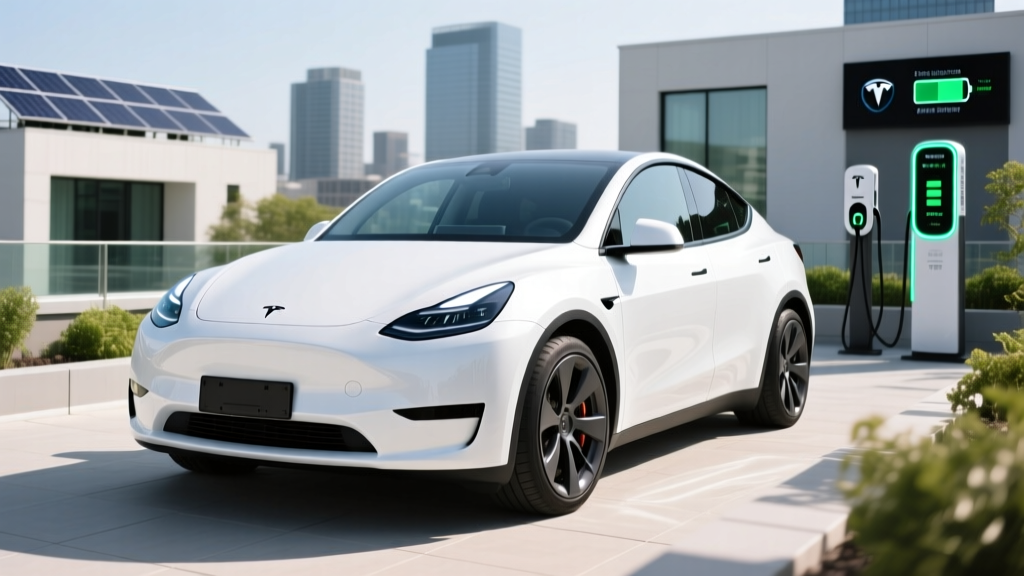
The Tesla Model Y Performance remains one of the most-searched electric SUVs on the market, and the Pearl White Multi-Coat variant continues to be Tesla's no-cost base exterior — making it the default canvas for buyers who want speed without paying a color premium. For 2026, the refreshed Model Y (internally dubbed "Juniper") carries over the structural and powertrain updates introduced last year: a revised 75 kWh usable NMC battery pack, 250 kW peak DC fast charging via NACS, and a dual-motor all-wheel-drive system that pushes 0-60 mph in 3.5 seconds. This review breaks down what the Model Y Performance in white actually delivers when you leave the showroom floor — real range, real charging curves, real costs.
Range, Efficiency, and Real-World Expectations
The EPA rates the 2026 Model Y Performance at 303 miles on its combined cycle with the standard 20-inch Performance wheels and Pirelli P Zero summer tires. Efficiency comes in at 122 MPGe combined, or roughly 28 kWh per 100 miles, according to fueleconomy.gov. Those are strong numbers for a dual-motor performance SUV producing over 450 horsepower.
EPA Sticker: 303 miles
Highway (70-80 mph, 65°F): ~255–275 miles
City / Suburban Mixed: ~285–300 miles (regen-friendly)
Cold Weather (20°F, highway): ~210–235 miles (heat pump mitigates but battery resistance and cabin draw reduce range 20–30%)
Mountain / High-Elevation: Expect 240–260 miles with sustained climbs; regen recovers some on descents
The gap between EPA and real-world highway range is typical for performance-oriented EVs with sticky summer rubber and aggressive aero tuning. If highway road trips are a priority, switching to the 19-inch Gemini wheels (available as a no-cost option at order time) can recover 15–20 miles of range thanks to lower rolling resistance and a slightly narrower contact patch — though you sacrifice some cornering grip.
Battery Chemistry, Capacity, and Longevity
The 2026 Model Y Performance uses an NMC (nickel manganese cobalt) lithium-ion pack with approximately 75 kWh usable capacity (roughly 82 kWh gross, with a top/bottom buffer to protect cell health). Tesla does not publish exact cell chemistry on its spec sheet, but teardown data and supply-chain reporting confirm NMC 811-type cells from a mix of Panasonic and CATL for North American builds.
Why NMC over LFP here? Tesla reserves its LFP (lithium iron phosphate) chemistry for the base rear-wheel-drive Model Y, where the priority is cost reduction and 100% daily-charge tolerance. The Performance trim demands higher energy density and discharge rates to hit its 3.5-second 0-60 time, and NMC delivers that — at the trade-off of a recommended daily charge limit of 80% for long-term cell health.
Tesla's battery warranty covers 8 years or 120,000 miles (whichever comes first) with a guaranteed minimum 70% capacity retention over that period. In practice, NMC packs in Tesla vehicles have shown roughly 8–12% degradation at 100,000 miles based on fleet data aggregated by third-party EV analytics — meaning most owners will retain well above the warranty threshold.
Charging Speed: DC Fast, Level 2, and the Curve Reality
Charging is where the Juniper-refreshed Model Y Performance made its biggest generational leap. The 2026 model supports up to 250 kW peak DC fast charging on Tesla's V3 and V4 Superchargers via the native NACS connector. Here's the breakdown:
| Charging Level | Max Power | Speed (mi/hr) | Notes |
|---|---|---|---|
| Level 1 (120V / 12A) | 1.4 kW | ~4 mi/hr | Emergency/trickle only; 75+ hours for full charge |
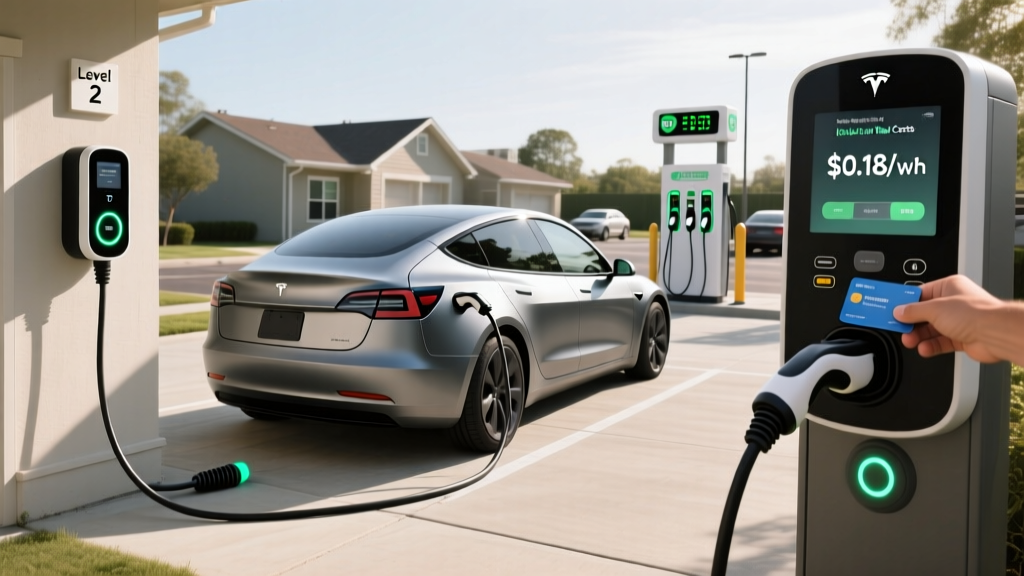
| Level 2 (240V / 48A) | 11.5 kW | ~37 mi/hr | Full charge in ~7 hours; ideal overnight home setup |
| DC Fast (V3/V4 Supercharger) | 250 kW peak | ~1,000 mi/hr (peak) | 10–80% in ~25 min; tapers sharply above 80% |
Charging-curve reality check: The 250 kW figure is a peak, not a sustained rate. The Model Y Performance's NMC pack holds close to 250 kW from roughly 10% to 30% state of charge, then ramps down through a stepped curve. By 60% SoC, you're typically seeing 120–140 kW; above 80%, it drops to under 50 kW. That's why the 10–80% time of approximately 25 minutes is the meaningful metric — charging from 80–100% can add another 20+ minutes. For road trips, the practical strategy is to charge to 80% and go, preconditioning the battery via the car's built-in navigation routing to the next Supercharger.
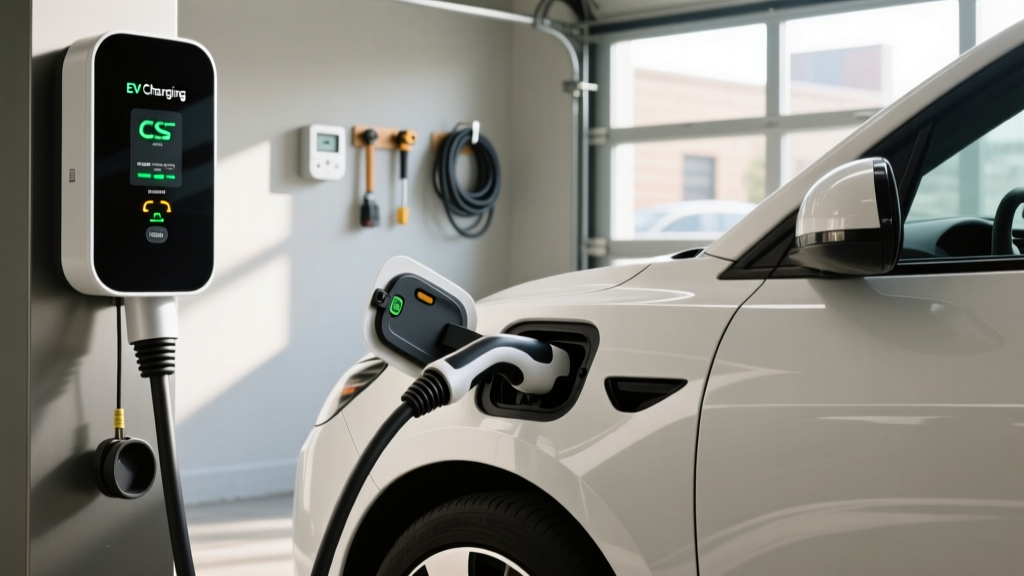
For home Level 2 charging, the onboard charger accepts up to 11.5 kW (48 amps), which requires a 60-amp dedicated circuit installed by a licensed electrician. A Tesla Wall Connector costs $475 for the hardware; professional installation typically runs $500–$1,800 depending on panel proximity and whether a service upgrade is needed.
Performance and Drivetrain Specs
| Specification | 2026 Model Y Performance |
|---|---|
| Drivetrain | Dual-Motor AWD |
| Horsepower | ~456 hp (combined) |
| Torque | ~487 lb-ft |
| 0–60 mph | 3.5 seconds |
| Top Speed | 155 mph |
| EPA Range | 303 miles |
| Battery (usable) | ~75 kWh (NMC) |
| Efficiency | 122 MPGe / 28 kWh/100mi |
| Max DC Charge Rate | 250 kW (NACS) |
| Cargo Volume | 30.2 cu ft (rear up) / 72.1 cu ft (rear folded) + 4.1 cu ft frunk |
| Rear Legroom | 40.5 inches |
| Towing Capacity | 3,500 lbs (with tow package) |
| Battery Warranty | 8 yr / 120,000 mi (≥70% retention) |
| Base MSRP | $51,490 (excl. $1,390 dest.) |
The dual-motor setup pairs a permanent-magnet synchronous motor on the rear axle with an induction motor up front. The front motor freewheels under light-load cruising to reduce drag losses, which partly explains the Model Y Performance's strong efficiency relative to its output. Launch control delivers the full 3.5-second run consistently, and the Performance trim includes larger front brakes and a sport-tuned adaptive suspension that's noticeably firmer than the Long Range variant — a trade-off you'll feel on broken pavement but appreciate on canyon roads.
Pricing, Trims, and Federal Tax Credit Eligibility
The 2026 Model Y Performance starts at $51,490 before the $1,390 destination fee, bringing the out-the-door base to $52,880. Pearl White Multi-Coat is the standard no-cost exterior; choosing Midnight Silver, Deep Blue, or Quicksilver adds $1,000–$2,000, and Ultra Red costs $2,500. Our hypothetical as-tested model with white paint, black interior, and Full Self-Driving (Supervised) came to $60,880.
| Item | Cost |
|---|---|
| Model Y Performance (White, Black Interior) | $52,880 (incl. dest.) |
| Full Self-Driving (Supervised) Package | $8,000 |
| As-Tested Total | $60,880 |
| Potential §30D Federal Tax Credit | Up to $7,500 (if eligible) |
| Effective Price (with max credit) | ~$53,380 |
Federal tax credit rules (IRS §30D) for 2026: The Model Y Performance is below the $80,000 MSRP cap for SUVs, clearing the first hurdle. Buyer income must not exceed $300,000 (MFJ), $225,000 (HOH), or $150,000 (single) based on modified AGI in the year of purchase or the prior year. The credit itself splits into two halves: $3,750 for critical-minerals sourcing and $3,750 for battery-component manufacturing, each with escalating domestic-content thresholds under the Inflation Reduction Act. As of 2026, the critical-minerals requirement is stringent, and Tesla's supply chain qualifies for at least one half — but confirm your specific vehicle's eligibility with your dealer and a tax professional before relying on the full $7,500. Per the IRS clean vehicle credit page, the credit can now be transferred to the dealer as a point-of-sale discount, effectively reducing your purchase price on delivery day.
Interior, Tech, and Driver Assistance
The Juniper refresh brought meaningful interior upgrades: ventilated front seats, ambient lighting, a rear 8-inch touchscreen for passengers, power-folding second-row seats, and improved sound insulation that noticeably reduces road noise at highway speed. The 15.4-inch center touchscreen runs Tesla's latest infotainment stack with native Spotify, Netflix, YouTube, and a surprisingly capable web browser — all without Apple CarPlay or Android Auto, which Tesla still refuses to support.
Every Model Y ships with Basic Autopilot (Traffic-Aware Cruise Control and Autosteer), which is an SAE Level 2 driver-assistance system. This means the driver must remain fully engaged, hands on the wheel (or torque-confirmed via Tesla's steering-wheel monitoring), and eyes on the road at all times. The optional Full Self-Driving (Supervised) package ($8,000 one-time or $99/month subscription) adds automatic lane changes, Navigate on Autopilot, traffic-light and stop-sign recognition, and Autopark — but it remains SAE Level 2. The driver is legally and practically responsible for every driving decision.
Tesla Autopilot and FSD (Supervised) are SAE Level 2 systems. They do not make the vehicle autonomous. The driver must continuously supervise steering, braking, and surrounding traffic. NHTSA has issued multiple investigations into Autopilot-related incidents. Use these features as convenience aids, not replacements for attentive driving.
Who the Model Y Performance Suits Best
- You want sub-4-second acceleration in a practical family SUV
- You have reliable home Level 2 charging and access to Tesla's Supercharger network
- You value over-the-air updates and a mature software ecosystem
- You want strong cargo capacity (72+ cu ft) with a usable frunk
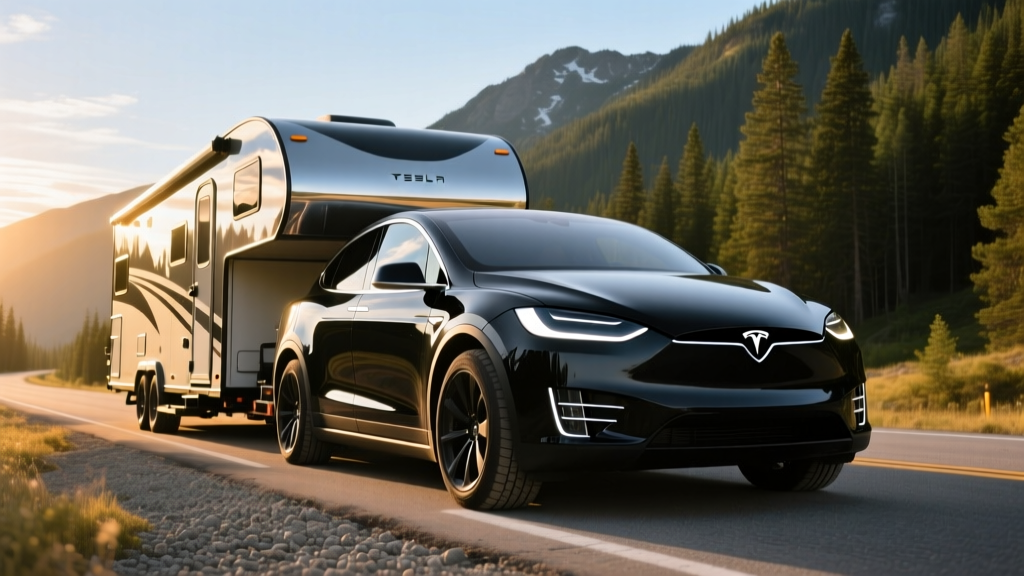
- You tow occasionally (3,500 lbs is enough for a small camper or jet skis)
- You want a plush, quiet ride — the Performance suspension is firm
- You need Apple CarPlay/Android Auto
- You frequently drive in extreme cold and need maximum range (consider the Long Range AWD with 19-inch wheels for ~320 EPA miles)
- Your budget is under $45,000 — the base RWD Model Y at ~$44,990 may be a better fit
Pros, Cons, and Competitor Check
- 3.5-second 0-60 in a 5-passenger SUV
- 250 kW peak DC charging with NACS native access to 25,000+ Superchargers
- Pearl White is no-cost — keeps MSRP at base
- Class-leading software and OTA update cadence
- Strong cargo versatility (frunk + flat-fold rear)
- IIHS Top Safety Pick+ (IIHS)
- Firm Performance suspension — rough on poor roads
- No Apple CarPlay or Android Auto
- FSD (Supervised) at $8,000 remains Level 2 — expensive for what it delivers
- Summer tires lose grip below 45°F — winter tire swap recommended in cold climates
- Panel gaps and paint quality still inconsistent across Fremont/Austin builds
- No physical instrument cluster — all info on center screen
Versus key competitors: The Hyundai Ioniq 5 N ($67,500) is more expensive and more track-focused but sacrifices range (220 EPA miles). The Ford Mustang Mach-E GT ($56,995) is a strong alternative with a more traditional cockpit and CarPlay, but its charging speed (150 kW peak) and Supercharger-network access (via adapter) lag behind. The BMW iX M60 ($88,000) is a luxury step up in price and refinement. For pure performance-per-dollar with charging infrastructure, the Model Y Performance remains hard to beat.
Frequently Asked Questions
What is the real-world range of the Model Y Performance?
The EPA rates it at 303 miles, but expect 255–275 miles on sustained highway driving at 70–80 mph in moderate temperatures. In winter cold (below 30°F), plan for 210–235 miles. City driving with regenerative braking can get you close to the EPA figure.
How fast does the Model Y Performance charge at home and on the road?
On a DC fast charger (Supercharger V3/V4), it peaks at 250 kW and charges 10–80% in about 25 minutes. At home on a 48-amp Level 2 charger (11.5 kW), you'll add roughly 37 miles per hour, fully recharging overnight in about 7 hours.
Does the 2026 Model Y Performance qualify for the federal EV tax credit?
It clears the $80,000 MSRP cap for SUVs. Whether you receive the full $7,500, a partial $3,750, or nothing depends on your income (AGI limits apply), and on Tesla's battery critical-mineral and component sourcing at the time of your vehicle's production. Verify with your dealer and consult the IRS clean vehicle credit page or a tax professional before purchase.
Is the white paint on the Model Y any good?
Pearl White Multi-Coat is Tesla's standard no-cost color and is a tri-coat formulation that looks better than typical base whites. It hides minor swirl marks well and reflects heat effectively in hot climates. However, it can show road tar and bug splatter more than darker colors, and some owners report slight orange-peel texture depending on the Fremont or Austin production batch.
Is the Model Y Performance worth buying over the Long Range?
If you value acceleration (3.5s vs. 4.8s 0-60), the sport suspension, and Performance brakes, the ~$4,000 premium is justified. If your priority is maximum range and ride comfort, the Long Range AWD with 19-inch wheels gives you ~320 EPA miles and a softer ride for less money. For most daily commuters, the Long Range is the pragmatic choice; the Performance is for enthusiasts who want the thrill.
What are the biggest ownership costs beyond the purchase price?
Insurance tends to run 20–40% higher than comparable gas SUVs due to repair costs and parts pricing. Electricity costs vary by region but average $0.13–$0.16/kWh at home, making a full "tank" roughly $10–$12. Supercharging costs more ($0.28–$0.40/kWh depending on location and time). Tire replacement for the 20-inch Performance Pirellis runs $1,200–$1,600 for a set and they typically last 20,000–30,000 miles.