Quick Verdict: The Model Y Performance Adds a Power Outlet for Your House
The 2026 Tesla Model Y Performance is no longer just the fastest compact electric SUV in its price bracket — it's now a rolling home battery. With the introduction of Vehicle-to-Home (V2H) bidirectional charging on the refreshed Juniper-generation Model Y, Tesla joins Ford and Hyundai in letting owners power household circuits during outages. Pair that with a 303-mile EPA range, a 2.9-second 0-60 time, and a starting price around $52,490 before incentives, and you have the most versatile version of America's best-selling EV yet.
But V2H isn't free: it requires Tesla's Powerwall-compatible gateway hardware and a specific electrical setup. Below, we break down every number that matters — range, charging curves, real-world efficiency, tax credit math, and whether the Performance trim justifies its premium over the Long Range AWD.
Range, Battery, and Real-World Efficiency
| Spec | 2026 Model Y Performance |
|---|---|
| EPA Range | 303 miles |
| Usable Battery Capacity | ~79 kWh (NMC) |
| EPA Efficiency | 111 MPGe combined / 30 kWh/100 mi |
| Drivetrain | Dual-Motor AWD |
| Horsepower | 510 hp |
| 0-60 mph | 2.9 seconds |
| Top Speed | 155 mph |
The 2026 Model Y Performance uses a nickel-manganese-cobalt (NMC) lithium-ion pack, which offers higher energy density than the LFP chemistry found in the Standard Range RWD variant. This translates to more range in a smaller physical package — critical for preserving the Model Y's cargo floor and handling dynamics. However, NMC batteries benefit from daily charge limits of 80–90% for longevity, reserving 100% charges for road trips. Tesla's battery management system enforces this with user-configurable charge limits.
Charging Speed: DC Fast, Level 2, and V2H Explained
| Charging Level | Power (kW) | Speed / Notes |
|---|---|---|
| DC Fast Charge (peak) | 250 kW | 10–80% in ~23 minutes (Supercharger V3+) |
| DC Fast Charge (sustained avg.) | ~150 kW | Charge curve tapers sharply above 65% SoC |
| Level 2 (Tesla Wall Connector) | 11.5 kW (48A) | ~37 miles of range per hour |
| Level 2 (standard 240V/32A) | 7.7 kW | ~25 miles of range per hour |
| Level 1 (120V outlet) | ~1.4 kW | ~4–5 miles per hour (emergency only) |
| V2H (Vehicle-to-Home) | Up to 11.5 kW output | Requires Tesla Gateway + Powerwall-compatible setup |
The 250 kW peak DC fast-charge rate applies at Supercharger V3 and newer V4 stalls. Here's the critical detail most spec sheets omit: that peak only holds between roughly 10–35% State of Charge (SoC). From 35–65%, the rate settles to 150–170 kW, and above 80% it drops to under 50 kW. This charge-curve taper is why Tesla (and most EV makers) quote 10–80% times rather than 0–100%. Plan road-trip stops around that 10–80% window for optimal throughput.
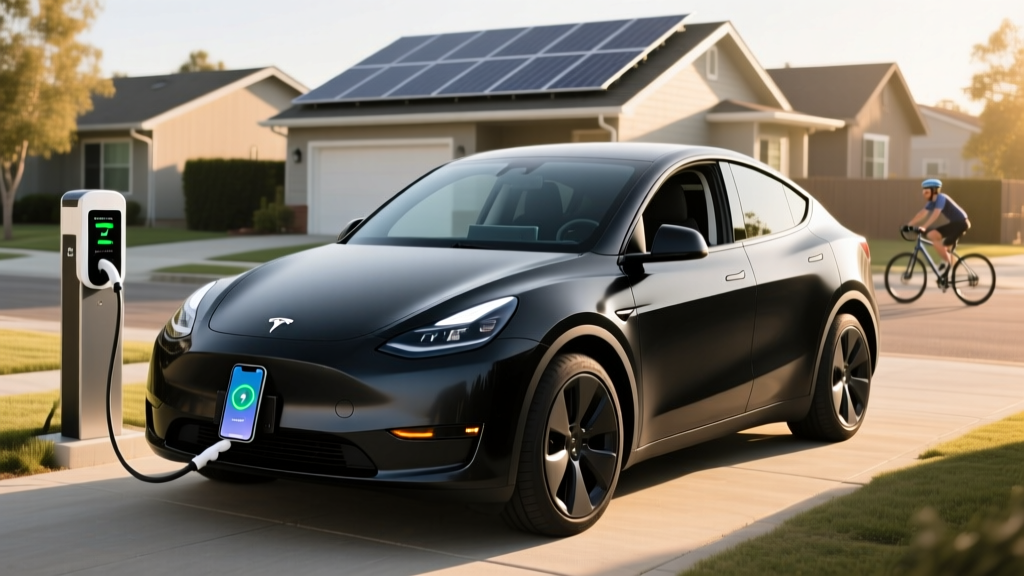
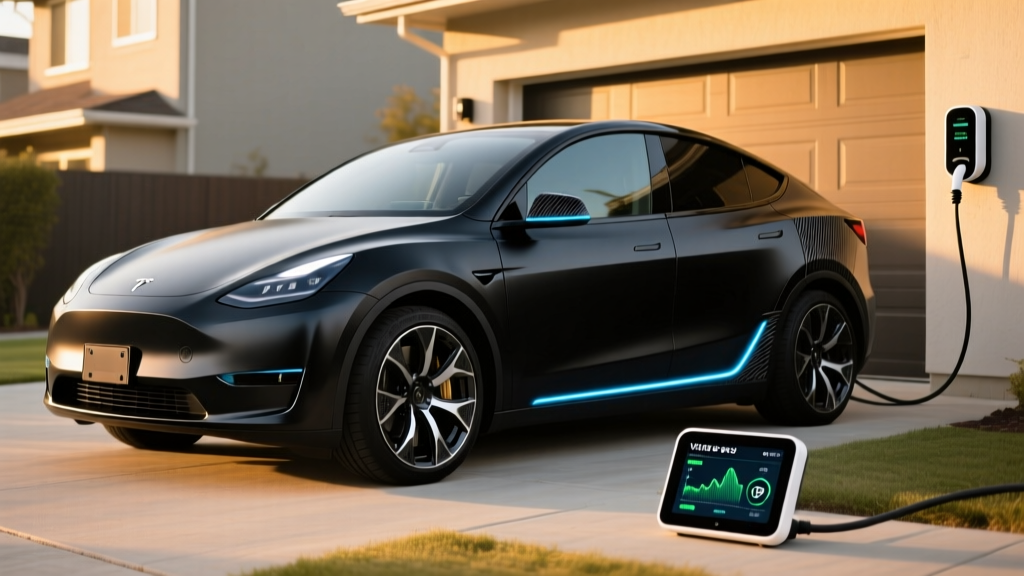
What V2H Actually Means for Owners: The Vehicle-to-Home feature allows the Model Y Performance's ~79 kWh battery to back-feed your home's electrical panel through a Tesla Gateway transfer switch. At up to 11.5 kW output, it can sustain essential circuits (refrigerator, lights, HVAC blower, internet, sump pump) for multiple days, or run a full average home (roughly 30 kWh/day consumption) for about 2–2.5 days if managed carefully. This is not the same as V2G (Vehicle-to-Grid, which sells power back to utilities) — V2H is a one-way home-backup function.
Important caveats: V2H requires a Tesla Gateway 2 or newer transfer switch installed by a licensed electrician, integrated with your home panel. It works best when paired with a Tesla Powerwall for seamless switchover. Standalone V2H from the car alone is supported but requires manual configuration. The hardware and installation typically add $2,500–$5,000 beyond the vehicle purchase.
Pricing, Trims, and Federal Tax Credit Eligibility
| Trim | Base MSRP | Est. After §30D Credit |
|---|---|---|
| Model Y Long Range AWD | $47,990 | ~$40,490* |
| Model Y Performance AWD | $52,490 | ~$44,990* |
*Assumes full $7,500 federal tax credit eligibility. Point-of-sale transfer available at participating dealers.
The 2026 Model Y Performance starts at $52,490 (including destination) before any incentives. Adding the $2,000 Full Self-Driving (Supervised) package, premium paint ($1,000–$2,500), and 21-inch wheels pushes an as-tested example to roughly $56,000–$58,000.
- MSRP Cap: SUVs/vans/pickups must be ≤ $80,000 MSRP. The Model Y Performance qualifies at $52,490. Verify on IRS.gov.
- Buyer Income Cap: Modified AGI must not exceed $150,000 (single), $225,000 (head of household), or $300,000 (joint filers).
- Battery Sourcing: Critical minerals and battery components must meet escalating domestic-content thresholds. Tesla's US-assembled packs with North American mineral sourcing have generally qualified, but rules tighten annually. Confirm current-year compliance at the point of sale.
- Point-of-Sale Transfer: Eligible buyers can apply the $7,500 credit as an immediate down-payment reduction at the dealership, rather than waiting for tax-season filing.
Always confirm your specific eligibility with a tax professional and the IRS clean vehicle credit page before purchasing. Rules and qualifying VIN lists are updated periodically.
Interior, Cargo, and Everyday Practicality
The Juniper refresh brought a noticeably quieter cabin, ventilated front seats, ambient lighting, a rear-seat touchscreen, and improved material quality over the pre-2025 Model Y. The minimalist interior remains polarizing — no physical buttons, no instrument cluster, everything runs through the 15.4-inch center display — but execution has matured.
- Cargo (behind 2nd row): 30.2 cu ft
- Cargo (seats folded): 72.1 cu ft
- Front trunk (frunk): 4.1 cu ft
- Rear legroom: 40.5 inches
- Front headroom: 40.8 inches
- Towing capacity: 3,500 lbs (with factory hitch)
For a family of four on a week-long road trip, the 30.2 cu ft behind the second row is competitive with the Hyundai Ioniq 5 (27.2 cu ft) and slightly behind the Ford Mustang Mach-E (29.7 cu ft rear, but deeper under-floor storage). The frunk is useful for charging cables and small bags. The 3,500-lb tow rating handles small boat trailers and utility trailers but falls short of body-on-frame SUVs.
Tech, Autopilot, and Driver Assistance
Every 2026 Model Y includes Tesla's Basic Autopilot (SAE Level 2), which provides adaptive cruise control and lane-centering on highways. The optional Full Self-Driving (Supervised) package at $2,000 adds automatic lane changes, traffic-light recognition, and city-street navigation — but the driver must remain fully attentive with hands on the wheel at all times.
The infotainment system runs on Tesla's proprietary OS with built-in navigation, streaming (Netflix, YouTube, Spotify while parked), a phone-as-key system, and over-the-air updates. There is no Apple CarPlay or Android Auto — Tesla's ecosystem is closed. For some buyers this is a non-issue; for others, it's a dealbreaker.
Warranty and Long-Term Ownership
- Basic Vehicle Warranty: 4 years / 50,000 miles
- Battery & Drive Unit Warranty: 8 years / 120,000 miles (whichever comes first), with a minimum 70% capacity retention guarantee
- Roadside Assistance: 4 years / 50,000 miles
Tesla's 8-year/120,000-mile battery warranty is competitive with the industry standard (Hyundai offers 10 years/100,000 miles on the Ioniq 5). The 70% retention threshold means Tesla will repair or replace the pack if it degrades below 70% of original capacity within the warranty window. Real-world data from high-mileage Tesla owners suggests NMC packs typically retain 85–90% capacity at 100,000 miles with proper charging habits (avoiding frequent 100% charges and DC fast-charging only when needed).
V2H usage does draw cycles from the traction battery. Tesla has not published specific guidance on how V2H cycling affects the warranty, but bidirectional use at 11.5 kW represents a moderate discharge rate well within the pack's design envelope. Monitor your battery's State of Health (SoH) through the Tesla app's energy tracking screens.
Pros, Cons, and Who Should Buy
- Fastest acceleration in its class (2.9s 0-60)
- V2H home backup capability unique among compact EV SUVs
- Extensive Supercharger network with reliable plug-and-charge
- 303-mile EPA range sufficient for most road trips
- Spacious cargo area and practical frunk
- Strong OTA update cadence keeps the vehicle current
- No Apple CarPlay or Android Auto
- V2H requires additional gateway hardware ($2,500–$5,000 install)
- Ride quality is firm, especially on 21-inch Performance wheels
- Minimalist interior lacks physical controls for HVAC and wipers
- Insurance premiums run 15–25% higher than comparable ICE SUVs
- Service center availability varies widely by region
Best for: Tech-forward families and commuters who want sports-car acceleration, need home backup power in areas with unreliable grids, and have access to home Level 2 charging. Road-trippers benefit from Tesla's Supercharger network, which remains the most reliable DC fast-charging ecosystem in the US.
Look elsewhere if: You need physical buttons, prefer CarPlay integration, live in an area with sparse Tesla service coverage, or want a softer ride. The Hyundai Ioniq 5 offers comparable range, 800V ultra-fast charging, and CarPlay at a lower entry price. The Ford Mustang Mach-E GT provides similar performance with a more traditional dealership experience.
Frequently Asked Questions
What is the real-world range of the 2026 Tesla Model Y Performance?
The EPA rates it at 303 miles combined. Expect 255–275 miles in real-world highway driving at 70–75 mph in moderate temperatures, and 220–245 miles in cold weather (below 32°F). City driving with regenerative braking often matches or slightly exceeds the EPA number.
How fast does the Model Y Performance charge?
On a 250 kW Supercharger, it charges from 10–80% in approximately 23 minutes, though the sustained average is closer to 150 kW due to charge-curve tapering. At home on an 11.5 kW Tesla Wall Connector, expect a full charge in about 7–8 hours, adding roughly 37 miles of range per hour.
Does the Model Y Performance qualify for the $7,500 federal EV tax credit?
It qualifies on MSRP ($52,490 is well under the $80,000 SUV cap) and Tesla's US-built battery packs have generally met critical-mineral sourcing thresholds. However, buyer income caps apply ($150K single / $300K joint). Confirm current-year eligibility on IRS.gov before purchasing.
How does V2H work, and what do I need to install?
V2H allows the Model Y's battery to power your home during outages through a Tesla Gateway transfer switch. You'll need the Gateway hardware installed between your utility meter and electrical panel by a licensed electrician. Total cost for the gateway and installation typically runs $2,500–$5,000. The system works best paired with a Tesla Powerwall for automatic, seamless switchover.
Is the Model Y Performance worth it over the Long Range AWD?
The $4,500 premium over the Long Range AWD gets you 2.9-second 0-60 acceleration (vs. 4.8s), track-tuned suspension, larger brakes, 21-inch wheels, and V2H capability. If you value the home backup power and performance, it's justified. If you prioritize ride comfort and maximum range, the Long Range AWD on smaller wheels is the more practical daily driver.
What are the biggest competitors to the Model Y Performance?
The Hyundai Ioniq 5 N (601 hp, $66,000) is more powerful but pricier and less practical. The Ford Mustang Mach-E GT (480 hp, $56,995) is close in performance with a traditional dealer network. The BMW iX xDrive50 offers a luxury alternative at significantly higher cost. None currently match the Model Y's combination of performance, V2H, and Supercharger access at this price point.