Quick Verdict: The Model Y Performance in 2026
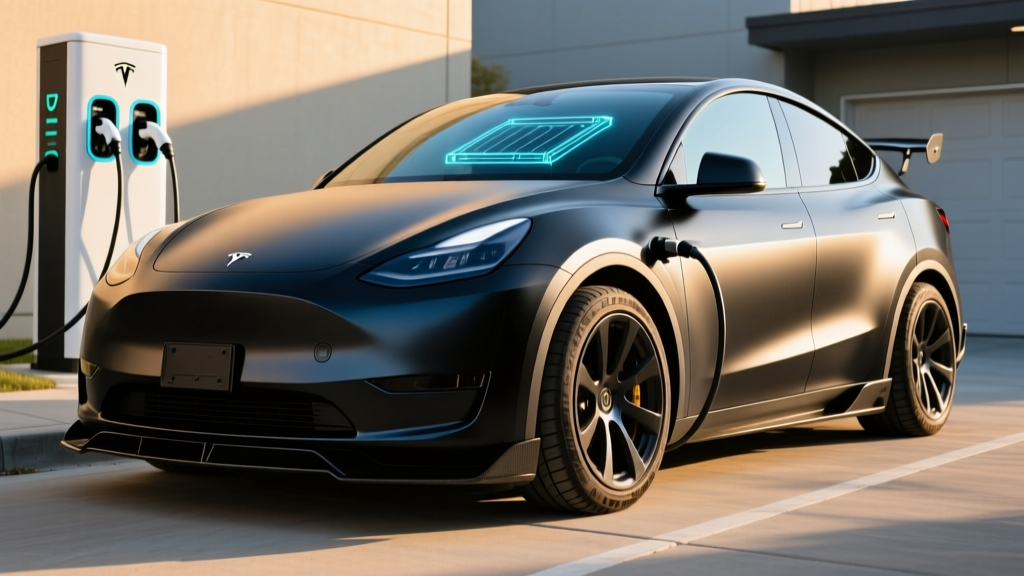
The 2026 Tesla Model Y Performance remains the benchmark for buyers who want sports-sedan acceleration in a practical electric crossover. With a 3.5-second 0-60 mph time, a dual-motor all-wheel-drive powertrain, and access to Tesla's Supercharger network, it delivers thrills and daily usability in one package. But the Performance variant's 21-inch Überturbine wheels and low-profile summer tires come with real trade-offs: reduced EPA range, firmer ride quality, and tire replacement costs that can catch new owners off guard. This review breaks down exactly what you get, what it costs, and whether the Performance trim's tire and wheel setup is the right call for your driving life.
| Spec | Value |
|---|---|
| EPA Range | 277 miles |
| Battery (usable) | ~75 kWh, NMC chemistry |
| Drivetrain | Dual-motor AWD |
| Horsepower | ~456 hp (combined) |
| 0-60 mph | 3.5 seconds |
| Top Speed | 155 mph |
| Max DC Fast Charge | 250 kW (peak) |
| 10-80% DC Charge Time | ~27 minutes |
| Level 2 Home Charge Rate | 11.5 kW (~44 mi/hr) |
| MPGe (combined) | 111 MPGe |
| Efficiency | 30 kWh/100 mi |
| Cargo Volume | 30.2 cu ft (rear seats up) / 72.0 cu ft (folded) |
| Base MSRP | $51,490 (before incentives) |
| Battery Warranty | 8 years / 120,000 miles |
Real-World Range: What the EPA Sticker Doesn't Tell You
The 2026 Model Y Performance carries an EPA-estimated range of 277 miles. That figure is achieved on the standard 21-inch Überturbine wheels wrapped in Pirelli P Zero or Michelin Pilot Sport EV summer performance tires. Step down to the available 19-inch Gemini wheels with all-season tires and range climbs — but the Performance trim is sold exclusively on the 21s, so 277 miles is your starting point.
EPA Range: 277 miles
Real-World Highway (70-80 mph, moderate weather): ~240-255 miles
Real-World Cold Weather (below 32°F, highway): ~195-220 miles
Real-World City / Mixed Commute: ~260-275 miles
Performance tires increase rolling resistance and the 21-inch wheel package adds unsprung weight. Combined with the Model Y Performance's more aggressive drive calibration, expect to use roughly 30-33 kWh/100 mi in mixed driving, rising to 35+ kWh/100 mi at sustained highway speeds or in cold conditions. According to fueleconomy.gov, the combined efficiency rating is 111 MPGe.
The NMC (nickel manganese cobalt) battery pack holds approximately 75 kWh of usable energy. NMC chemistry offers strong energy density and excellent fast-charging performance, though it degrades slightly faster than LFP (lithium iron phosphate) over very high cycle counts. Tesla recommends daily charging to 80% for NMC packs and 100% only for long trips — a practice that meaningfully extends long-term battery health.
Charging Speed: Supercharger Access and Home Setup
Charging is where the Tesla ecosystem continues to hold an advantage. The Model Y Performance supports up to 250 kW peak DC fast charging on V3 and V4 Superchargers, with a 10-80% charge taking approximately 27 minutes under optimal conditions (battery preconditioned, moderate ambient temperature).
| Level | Power | Speed (approx.) | Typical Use Case |
|---|---|---|---|
| Level 1 (120V) | ~1.4 kW | ~4-5 mi/hr | Emergency / overnight trickle |
| Level 2 (240V, 48A) | 11.5 kW | ~44 mi/hr | Home daily charging (Wall Connector) |
| DC Fast (V3 Supercharger) | 250 kW peak | ~162 mi in 15 min | Road trips, public charging |
| DC Fast (CCS adapter) | Up to 150-250 kW | Varies by station | Non-Tesla networks (Electrify America, EVgo) |
Charging curve reality: The 250 kW peak is not sustained. The Model Y Performance typically holds peak power between roughly 10-40% State of Charge (SoC), then tapers progressively. By 70% SoC, expect charge rates around 80-100 kW, and above 85% the rate drops sharply to protect the battery. Preconditioning the battery — which happens automatically when you navigate to a Supercharger — is critical for achieving peak rates, especially in cold weather.
At home, Tesla's Wall Connector on a 60-amp circuit delivers 11.5 kW (48 amps continuous), adding roughly 44 miles of range per hour. A full overnight charge from 20% to 80% takes about 4-5 hours. Installation costs for a Level 2 home setup typically run $500-$2,000 depending on panel proximity and whether a 200-amp panel upgrade is needed.
The Tire Question: What Performance Owners Need to Know
The keyword in this review isn't accidental — tires are one of the most consequential ownership variables on the Model Y Performance. Here's what you're dealing with:
Stock tire: The 21-inch Überturbine wheels ship with 255/35R21 summer performance tires, typically the Pirelli P Zero (PZ4) Elect or Michelin Pilot Sport EV. These are engineered for grip, low noise (with foam inserts), and EV-specific load ratings (XL/HL).
Replacement cost: Expect to pay $280-$420 per tire, or $1,100-$1,700 for a full set mounted and balanced. Performance tires on a heavy EV (the Model Y Performance weighs roughly 4,400 lbs) wear faster than on a comparable ICE vehicle due to instant torque and regenerative braking forces. Real-world tread life averages 15,000-25,000 miles depending on driving style — significantly shorter than the 40,000+ miles you'd get from all-season tires on the Long Range trim's 19-inch wheels.
Can you swap to all-season or smaller wheels? Some owners downsize to 20-inch aftermarket wheels with all-season tires (e.g., Michelin CrossClimate 2 or Continental ExtremeContact DWS06 Plus) for improved tread life, ride comfort, and winter capability. However, this alters the vehicle's handling character and may affect speedometer calibration. Always ensure any aftermarket tire meets the Model Y's load index (103 or higher) and carries an EV-appropriate load rating.
Cold-weather note: Summer performance tires lose significant grip below 45°F and become dangerously hard in freezing temperatures. If you live in a climate with real winters, budget for a dedicated set of winter tires on separate wheels — roughly $1,200-$1,800 for a quality winter set (e.g., Michelin X-Ice Snow or Nokian Hakkapeliitta R5 EV).
Performance, Tech, and Interior
The Model Y Performance's dual-motor AWD powertrain produces approximately 456 horsepower and delivers a 3.5-second 0-60 mph time — making it one of the quickest crossovers on the road at any price. The instant torque delivery is addictive, and the low center of gravity (battery pack under the floor) keeps body roll well-controlled despite the vehicle's weight.
Interior and cargo: The minimalist cabin centers on a 15.4-inch touchscreen handling virtually all vehicle controls. Front legroom is generous at 41.8 inches; rear legroom measures 37.3 inches — adequate for adults on shorter trips but tighter than rivals like the Hyundai Ioniq 5 or Ford Mustang Mach-E. Cargo space is a strong point: 30.2 cubic feet behind the second row and 72.0 cubic feet with seats folded, plus a small front trunk (frunk) for additional storage.
Driver assistance: Tesla's Autopilot comes standard with Traffic-Aware Cruise Control and Autosteer (lane centering). Full Self-Driving (Supervised) is a $8,000 option or $99/month subscription that adds automated lane changes, traffic light recognition, and Navigate on Autopilot. It is critical to understand that FSD Supervised is an SAE Level 2 system — it requires continuous driver attention and hands-on-wheel supervision at all times. It is not autonomous driving.
Notable drawbacks: The absence of physical buttons (climate, mirrors, and glovebox are all screen-controlled) frustrates some drivers. Ride quality on the 21-inch wheels and performance-tuned suspension is firm — you'll feel expansion joints and potholes more than in the Long Range trim. Rear-seat comfort on long trips is adequate but not class-leading. Build quality has improved significantly by 2026 but still shows minor panel-gap variability.
Pricing, Tax Credits, and Ownership Cost
The 2026 Tesla Model Y Performance starts at a base MSRP of $51,490, including destination. Common options that push the as-tested price higher include FSD Supervised ($8,000), premium interior colors ($1,000-$2,000), and 21-inch Überturbine wheels (included on Performance). A typical as-tested configuration lands in the $52,000-$60,000 range.
| Item | Amount |
|---|---|
| Base MSRP (Performance AWD) | $51,490 |
| MSRP Cap for SUVs (§30D) | $80,000 ✓ (qualifies) |
| Federal Tax Credit (max, §30D) | Up to $7,500 |
| Point-of-Sale Transfer | Available — reduces purchase price at dealer |
| Estimated Price After Max Credit | ~$43,990 |
Federal tax credit eligibility (§30D) — key rules per IRS.gov:
- Income caps: Modified AGI must not exceed $300,000 (joint filers), $225,000 (head of household), or $150,000 (single).
- MSRP cap: SUVs/vans/pickups capped at $80,000; sedans at $55,000. The Model Y is classified as an SUV and qualifies.
- Battery sourcing: The credit splits into two $3,750 halves — one for critical minerals sourcing and one for battery component manufacturing. Sourcing requirements tighten annually; verify current-year compliance on Tesla's website or the DOE's qualifying vehicle list.
- Point-of-sale transfer: As of 2024+, buyers can transfer the credit to the dealer at purchase, reducing the out-of-pocket price directly rather than waiting for a tax refund.
Always consult a tax professional to confirm your personal eligibility. State and local incentives vary and may stack on top of the federal credit.
5-year ownership considerations: Electricity costs average $0.14-$0.18/kWh nationally, putting the Model Y Performance's fuel cost at roughly $1,050-$1,350/year for 12,000 miles of driving (at 30 kWh/100 mi). Compare that to a similarly quick gas crossover at 22 MPG and $3.50/gallon — approximately $1,909/year in fuel. However, factor in higher tire replacement costs ($1,200-$1,700 every 20,000 miles on performance tires), potentially higher insurance premiums (EVs average 15-25% more to insure), and Tesla's 8-year/120,000-mile battery and drive unit warranty.
Pros and Cons
Pros
- 3.5-second 0-60 mph — supercar acceleration in a practical crossover
- Supercharger network access with reliable plug-and-charge experience
- 250 kW peak DC charging, 10-80% in ~27 minutes
- Generous 72.0 cu ft cargo capacity with seats folded
- OTA updates continuously add features and refinements
- Strong resale value relative to most EV competitors
- 8-year/120,000-mile battery warranty
Cons
- 21-inch performance tires cost $1,100-$1,700 per set and last 15,000-25,000 miles
- Summer tires are unsafe in freezing temperatures — winter tire purchase required in cold climates
- Firm ride quality on performance suspension and low-profile tires
- 277-mile EPA range trails the Long Range AWD (320+ miles)
- No Apple CarPlay or Android Auto — Tesla's proprietary infotainment only
- Rear-seat legroom (37.3 in) trails competitors like the Ioniq 5
- FSD Supervised is Level 2 only — requires full driver attention despite the name
Is the Model Y Performance Worth It vs. Competitors?
The Model Y Performance competes against the Ford Mustang Mach-E GT ($54,995, 290-mi range, 3.5-sec 0-60), the BMW iX M60 ($111,500, 288-mi range, 3.6-sec 0-60), and the Porsche Macan 4 Electric ($84,900, 302-mi range, 4.9-sec 0-60). Against the Mach-E GT, the Model Y wins on charging infrastructure and software; the Mach-E offers a more engaging steering feel and Apple CarPlay. Against the luxury German options, the Model Y delivers comparable acceleration at a dramatically lower price, though it can't match their interior materials or ride refinement.
Choose the Model Y Performance if: You prioritize acceleration, Supercharger network reliability, and Tesla's software ecosystem — and you accept the tire cost and ride firmness that come with the 21-inch performance setup.
Consider the Model Y Long Range AWD instead if: You want 320+ miles of range, a more comfortable ride on 19-inch all-season tires, lower tire replacement costs, and you don't need the 3.5-second 0-60 time. The Long Range starts around $44,990 and may be the smarter daily driver for most buyers.
Frequently Asked Questions
What tires come on the 2026 Tesla Model Y Performance?
The Model Y Performance ships with 255/35R21 summer performance tires, typically the Pirelli P Zero (PZ4) Elect or Michelin Pilot Sport EV, mounted on 21-inch Überturbine wheels. These tires feature EV-specific compounds and foam noise-reduction inserts.
How long do the performance tires last on a Model Y?
Expect 15,000 to 25,000 miles from the stock summer performance tires, depending on driving style, road surfaces, and how aggressively you use regenerative braking. The Model Y's 4,400-lb weight and instant torque accelerate tread wear compared to lighter or ICE vehicles. Budget $1,100-$1,700 per replacement set.
Can I put all-season tires on the Model Y Performance?
Yes, but you'll need to either find all-season tires in the 255/35R21 size (limited options) or switch to aftermarket 20-inch or 19-inch wheels. Downsizing improves tire life, ride comfort, and winter capability, but changes handling dynamics. Ensure any tire meets the vehicle's load index requirements.
Does the 2026 Model Y Performance qualify for the $7,500 federal tax credit?
The Model Y Performance at $51,490 falls well under the $80,000 SUV MSRP cap. Eligibility for the full $7,500 credit depends on your income (under $300,000 joint / $150,000 single MAGI) and the vehicle's battery sourcing compliance for the current tax year. Check IRS.gov and Tesla's current credit disclosure before purchasing. The credit can be transferred at point of sale to reduce your purchase price directly.
What is the real-world range of the Model Y Performance?
The EPA rates it at 277 miles. In real-world mixed driving at moderate temperatures, expect 240-260 miles. Highway driving at 75-80 mph drops this to roughly 230-250 miles, and cold weather (below 32°F) can reduce range to 195-220 miles due to battery heating demands and reduced regenerative braking efficiency.
Is the Model Y Performance AWD?
Yes. It uses a dual-motor all-wheel-drive layout with an induction motor up front and a permanent magnet synchronous motor in the rear. This provides excellent traction in rain and light snow, though the summer tires limit cold-weather grip — winter tires are strongly recommended in snow-belt states.
How does Autopilot and FSD work on the Model Y Performance?
Autopilot (standard) provides Traffic-Aware Cruise Control and Autosteer lane centering. FSD Supervised ($8,000 or $99/month) adds automated lane changes, Navigate on Autopilot, and traffic light/stop sign recognition. Both are SAE Level 2 driver-assist systems — the driver must keep hands on the wheel and eyes on the road at all times. Tesla's camera-only Tesla Vision system does not use lidar or radar.