The Performance Model Y at a Glance
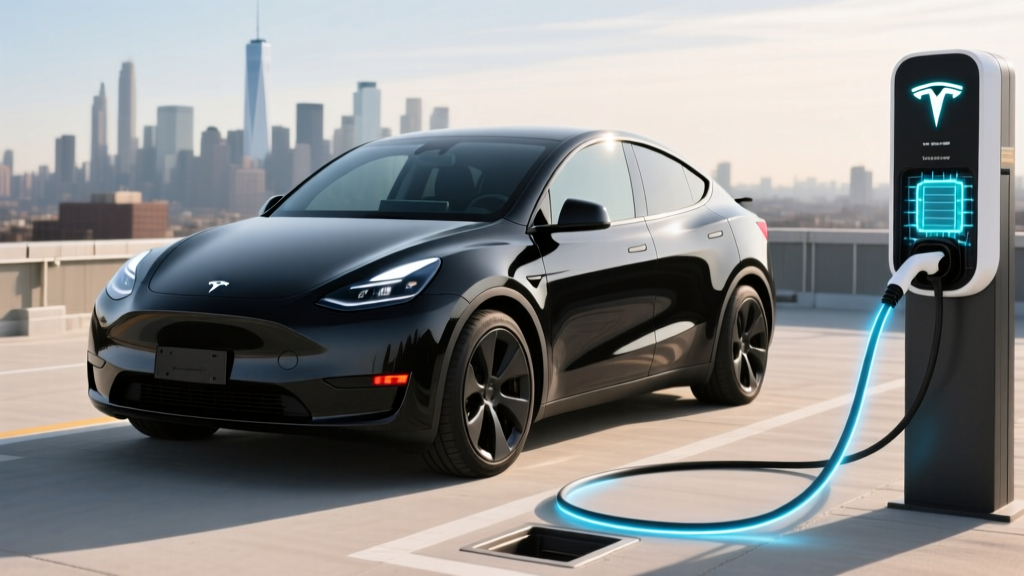
The Tesla Model Y Performance remains the benchmark for buyers who want sports-sedan acceleration in a practical electric crossover. For 2026, Tesla has refined the Juniper-generation platform with updated thermal management, a revised battery pack, and interior improvements that address the most common complaints from earlier Model Y owners. But with rivals like the Porsche Macan Electric, Hyundai Ioniq 5 N, and BMW iX M60 closing the gap, does the performance Model Y still earn its premium?
After spending significant time behind the wheel and at the charger, the answer is nuanced. The acceleration is still startling, the Supercharger network remains a decisive advantage, and the efficiency numbers are hard to beat. But the ride quality, minimalist interior, and insurance costs demand honest evaluation before you sign.
| Spec | Value |
|---|---|
| EPA Range | 277 miles |
| Usable Battery Capacity | 78.1 kWh (NMC chemistry) |
| Drivetrain | Dual-Motor AWD |
| Horsepower | 510 hp (combined) |
| 0–60 mph | 3.3 seconds |
| Top Speed | 155 mph |
| Max DC Fast Charge | 250 kW peak |
| 10–80% DC Charge Time | ~27 minutes |
| Level 2 Home Charge Rate | 11.5 kW (~44 mi/hr) |
| MPGe (Combined) | 111 MPGe |
| Efficiency | 30 kWh/100 mi |
| Cargo Volume (rear seats up) | 30.2 cu ft |
| Cargo Volume (rear seats folded) | 72.1 cu ft |
| Base MSRP | $48,990 |
| Battery Warranty | 8 years / 120,000 miles |
Real-World Range: What the EPA Number Doesn't Tell You
The EPA rates the 2026 Model Y Performance at 277 miles of range. That figure is derived from standardized lab cycles and represents a blended mix of city and highway driving at moderate temperatures. In practice, your mileage will vary — sometimes significantly — based on speed, terrain, and climate.
EPA Sticker: 277 miles
Highway (70–75 mph, moderate weather): ~240–255 miles
City/Suburban mixed driving: ~265–280 miles (regen braking helps recover energy)
Cold weather (below 32°F, highway): ~195–220 miles
Cold weather with cabin preconditioning: ~225–245 miles
The Model Y Performance uses 21-inch wheels with performance tires as standard, which carry a range penalty versus the Long Range trim's 19-inch setup. Expect roughly 5–8% less range than the Long Range AWD's 320-mile EPA rating, largely due to rolling resistance and weight.
The 78.1 kWh usable battery (NMC chemistry) provides a solid energy buffer, but Tesla's thermal management system is what really matters for sustained range. The heat pump — standard across the 2026 lineup — reduces cold-weather energy consumption for cabin heating by roughly 30% compared to resistive heaters in older EVs. On a 200-mile highway trip in 25°F conditions, preconditioning the battery and cabin while plugged in before departure can recover 20–30 miles of range that would otherwise be lost to heating demands.
For context, the EPA's fueleconomy.gov listing confirms the 111 MPGe combined rating and 30 kWh/100 mi efficiency figure. That efficiency is best-in-class for a performance AWD electric SUV — the Porsche Macan 4 Electric, for comparison, returns roughly 86 MPGe combined.
Charging Speed: Supercharger Access Is the Real Advantage
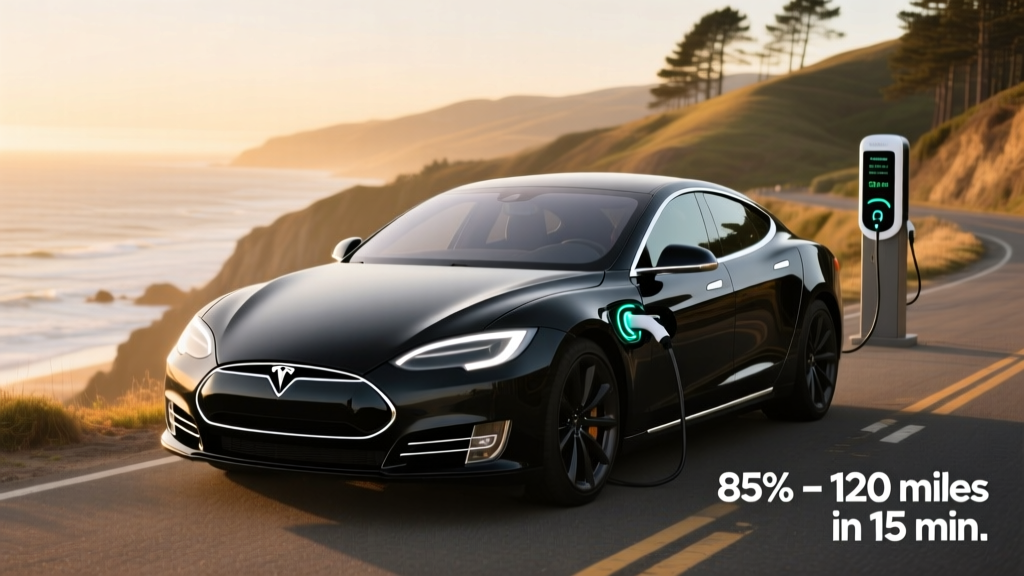
Charging infrastructure remains Tesla's strongest ownership moat. The Model Y Performance supports up to 250 kW peak DC fast charging on V3 and V4 Superchargers, which translates to a 10–80% session in approximately 27 minutes under optimal conditions (warm battery, low state of charge at arrival).
| Charging Level | Power (kW) | Miles Added per Hour | Typical Use Case |
|---|---|---|---|
| Level 1 (120V household) | ~1.4 kW | ~5 mi/hr | Emergency/overnight trickle |
| Level 2 (240V, 48A Wall Connector) | 11.5 kW | ~44 mi/hr | Home daily charging |
| Level 2 (public, 7.2–9.6 kW) | 7.2–9.6 kW | ~28–37 mi/hr | Destination/workplace |
| DC Fast (250 kW Supercharger) | 250 kW peak | ~175 mi in 15 min | Road trips |
| DC Fast (CCS adapter at EA/others) | Up to 250 kW | Varies by station | Non-Tesla networks |
A few charging-curve realities matter here. The 250 kW figure is a peak, not a sustained rate. The Model Y Performance charges fastest between roughly 10% and 45% state of charge, where it can sustain 200–250 kW. Above 60% SoC, the rate tapers progressively — by 80%, you're typically seeing 60–80 kW, and above 90% it drops further to protect battery longevity. This is why Tesla's navigation system recommends charging to 80% on road trips: the time penalty to go from 80% to 100% often exceeds the time saved by driving the extra miles.
For home charging, Tesla's Gen 3 Wall Connector on a 60-amp circuit delivers 11.5 kW (48 amps continuous), adding roughly 44 miles of range per hour. A full overnight charge from 20% to 80% takes about 4 hours — more than sufficient for daily driving. Most owners charging nightly from 30–40% daily depletion will see a full charge in under 2 hours.
Tesla now includes a CCS adapter with new vehicles, opening access to Electrify America, EVgo, and other non-Tesla networks. However, Supercharger reliability and plug-and-charge simplicity remain meaningfully better than third-party networks in most regions, based on consistent uptime data.
Performance and Driving Dynamics
The numbers are the headline: 510 horsepower, 3.3 seconds to 60 mph, and a dual-motor all-wheel-drive system that delivers instant torque to all four wheels. Launch control extracts maximum grip from the 21-inch Pirelli P Zero tires, and the acceleration remains relentless well past highway speeds. For reference, 3.3 seconds matches or beats most six-figure sports cars from just a few years ago.
But the Model Y Performance is more than a straight-line drag racer. The Juniper-generation chassis revisions include retuned adaptive dampers, a lower ride height compared to the Long Range, and stiffer anti-roll bars. Cornering grip is genuinely impressive for a 4,400-pound crossover — the car stays flat through sweepers and changes direction with confidence. The steering is precise if somewhat numb, which is a common Tesla characteristic.
The trade-off is ride comfort. The Performance model's firm suspension and low-profile 21-inch tires transmit more road imperfections into the cabin than the Long Range variant or competitors like the Genesis GV60 Performance or BMW iX. On poorly maintained urban streets, you'll feel expansion joints and potholes more acutely. If daily comfort is a priority, the Long Range AWD with 19-inch wheels is the more livable choice.
Regenerative braking offers strong one-pedal driving capability. The single-pedal mode (now standard without the previous "creep" controversy) allows most drivers to come to a complete stop without touching the brake pedal in normal traffic. The friction brakes are rarely engaged in daily driving, which extends pad and rotor life considerably.
Interior, Cargo, and Technology
The 2026 Juniper interior addresses the most-criticized aspects of the pre-refresh Model Y. Ventilated front seats are now standard on the Performance trim, ambient lighting runs across the dash and door panels, and material quality has improved with soft-touch surfaces replacing the hard plastics of earlier models. The 15.4-inch center touchscreen remains the control hub for virtually all vehicle functions, including climate, mirrors, and glovebox — a design choice that continues to polarize.
Cargo and passenger dimensions:
- Front headroom: 41.0 inches
- Rear headroom: 39.4 inches
- Rear legroom: 40.5 inches
- Cargo behind rear seats: 30.2 cu ft
- Cargo with rear seats folded: 72.1 cu ft
- Front trunk (frunk): 4.1 cu ft
The cargo area is among the most practical in the electric SUV segment. The flat load floor, wide hatch opening, and available under-floor storage make it genuinely useful for family hauling, Costco runs, or camping gear. The frunk adds space for a charging cable bag or small groceries.
Technology highlights:
- 15.4-inch center touchscreen with Tesla OS (regularly updated OTA)
- 8.0-inch rear passenger touchscreen for climate and media
- Tesla Autopilot standard (SAE Level 2 driver assistance)
- Full Self-Driving (Supervised) available as a $8,000 add-on or $99/month subscription
- Dashcam and Sentry Mode with USB-C storage
- 17-speaker premium audio system
- Phone-as-key with Bluetooth and NFC backup
Tesla Autopilot and Full Self-Driving (Supervised) are SAE Level 2 driver-assistance systems. The driver must remain fully attentive, keep hands on the wheel (or demonstrate engagement via the cabin camera), and be prepared to take over instantly. These systems do not make the Model Y autonomous. Only Level 4 services like Waymo operate without a human driver in defined areas. Tesla's "Supervised" label is intentional — you are the supervisor, always.
Pricing, Trims, and Federal Tax Credit Eligibility
The 2026 Tesla Model Y Performance starts at $48,990 (MSRP, excluding destination). With common options — FSD Supervised ($8,000), red multi-coat paint ($2,000), and 21-inch wheels (standard on Performance) — an as-tested price can reach $58,000–$60,000 before incentives.
| Item | Amount |
|---|---|
| Base MSRP (Performance AWD) | $48,990 |
| Destination Fee | $1,390 |
| FSD Supervised (optional) | $8,000 |
| Premium Paint (optional) | $1,500–$2,500 |
| Typical As-Tested Price | $52,000–$59,000 |
| Federal Tax Credit (§30D) — Potential | Up to $7,500* |
| Point-of-Sale Transfer | Available at time of purchase* |
Federal tax credit eligibility requires meeting several conditions under IRS §30D rules. The Model Y Performance qualifies under the MSRP cap (SUVs/crossovers must be under $80,000), but the full $7,500 credit depends on:
- Buyer income limits: Modified AGI must not exceed $150,000 (single), $225,000 (head of household), or $300,000 (joint filers)
- Battery component sourcing: A percentage of battery components must be manufactured or assembled in North America (thresholds increase annually through 2029)
- Critical minerals: A percentage of critical minerals must be sourced from the US or free-trade-agreement countries
- Point-of-sale transfer: As of 2024, qualifying buyers can transfer the credit to the dealer at purchase, reducing the upfront price rather than waiting for tax filing
The exact credit amount for the 2026 Model Y Performance depends on Tesla's battery supply chain at time of delivery. Check the latest eligibility data on fueleconomy.gov and confirm with your tax professional. Rules change annually, and partial credits ($3,750) may apply if only one of the two sourcing requirements is met. See the IRS clean vehicle credits page for current guidance.
Ownership Costs and Warranty
Tesla's battery and drive unit warranty covers 8 years or 120,000 miles (whichever comes first) with a minimum 70% capacity retention threshold. The basic vehicle limited warranty is 4 years or 50,000 miles. These terms are competitive with the broader EV market, though some competitors like Hyundai offer 10-year/100,000-mile battery coverage.
Real-world degradation data for Tesla's NMC packs shows roughly 8–12% capacity loss over the first 100,000 miles, with the curve flattening significantly afterward. Many high-mileage Tesla owners report 85–90% state of health at 150,000 miles. To maximize longevity, Tesla recommends daily charging to 80–90% for NMC batteries (unlike LFP packs, which tolerate regular 100% charges).
Estimated annual operating costs:
- Electricity (12,000 mi/yr, $0.16/kWh national avg): ~$576/year
- Gasoline equivalent (25 MPG SUV, $3.50/gal): ~$1,680/year
- Annual fuel savings vs. gas: ~$1,100
- Insurance: Expect $2,200–$3,200/year (Performance trims carry higher premiums due to repair costs and acceleration risk classification)
- Maintenance: Minimal — no oil changes, cabin air filter every 2 years, brake fluid check, tire rotation. Budget ~$300–$500/year
Insurance is the ownership cost that catches many Performance buyers off guard. The 3.3-second 0–60 time and Tesla's collision repair costs (aluminum body panels, sensor recalibration) push premiums 30–50% higher than a comparable Long Range or non-performance electric SUV. Get quotes before purchasing.
Pros and Cons
Pros
- 3.3-second 0–60 mph is supercar territory
- Best-in-class efficiency at 111 MPGe combined
- Supercharger network reliability and coverage
- Spacious cargo area (72.1 cu ft max) with flat floor
- Continuous OTA software updates add features post-purchase
- Strong resale value relative to EV segment average
- Heat pump standard for cold-weather efficiency
Cons
- Firm ride quality on 21-inch wheels over rough roads
- Insurance premiums significantly higher than Long Range trim
- Touchscreen-only controls frustrate some drivers (no physical stalks for turn signals on Juniper)
- 277-mile range trails the Long Range by ~43 miles
- FSD Supervised remains Level 2 despite the name and cost
- Build quality inconsistencies still surface occasionally
- Rear-seat entertainment screen is small (8 inches)
Who Should Buy the Model Y Performance?
Choose the Model Y Performance if:
- You want the fastest practical family EV and value instant torque for highway merging and passing
- You regularly road-trip and rely on the Supercharger network's coverage and reliability
- You prioritize efficiency and low running costs alongside performance
- You need crossover cargo space but don't want to sacrifice acceleration
- You have access to Level 2 home charging (essential for daily ownership satisfaction)
Look elsewhere if:
- Ride comfort is your top priority — consider the Model Y Long Range, Genesis GV60, or BMW iX
- You want a traditional luxury interior with physical controls — the Porsche Macan Electric or BMW iX M60 deliver
- Your budget can't absorb the insurance premium increase over the Long Range trim
- You need more than 277 miles of range without stopping — the Long Range AWD offers 320 miles EPA
Frequently Asked Questions
What is the real-world range of the Tesla Model Y Performance?
The EPA rates it at 277 miles, but real-world highway driving at 70–75 mph typically yields 240–255 miles. In cold weather (below 32°F), expect 195–220 miles on the highway. City driving with regenerative braking often matches or slightly exceeds the EPA number, at 265–280 miles.
How fast does the Model Y Performance charge?
On a 250 kW Tesla Supercharger, it charges from 10% to 80% in approximately 27 minutes. At home on a Level 2 Wall Connector (11.5 kW), it adds about 44 miles of range per hour, or roughly 4 hours from 20% to 80%.
Does the 2026 Model Y Performance qualify for the federal EV tax credit?
It can qualify for up to $7,500 under IRS §30D, subject to buyer income limits ($300,000 joint / $150,000 single), battery component sourcing requirements, and the $80,000 MSRP cap for SUVs. Eligibility varies by delivery date and supply chain — always verify on fueleconomy.gov and with a tax professional before relying on the credit.
Is the Model Y Performance worth it over the Long Range?
If acceleration and handling matter to you, the 3.3-second 0–60 and retuned suspension justify the premium. If you prioritize range (320 vs. 277 miles), ride comfort, and lower insurance costs, the Long Range AWD is the more practical daily driver at a lower price.
How does the Model Y Performance compare to the Hyundai Ioniq 5 N?
The Ioniq 5 N is a more engaging driver's car with simulated gear shifts and a track-focused personality, but it sacrifices range (~220 miles EPA) and cargo space. The Model Y Performance is the more practical daily vehicle; the Ioniq 5 N is the more entertaining weekend car.
What is the battery warranty on the Model Y Performance?
Tesla covers the battery and drive unit for 8 years or 120,000 miles, whichever comes first, with a guaranteed minimum 70% capacity retention during that period. The basic vehicle warranty is 4 years or 50,000 miles.