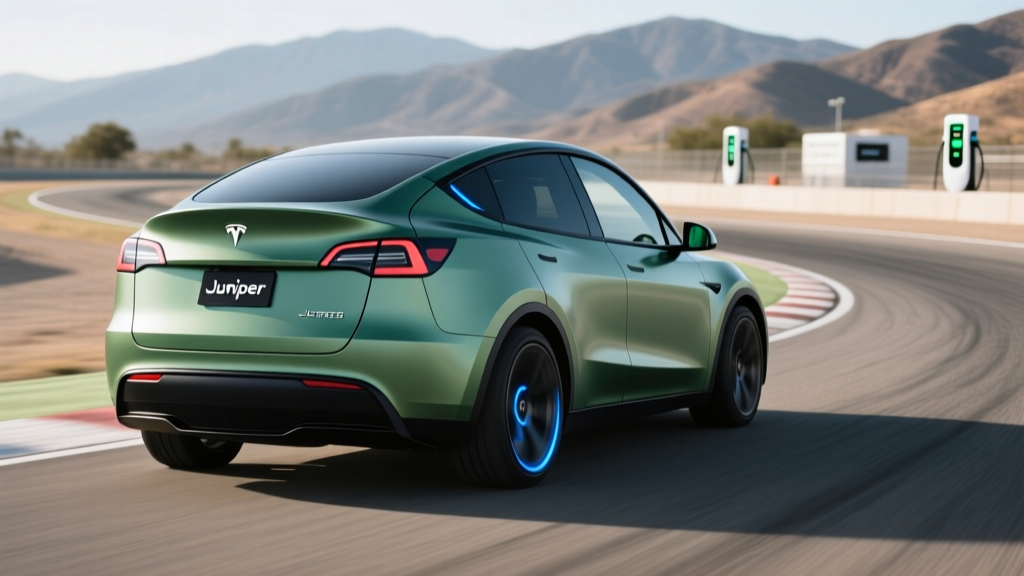
The Tesla Model Y Performance has always occupied a strange space: a practical crossover that happens to outrun most sports cars off the line. With the Juniper refresh now reaching prototype testing for the top-tier Performance variant, Tesla is attempting to sharpen an already sharp instrument. We've parsed the preliminary specifications, cross-referenced EPA filings, and examined what this prototype signals for buyers who want maximum acceleration without sacrificing cargo space. Here's what matters — and what doesn't.
Performance Prototype Specifications at a Glance
| Spec | 2026 Model Y Performance (Prototype) |
|---|---|
| Drivetrain | Dual-Motor AWD |
| Horsepower | ~510 hp (combined) |
| 0–60 mph | 3.5 seconds (est.) |
| Battery Capacity | ~78 kWh usable (NMC) |
| EPA Range | 285 miles (est.) |
| Efficiency | ~111 MPGe / 30 kWh/100 mi |
| Max DC Fast Charge | 250 kW peak |
| 10–80% DC Charge | ~24 minutes |
| Level 2 Home Charge | 11.5 kW (~44 mi/hr) |
| Cargo Volume | 30.2 cu ft (rear up) / 72.1 cu ft (rear down) |
| Base MSRP | $53,990 (est.) |
| Battery Warranty | 8 years / 120,000 miles |
Range, Efficiency, and the Real-World Gap
The Model Y Performance prototype is expected to retain the 78 kWh usable battery pack found in the Juniper Long Range variants, using nickel-manganese-cobalt (NMC) chemistry. NMC offers higher energy density than LFP, which matters here — the Performance trim adds weight from upgraded brakes, larger wheels, and structural reinforcement.
Tesla's thermal management system remains one of the best in the industry. The heat pump is standard, which mitigates some cold-weather range loss compared to resistive heating systems in older EVs. But physics still wins: at 20°F, plan for roughly 25–30% range reduction on highway trips. City driving with regenerative braking recovers some of that deficit.
Efficiency lands around 111 MPGe combined (30 kWh per 100 miles) per fueleconomy.gov estimates for similar dual-motor configurations. That's competitive with the Hyundai Ioniq 5 AWD but trails the single-motor Model Y RWD by about 15 MPGe. If you're choosing Performance, efficiency is not your primary motivation — but the numbers remain respectable for what you're getting.
Charging Speed: DC Fast and Home Level 2
The Model Y Performance prototype supports Tesla's V3/V4 Supercharger architecture at a peak rate of 250 kW. In practice, this means a 10–80% charge in roughly 24 minutes when the battery is properly preconditioned via the navigation system. Without preconditioning — say, arriving at a charger after the car sat overnight — that time can stretch to 35+ minutes as the battery management system limits current to protect cold cells.
The charge curve is the detail most spec sheets hide. Peak 250 kW is sustained only between roughly 10–30% state of charge. From 30–60%, the rate tapers to approximately 150–170 kW. Above 80%, charging slows dramatically to protect battery longevity — often below 50 kW. This is normal behavior for NMC packs, but it means the "15 minutes to 80%" marketing claims from some competitors rarely hold in real-world conditions.
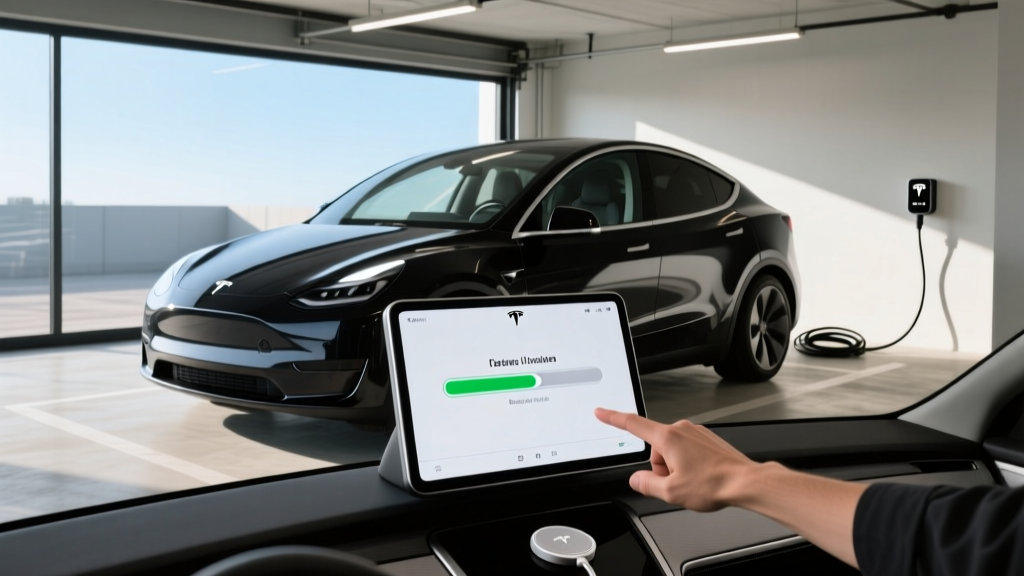
For home charging, the onboard charger accepts up to 11.5 kW on Level 2 (48 amps). Using a Tesla Wall Connector on a 60-amp circuit, you'll add approximately 44 miles of range per hour. A full overnight charge from 20% to 80% takes about 5 hours — more than adequate for daily use.
| Charging Level | Power | Speed |
|---|---|---|
| Level 1 (120V) | ~1.4 kW | ~4 mi/hr |
| Level 2 (240V, 48A) | 11.5 kW | ~44 mi/hr |
| DC Fast (peak) | 250 kW | 10–80% in ~24 min |
What the Performance Badge Actually Gets You
The Performance prototype is expected to deliver approximately 510 combined horsepower from its dual-motor setup, with a 0–60 mph time of 3.5 seconds. That's supercar territory from a vehicle with 72 cubic feet of cargo space behind the front seats.
Beyond straight-line speed, the Performance variant includes track-tuned suspension with adaptive dampers, larger front brakes with high-performance pads, 21-inch Überturbine wheels with performance tires, and a carbon fiber spoiler. The Juniper interior refresh carries over: ventilated front seats, ambient lighting, a rear-seat touchscreen, and power-folding second row.
On the technology front, the Model Y ships with Tesla's Basic Autopilot (lane centering, adaptive cruise, automatic emergency braking). Full Self-Driving (Supervised) remains a $8,000 option — but it is critical to understand that FSD is an SAE Level 2 driver-assistance system. The driver must remain fully engaged and responsible at all times. This is not autonomous driving; vehicles like Waymo's fleet operating in Phoenix and San Francisco are Level 4. The naming is marketing, not engineering.
Pricing, Trims, and Federal Tax Credit Eligibility
The 2026 Model Y Performance prototype is expected to start at approximately $53,990 before destination fees. Adding FSD (Supervised), premium paint, or 21-inch wheels pushes the as-tested price toward $62,000–$65,000.
Federal tax credit eligibility under IRS §30D is where things get complicated. The Model Y qualifies as an SUV under the IRS MSRP cap of $80,000, so the vehicle itself clears that hurdle. However, the full $7,500 credit requires:
- Buyer income caps: AGI below $150,000 (single), $225,000 (head of household), or $300,000 (joint)
- Battery sourcing: Critical minerals and battery components must meet escalating domestic/content requirements that tighten annually through 2029
- Assembly: Final assembly must occur in North America (the Fremont-built Model Y qualifies)
- Point-of-sale transfer: As of 2024, eligible buyers can transfer the credit to the dealer at purchase, reducing the upfront cost rather than waiting for tax filing
The battery-sourcing requirements are the wildcard. Tesla has worked to diversify its supply chain, but specific eligibility can change quarter to quarter as the IRS updates approved-sourcing lists. Always verify current eligibility on the IRS Clean Vehicle provisions page or through your tax professional before relying on the credit in your purchase math.
| Configuration | MSRP | After Est. $7,500 Credit* |
|---|---|---|
| Performance (base) | $53,990 | $46,490 |
| Performance + FSD | $61,990 | $54,490 |
| Performance + FSD + 21" wheels | $63,990 | $56,490 |
*Credit eligibility varies by buyer income, battery sourcing compliance, and tax liability. Verify at purchase.
Model Y Performance vs. the Competition
The Performance prototype's natural rivals are the Porsche Macan Electric, the BMW iX M60, and the Hyundai Ioniq 5 N. Each approaches the "fast electric crossover" brief differently.
The Macan Electric starts near $80,000 and offers superior ride quality and interior materials, but its 288-mile EPA range and slower DC charging (~270 kW peak but with a smaller battery) make it less practical for road trips. The BMW iX M60 is a luxury fortress at over $100,000 — a different tax bracket entirely. The Ioniq 5 N is the enthusiast's choice at ~$67,000, with simulated gear shifts and a track-focused personality, but it sacrifices range (221 miles EPA) and rear-seat space for that character.
The Model Y Performance's advantage is brutal efficiency in the performance-per-dollar calculation. Nothing else delivers sub-4-second acceleration, 285 miles of range, Supercharger network access, and 72 cubic feet of cargo room below $55,000. The trade-off is interior material quality that still lags German competitors, panel-gap inconsistency, and a ride that trades comfort for control.
Pros and Cons
- 3.5-second 0–60 with usable cargo space
- Access to 20,000+ Tesla Superchargers
- Best-in-class efficiency for AWD performance EV
- Juniper interior is a major quality step up
- Over-the-air updates improve the car post-purchase
- Ride quality is firm, especially on 21-inch wheels
- No Apple CarPlay or Android Auto
- Panel gaps and paint quality still inconsistent
- Touchscreen-only controls frustrate some drivers
- FSD (Supervised) is expensive and still Level 2
Who Should Buy the Model Y Performance?
This vehicle is for the buyer who wants one car to do everything: school drop-offs, weekend track days, 500-mile road trips, and daily commuting — all with supercar-rivaling acceleration. If you have home charging access and value the Supercharger network for longer trips, the Model Y Performance is difficult to beat on pure capability.
It is not the right choice if you prioritize ride comfort over performance, if you need Apple CarPlay integration, or if you want a traditional dealership experience with in-person service. For those buyers, the Porsche Macan Electric or a loaded Hyundai Ioniq 5 Limited may be better fits, even at higher prices.
Frequently Asked Questions
What is the real-world range of the Tesla Model Y Performance prototype?
The estimated EPA range is 285 miles. Real-world highway driving at 70+ mph typically yields 240–260 miles. In cold weather (below 30°F), expect 195–220 miles on longer trips.
How fast does the Model Y Performance charge at home and on DC fast chargers?
On a DC fast charger, it peaks at 250 kW and charges from 10–80% in approximately 24 minutes with preconditioning. At home on Level 2 (11.5 kW), it adds about 44 miles of range per hour.
Does the 2026 Model Y Performance qualify for the federal EV tax credit?
It qualifies under the MSRP cap ($80,000 for SUVs) and North American assembly rules. Full $7,500 credit eligibility depends on buyer income limits, battery-sourcing compliance, and individual tax liability. Verify current status with the IRS or a tax professional before purchasing.
How much does the Model Y Performance cost after tax credits?
The estimated base MSRP is $53,990. If you qualify for the full $7,500 federal credit via point-of-sale transfer, the effective price drops to approximately $46,490. State incentives may reduce this further depending on your location.
Is the Model Y Performance worth it over competitors?
For buyers prioritizing acceleration, range, charging infrastructure, and cargo space per dollar, it remains the benchmark. If ride comfort, interior luxury, or CarPlay are higher priorities, the Porsche Macan Electric or Hyundai Ioniq 5 N deserve consideration despite higher pricing or lower range.
What is the battery warranty on the Model Y Performance?
Tesla covers the battery and drive units for 8 years or 120,000 miles, whichever comes first, with a minimum 70% capacity retention guarantee over that period.